

Over her five year stint as Festival Director, Pooja Nansi has seen through some of the most challenging editions of the Singapore Writers Festival. From coming in as the first female director of the festival, to adapting the festival for an online and hybrid format during the pandemic years, the journey has not been an easy one. But one thing’s for certain – Pooja has made her mark, with the way she’s enlivened the festival with perhaps some of the most diverse programme offerings since its beginnings, bringing together hardcore fans, curious readers, and at times, people who have barely touched a book in their life.

“There are two things that I hoped to grow in the festival when I took on the mantle of Festival Director,” says Pooja. “Firstly, youth attendance in the 13-18 year old age range was a big gap that we identified, which is why I started the Youth Fringe to work with youth curators and moderators to give greater ownership to young people and address issues that matter to them at the festival. It’s been great watching it grow from its first edition during the pandemic till now. I also wanted to see young people and squealing teenagers in hordes at the festival, and that happened, especially when we brought in young adult writers like Dustin Thao. It’s heartwarming because I really believe young people coming and they are the future of the literary community, and use the festival to get their buy in and invest in them.”
“My other aim was to diversify the kinds of people in the lineup, because I believe that a literary festival should be one of the most democratic, accessible spaces available,” she adds. “I think that as we grow, we’ve done good work in engaging different sectors of people, like how we even had football fans last year showing up in football jerseys when we had football legend Lilian Thuram, while this year, we’ll be bringing in UFC fighters to talk about a new book. And so I do think our team has achieved that goal of improving both accessibility and inclusivity.”

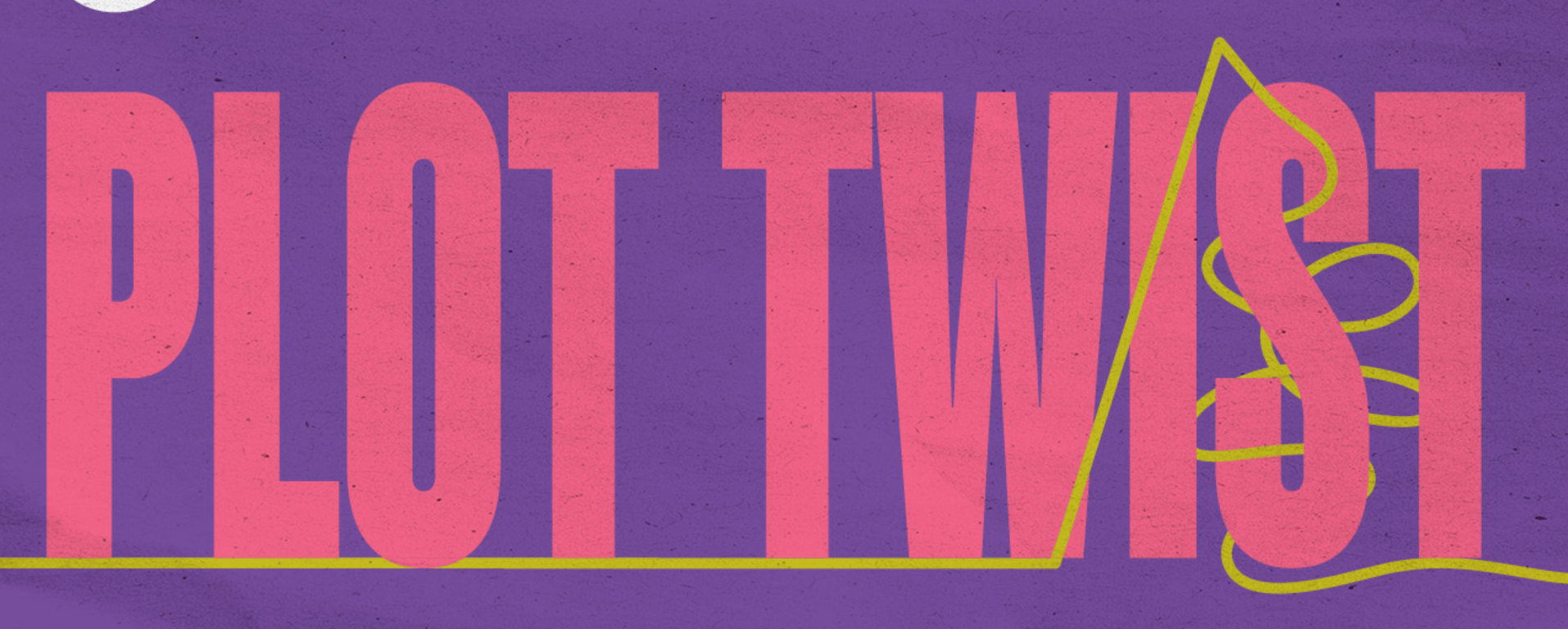
Indeed, with this year’s theme, Plot Twist, attendees should be prepared to expect the unexpected, with unlikely connections and surprising outcomes in store. “To me, the theme of ‘Plot Twist’ doesn’t necessarily apply to just horror or thrillers, but really about the experience at the festival itself,” says Pooja. “It’s about having these unexpected ways of thinking, and ensuring that we don’t limit our curation, bringing in more wild and wacky things. That’s also why we have the biggest selection of programmes from the open call this time around – we were surprised and wanted to surprise the audience as well.”
“As a festival director, you can’t just programme what you like or don’t like, and have to adopt certain curatorial principles which also appeal to the audience, especially new audiences who may never have attended before, which is the most organic way of growing the festival,” she adds. “And to experience that plot twist, that’s exactly what the Festival Pass was designed to do, offering access to over 150 programmes at the festival. Mostly, you’d tell first timers to check out maybe two to three things they’d naturally gravitate to, and go out on a limb and try something out of their comfort zone. Even if they realise it isn’t their cup of tea, they can politely dip out of it and do something else instead, and hopefully learn something new or about themselves.”

While the SWF tends to spotlight a country of focus each year, the 2023 edition instead has decided to go with a more specific group of writers: Asian-Americans. But make no mistake, the selection of writers aren’t limited to writing about the diasporic experience, but instead takes those experiences to inform their broad range of genres, from superhero tv scripts, to academia to young adult fiction. “The Asian American focus cam about because of the support from the US Embassy, and how they really wanted to work more closely with us and help bring in a contingent of writers, especially considering that they’re one of the biggest exporters and creators of anglophone literature,” says Pooja. “Given that the festival takes place in Singapore, and how there’s been a resurgence in Asian-American presence in our minds recently, such as with Everything Everywhere All At Once, there was this potential for writers to come to Asia, be seen and be elevated.”
“There’s a whole buffet of experiences for visitors to encounter, where they can learn about how the Asian-American experience is quite diverse,” she adds. “I think, being a child of immigrants myself, I realise we don’t need to tell the immigrant story any one specific way, and among our guests we have writers like Fatimah Asghar, who’s a co-producer and writer for Ms. Marvel on Disney+, Jeff Chang who’s a hip-hop historian and releasing a biography on Bruce Lee, and Emily X.R. Pan who writes acclaimed teen fiction, and Gayatri Spivak, known for her essay Can The Subaltern Speak?. I think it all speaks to the broader principles by which we design the festival, such that there’s something for everyone.”

Even with a plan in mind, preparing for and curating the festival isn’t always easy, and Pooja takes us through the process, which started as early as when the previous edition ended. “We start out with a wishlist, and that’s compiled from both myself and various members of the programming team who are all experts in their own right, from someone who’s very in touch with BookTok and YA (young adult) fiction, and someone else who knows all about children’s literature. They all come together with their breadth of knowledge, and then I come in to question and figure out if there are any gaps in the programming,” says Pooja.
“We do tend to start with the biggest names, like how we have Pulitzer Prize-winning author Viet Thanh Nguyen delivering our keynote lecture, but we also have other authors like Kyeong Mo, a Korean adoptee in the USA who responded to our open call who will be lecturing on the colliding worlds of poetry and punk rock,” she adds. “There are so many streams that run through SWF, and the process of curation is about adapting to the programmes constantly in flux, depending on who says yes or no, and ensuring that we have enough representation of literary forms across the board.”

As the Singapore Writers Festival, naturally, local authors are also given a chance. to be in the spotlight, and Pooja assures us that the Singaporeans are given just as much space to shine as the international ones. “We do always think about Singaporean names to spotlight and who to put them in conversation with, and how to help bring them to more international visibility,” says Pooja. “In most of the panels, you’ll see a mix of local writers in conversation with the international writers, and it helps put things into perspective and see how local literature speaks to larger global trends and issues with publishing and reading.”
And to really show love for local literature, SWF continues to maintain their literary pioneer spotlight, with this year focusing on Goh Poh Seng. “There are so many local writers who have yet to get their flowers, and I always feel this need for more people to know about them. Like how pioneering librarian Hedwig Anuar was the focus of 2021, and I couldn’t believe how she had been yet to be honoured, considering she’s one of the biggest reasons we have a library system, the Singapore Book Council, and had all these wild stories,” says Pooja. “When the old National Library was torn down and there was not enough budget to move. the books, she organised an entire train of librarians to physically pass books down the line! Or even how last year we featured Singapore’s pioneering Malay female writers, who have never been documented. Young writers need to know we do have a rich history of literature, to respect and understand that.”

Goh Poh Seng is probably best known as a jack-of-all-trades, writing across poetry, drama and novels, including his first novel If We Dream Too Long. Goh was also one of the original architects of the arts and culture scene of Singapore holding positions in the National Theatre Trust and the National Arts Council, where he lay the groundwork for the building of some of our best known national arts companies such as the Singapore National Symphony (now the Singapore Symphony Orchestra today), the Singapore Chinese Orchestra and the Singapore Dance Company.
“While Goh has been widely archived, it was odd that he hadn’t actually been formally recognised as a literary pioneer yet, since we started the series in 2009,” says Pooja. “The challenge to this was how to bring something new to his story beyond what had already been present in the Esplanade’s archive or the Cultural Medallion Gallery, which is why we focused on his position. asa visionary and a bit of a rebel ahead of his time, from having penned Singapore’s first English language novel to even starting Bistro Toulouse-Lautrec, a jazz and poetry club that got shut down by the authorities.”

The exhibition’s title, ‘Tell Bowie He’s Only A Rock Star. I, However, Am A Poet.’, specifically refers to the story behind how Goh ended up staging David Bowie’s first concert in Singapore in 1983. When he invited Bowie and his musicians to their home for a performance by classical Chinese musicians, Bowie’s band arrived without Bowie, who said that he did not “fraternise with concert promoters.” Goh retorted “tell Bowie he’s only a rock star. I however, am a poet”, which humbled and compelled Bowie to turn up after all.
“The exhibition aims to capture and highlight key moments which demonstrated his dedication and rebel spirit, and I wanted it to be super contemporary. I asked Lucas Ho to pen the exhibition text, which he wrote as an extended essay, and we’ll also have No Cause For Grief, which sees poets Ang Kia Yee, Cyril Wong and Zeha read his unpublished work, set to music led by Chok Kerong,” says Pooja. “The last thing I wanted it to feel like was a memorial service, and so it becomes a celebration of his legacy carrying on till today. In the hands of these young and contemporary poets, his words end up sounding so moving, so alive and so present, with a beautiful sense of lyricism I believe will contribute to a very special evening.”

But do Singaporeans still read? Or is everyone already too hopped up on streaming and gaming to settle down with a nice book anymore? “I don’t think less people are reading, just that they’re reading in different forms, with audiobooks and ebooks instead. Especially with BookTok, I believe reading is seeing a revival, and it’s so cute to see people showing off their book hauls,” says Pooja. “Even at the eye of the storm so to speak, where I am, I do feel like I do see people reading, and when people are saying youths aren’t reading anymore, it’s more likely that they’re reading books that are different from what the older generations used to.”
“So that’s why we brought in Jack Edwards, who has over 2 million followers on BookTube and BookTok, and when we posted the announcement on Instagram, you can see how everyone in the comments ended up more excited for him than Viet Thanh Nguyen!” she continues. “It was so fascinating to see people get so excited about him, and I do see the appeal. He gives comprehensive and honest reviews of say, Kylie Jenner’s book recommendations, and there’s so much joy in watching him speak about them. Trends are definitely changing, and it all belongs to part of a bigger conversation about pop culture and consumption habits, but for now, it really is exciting to see all these changes happening.”

To add on to that conversation about technology, SWF’s beloved opening debate will surround the motion of whether AI Is The Better Writer, moderated by Shamini Flint and featuring Oniatta Effendi, Petrina Kow, Nessa Anwar, Marc Nair, Amanda Chong, Joses Ho and of course, ChatGPT. “I think AI is here to stay, and it feels as big as the Internet when it first came to public attention,” says Pooja. “There is a very real anxiety surrounding it, especially when it comes to the ethics and legislation, and there were some grumbles that we decided to do a debate around this topic. But at the end of the day, the debate is an opportunity for writers to speak on it and get the last word, and a chance to hash it out in front of an audience and community invested in it. I think it’s going to be phenomenal.”
And while the SWF may seem like ‘the’ literary festival in Singapore, Pooja hopes that by no means it is the only one, and believes that the more the merrier. “The space for literature needs to be bigger, and doesn’t always have to rely on big festivals like the SWF. There is room for more community events on the ground that serve niche communities and needs that the SWF can’t,” says Pooja. “But what the SWF is then is a pinnacle event that’s just one big, ten day celebration of fun. Meanwhile for the rest of the year, you’ve got SingLit Station, the Singapore Book Council and other groups catering to their own audiences, and it’s so vibrant once you really integrate youself into the community.”

As her final year before welcoming a new Festival Director, Pooja reflects on her time helming SWF before stepping down. “I think the new Festival Director will come in with their own perspective and lens, but I remember how differently I saw the festival from before I took over and after, where I became so much more aware of all the stakeholders involved, becoming more attentive to audience numbers and reactions beyond the programming itself,” she says.
“Once you’re in the thick of it, you realise how many considerations there are, and how often things shift and get revised. In my first year, I kept wanting to pin things down early, but after five years, riding the wave of the pandemic and adapting to different formats, I’ve learn to put my trust in my team and believing that everything will fall into place,” she adds. “I still don’t think I’ve fully gotten used to the adrenaline rush that comes with every festival, but I’ve definitely learnt to become more adaptable, and ensure that I’m leaving the festival better than when I first stepped into the role.”

As a writer herself, Pooja ends off by thinking about the next generation, specifically her own daughter, and the literary landscape she wants her to grow up in. “I was always very appreciative of how my own mum gave me space to read whatever I wanted, and reading always felt like an adventure. There were even times it would feel forbidden with how into it I was, where my mum would turn off the lights after 8 but I’d still grab a flashlight to read under the covers,” says Pooja. “Reading has always been a privilege, not a punishment, and I believe that we have to meet young people where they are, making sure they develop a love for reading as opposed to forcing it upon them to nurture the habit.”
“It’s really about seeing people for who they are and making recommendations that make sense. My own daughter is still young, and at the stage where she would get me to read the same barnyard story over and over again to her, but by all means. There are no ‘right’ books or ‘wrong’ books, and to me, I just want my daughter to grow up in an environment where she will always have access to the books that she wants to read. The only way we can do that is to ensure we kee an open mind, and as a parent, give them more exposure, variety and freedom in their reading landscape as possible.”
Image Credits: Arts House Limited
Singapore Writers Festival 2023 runs from 17th to 26th November 2023. Tickets and more information available here
 Bakchormeeboy
One thought on “Singapore Writers Festival 2023: An Interview with Pooja Nansi on her final year as Festival Director, diversity and inclusion, and the literary landscape”