
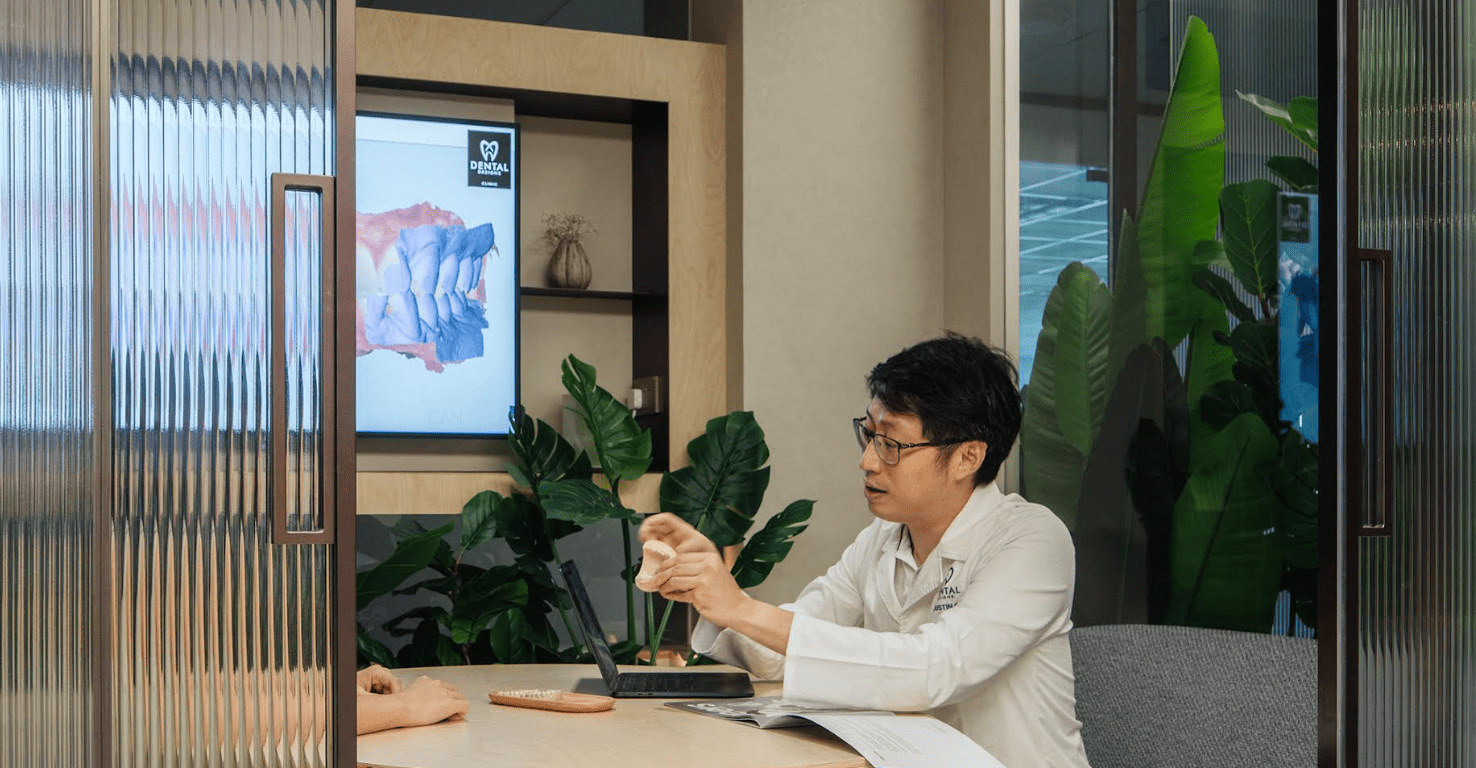
We often associate craftsmanship with studios, workshops, or ateliers. Yet some of the most meticulous design work today takes place in spaces rarely described as creative: dental clinics.
Modern dental crowns sit at an intersection of digital technology, material science and hand craftsmanship. Designed to disappear seamlessly into the body, they demand the same attention to form, texture and colour that defines good design elsewhere. Using Dental Designs Clinic in Singapore as a case study, this article explores how contemporary crown-making reflects broader shifts in how objects are designed and made today.
So what exactly is a dental crown?
A dental crown is a custom-made covering placed over a tooth that has been damaged, weakened or extensively restored. It reinforces the tooth while restoring its original shape, allowing it to function normally again.

Crowns are commonly used when a tooth is cracked, heavily filled, worn down over time or has undergone root canal treatment. In some cases, they are also used to improve the appearance of teeth that are discoloured or misshapen.
While their purpose is functional, the success of a crown depends largely on how naturally it integrates with the surrounding teeth; an outcome that relies as much on design and craftsmanship as on clinical technique.
In the past, traditional crown-making relied on physical impressions taken using trays and impression materials. These moulds were then sent to external laboratories, introducing delays and room for interpretation.
Many contemporary clinics now use digital intraoral scanners, which create highly accurate 3D models of a patient’s teeth and bite. These scans capture fine surface details and spatial relationships, forming the digital foundation for the crown’s design. The process is quicker, more precise and removes much of the guesswork once inherent in physical impressions.
In industrial design and craft, proximity between designer and maker often leads to better outcomes. The same principle applies in dentistry. Over at Dental Designs Clinic, crowns are fabricated in-house rather than outsourced to external laboratories. This allows dentists and dental ceramists to work closely throughout the process, reviewing proportions, bite dynamics and aesthetic considerations as the crown takes shape.

This collaborative workflow reduces the distance between design intent and final object, a concept familiar in many creative disciplines. Yet, while digital design software and milling machines provide exceptional precision, they do not replace the role of the maker.
After initial fabrication, crowns are hand-finished by ceramists who refine surface textures, contours and colour transitions. Subtle variations in translucency and tone are introduced to replicate the way natural teeth interact with light. Without this stage, restorations can appear flat or overly uniform.
This balance between automation and handwork mirrors trends seen across contemporary craft: technology handles structure and accuracy, while human judgement completes the aesthetic narrative.
Material choice plays a crucial role in how a crown is perceived. Many modern clinics now favour metal-free ceramic crowns, which allow light to pass through in a way that more closely resembles natural enamel.
Dental Designs Clinic works with ceramic materials sourced from Europe and Japan, selected for their durability, biocompatibility and optical properties. These materials help crowns blend seamlessly with surrounding teeth, avoiding the opaque or shadowed appearance sometimes associated with metal-based restorations.
In essence, the goal is not to draw attention to the object, but to make it visually disappear, providing a design challenge as complex as it is subtle.

Seen through a cultural lens, dental crowns are a reminder that craftsmanship often exists beyond traditional creative spaces. They are objects shaped by collaboration, material knowledge and aesthetic sensitivity, made to function quietly within daily life.
As design continues to expand into unexpected contexts, practices like contemporary dentistry reveal how deeply creative thinking is embedded in the systems that support our everyday experiences, even when the final result is meant to go unnoticed.
Dental Designs Clinic has three locations:
Raffles Place branch: Level 3, The House of Eden Singapore, 4 Robinson Road
Telok Ayer branch: #01-01B Keck Seng Building, 133 Cecil Street
Orchard branch: #12-05 Wisma Atria Office Tower, 435 Orchard Road
Call 6221 8284 | WhatsApp 8200 9092 | Email contact@dentaldesigns.com.sg
More information about Dental Designs Clinic available on their website here
 Bakchormeeboy