
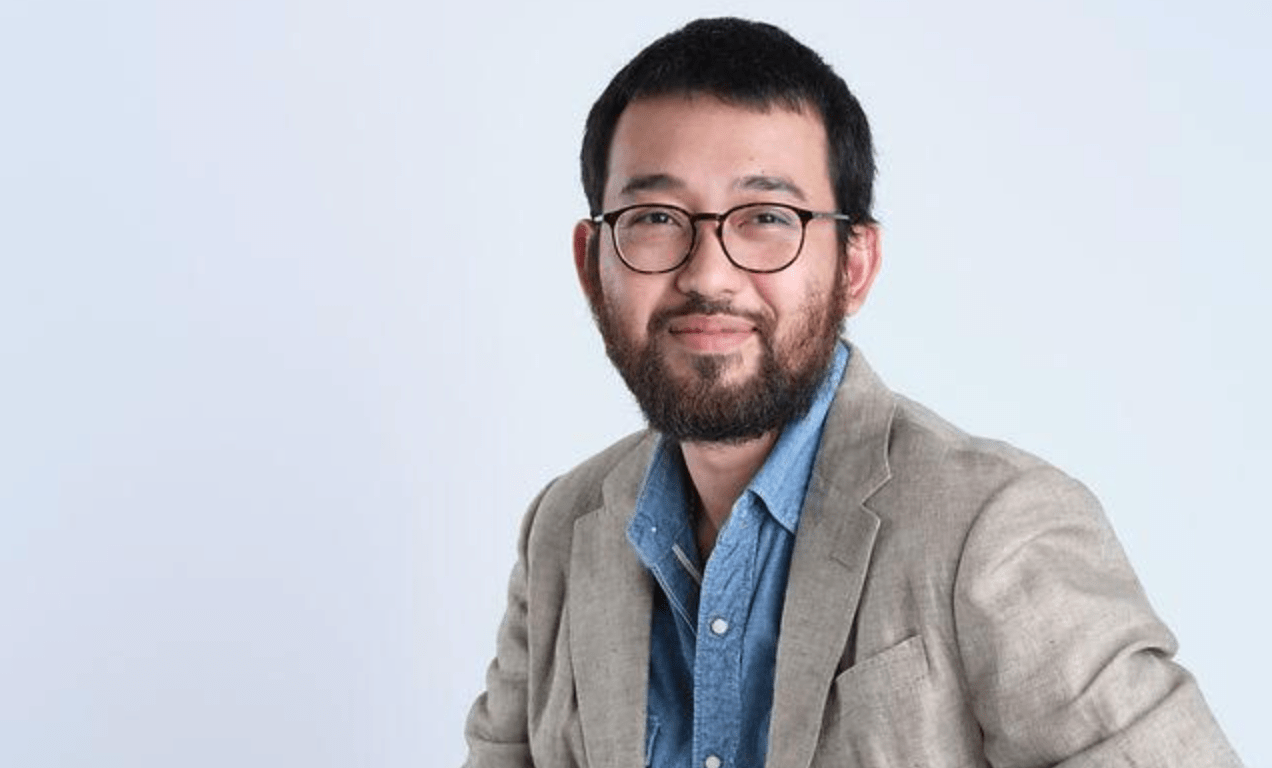
The Substation may have faced a tumultuous few years, with the venue itself losing its space, but with last year’s successful return of their beloved SeptFest, the organisation looks to be coming back stronger than ever, with a new direction and new branding, with the announcement of independent curator and exhibition-maker John Tung as their brand new Festival Director.
Taking place in September 2023, John will be leading the inaugural edition of Re-Connect/Centre/Converge: The Arts Festival, which replaces and renews The Substation’s SeptFest – the company’s annual multi-disciplinary arts festival.
“We are honoured to have John as the Festival Director for Re-Connect/Centre/Converge: The Arts Festival by The Substation,” said Yvonne Lee, Company Manager of The Substation. “Having worked closely on the ground and contributed to our Singapore arts scene, his experience and expertise make him the perfect fit for this role as The Substation continues our commitment to present original programmes through our annual festival that reflect the diversity we have in our arts landscape today.”
A former Assistant Curator at the Singapore Art Museum, John has curated and co-curated 9 exhibitions, in addition to serving as a co-curator for the Singapore Biennale 2016 and Singapore Biennale 2019. The festival will take place throughout the month of September 2023 and will feature a range of exhibitions, performances, talks, and workshops reflecting this year’s theme Re-Connect/Centre/Converge. While the festival has yet to announce its lineup and location, The Substation is currently continuing fundraising efforts for its festival, with the public able to make donations here
“I’ve known Yvonne and Ezzam (Rahman, the most recent Artistic Director of The Substation) for a while now, and I recognise that this is not a small-scale festival and isn’t to be taken lightly,” says John. “But I think I fit in well, not only because of my interest in both commercial art and the community, as well as my relationship and history with The Substation. For me, it’s been a space I’ve visited since I was a student, experiencing everything from my first poetry recital to first film presentation. It’s a formative and important part of so our country’s cultural identity, and for the arts ecosystem.”
Re-Connect/Centre/Converge: The Arts Festival by The Substation promises to showcase multi-disciplinary programmes featuring both emerging and established artists. “The reason for the rebrand is in part because of how we’ve moved out of our home at Armenian Street, and a rededication to cross-disciplinary art forms, and platforming local artists, alongside providing a space for forum and conference,” says John. “What stands out is the spirit of experimentation, with new alternative practices and a commitment to highlighting lesser known, diverse ways of thinking.”
“That’s why we’ve deliberately curated artists with a wide age range, with freedom to propose and create works in their interests, as opposed to sticking to a specific theme,” he adds. “There is no grand narrative here, it’s not top-down, but allowing for micro-narratives to naturally form, and to promote the idea of contributing to and sharing knowledge.”
Under the re-branding, John hopes to fully integrate art into the chosen space, co-existing and interacting with each other. “The point is to rethink what can be done in this one centralised location, where placemaking and the space is prioritised over decentralisation over various nodes, unlike other festivals,” says John. “Living in Singapore, just travelling between locations can already leave you sweaty and exhausted, so there has to be some kind of convenience or model that works for us. More than that, it’s a way for ensuring people are coming together, with all this art and all the programmes in the same space, which allows for clearer narratives to emerge and for conversations to start, between audience members, between artists, and between audience and artists.”
“Of course, even in that sense, there might be different spaces within the overarching location, with different rooms for conferences and exhibitions, but I am confident of my ability to make it work. The scope of work really is akin to what I do when I curate, and with over 16 exhibitions done in the last year or so, meeting so many new artists, it really lines up with my role as festival director here,” he says.
John’s proposed space, to be announced, is heavily hinted at being a rather alternative location, one not necessarily intended for art, but will be reappropriated and transformed for such a purpose. “It’ll be quite an open space, and logistically, we do know there’s a degree of need to ‘control’ the space as well, and make it come alive with our programming,” says John. “I remember how back when I was doing my post-graduate degree in Hong Kong, and we’d end up having regular hangouts where we’d find a comfortable spot under a bridge and sit on discarded furniture, drinking and talking philosophy. Any space can be activated, if the quality of the programme and people is ensured and curated.”
“Even here in Singapore, we don’t have a lack of spaces, and I think a trend we’ve seen happening more is the proliferation of art in everyday spaces – like how we even have Roy Lichtenstein’s work. in Millennia Walk or an Anish Kapoor in the CBD. We have the infrastructure, but we now want people to be aware of its existence and its potential, which is why the festival also becomes a festival of ideas,” he adds.
Despite being known for his roles as a curator and for his work in visual art, John actually has a wealth of experiences across multiple art forms and mediums. “As a child, I was already exposed to theatre, had a short stint in fashion, music and film, and it’s all these broad interests and approaches that have led to where I am today,” says John. “I do like to get my hands dirty, and I have so many other tools and roles under my belt that few other curators have in this country, which all go into a fest like this. Fundamentally, as director, it really comes back to understanding what artists are doing, what audiences want, and finding the middle ground to mediate that interaction through different art forms.”
“The question then is, how do we do outreach to find new audiences? By having a rich enough programme to engage people in more meaningful ways, and people who would then wind up having that vested interest in art,” adds John. “The language used shouldn’t alienate our target audience, and we need to ensure the art’s intrinsic value and goodness comes out. However, it is so important that people come down in person to experience that art for themselves, in order to facilitate their own process of meaning making. I hope that people aren’t afraid to come down or say that ‘contemporary art isn’t me’, because we will be creating entry points, such as hands-on workshops and artist talks.”
As of now, John emphasises the need to continue supporting the Substation in the lead up to the festival, with donations and sponsorships necessary, and all-in-all, forging a strong community willing to make it happen. On the Substation’s end, they are fully confident of John’s abilities and commitment to the project, and are excited to see how it all turns out. “A space is empty. But what we’re doing is to make a space into a place. That comes down to garnering communal support, to find friends and people who care, and who will help manifest this, from deep conversations to reality. Nothing is stopping us from doing it here, and it just takes a little encouragement to see the vision.”
As the curatorial direction and artwork commissions develop, the public can look forward to progressive updates in the lead up to the festival. The Substation is currently continuing fundraising efforts for its festival. Donations can be made here
 Bakchormeeboy