

Truth that lies buried under the pressures of society.
A monster is often imagined to be a singular, bestial creature bringing terror to all in its vicinity, a wickedness and intentionality behind its cruelty that warrants a hero to vanquish it. Yet, monsters are not born but made, where behind every action is a reason, to the extent that we wonder – is it possible that society itself is the monster instead?
That is the central question behind Hirokazu Kore-eda’s latest film, Monster, whose screenplay, by Yuji Sakamoto, won Best Screenplay at the 2023 Cannes Film Festival. Monster‘s plot initially seems straightforward, where single mother Saori (Sakura Ando) notices strange behaviour in her son Minato (Soya Kurokawa). Minato confesses that homeroom teacher Hori (Eita Nagayama) has been abusing him, and Saori demands an explanation from the school.

But rather than a simple drama pitting family against school, Monster begins to transform into something else altogether, when it reveals all is not as it seems. Transitioning into a Rashomon-esque presentation style, Monster then showcases Hori’s side of the story, before finally concluding with Minato’s, unveiling a reality that is far more tragic than any of them could have imagined.
In adopting such a non-linear narrative style, Kore-eda constantly keeps viewers guessing, as we dive deeper into the mystery with each new piece of information offered. There is clear mastery over storytelling, as our assumptions about what really happened constantly shifts, never entirely sure about who is telling it as it is, or hiding an even greater secret.

Each cast member fully dives into their role, which makes it far easier to empathise with them each time we see things from their point of view. As Saori, Sakura Ando shares a strong onscreen chemistry with Soya Kurokawa, and there is clear devastation in her eyes when their bond is clearly fraying. All alone, confused and at a loss, it’s no wonder she turns her anger towards the school, lashing out when they give a stoic, emotionless response and continually refer to their notes each time she meets them.
Meanwhile, Eita Nagayama, as Hori, has one of the most difficult jobs of all – going from a character to be despised, to one that elicits our sympathy. His initial portrayal is cold and combative and awkward, and we are almost certain that he is guilty of something. But when we shift to his perspective, we begin to understand his side of the story, and how simply by understanding the circumstances surrounding his behaviour, we become that much more empathetic, a victim of the media storm and the school’s need to preserve their own reputation.

All of this sets up for the final reveal, from Minato’s perspective. Kore-eda has almost always included children and younger actors in his films, and has mastered an uncanny ability to bring out the best in their performances. Monster is no different, and being partially set in an elementary school, the child actors’ performances become integral to the film. Soya Kurokawa’s apathetic mystery he imbues into Minato makes complete sense when contrasted against Hinata Hiiragi’s performance as classmate Yori Hoshikawa, who brims with joy and innocence, literally skipping his way to school and perpetually smiling.
Against the already stellar performances from the adult cast, it is truly a directorial feat to bring out some of the film’s best scenes from Soya and Hinata, where their unlikely friendship and growth in hanging out with each other is what ultimately fuels the film. In seeing and learning of Hoshikawa’s home and school life, Monster then points the finger at society’s neglect and ignorance, rather than the individual, as the true monster that inflicts pain upon those who do not conform.

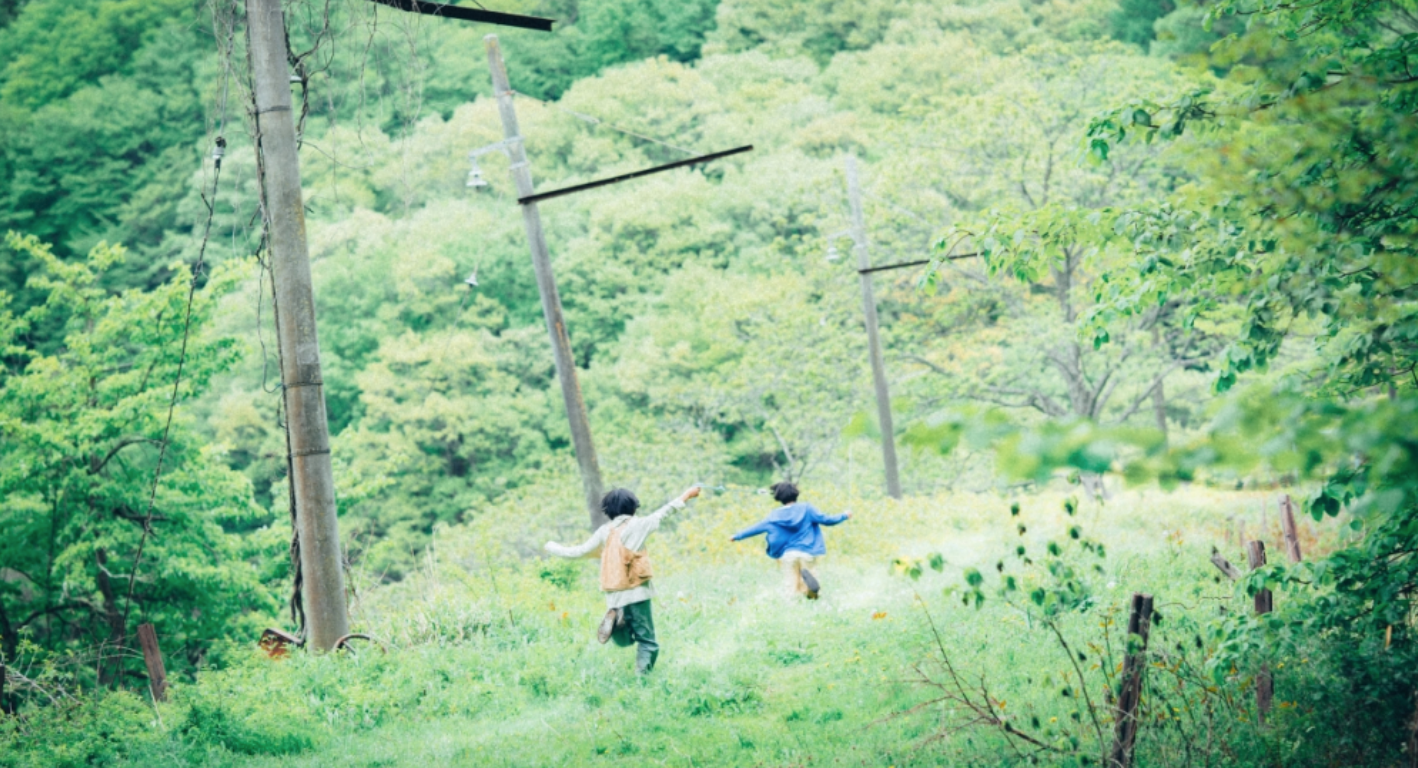
Even the film’s cinematography echoes this underlying message, with its opening scene a magnificent sight of a building in flames, perhaps a symbol of how urban cities have continued to contribute towards humankind’s own destruction. This is in contrast to the forested areas within the film, initially seen as dangerous and foreign, but eventually seen as a source of refuge and freedom, the lush greenery an escape away from the claustrophobia and restrictive nature of the city.
Monster is also significant in being the last film late composer Ryuichi Sakamoto composed for, and in the same way Kore-eda holds back from revealing everything at once, much of Monster does not feature Sakamoto’s tracks. Most scenes instead allow for the natural sounds of children laughing, or a typhoon brewing to amp up the naturalism, and reserves Sakamoto’s compositions only for the most climactic of moments, amplifying pain or joy as necessary.
While it does not necessarily end on a happy note, Monster is proof of a scriptwriter at the top of his game, fleshing out relatable yet unique characters who are each given their fair share in the spotlight, none of them outright heroes or villains, but rather, victims of society, making baseless assumptions and problematic judgments. By its end, it is clear that the biggest monster of all is society itself, making simple truth hard to confess to, for fear of terrible repercussions. Monster is an urgent film that highlights the desire for a more compassionate and observant attitude that pays attention to the needs of others beyond the self, in order to put an end to the loss of innocent victims.
Monster is now playing across cinemas, including The Projector and Golden Village.
 Bakchormeeboy