
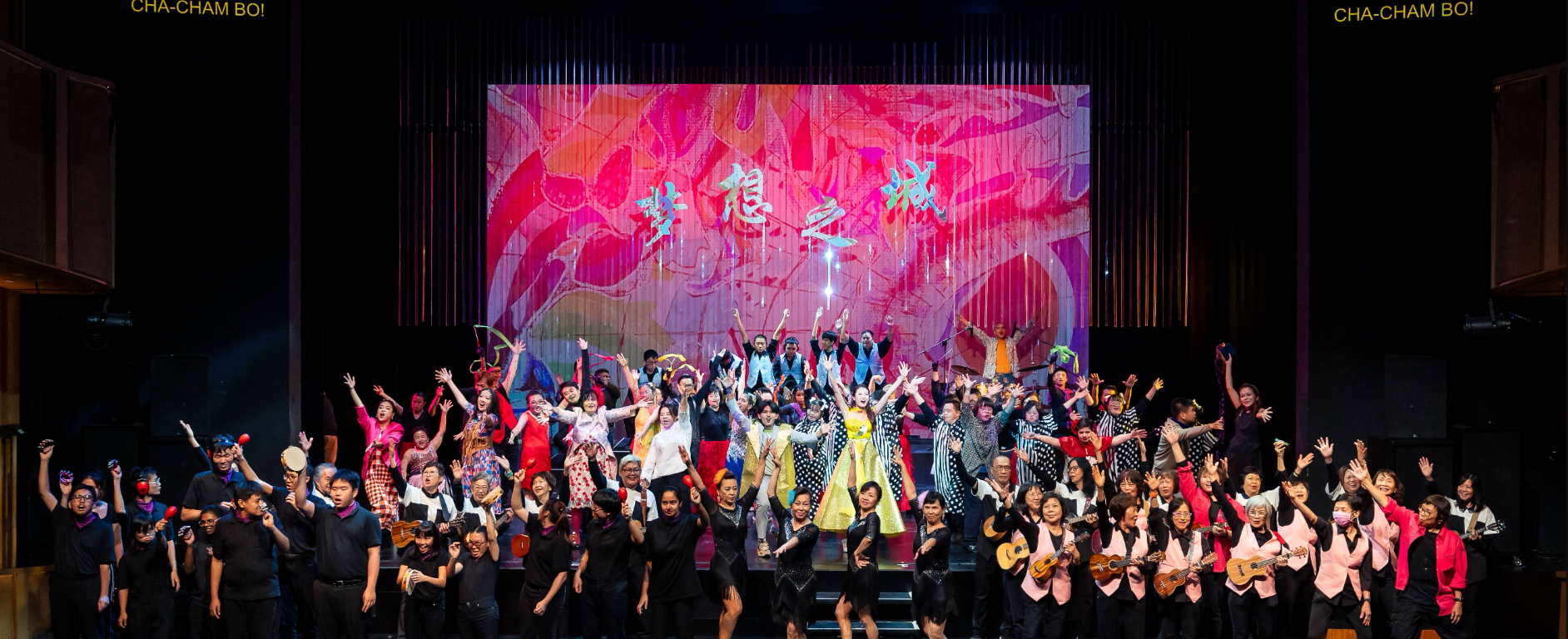
Disabled artists spread their wings and shatter the glass ceiling in original musical about taking chances and overcoming the odds.
There’s saying that music is the universal language of mankind, allowing people to connect through song and symphony. Nowhere does that seem more clear than in ART:DIS’ Chachambo: Taking Flight, which brings together hit songs and dance numbers in a single, moving story, that proves disabled performers are just as capable of non-disabled performers.

Directed by Peter Sau, and written by Claire Teo, Chachambo: Taking Flight follows a visually-impaired girl as she tries to revive an entertainment club to its former glory. Facing obstacles along the way, from battling revolting employees who challenge her at every turn, to dealing with her mother’s struggle to raise her, Chachambo is a classic tale of triumph in a world where the odds seem stacked against you.

As a production featuring so many disabled artists, audience accessibility is high on the list of priorities, with both creative captioning that visually captures the mood and tone of the lines, utilising colour and font size to good effect, as well as live translation by our narrator, the club concierge (played by Jo Kwek). Jo opens the show by giving a quick introduction to the setting, putting our minds in the right timeframe, as we mentally prepared to travel into the past, seamlessly transition into the performance, and let the show begin.

Chachambo‘s storyline spans decades and generations, and its cast manages to match that sense of the epic with their performance. We begin in tragedy, with an introduction to the blind Ming Zhu (played by Claire), poised to take over the club (named Jin Hua Yuan) she inherits from her late mother. As the lights dim, Claire shows off her vocal prowess with a rendition of ‘Habanera’ from Bizet’s opera Carmen, a class act that showcases Ming Zhu’s fiery personality and determination to not let any challenge pull her down.

There is a clear sense of onstage chemistry between the performers, where we see the backup dancers bantering with Claire, or even utilise the violin as part of the ‘conversation’, showcasing how many different forms of communication are present. As they come together to perform Elvis’ ‘Jailhouse Rock’, it feels powerful to see everyone coming together on stage, moving together and in character, all clearly enjoying themselves as they jive to the beat and fully able to express themselves however they want.

Yet even with all this, handling the club is still no easy feat. While they pride themselves on being the only nightclub that hires people with disabilities, there are still issues with communication, and disagreeable employees. All Ming Zhu has is Tao Jie (Grace Ng), her longtime guardian, exceptionally close from this almost telepathic way they seem to understand each other, signing to communicate and articulate herself. Given the structures put in place by society, there is never an easy way out, yet these characters try their best anyway, should they be given a chance to and granted more patience.

Interspersing the present and the past, Chachambo takes time to explore both Ming Zhu and her mother Bao Yu’s backstories and struggles. For Bao Yu (played by Germaine Goh, Luo Mang, Wan Wai Yee and Yeo Yann Yann at different stages in her life), an early romance gone wrong leaves her with a heart of stone, her innocence shattered after putting all her trust in her lover (Timothy Lee). As the young Bao Yu, Germaine Goh brings a sweetness and charm to the role, and our heart breaks alongside hers when she is betrayed.

It is interesting then that Ming Zhu resents her mother in the present, emotionally singing Yoshiko Yamaguchi’s ‘Three Years’ while rejecting her mother’s pressure to study abroad and place all her bets on a good education. Even worse perhaps, is the end to Ming Zhu’s own first relationship, with deaf dancer Ali (Ammar Ameezy).

This is a relationship that resonates well with the audience, as their meet-cute ends up with hugs, drinking Kickapoo Joy Juice (drawing the laughs from the audience at recognising it), and most of all, a blossoming romance expressed as they dance to P. Ramlee’s ‘Getaran Jiwa’. As they sing, dance and sign together, it feels as if their souls are connected, the song in their heart, only to be forced apart by Bao Yu.

Yet, even with such pains, things do eventually look up, as Bao Yu (Luo Mang) meets the charming Lucky Liu (Choo Jun Wei), and through sheer perseverance, breaks through to her heart. This newfound hope is represented by the two of them showing off their musical skills, playing a duet version of ‘Somewhere Over The Rainbow’ on the violin and ukulele respectively, their eyes locked and inevitable feelings starting to form.

Sadly, Bao Yu can never quite catch a break, as she is betrayed yet again – this time while pregnant. Discovering Lucky Liu (now played by Ivni Yaakub) flirting with and singing Yao Li’s ‘Rose, Rose I Love You’ in English, Chinese and Malay to dancer Rose (Jaspreet Sekhon, in a beautiful rose-patterned cheongsam), she loses her cool and sends Lucky away from the club. All alone, Bao Yu sings Joni Mitchell’s ‘Both Sides Now’, before taking a bow.

Back in the present, Ming Zhu learns all this through Tao Jie and a tape recording, from Bao Yu’s rough pregnancy to her guilt for giving birth to a visually-impaired daughter. All this is beautifully put together onscreen by multimedia designer Brian Gothong Tan, and tears stream forth as Ming Zhu realises how much her family has been through. Ming Zhu finally understands the pains her mother has gone through, and finds new empathy for her, as both she and Bao Yu sing an emotional rendition of Carrie Koo’s ‘Love Without End’ in an act of reconciliation.

One of the major themes of Chachambo revolves around the idea of freedom, expressed through the unbridled expression performers showcase through song and dance. Beyond the performers’ own abilities, the design team has work to ensure optimum conditions for this to happen. From first glance, Dorothy Png’s set already feels like it’s been optimised for its diverse cast, giving them as much room as possible to express themselves, easy to navigate. Max Tan’s costume design gives all the performers enough flexibility to move, while also integrating his keen sense of fashion and design sensibilities into them, such as chic lined dresses reminiscent of the era, or incorporating patterns such as polka dots and stripes, each outfit telling a story in the clothing choice alone.

In addition, Chachambo is a strong show in that it offers both an opportunity for the main characters and actors to shine, while also ensuring everyone else is given ample involvement and time onstage. Tao Jie and Ming Zhu’s relationship seems to embody that, and what director Peter Sau does so well is to showcase care and empathy in almost every interaction onstage, allowing performers to use sign language, body language and voice to express themselves in the way they know best. Mass numbers are genuinely impressively, as a showcase of skill, with different groups of people coming together onstage not as individuals but as one, helping each other find their positions and performing to the best of their ability.

And by its end, even with all its ups and downs, Chachambo ends on a high a poignant note with Ming Zhu taking up her mother’s offer to study in Hong Kong, and three years on, Ming Zhu becomes a success. We hear the instrumental version of ‘Getaran Jiwa’, and Ali reappears, sharing a moment with her in a dream-like moment which seems to imply what could have been. With her trusted Tao Jie by her side, Ming Zhu is ready to face the new world, confident and brave as she answers to a reporter, looking towards the road ahead for a brand new journey.

With a choir and the entire 90-member strong ensemble onstage, regardless of disability, Chachambo ends with the title song, celebrating these diverse lives and performers, their unique forms of expression and their artistry, filled with joy as they dance and sing together as one community. This is not a charity show to evoke our pity. This is a full-fledged performance that proves to audience members that with determination and hard work, the disabled community stands strong and are more than capable of putting on a theatre show anyone would be impressed by. It takes a village, but with courage and resilience, more help, understanding and enabling, we can move closer towards recognising disabled artists as professionals in their own right, and champion ART:DIS’ cause of empowering the community.
Photo Credit: Poh Yu Khing
Chachambo played from 4th to 6th August 2023 at Victoria Theatre. More information about ART:DIS available here
Production Credits:
| Director: Peter Sau Assistant Director: Su Paing Tun Playwright: Claire Teo Cast: Ammar Ameezy, Jaspreet Kaur Sekhon, Choo Jun Wei, Jo Kwek, Claire Teo, Luo Mang, Germaine Goh, Timothy Lee, Grace Ng, Wan Wai Yee, Ivni Yaakub, Yeo Yann Yann Community Performers: ART:DIS Cajon & Choir, Lighthouse School, APSN Tanglin School, Spring Wind Divas, Ageless Bridge, Yong-en Active Hub, Down Syndrome Association, Y-Stars Costume Designer: Max Tan Music Composer, Song Arranger & Sound Designer: Dr Philip Tan Multimedia Designer: Brian Gothong Tan Vocal Artist: Sky Shen Lighting & Set Designer: Dorothy Png Production & Stage Manager: Charlinda Pereira Sound Engineer: Joel Fernandez Lead Choreographer: Zulfikar Ali Choreographers: Adele Goh, Nur Arianty & Xenres Kirishima Hair & Makeup: Grace Meng SgSL Interpretation: Azzam Akbar & Shawn Fang Caption Designer: Shai Caption Assistant: Courtney Mae Lim Creative Narration Writer: Su Paing Tun Creative Narration Advisor: Claire Teo & Peter Sau Original Concept: Dr Dawn-joy Leong Photography: Poh Yu Khing Videography: Studio W Contributing Writer: Jade Ow |
 Bakchormeeboy
2 thoughts on “★★★★☆ Review: Chachambo – Taking Flight by ART:DIS Singapore”