
The steep price of justice.
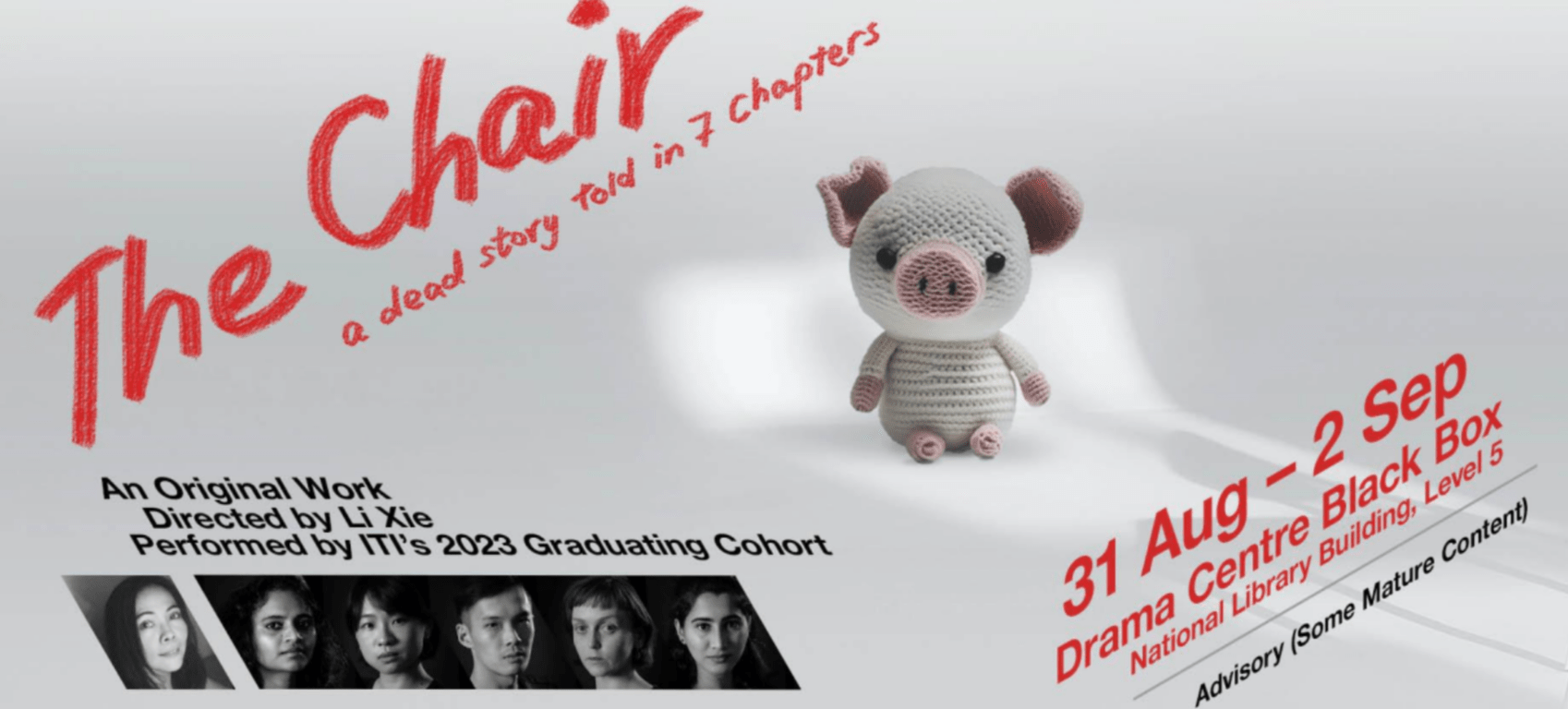
The death penalty has always been controversial, being a clear form of punishment as opposed to reform, and giving criminals no chance to repent or atone for their sins. But even when abolishing it seems like an easy, merciful fix, there are far more factors that play into the act of taking an eye for an eye, as explored in the Intercultural Theatre Institute’s graduating class’s original production, The Chair.
Directed by Li Xie, the devised piece takes place in an unnamed, remote town, where its citizens seem to have led relatively peaceful lives. Their tranquil lives are rocked when several children are drowned by a local teenage boy, previously thought of as a brilliant young man, who was set to receive the town’s first ever presidential scholarship, to pursue medicine. Not only is the boy branded a remorseless killer; with no account of any murder taking place over the last half century, the village has no executioner to mete out the death penalty, leaving it to the families of the deceased to hang the boy themselves.
The resulting dilemma that emerges is a harrowing one. No one wants blood on their hands, and there is a clear sense of fear in the families’ eyes as they ponder the ethical implications of taking a life. On the other hand, should they refuse, the boy will instead go free after six months of incarceration, an impossibly light penalty for the murder of innocent children. What makes things even more complex is how the news has garnered the attention of global media, as the pressure mounts and the world watches to see what the town will decide on.
The Chair does require some suspension of disbelief, where in any real life situation, a court of law or government would likely have found some kind of middle ground to punish the accused. However, what it does so well is to convince us and immerse us in this fictional world it’s created, even with limited resources, so much that we only question its reality after the show is over.
Much of this is due to the ominous atmosphere that is created and maintained throughout the show – Julian Wong’s compositions does much of the heavy lifting, with music that escalates the suspense and tension in each scene, or more melancholic tracks to provoke an emotional response. Meng Jiaoyang’s sound design incorporates mysterious drips and other occasional effects that add to the sense of the uncanny.
Even with its minimal set design, The Chair is able to draw us quickly into its world. A central, tower-like figure in the centre is deconstructed early on in the play, becoming chairs for each character to sit on, while dangerous-looking hooks descend from the ceiling, used to hang various items. The audience is seated all around the space, as if we are putting these characters on trial, all dressed in Max Tan’s outfits, which toe a fine line between fashion and costume, each one capturing their characters’ personality instantly. Visually, The Chair makes us believe in a somewhat archaic or rural world in front of us, with its main characters mostly blue collar workers, devoid of technology.
At its heart though, The Chair is reliant on its actors to perform, and while the characters are mostly simple mouthpieces or vehicles for the narrative, this cast of students do a good job of embodying their physicality and mannerisms to immediately understand each archetype presented. There’s the butcher (Choy Chee Yew), gruff on the outside but possessing a gentle heart, aware of how completely different it is to kill a human from animals. His wife (Swathilakshmi Perumal), who is somewhat more disturbed, takes a detached, cruel pleasure and practical approach towards getting rid of the things that bother her.
Then there’s the retired counselor (Cheng Kam Yiu), a grumpy older woman, while the prim and proper mayor (Mika Oskarson Kindstrand) frets over the dissolution of peace in her small town. Finally, there’s the cleaner (Abinaya Jothi), single mother to the accused, and perhaps the most affected character of them all, as she watches the fate of her son debated, and tries to understand her own role in the entire affair, alongside how she could possibly have missed out hints her son would have become the monster he is.
The Chair smooths over many of these complexities a little too easily, in that it prioritises the central debate of to kill or not to kill, rather than delving deeper into character backstories. But within the scope of such a short, one act play, it is understandable, and where the actors do shine is in their physical theatre work. One particularly distressing scene sees the mayor dragging out a ‘living’ creature in a bag to practice the hanging on, writhing violently before it is strung up via a telephone cord, making us almost believe there truly is something breathing in there. This is followed up by a brilliantly dark moment, where the mayor disconnects the phone from its cord, still tied around the creature, to receive a call, showcasing a strong awareness from the cast on how to create tension and break it.
With no other option but to proceed with the hanging, The Chair ends on a somewhat somber note, as the characters reel from their final decision, and ponder the losses experienced along the way, and how the town is forever changed because of it. In short, The Chair is able to bring out the complexities of collective responsibility, but with how detached the audience is from the characters themselves and the ambiguity over where the play stands in terms of the death penalty or forgiveness, it is difficult to feel particularly strongly for this allegorical work.
Still, while there is more one wants to get out of these fascinating characters crafted by these student actors, but for now, they can congratulate themselves on a show that suggests potential in all of them, with good ensemble work evidence of their ability to work as a team, and a thought-provoking show that makes audience members consider the high cost of justice. The Chair opens up many questions about all the factors that go into a punishment, and leaves us wondering if there are flaws in the law, and to begin considering how we might begin to plug them.
The Chair played from 31st August to 2nd September 2023 at the Drama Centre Black Box.
Production Credits:
| Director: Li Xie Cast: Abinaya Jothi, Cheng Kam Yiu (Yolanda), Choy Chee Yew, Mika Oskarson Kindstrand, Swathilakshmi Perumal Set Design: Devised by Director and Cast Lighting Designer: Faith Liu Yong Huay Sound Designer: Meng Jiaoyang Composer: Julian Wong Costume Designer: Max Tan Production Manager: Clarisse Ng Stage Manager: Marilyn Chew Assistant Stage Manager: Shivani Rajan |
 Bakchormeeboy
One thought on “★★★☆☆ Review: The Chair by Intercultural Theatre Institute”