
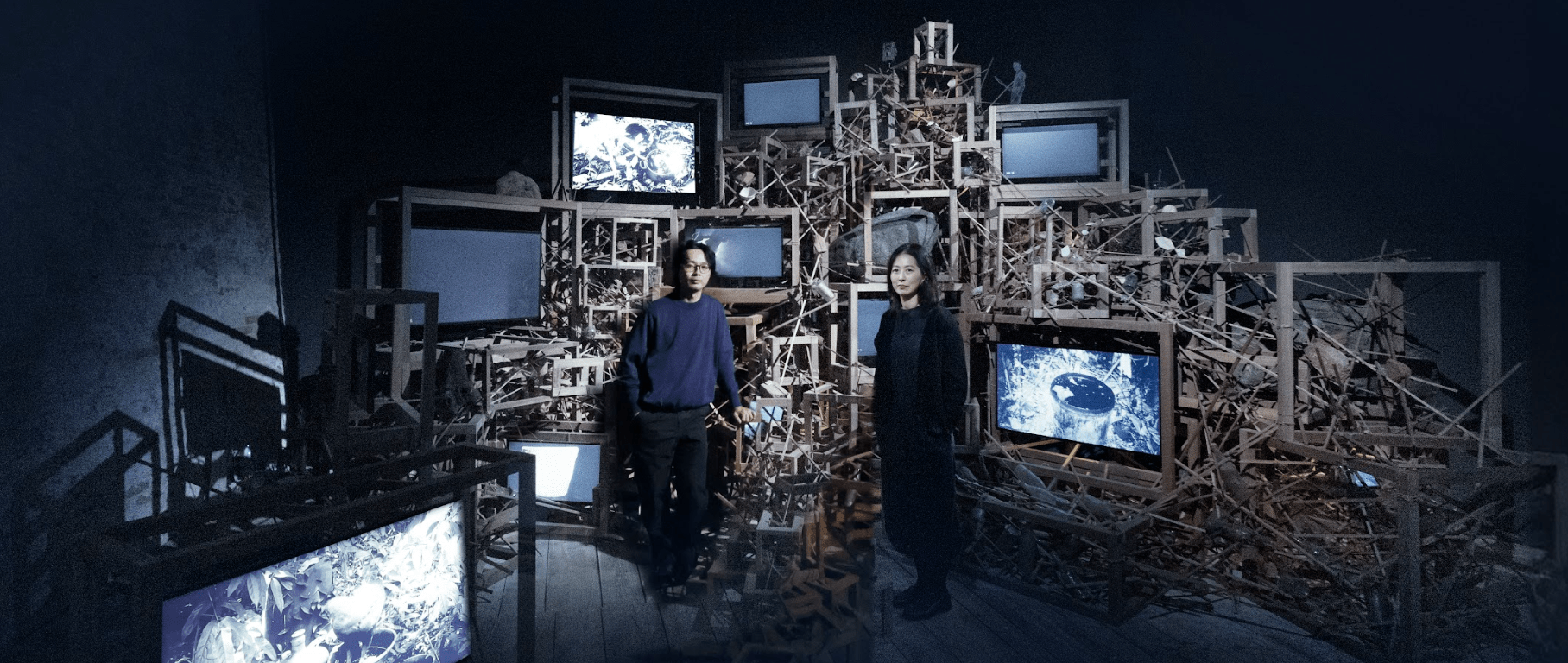
VENICE, ITALY – Representing Singapore with the country’s national Pavilion at the 60th International Art Exhibition of La Biennale di Venezia is artist Robert Zhao Renhui, who presents his work Seeing Forest. Created in collaboration with curator Haeju Kim, Seeing Forest acts as an invitation for visitors to enter a mysterious, forested zone that exists both in the imagination and in Singapore. In this in-between space called the secondary forest — a threshold between old-growth or primary forest and developed areas, between urban and wild, invention and reality — artist Robert Zhao Renhui invites us to consider a complex web of human and non-human co-existence.
Seeing Forest encourages visitors to explore the ways in which urban design can shape the natural world, and vice versa, resulting in a new ecosystem of migrant species that echoes the histories, trajectories and makeup of a city’s human population. A selection of compelling scenes compiled from hundreds of hours of film and close to a decade of Zhao’s research of secondary forests culminate in three key works: a two-channel video installation; a sculptural video installation; and a photographic work.
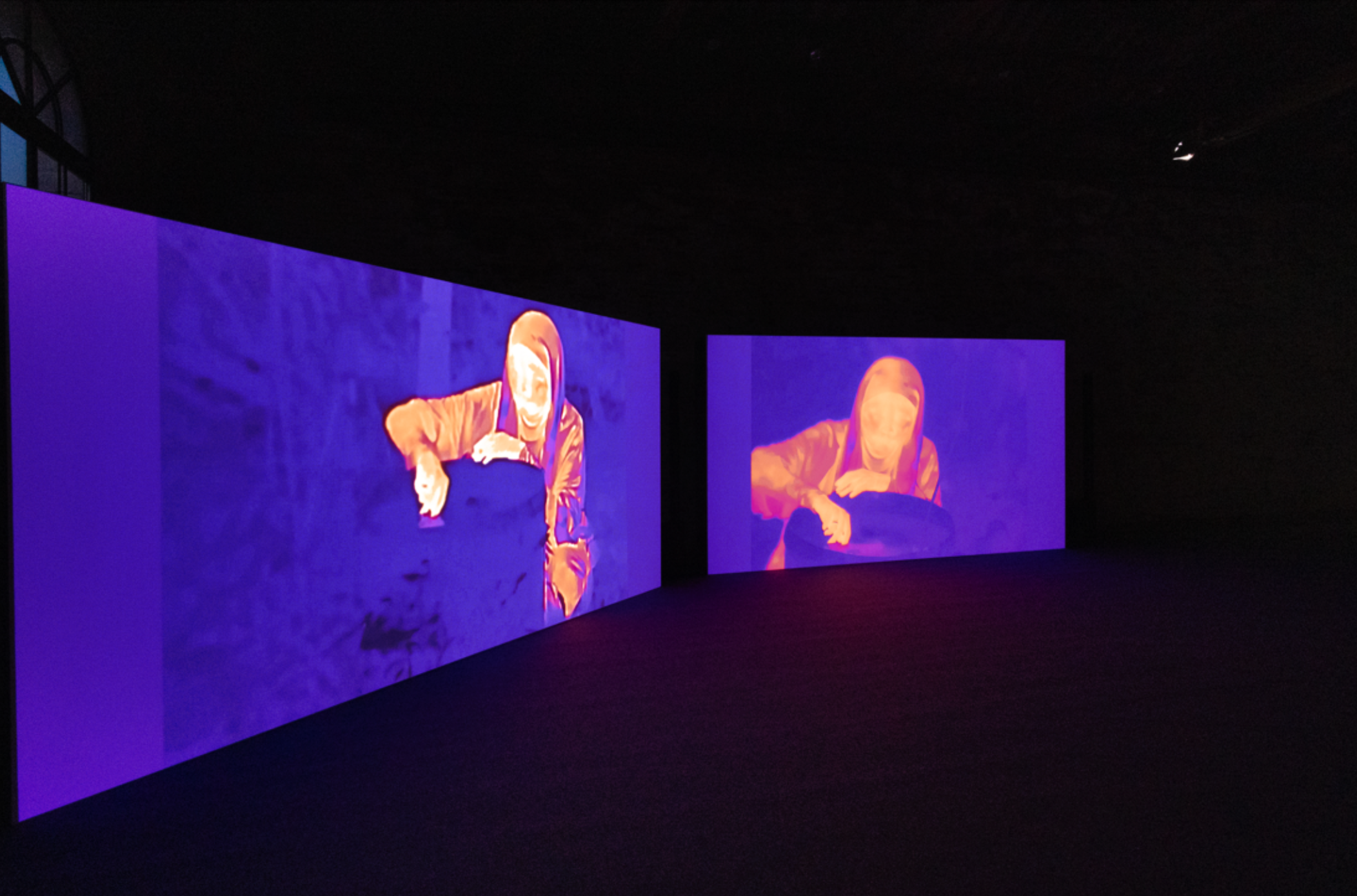
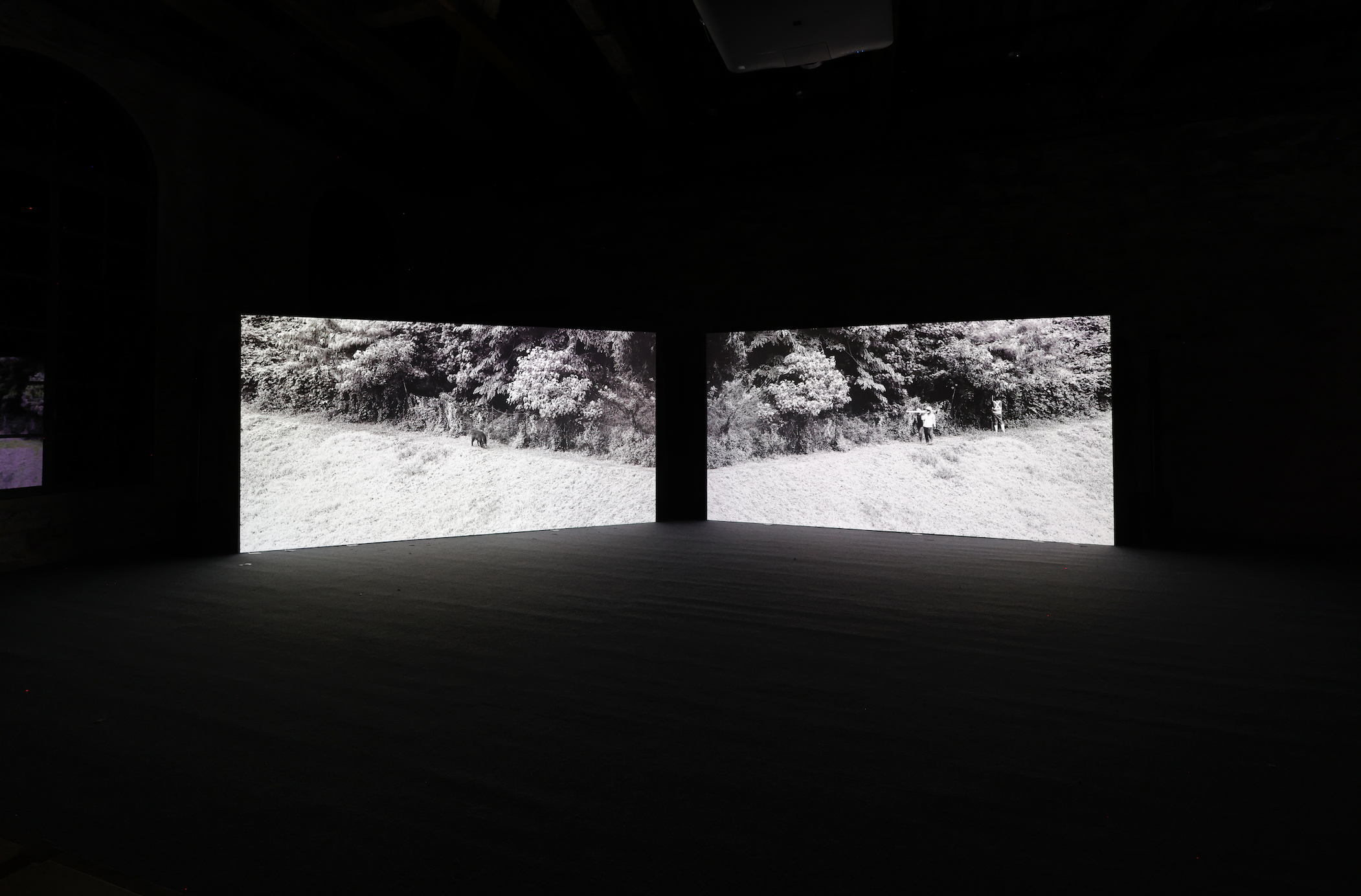
Two-channel video installation The Owl, The Travellers and The Cement Drain (2024) is the central work of the exhibition. The filmic essay reveals a series of hypnotic scenes from the Seeing Forest; its trees and animals, migrant workers’ abandoned tents, migratory birds from a concrete drain — complemented by an unstable, fluctuating narrative of two human characters as they journey through it. By eschewing familiar documentary approaches, ecologicallyminded activist perspectives, and the certainties of linear narrative, Zhao aims to transpose the forest into a new register: a mutable space of possibility.
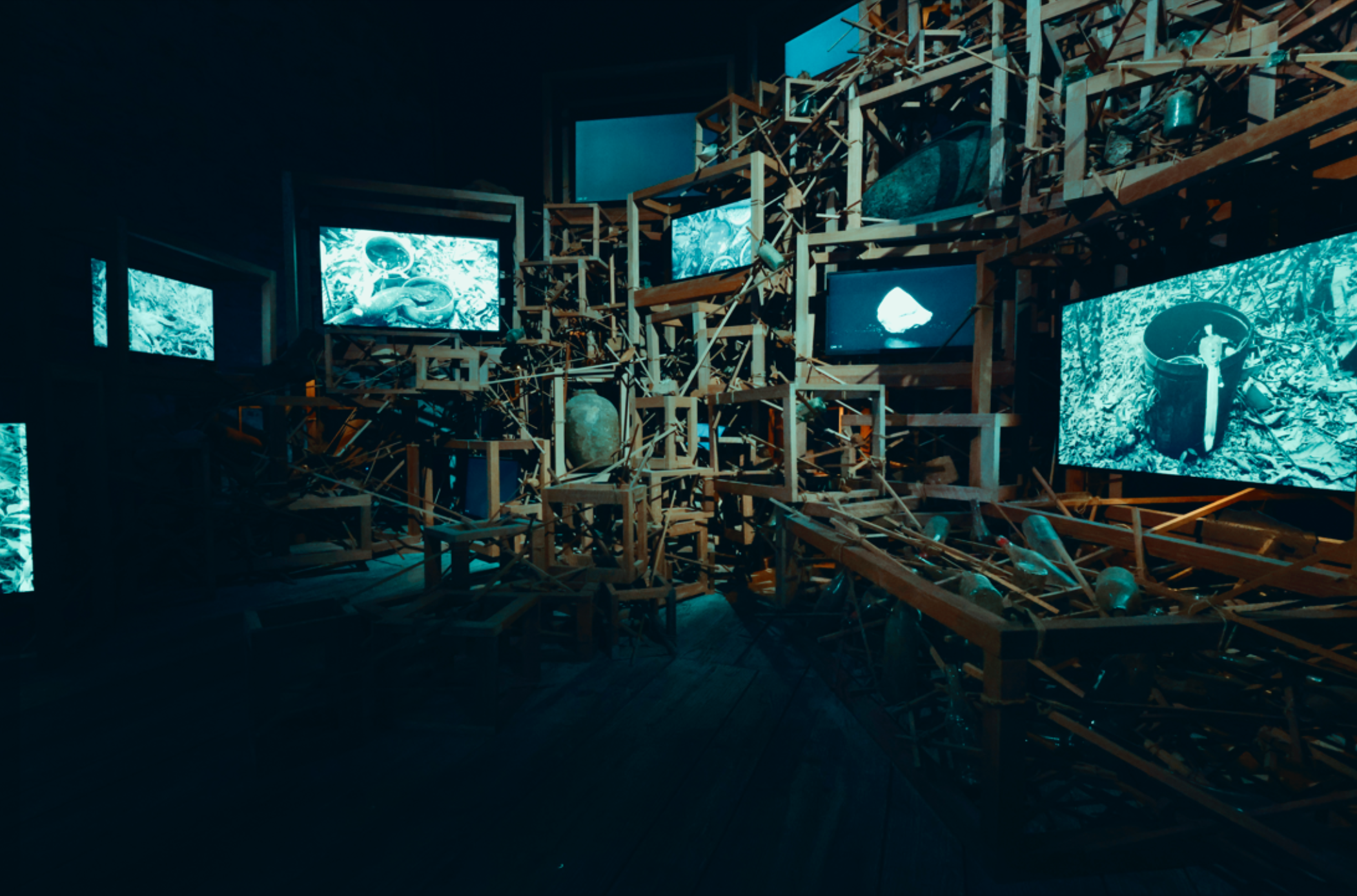
In conversation with this work is the sculptural video installation, Trash Stratum (2024), which comprises over ten screens showing various creatures visiting a makeshift watering hole in the form of an abandoned dustbin. The screens are arranged around a deconstructed cabinet of curiosities built from Nyatoh hardwood and showcase a selection of compelling scenes compiled from hundreds of hours of film and close to a decade of research. This dismantled wunderkammer alludes to colonial systems of classification, destabilising control over natural history narratives in favour of more imaginative and fluid ways of drawing out relationships and networks. Within this structure, various objects from the forest can also be found, a poignant reminder of the presence of human histories, so often entangled with those of nature.
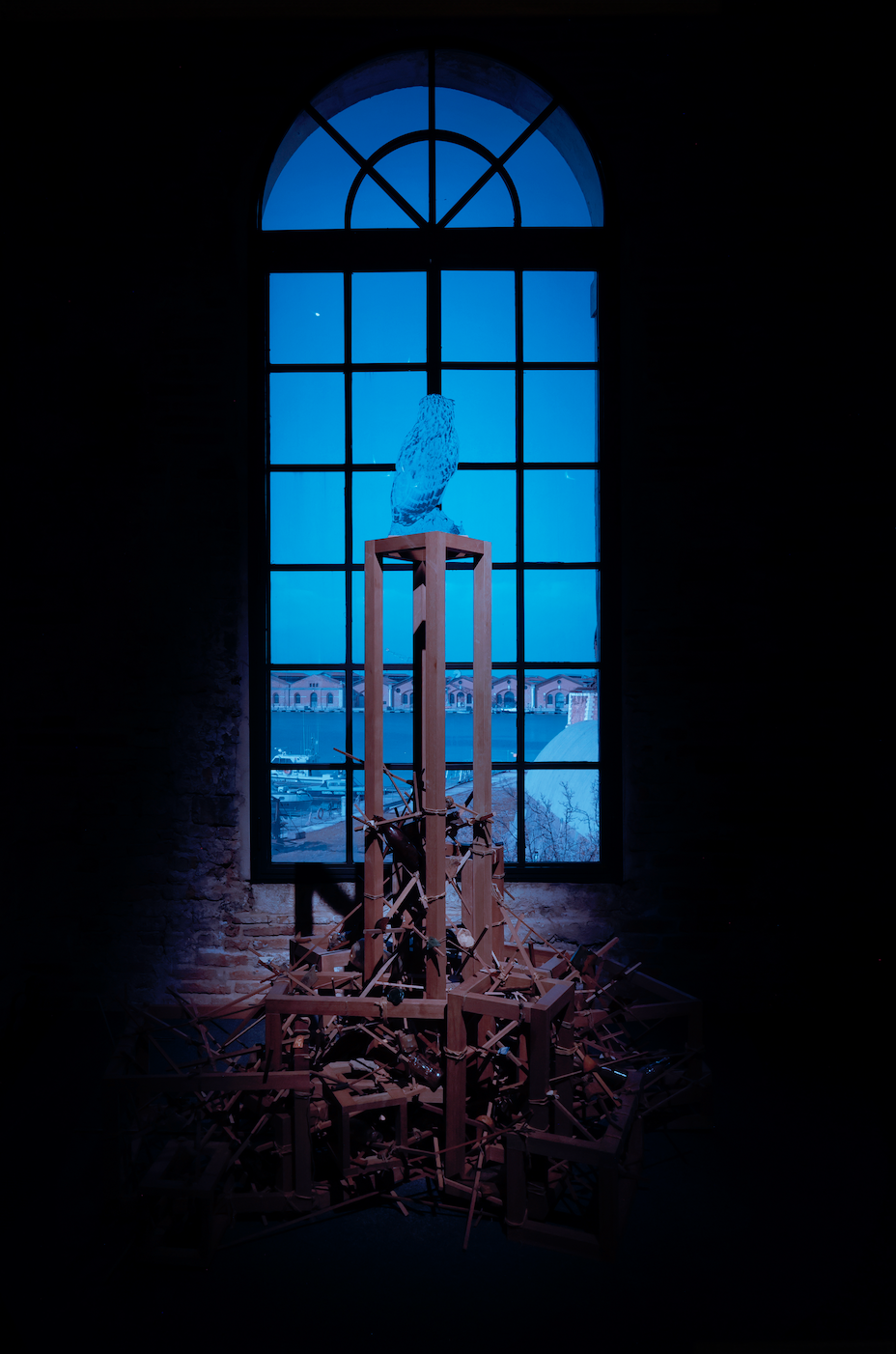
Buffy (2024) is a digital print of a bird native to Southeast Asia, the buffy fish owl. Zhao’s practice has often included photography and its indexical quality. In this work, Buffy has its back turned to us, an evocative reference to the Heraclitan fragment, “nature loves to hide”, perhaps suggesting that concealment and discovery are somehow connected, behaving like curious companions.
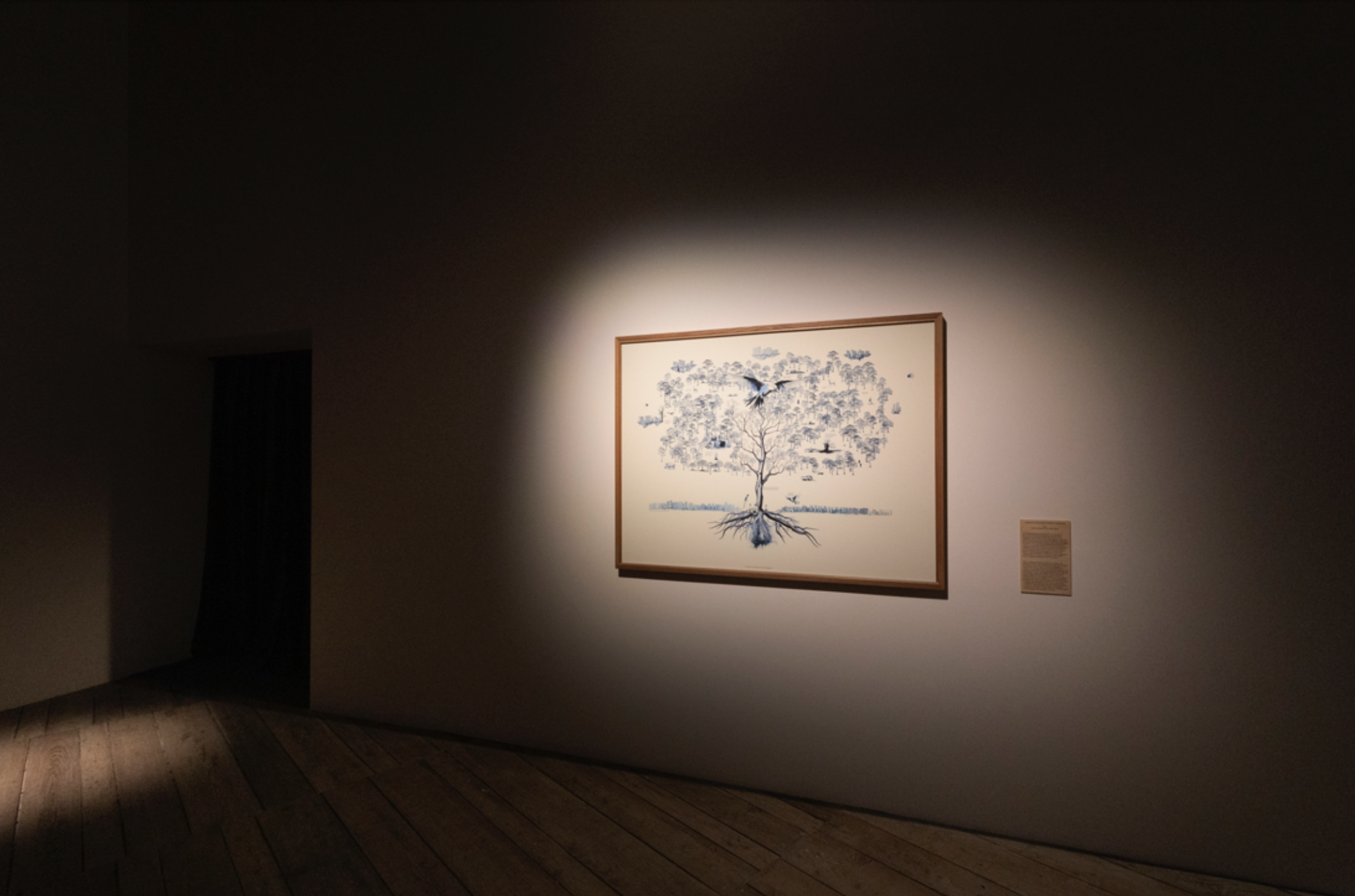
Alongside the three key works, visitors will also encounter a digital printed map of an unnamed, imaginary forest. This work identifies the contours and features of the secondary forests that appears in other works presented in the Pavilion. The work orientates the visitor to the imaginal and natural zone, and serves as a guide to the characters and histories conjured up by Zhao’s works.
Says curator Haeju Kim: “Visitors are invited to observe the lingering details, narratives, and connections that unfold and become visible within the exhibition. Much like entering a forest, entering this exhibition is a bodied and temporal experience, one that draws attention to the relationship between what is seen and experienced with one’s physical self. Set against the backdrop of Singapore’s secondary forests, the exhibition provides one pathway to understanding the city’s history intertwined with nature. It invites us to an active listening and careful seeing of what is happening at the threshold of a rapidly developing city and the affected natural environment. In doing so, it suggests a humbling view of the world around us.”
Commissioned by the National Arts Council (NAC), supported by the Ministry of Culture, Community and Youth, and organised by Singapore Art Museum (SAM), this year marks Singapore’s 11th participation at the Biennale Arte. Complementing Stranieri Ovunque — Foreigners Everywhere, the theme for Biennale Arte 2024, Zhao’s presentation offers a tribute to the undomesticated and free forests found along the margins of our urban lives. The exhibition encapsulates Singapore’s histories of settlement, colonisation, migration, and mutual co-existence amongst species.
Eugene Tan, Co-Chair of the Commissioning Panel and Chief Executive Officer of Singapore Art Museum (SAM), said: “Through sustained investigation of secondary forests in Singapore, Robert Zhao Renhui reveals the complexity, conflicts and equilibriums existing in these spaces, where hierarchies of native and invasive, local and foreign, the living and the dead are collapsed. These frontier spaces help us to imagine what environments not disciplined by binary logic can look like, and at the same time, allow us to wonder at the mystery of untamed spaces. Curated by Haeju Kim, Seeing Forest has the propensity to provoke thought and inspire mindful change, which represents SAM’s vision for the art we present. We are excited to be able to present and profile Zhao’s practice at this important international platform.”
At the Pavilion’s opening, Edwin Tong, Singapore’s Minister for Culture, Community and Youth said: “The theme of this year’s Venice Biennale – Foreigners Everywhere – I think it is a little deliberately provocative, but I think it resonates with all of us because we are all foreigners somewhere when we are in different spaces. Nonetheless, it is a powerful rallying call for everyone to embrace diversity around us, to recognise that we are all foreigners in some sense, and to have the humility to learn from people all around us.”
“There are also many parallels between the Venice Biennale theme, and Singapore’s art scene. Singapore, as many of you know, is a vibrant, multicultural, multiethnic city-state at the crossroads of Southeast Asia. We pride ourselves in our diversity, and our openness to the world.”
“But at the same time we are a relatively young nation – 58 years, celebrating less than six decades of independence. But over the years, we have created a dynamic, flourishing, as well as a distinctive arts scene, one that celebrates our unique cultural heritage while always remaining outward-looking and open to ideas, innovation, and change.”

Low Eng Teong, Co-Chair of the Commissioning Panel and Chief Executive Officer of NAC, Singapore, added: “Seeing Forest opens up a portal into Singapore, for the world to glimpse the rich, unexpected biodiversity within our urban spaces. Art imitates life as we reflect on the resilience of humanity in recent years, and how the different experiences have binded humanity even closer as one. NAC has supported Robert Zhao Renhui’s practice over the years and his participation in the 60th Biennale Arte marks an important milestone in his artistic journey. As commissioners of the Singapore Pavilion, this affirms the Council’s commitment to profile Singapore’s artists on an international platform, fostering further collaborations, and conversations with the global arts community.”
The observation of the ultimately unknowable in the natural world is a hallmark of artist Robert Zhao Renhui’s praxis. Since 1998, under the auspices of his own semi-fictional Institute of Critical Zoologists, Zhao’s many and varied projects have served as lenses that highlight the resilience of nature and the various interactions that occur when such resilience overlaps with human life and society. Notably, over the last seven years, he has been focusing on secondary forests in Singapore — forests regrown from deforested land due to human intervention such as development and plantation — and the new ecosystems that have developed within it.
For the Singapore Pavilion, decades of Zhao’s accumulated observations are condensed and organised into an intensive installation that complements the scale and condition of the Singapore Pavilion in Arsenale. Through this exhibition, we see how the island of Singapore has evolved to arrive at the present day, revealing some of the ways in which human urban design can shape the natural world itself, resulting in an ecosystem of migrant species that echoes the trajectories and makeup of the city’s human population. At the same time, Seeing Forest also highlights phenomena that are universally relatable to those living in any urban environment.
“I have studied secondary forests for close to a decade and they yield constant discovery, surprise and meaning to me. They exist on the margins of the city, unwanted and overlooked, but they are the spaces where there is a sense of wildness, an equilibrium of forces resulting not from control but being allowed to just be,” says artist Robert Zhao Renhui. “There is a rich intermingling of past and present, nature and culture, native and invasive, which makes these spaces radically hospitable and free. I hope Seeing Forest offers a rich and ambiguous space where an imaginary forest comes alive through hypnotising images and sounds, invoking a sense of community, wonder and mystery with the myriad beings that populate it.”
Photos Courtesy of Robert Zhao Renhui
Seeing Forest will be on display from 20th April to 24th November 2024 at the Singapore Pavilion, Level 2 of Arsenale – Sale d’Armi, Venice, Italy. In January 2025, the exhibition will return to Singapore, where it will be reimagined for a second iteration at SAM at Tanjong Pagar Distripark. More information available here
Biennale Art 2024: Stranieri Ovunque – Foreigners Everywhere runs from 20th April to 24th November 2024. More information available here
 Bakchormeeboy
2 thoughts on “Art What!: Robert Zhao Renhui’s ‘Seeing Forest’ makes premiere at the Singapore Pavilion at the 60th International Art Exhibition of La Biennale di Venezia”