

Taking on the mantle is no easy task, and for Yong Shu Hoong, this first year as Festival Director of the Singapore Writers Festival (SWF) becomes a test of his vision and ability to see the longstanding literary festival through its latest edition. Opening next Friday and running for two weeks, the 2024 SWF, organised by Arts House Limited (AHL) will once again welcome a plethora of international and local writers from all genres and mediums.
“Taking over from Pooja (Nansi), it made sense to check in with her before officially coming onboard, and she’s been very forthcoming about how to overcome the challenges she encountered during the five years of her tenure. I also talked to Yeow Kai Chai and Paul Tan, who were Pooja’s predecessors, and thought about the evolution of the festival and where it is right now,” says Shu Hoong. “It’s a definitely a lot of hard work, with over 200 programmes and 40 international authors coming in, while having to satisfy the local community as well, with so much negotiation and explanation that’s involved. But if anything, I’ve been well-supported by my very supportive and helpful colleagues, alongside the literary scene as a whole lending me their support, and everyone has been quite understanding with regards to the programming.”

While he has never formally helmed a festival, Shu Hoong is familiar with events organisation, having founded subTEXT, a series of monthly literary readings that ran from 2001 to 2008, and now held on an ad hoc basis. Respected in the local literary community as a published poet, educator and editor, Shu Hoong brings a very different energy to the SWF compared to the past, while still maintaining the status quo. “As someone who has seen the SWF as a participant over the years, I do think I’m relatively familiar with how the festival is run, and have seen the audience change over the years as well,” says Shu Hoong. “As a Chinese male poet of a certain age, I’m aware that I cannot simply curate to my tastes, and my team and I actively considered the programmes that would appeal to other demographics, such as Malay and Tamil language groups, or the Youth programmes. I’m always appreciative of how we have so much space and resources to play with in the programming, and provides enough range for a broad-based appeal to all kinds of audiences, reflecting the diversity of our audiences and allowing them to discover new genres and writers they may not have previously been interested in.”
“Elaborating on that, as Festival Director, I’ve been making consistent effort to talk to and interact with all these various subgenres of writers in both language and medium that exist and work in Singapore, such as the guest curators handling the Mother Tongue programmes. After all, the SWF is branded as one of the few multilingual festivals in the world,” he adds. “I’m also taking my experience over the years where I have talked about issues like arts housing, the recipients of the Young Artist and Cultural Medallion, and as an educator, have interacted with so many different communities and stakeholders, from the Singapore Book Council, the National Arts Council, the National Library Board and so on. Having all these acquaintances and contacts makes the process that much smoother, and as friends, can facilitate discussions and negotiations much more easily.”

Perhaps a little known fact about Shu Hoong is how he wasn’t always involved in the literary arts, having in fact, been much more STEM-inclined, even pursuing computer science in university, with no formal education in literature or creative writing. “I think that my background shows that it’s possible to still appreciate the literary arts even without a formal background, and for this festival, I wanted to bring in more of that ‘other world’ not often associated with writing, such as academic writing in the fields of technology and science, and how it could bring more insight to our conversations and discussions,” says Shu Hoong. “If anything, the definition of writing has expanded, and over the years we’ve seen journalism, social media, songwriting and even rap music included in the SWF. And as we move forward, we can continue to explore how far we can go, pushing for more intellectual rigour or technical writing that gets involved as well, while still maintaining these other forms of writing that have entered the festival over the years.”

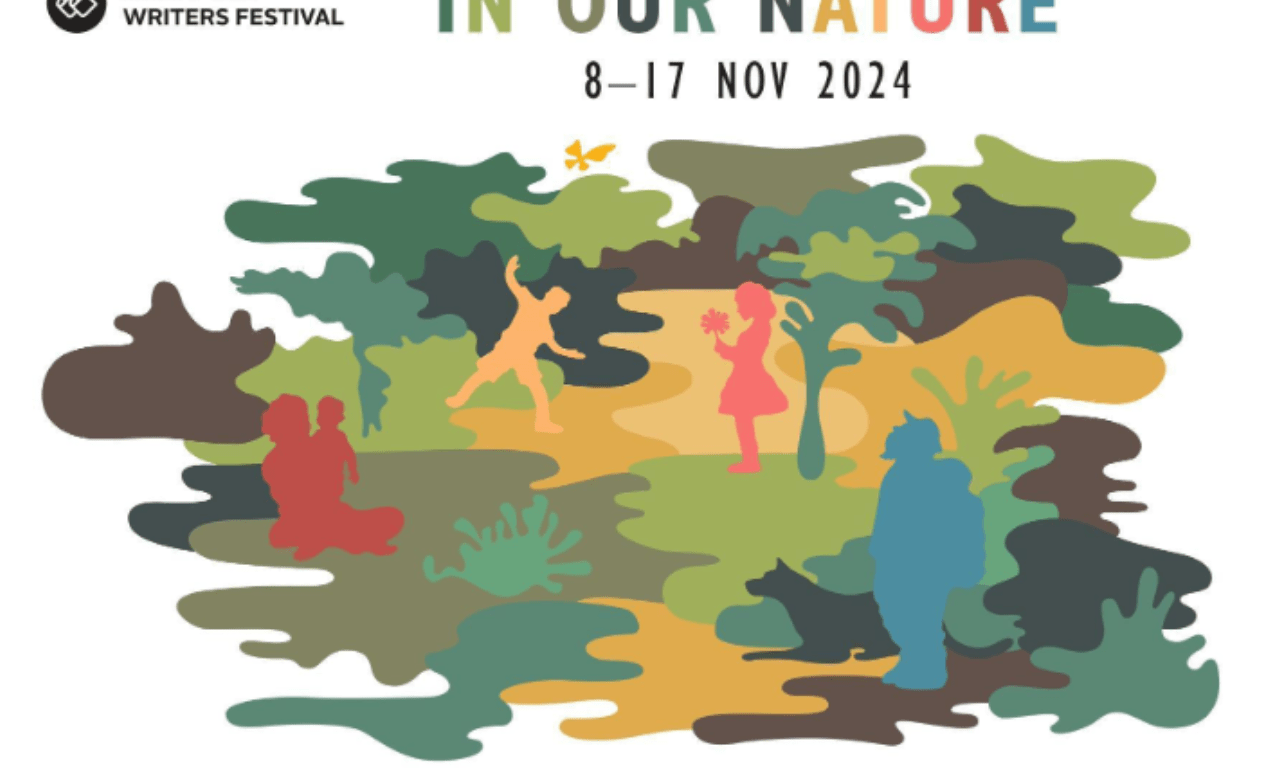
On the actual curatorial process itself, Shu Hoong likens it to crafting a poetry collection, where the festival has to be cohesive yet diverse, providing pathways that allow anyone attending to be enriched by the journey it takes them on. This year, with the theme being In Our Nature, the festival zooms in on what it means to be human as well as our relationship with the natural environment. “In Our Nature is a broad enough theme that allows for all kinds of programmes to fall under that umbrella, while also ensuring there is a thematic focus that ties them all together. You’ve got authors like Esi Edugyan, whose work Washington Black is about the human want to find love and freedom, or Literary Pioneer Dan Ying, whose poetry often reflects the human condition,” says Shu Hoong. “Then you have activities like Dear Home, a musical performance by Sushma Soma that explores our relationship with home, in both the natural environment and society, while also considering the issues of climate change, such as Planet In Focus, which brings together two academics to talk about potential solutions in aiding sustainability. We also have a session titled Ecopoetry that’s all about poetry inspired by nature and the wish to share about the natural beauty of the world and how we live in harmony with it. All of it comes together to present what makes us human.”
“I do think that the task of scheduling is very important, and there are so many different tracks, so a lot of the work also goes into ensuring that there isn’t too much overlap between programmes that the same people might be interested in, instead of one programme cannibalising the others. A lot of that also boils down to analysing and predicting customer behaviour, which could be unexpected and there’s no guarantee,” he adds. “But overall, we do encourage attendees to try different things, and to curate their own experience at the festival. After all, the Festival Pass offers attendees access to plenty of events, and most of them can decide on their own path, whether it’s only choosing things they like or finding joy in wherever the available programmes lead them to, and with over 200 programmes, there’s bound to be more than one thing that interests you.”

On the bigger overarching programmes the SWF is offering this year, Shu Hoong touches on both the Literary Pioneer Dan Ying, as well as the Country Focus on the Republic of Korea. “The Embassy of the Republic of Korea have been very supportive of us, and have managed to helped with bringing in around six authors, to which I think it’s all very timely with the current K-Wave across all aspects of culture – now is the best time if any to look at Korean literature too,” says Shu Hoong. “As for Dan Ying, the festival has always highlighted Literary Pioneers with supporting materials, with a travelling exhibition that deals with her life and work going around Singapore. The hope is that gaining that initial knowledge will spur people into finding out even more about these pioneers, or even more – when local writers might do more translation or transcreation of these pioneers’ work that makes them even more accessible to more readers out there. As much as we focus on a different pioneer each year, there is the hope that the interest goes beyond that ‘shelf life’, and essentially helps them enter the consciousness of the mainstream, not just in Singapore but even overseas as well.”

As for the opportunities SWF offers local writers, Shu Hoong is confident that it remains a strong platform for greater recognition and the exchange of ideas. “Ultimately, what the festival does is provide a meeting point for interactions to happen, to be aware of new ideas in other parts of the world, and to facilitate the presence of both local and international writers, and the literary agents and other regional literary festival directors that end up visiting us. It’s a kind of informal networking session, and up to the writers to form these connections with the opportunities offered, and a chance to find out how to succeed in a difficult industry,” says Shu Hoong. “This is a festival that is about promoting both writers and writing in all its forms, and these are done through interactions with both writers and other festivalgoers that will enrich the mind if you’re willing to open yourself up to new ideas beyond what Singapore alone can offer.”
“Being a writer is still about a numbers game, and about gaining enough fame beyond Singapore’s market to amp up the readership and increase sales. We’ve seen some writers here and there being signed to literary agencies in big cities like New York and London, and published in those markets, and honestly, the scene has really grown so much since the time I started out myself,” he adds. “The next level would be winning prestigious, internationally-acclaimed awards, like the Booker Prize, so we’d hope that’s what happens eventually, perhaps by speaking to literary agents who might attend the festival. But for the majority of us, we really just want more recognition from both peers and readers, and this opportunity to interact with other writers from around the world, in person, so that you can see how different each scene is like, or the challenges they face, or simply learning more about these experiences.”

“SWF has a very strong identity by now, and I think people should not be intimidated by the unknown, but in fact, partake in and celebrate all these workshops and panels and be ready to learn something new. Step out of your comfort zone, and enjoy the festival atmosphere open to all in this home and hub of the literary arts,” Shu Hoong concludes. “It’s not always serious – there’s so many tongue-in-cheek activities as well, keeping things casual, while those that do want more intellectually-stimulating material will find it too, covering issues that are both topical and inclusive. There’s a conscious effort to move away from the colonial literary canon, and that’s why we place so much emphasis on diversity in terms of ethnic backgrounds and region or even disability or socioeconomic status. We’re here to provide everyone a chance to air their voice and platform their writing.”
Photo Credit: Moonrise Studio
Singapore Writers Festival 2024 runs from 8th to 17th November 2024. Festival Passes and tickets to selected single ticketed programmes can be purchased here All tickets and Festival Passes will now be issued digitally. Entry to all Festival Pass programmes remains on a first-come-first-served basis.
 Bakchormeeboy