
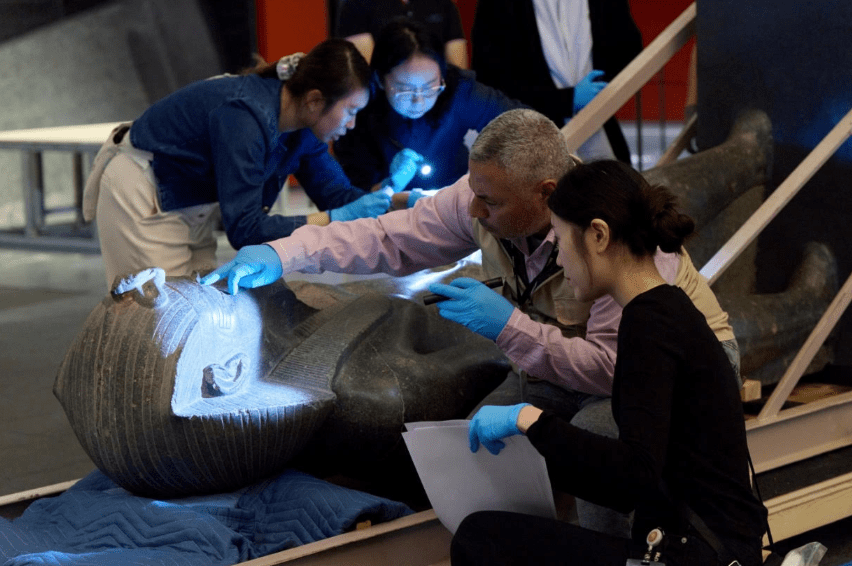
HONG KONG – The Hong Kong Palace Museum (HKPM or the Museum) held a special crate-opening ceremony at which it unveiled three of the key statues featured in its landmark special exhibition, “Ancient Egypt Unveiled: Treasures from Egyptian Museums”, which runs from 20 November 2025 through 31 August 2026 in Gallery 9. Jointly organised by the HKPM and the Supreme Council of Antiquities of Egypt, the exhibition is proudly supported by Bank of China (Hong Kong), the HKPM’s Strategic Partner, with Cathay and UnionPay International as the Major Sponsors.
“Ancient Egypt Unveiled” will be the largest, most comprehensive, and longest-running display of ancient Egyptian treasures ever to go on display in Hong Kong. For the first time, the city will exhibit museum artefacts and the latest archaeological findings on loan directly from the Supreme Council of Antiquities (SCA) of Egypt, the sole owner and lender of the artefacts in the upcoming exhibition. The SCA is proud to share these treasures with the people of Hong Kong and the world as part of its mission to preserve, protect and promote Egypt’s cultural heritage through international collaboration.
Anas Shadi, Deputy Consul-General, Consulate General of Egypt in Hong Kong and Macau; Dr Louis Ng, Museum Director of the HKPM; and Dr Daisy Wang, Deputy Director, Curatorial, Collection and Programming of the HKPM witnessed the unveil of the Striding statue of Merenptah (19th Dynasty, reign of Merenptah, about 1213–1203 BCE). This monumental statue, standing 2.4 metres tall and weighing over 1,700 kilograms, has been installed on the ground floor of the Museum.
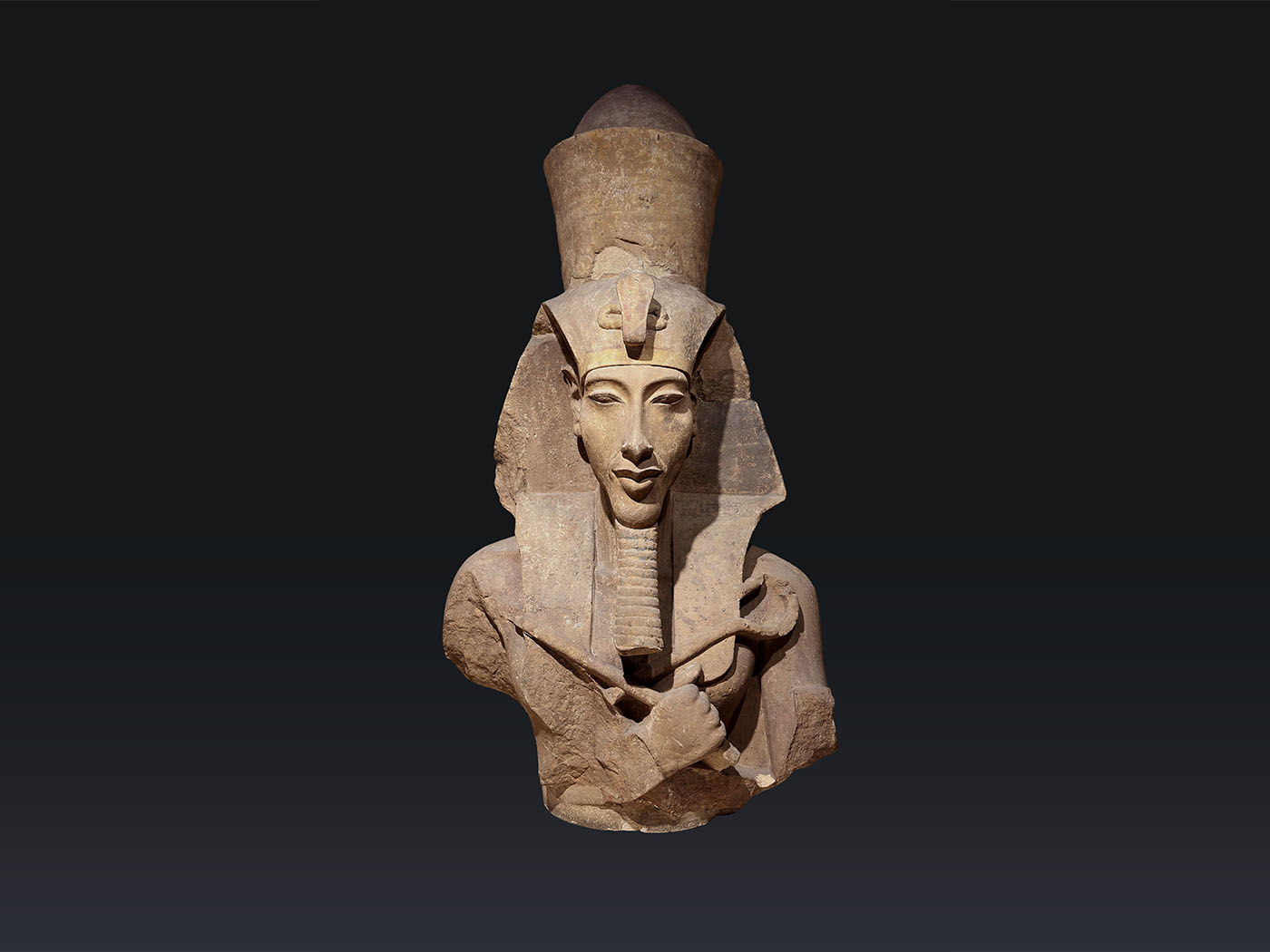
18th Dynasty (1550–1295 BCE)
Sandstone, pigment
Egyptian Museum in Cairo
Two more statues, the Striding statue of Shepenwepet II, God’s Wife of Amun (25th Dynasty, about 747–656 BCE), and the Seated statue of Iunit (18th Dynasty, about 1550–1295 BCE) have been installed in the 2/F Atrium of the HKPM. The installation of these three pieces is the first-ever display of exhibits in the public areas outside of the main galleries, marking an important milestone in the countdown to the highly anticipated exhibition. From 29 October, Museum visitors will have the opportunity to experience these three masterpieces up close to appreciate the scale, craftsmanship and cultural significance of these treasures. All loaned artefacts are the inalienable property of the Arab Republic of Egypt and are presented on temporary loan by the SCA.
To prepare for the exhibition’s official opening on 20 November, curators and conservators from the HKPM and Egyptian museums are working closely together to conduct final condition checks and oversee the installation of these treasures.
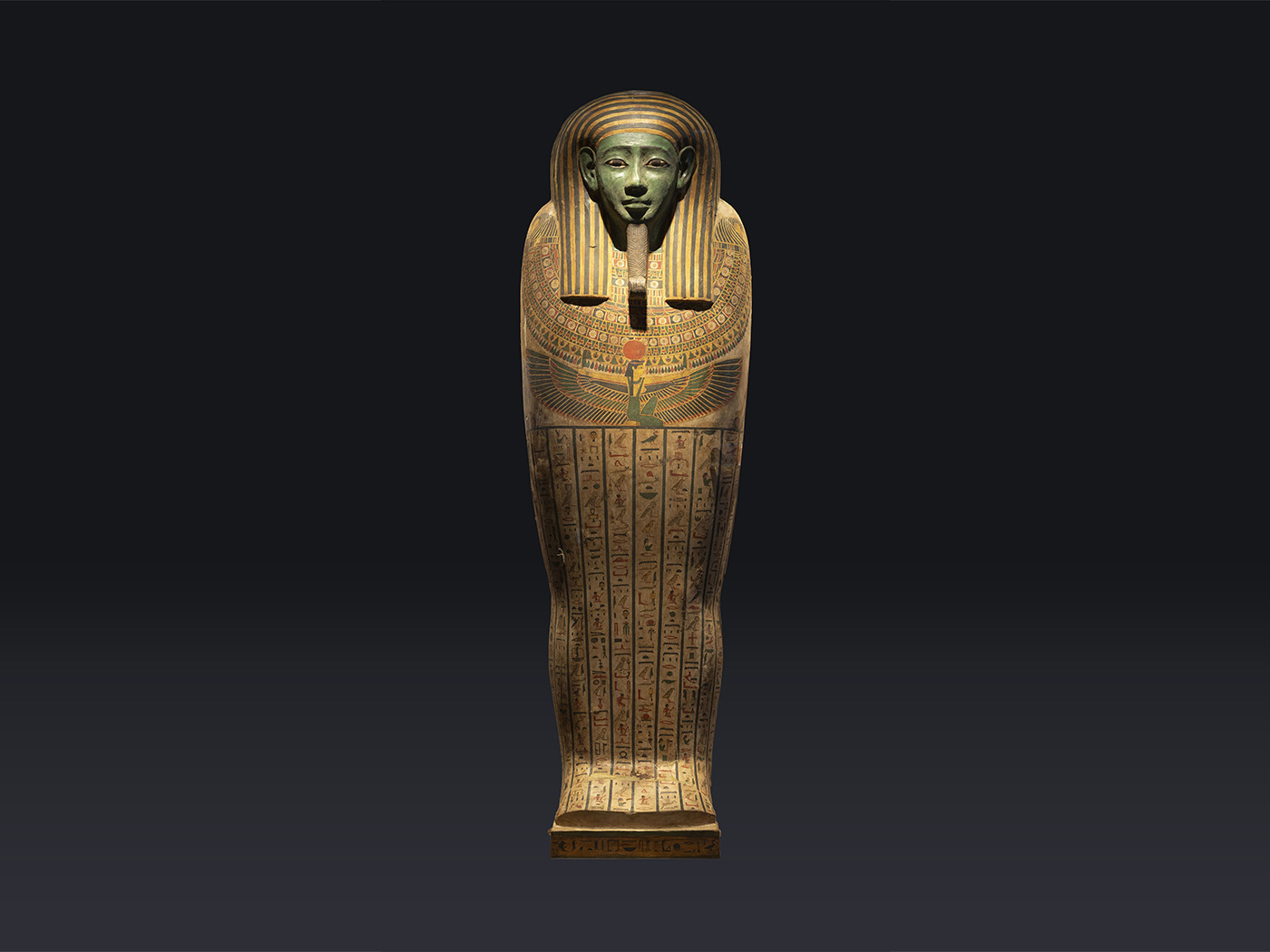
Late Period (664–332 BCE)
Wood, pigment
Egyptian Museum in Cairo
The three remarkable statues unveiled are:
1. Striding statue of Merenptah (19th Dynasty, reign of Merenptah, about 1213–1203 BCE), displayed on the ground floor, depicts Pharaoh Merenptah, son and successor to Rameses II, seen striding forward with both arms at his sides, adorned with the royal Nemes headdress topped by a uraeus, the rearing cobra symbol of divine authority. The forward movement and upright posture symbolise royal authority, vitality, and readiness to lead. The statue’s finely carved features and robust proportions exemplify the artistic mastery of the New Kingdom and the enduring artistic legacy of Egypt’s royal tradition.
2. Striding statue of Shepenwepet II, God’s Wife of Amun (25th Dynasty, about 747–656 BCE), displayed in the 2/F Atrium, depicts the daughter of King Piankhy, who held the esteemed title of God’s Wife of Amun – one of the most significant religious positions in ancient Egypt. She wears a close-fitting dress with her left arm holding a flywhisk as the symbol of authority. Shepenwepet II played a crucial role in temple rituals and dynastic politics, reflecting both religious devotion and the influential power of royal women in ancient Egypt.
3. Seated statue of Iunit (18th Dynasty, about 1550–1295 BCE), displayed in the 2/F Atrium, was discovered in the 1980s and was the first statue of Iunit identified by archaeologists. Iunit is depicted with a wig, seated upright with both hands resting on her knees. Her right hand holds the ankh – an ancient Egyptian symbol known as the “key of life”. Iunit was a Theban goddess, consort of the war god Montu. In the New Kingdom period, she was included as one of the pantheon of gods at the Temple of Karnak, Thebes.
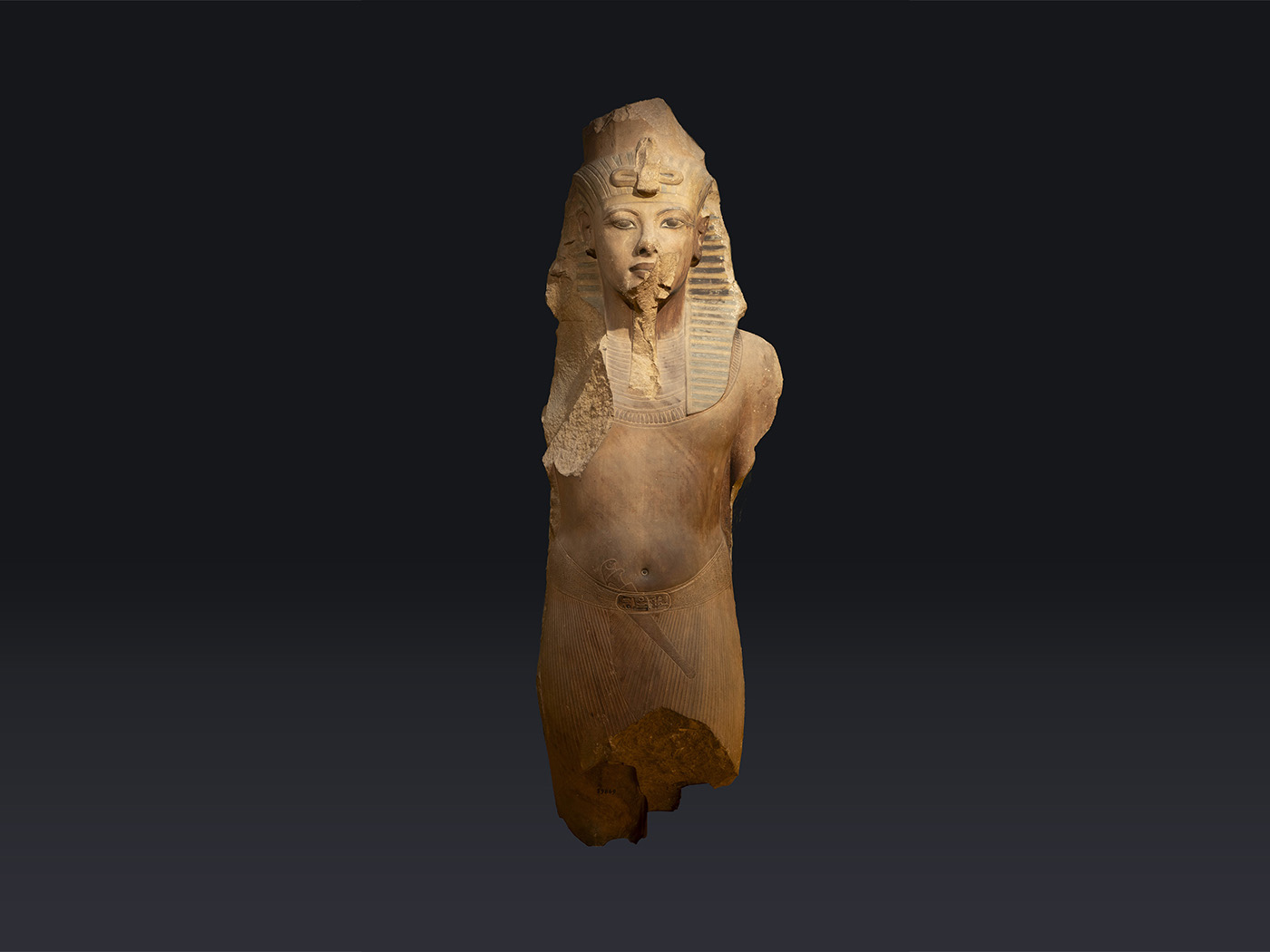
18th Dynasty (1550–1295 BCE)
Quartzite, pigment
Egyptian Museum in Cairo
Dr Louis Ng, Museum Director of the Hong Kong Palace Museum, said, “We are honoured to partner with Egypt’s Supreme Council of Antiquities to bring its treasured heritage to audiences in Hong Kong and beyond. This collaboration not only showcases an extraordinary collection of artefacts, but also reflects our commitment to innovative curatorial practices, cultural exchange, and inheritance. The exhibition tickets and membership offers were released last week, and we are thrilled by the overwhelming response, especially the strong interest in docent-led tours. This enthusiasm reflects a genuine desire for an in-depth exploration of the exhibition. We eagerly anticipate welcoming visitors from Hong Kong and around the globe to this landmark exhibition.”
To further enrich the visitor journey, the exhibition features more than 10 multimedia installations* both inside and outside the gallery, offering a dynamic and interactive exploration of ancient Egypt. Highlights include:
Colossal Tutankhamun Statue Restored: Witness the legendary colossal statue of Tutankhamun as never before. For the first time, projection mapping technology and digital colour reconstruction are used directly on this artefact to reconstruct its missing features and original colours, offering visitors a rare glimpse into the statue’s former splendour.
The Making of an Egyptian Mummy: Embark on a journey through the ancient art of mummification with a newly created video that vividly illustrates each step of the preservation process, bringing the mysteries of ancient Egyptian funerary practices to life.
Name in Ancient Egyptian Script: Located in the 1/F public area, this interactive station invites visitors to enter their own name or their pet’s name and see it instantly turned into ancient Egyptian hieroglyphs. Visitors can then scan and take away their personalised script as a unique memento of their visit.
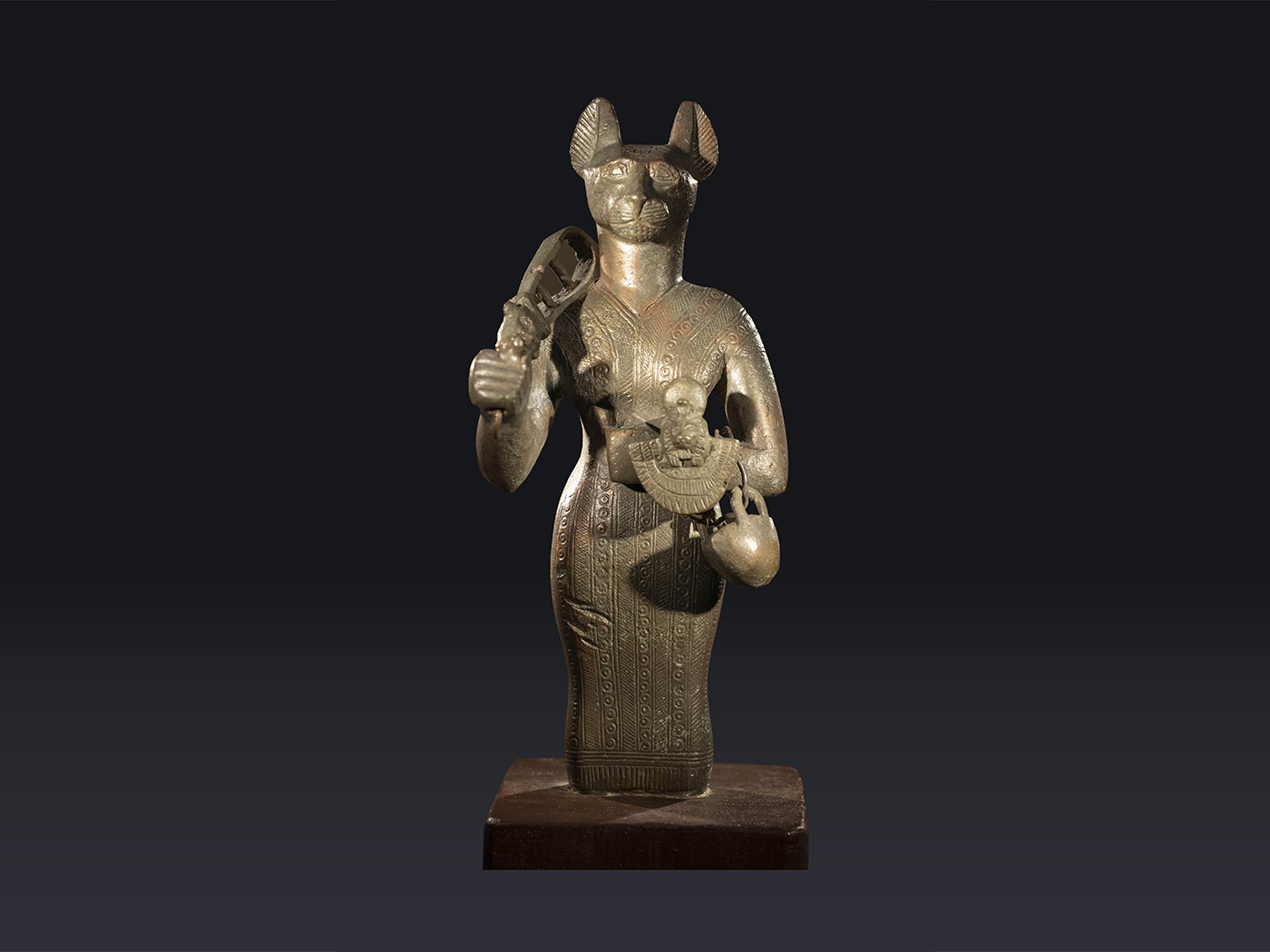
Late Period (664–332 BCE)
Bronze
Egyptian Museum in Cairo
The HKPM will also offer a series of educational programmes and publications related to the exhibition, including interactive workshops, performing arts events, public talks, and guided tours. Highlights include:
Little Pharaohs Family Workshop and Tour: This workshop invites participants to learn about the origins and development of ancient Egyptian jewellery, and to unleash their creativity by making their own necklaces with animal amulets. Participants are welcome to dress up in their favourite Egyptian-style costumes for the event.
Discover Pyramid Workshop: Participants will become junior architects of pyramids, discovering the historical development of these ancient monumental structures, unveiling hidden chambers, mysterious passages, and ancient secrets! What’s more, young participants can expand their imagination by designing a pyramid-themed marble run.
Create Your Own Cat Temple Workshop: In ancient Egypt, cats were regarded as sacred companions and symbols of divine protection. This workshop invites participants to explore the wonders of sacred animal cults in Egyptian culture, uncover recent archaeological discoveries of the Egyptian Cat Temple, and create a personalised animal temple model.
In addition, the Museum will present a special Egyptian dance performance as part of the Bank of China (Hong Kong) Presents: HKPM SHOWTIME! on 22 November and will support the 8th Hong Kong International Egyptian Dance Festival. Further details on talks, workshops and additional learning offerings tied in with the exhibition will be announced in due course.
Ancient Egypt Unveiled: Treasures from Egyptian Museums runs from 20th November 2025 through 31st August 2026 in Gallery 9, the Hong Kong Palace Museum. Please visit the Museum’s website for more details.
 Bakchormeeboy