

In a cultural landscape obsessed with certainties, guarantees, and KPIs, the Singapore International Film Festival is, in many ways, an act of defiance. Not loud, not rebellious, but simply the act of being utterly committed to the art of cinema and its continuity. As the festival prepares for its 36th edition, running for two weeks from 26th November to 7th December, the people behind it speak less like administrators of an arts event and more like caretakers of a fragile ecosystem that needs constant tending.
“I’ve been at it for five editions now, and the goal has always been the same,” says Programme Director Thong Kay Wee. “These are building blocks. The goals for the festival are not just to retain audiences, but to also strategically build influence, and hopefully bridge that attention to the rest of our programmes.”
It is a sentiment shared, though articulated differently, by Festival General Manager Jeremy Chua. “I think it’s like every film,” he says, “As tempting as it can be to copy a formula after it succeeds, but actually, the formula changes over time, with changing sentiments and landscapes.”
ForJeremy, last year’s festival, his first as General Manager, was spontaneous and idealistic, relatively free of pressure. “This year feels a bit more intense,” he admits. “We are releasing more tickets than before. We are organising more screenings and events than before. At the same time, we are changing the structure of the office, doing internal sustainability and reorganisations. So it definitely feels like the first time again for me, and I’m sure this won’t be the same next year.”
Kay Wee nods in agreement. “I’ve been on this rodeo a bit longer than Jeremy, and still getting used to it. But it’s the same rodeo, different battles every year, in a way. The expectations are consistent, but the context shifts. This year, with all the challenges facing the cinema exhibition business, we’re more conscious of expanding the programme and giving it more exposure. These are things we build on, year after year.”
Even as the festival grows, both Kay Wee and Jeremy acknowledge the inherent tension between scale, influence, and intimacy. “I would say that this year our festival has managed to still grow bigger than ever in my last five years,” Kay Wee says, smiling. “That’s one of the ambitions we’re trying to meet, and to overcome the challenges that come with it.”
For Jeremy, the lesson of experience is learning to balance artistic ambition with strategic foresight. “Last year I hit the ground running, and learned a lot of keywords, things like a three-year runway, and having to plan far ahead. In an independent company, you can just change direction and pivot quickly if necessary. But here, you have responsibilities to the board, staff, and audiences. You can’t be too selfish and there are more people you have to answer to. I think that’s the mindset shift I’ve had this year and adjusted our processes accordingly.”
The expansion is not merely quantitative, but also qualitative. Kay Wee points out, “We want to build on previous years and have more high-profile guests, such as Shu Qi, Tony Leung and Yuh-jung Youn. But high-profile guests come with expectations and events of their own. This programme expansion is also a statement for us: cinema is here to stay, and it deserves attention.”
This philosophy extends to the festival’s local film selection. “We’ve expanded our Singapore short films line-up, and some of the local films respond to the times,” Kay Wee says. “We have At Home with Work, a documentary on home businesses and Sandbox, a comedy about independent business struggles. These films resonate locally but also reflect world issues. The festival becomes a conduit for expression, a place to commiserate together.”
The apparent explosion of local films is less a coincidence than a deliberate strategy. “The number of short films have always been quite consistent,” Kay Wee explains. “We just decided to increase their exposure. And Singapore documentaries have always been strong. Outside the festival, there have been great film achievements for Singapore films like We Can Save the World managing to find places to screen the film, and A Good Child, the latter of which got Golden Horse nominations. We also have The Old Man and His Car, premiering in Tokyo. It’s not necessarily an abundant year for feature films, but we showcase what’s available and platform what we can.”
Jeremy, however, cautions against assuming the local filmmaking landscape is thriving. “I fear at times it might be the opposite, and I actually think it’s harder to produce films now,” he says. “Market forces push certain kinds of films to do well, like Chinese New Year films that appear so often. Studio backing means higher budgets, more advertising, and greater box-office results. On the other hand, independent films often don’t get commercial distribution, even if they do well at festivals. This creates pressure to mass-produce commercially safe content, just like in music. Art spaces have been monopolised by commercial streams. That’s why the festival tries to counterbalance these forces by providing a space for these films to thrive.”
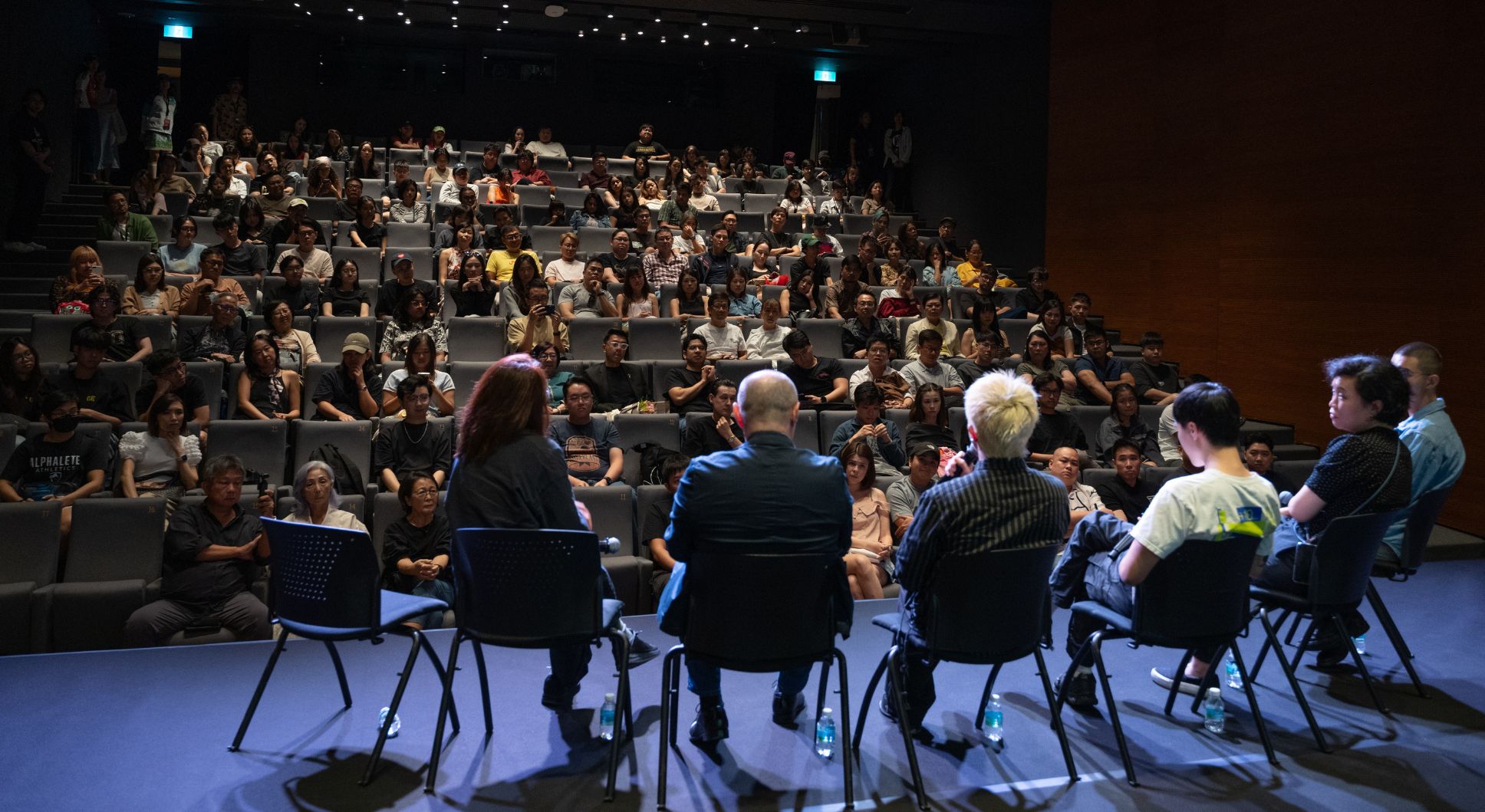
This counterbalance manifests in programming choices. “We allocate enough publicity and allocation time to ensure the programme is eclectic and diverse,” Jeremy says. “We include big names to draw audiences, but when people explore the festival, they encounter films that challenge the mainstream. If you don’t support independent cinema, subcultures become extinct. Mainstream culture dominates. Asian perspectives also matter and we want to counterbalance Western imperialistic attitudes.”
Balancing artistic integrity with audience expectations and commercial realities is central to SGIFF’s mission, and it’s especially concerning when big time players and institutions such as The Projector and Cathay Cineplexes have shuttered their doors this year. Kay Wee explains: “When we bring in high-profile titles and guests, we do so strategically. They attract attention that spills over to niche films. It’s about sparking curiosity and engagement. Social media amplifies this, but culture cannot be built by one institution alone. We leverage the festival’s visibility, but other players must also contribute.”
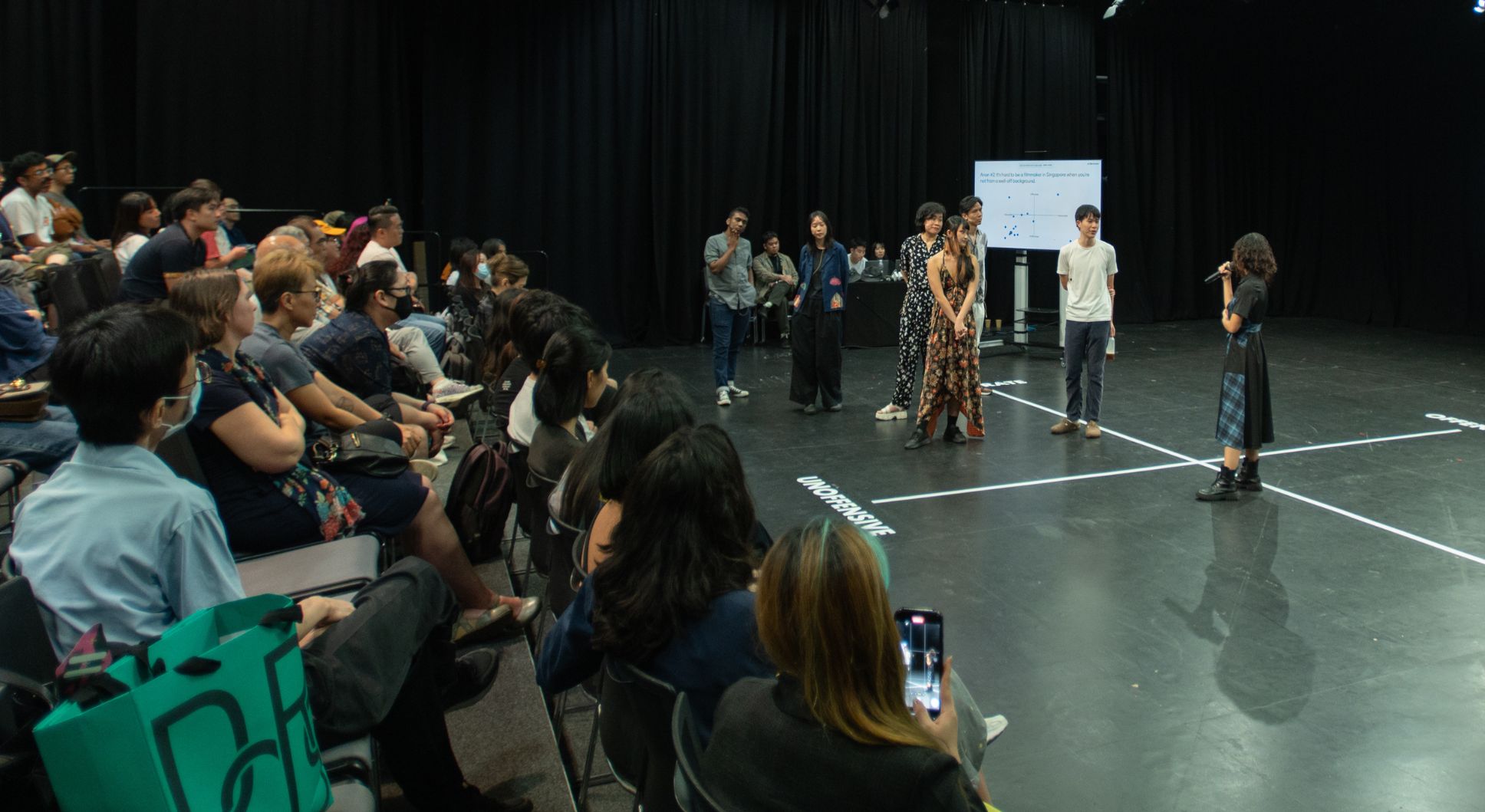
The festival also tackles urgent industry questions, such as the survival of cinema spaces. “We’re organising a forum called #SaveOurCinemas,” Kay Wee says. “We’re bringing in Golden Village, Shaw, Prashant from The Projector, and policy thinkers. The goal is not to solve everything immediately, but to create discourse and awareness. It’s an essential part of our role.”
Jeremy reflects on the intellectual dimension of cinema-going: “Cinema is about conversation. Watching alone is different from engaging in discussion, debating, questioning. Forums exercise that sense of self. Another forum, SGIFilmFeud, is a game-show format inspired by Family Feud, inviting local practitioners to guess public answers and then discuss them. Both forums, the serious and the playful, are part of engaging the community and building it up.”
This engagement extends to the festival’s recognition of generational and cultural shifts in films that interest them and even cinema-going habits. Jeremy observes, “It’s a generational thing. Older generations valued nuance and subtlety; younger generations value irony and irreverence. The way films are watched and analysed changes over time, and intellectualism is perpetually moving and evolving.
“Our job then is to accommodate different wavelengths, ensure there’s something for everyone. This year we have more animation, documentaries on social subjects, classical and experimental fictions. The festival’s intellectual space must be vibrant, not uniform to accommodate and be inclusive of everyone.”
Kay Wee concurs, emphasizing inclusivity: “Cinema requires patience and engagement, especially in a culture increasingly commercialised and sensation-driven. People are drawn to immediate gratification, but cinema rewards durational attention. There’s something for everyone, from art-house to accessible films, and it’s our role to curate that balance.”
Jeremy situates this in a broader societal context. “Singaporeans work incredibly hard, face high stress, and are conditioned to pursue money and efficiency. Cinema is counter-intuitive to that; it offers patience, reflection, and exposure to other realities. Most people’s free time is planned around flying overseas, family, or faith. The festival offers an alternative: engagement with art that challenges assumptions and broadens perspectives.”
The festival’s dual mission, to maintain artistic integrity while sustaining a viable operation, is ever-present. Kay Wee says, “Running this festival is a balance between business and moral responsibility. Programming purely for profit is not our purpose. We constantly navigate the tension between commercial viability and artistic ambition.”
Jeremy elaborates: “Even artists and auteurs like Wong Kar Wai are businesses where he’s shaped such a brand around his style. The festival must have resonance. You have TikTok and Instagram competing for attention, where microfilms and vertical content are our competition. We need to understand how art can remain relatable and accessible, and keep people coming against all this competing for our attention.”
The festival’s position as a hub is relative. “You can see how other countries’ markets are growing rapidly: Vietnam, Indonesia, Saudi Arabia, and these are all emerging cinema scenes, with some having just opened their very first cinemas, and there is indeed a market,” Jeremy says, “We’re not a hub for film in terms of resources, but we feel the pressure because Singapore is known as one in many aspects. Accessibility remains key for us: reaching rural communities, schools, people with disabilities. That’s the kind of hub we aim to be, and not just the one that’s about the name, the glitz and the spectacle”
This is further complicated by having to fulfil the expectations of various stakeholders. “It can be difficult to manoeuvre these various expectations,” Jeremy notes. “There are times where some may prioritise profits, while others might champion diversity, and as an independent festival, we must find ways to balance both. The festival acts as a guardian, supporting filmmakers and reminding audiences that independent culture matters.”
SGIFF must also navigate the tension between scale and intimacy. “COVID forced us to adjust budgets and approaches,” Kay Wee says. “But over time, we’ve increased face-to-face engagement, flown in more guests, and diversified openings. We balance scale with influence, retaining branding and impact while nurturing niche, artisanal content.”
Sponsors play a crucial role. Jeremy explains, “Canon is our new big sponsor. Raising funds for an arts charity in Singapore is difficult; donors often prefer immediate, tangible outcomes, where you know your money goes towards feeding a child for a day or something. Cinema is first seen as economic rather than artistic. Supporting long-term cultural development is rare, simply because the culture isn’t very strong here in Singapore – many people aren’t aware that we’re a charity, and how they don’t just have to see results immediately; often there is long-term development they need to contribute to, to develop this culture of cinema appreciation, of socialising, and ultimately, creating a sustainable community and scene.”
Yet, despite these challenges, the festival’s purpose remains clear. Jeremy reflects: “We want participation to be motivated by hunger, not obligation. Festivals should influence how we live, work, and perceive the world. That ethos drives everything we do.”
In this delicate dance between commerce and art, between scale and intimacy, between tradition and experimentation, the Singapore International Film Festival persists. Kay Wee concludes, “Our vision is consistent: to build blocks strategically, retain influence, and open minds through cinema. SGIFF should stand for something in Asia and the world. We hope that every programme, every screening, contributes to that ongoing conversation. We’re going to build this, one festival at a time, and hope that people give us their trust and attention, and join us in this shared cinephilia. The struggle to do this will always be worthwhile, because the end goal resonates so much with us.”
The 36th SGIFF runs from 26th November to 7th December 2025. More information available via their website here
 Bakchormeeboy