

In a night shimmering with cinematic daring, the 36th Singapore International Film Festival unveiled the winners of its 2025 Silver Screen Awards, an event that once again affirmed Southeast Asia as one of the world’s most vibrant storytelling regions brimming with potential. First introduced in 1991 as the pioneering international competition devoted to Asian cinema, the Silver Screen Awards have long stood as a beacon for bold, boundary-pushing filmmakers.
Held on 7 December 2025 as part of the Singapore Media Festival and presented under the auspices of the Infocomm Media Development Authority (IMDA), this year’s ceremony honoured fourteen exceptional works across five categories, including the prestigious Asian Feature Film Competition and the Southeast Asian Short Film Competition.
Beyond the trophies and applause, this year’s laureates share something deeper: an artistic instinct to probe the fractures of their worlds, whether personal, political, or spiritual, and to seek out the fragile humanity nestled within. Their films traverse landscapes shaped by history and desire, from rural China to the Knuckles mountain range of Sri Lanka, from spectral industrial corridors in Thailand to the neon pulse of a discotheque caught in the 1980s. Some filmmakers arrive as first-time feature directors; others, such as those who have graced Busan, Berlin, Locarno and Venice, return as established voices. But together, they speak in a chorus that is distinctly Asian, distinctly contemporary, and defiantly imaginative.

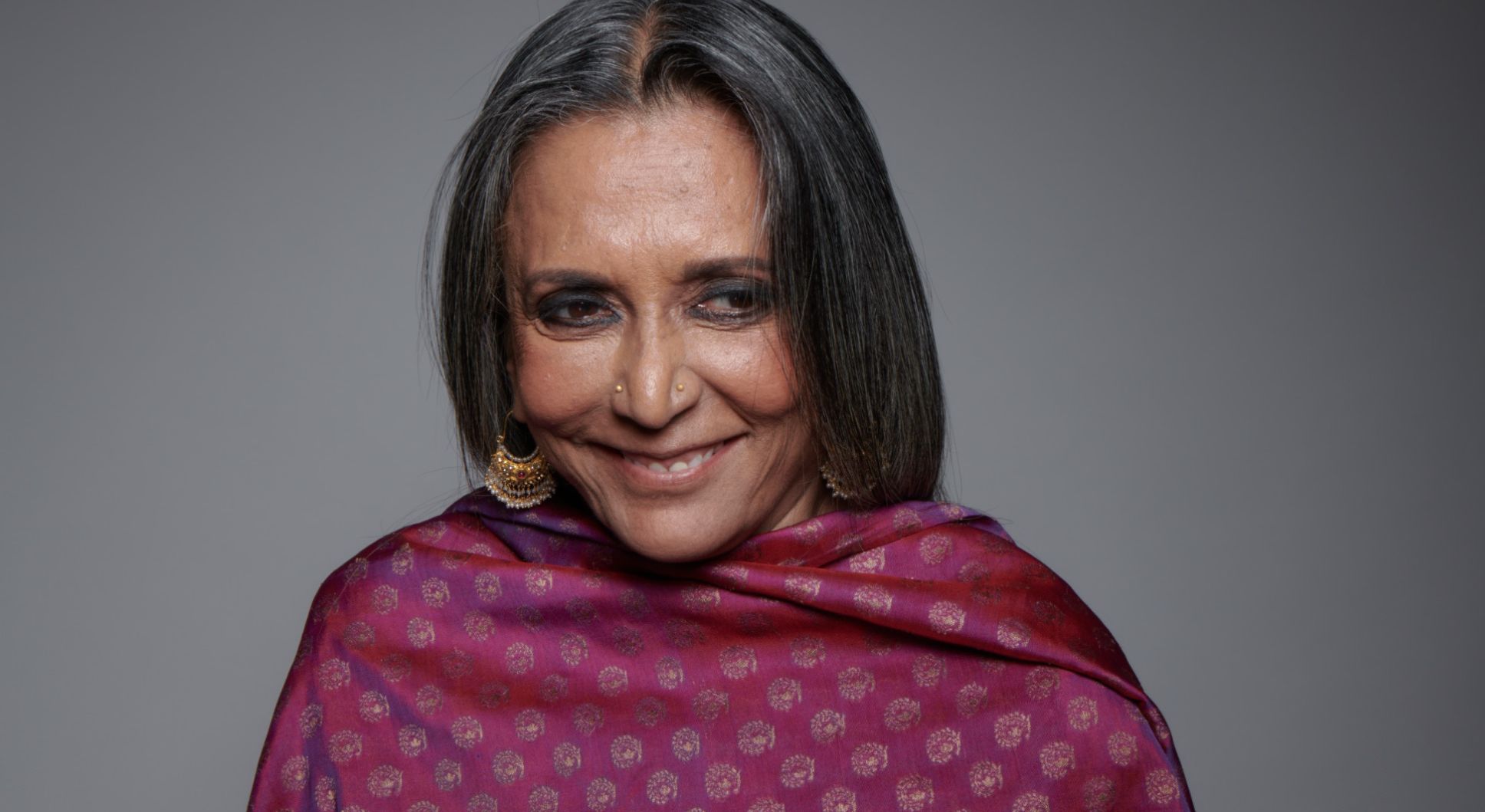
At the 36th SGIFF, Always by Chen Deming received Best Asian Feature Film, while Riverstone secured both Best Performance and Best Director. In the Southeast Asian Short Film Competition, Through Your Eyes by Nelson Yeo was awarded Best Southeast Asian Short Film, and Children’s Day by Giselle Lin won Best Singapore Short Film. SGIFF also presented the Cinema Honorary Award to Deepa Mehta and the Screen Icon Award to Youn Yuh-jung, alongside the Audience Choice Award for Coda.
Asian Feature Film Competition
Best Performance — Mahendra Perera; Best Director — Lalith Rathnayake
Riverstone
A police convoy embarks on a prolonged, contemplative journey across Sri Lanka’s Knuckles mountain range as three officers transport a young prisoner back to his village. The landscape—marked by colonial history and harsh terrain—frames their private anxieties, professional doubts and mounting moral dilemmas. As the prisoner increasingly reflects their own contradictions and compromised ideals, divisions of ethnicity, power and authority become more complex, revealing the fragile possibilities of connection within a system shaped by state violence. The journey evolves into a meditation on duty, conscience and the burdens that shape human life.
FIPRESCI Award — Human Resource (dir. Nawapol Thamrongrattanarit)
Fren, an HR officer, is tasked with finding a new secretary for her volatile boss and interviews a series of candidates under mounting pressure. When she discovers she is pregnant, she becomes conflicted about her own body becoming a potential source of “human resources,” mirroring the demands of her profession. Her anxieties—about survival, societal expectations and environmental collapse—manifest through sensory fragments of daily life. The film examines a woman caught in a culture of perpetual self-improvement and raises questions about existence, mortality and what constitutes happiness.
Best Asian Feature Film — Always (dir. Chen Deming)
Eight-year-old Gong Youbin presents a poem about uncertainty to his classmates as he spends his days helping with farm work and playing in the fields and forests of rural Shangzhi County, Hunan. While his life appears simple, his disabled father and elderly grandparents face difficult choices about their future with limited resources. The film weaves the children’s poetry—expressed through calligraphy—into quiet observations of nature, labour and family. Time passes steadily, transforming the textures of childhood into memory.
Special Mention — A Useful Ghost (dir. Ratchapoom Boonbunchachoke)
After dying from dust pollution, Nat returns to her husband by possessing a vacuum cleaner manufactured in his family’s factory. Their renewed bond is challenged by his family’s interference, while other unrest surfaces due to a worker’s death caused by unsafe conditions. Hoping to prove her worth and restore harmony, Nat volunteers to exorcise the displaced spirits in the factory, even if it requires morally dubious actions. Blending vulnerability with political critique, the film reflects on class, exploitation and the sacrifices demanded in the name of progress.
Audience Choice Award — Coda
For six months, 42 nonprofessional singers gather weekly to indulge in their passion for music. They are Victoria Chorale, an alumni choir led by conductor Nelson Kwei since its inception in 1988. After an 18-year hiatus, Kwei is preparing them for the world stage again, but the thrill of competing soon meets the stress of gruelling practice. Coda chronicles the choir’s journey from a small room to their rapturous climactic performance in Tokyo. Simmering in the background are mixed emotions that prompt conversations about competition – what if they pursue growth at their own pace without the pressure of winning as validation? Amid tears and jubilation, the fate of Victoria Chorale begins to appear tenuous.
Southeast Asian Short Film Competition
Best Director — Ananth Subramaniam (BLEAT!)
An elderly couple becomes alarmed when the male goat they have been rearing as an offering to the gods is found to be pregnant, confronting them with an inexplicable and unsettling situation.
Best Cinematography — Batara Goempar (Sammi, Who Can Detach His Body Parts)
Sammi, who possesses the extraordinary ability to remove and gift his own limbs and organs, dies and leaves his body dispersed among various recipients. His mother begins a determined effort to retrieve every part of him so she can bury him whole.
Best Performance — Tysha Khan (Fruit)
In a society where abortion is illegal, a woman repeatedly attempts to end her pregnancy without success. Her circumstances shift when she meets a calm, enigmatic bus driver whose presence alters her trajectory.
Best Singapore Short Film — Children’s Day (dir. Giselle Lin)
Timid eight-year-old Xuan searches for the right Children’s Day outfit while contending with the harshness of her family. As she navigates her uncertainties, she slowly opens herself to the kindness of a classmate who extends genuine friendship.
Best Southeast Asian Short Film — Through Your Eyes (dir. Nelson Yeo)
In a discotheque suspended in the aesthetics and rhythms of the 1980s, four individuals find their lives intersecting as they each pursue connection and meaning amid the pulsating music and enduring allure of the era.
Special Mention — True Love (Chân Tình) (dir. Huỳnh Công Nhớ)
As a couple walks through their city, sights and sounds from different moments in their lives gather around them. These layered impressions prompt them to revisit the remnants of a love and set of dreams that were once abandoned.
In their own ways, each of this year’s winning filmmakers dares to step into the quiet rooms where personal and political histories entwine—whether through a child seeking belonging, a prisoner revealing the inner fault lines of a nation, or a ghost testing the limits of love and usefulness. From Giselle Lin’s delicate attention to childhood fragility, to Nelson Yeo’s surreal choreography of searching souls; from Lalith Rathnayake’s Buddhist-inflected contemplation of duty, to Nawapol Thamrongrattanarit’s wry yet existential meditations on labour and creation; from Chen Deming’s patient listening to life’s smallest murmurs, to Ratchapoom Boonbunchachoke’s radical blend of the uncanny and the political—these works gesture toward a cinema that is unafraid to unsettle, to soothe, and to provoke.
As these storytellers claim their place on the international stage, their films remind us that Southeast Asian cinema continues to evolve in adventurous, genre-defying directions. What binds them is not national identity or shared aesthetics, but a commitment to revealing the complicated, trembling inner lives shaped by larger forces—history, memory, inequality, love. And in doing so, they ensure that cinema remains not merely a mirror of our world, but the lantern that allows us to see its shadows, its secrets, and its possibilities anew, as the 36th SGIFF draws to a close.
Featured Photo Credit: Ryan Peters/Spectrum Photography
The 36th SGIFF ran from 26th November to 7th December 2025. More information available via their website here
 Bakchormeeboy