
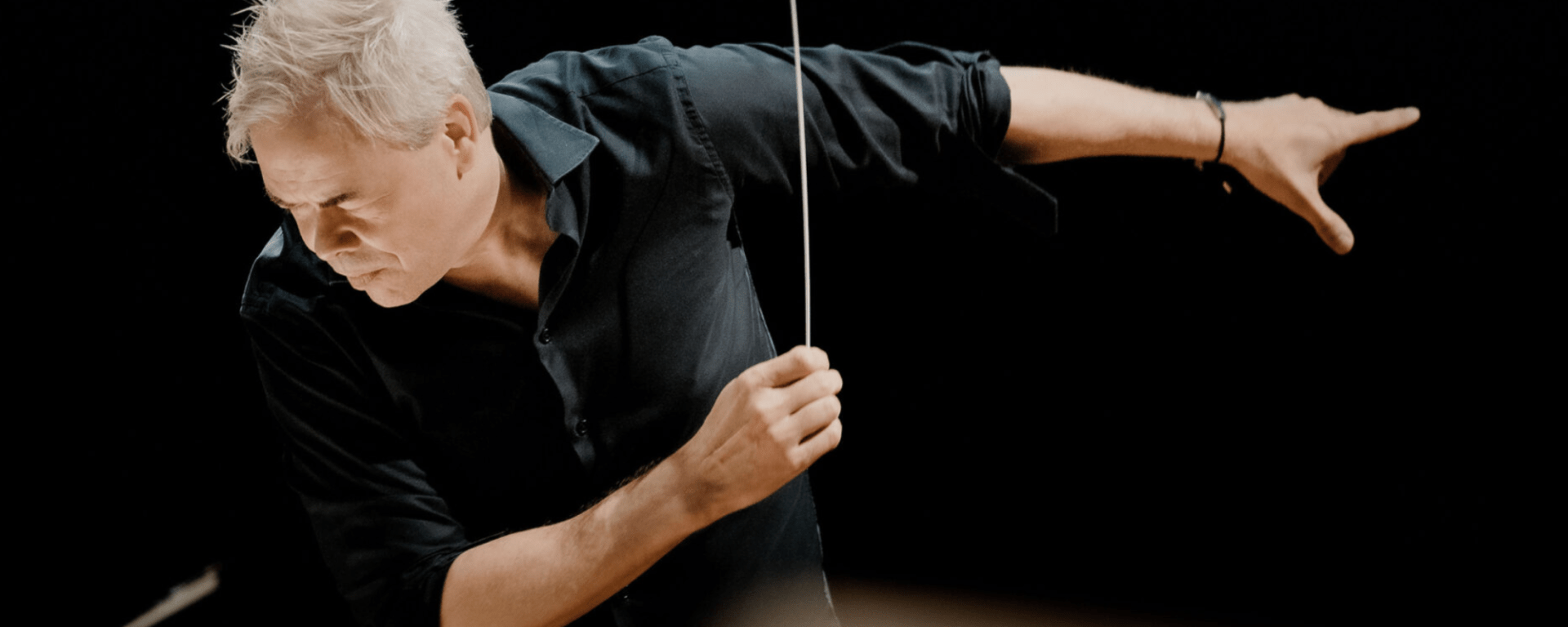
Under Hannu Lintu, the Singapore Symphony Orchestra delivers a gripping, emotionally-charged Shostakovich marathon alongside violinist Leonidas Kavakos.
There was something revealing in a remark shared in conversation with Hannu Lintu beforehand, where he stated that the soloist, above all, must remain central. It is a simple philosophy, but one that shaped the entire evening. What emerged was not just a display of orchestral discipline, but a carefully calibrated partnership: conductor, soloist, and orchestra aligned in a shared sense of purpose. Lintu carries a certain quiet confidence on the podium, an understated charisma, even a touch of swagger, that neither overwhelms nor recedes, but instead draws both players and audience into the music. From the outset, there was a sense of anticipation, not just for what would be played, but how it would unfold.
The first half centred on Violin Concerto No. 1 in A minor, Op. 77 by Dmitri Shostakovich, with Leonidas Kavakos as soloist. The opening Nocturne emerged from a low, almost subterranean brass register, setting a tone that felt grounded and ominous before a single melodic line had taken shape. Lintu resisted any urge to push forward, allowing the music to settle into an unhurried, suspended state. When the violin entered, it did so not as a virtuosic statement, but as a solitary voice, introspective, searching, and deeply human.
As harp textures began to shimmer through the orchestral fabric, the character of the movement clarified into something more contemplative. The harmonic shading — those subtle darkenings that tilt the music toward unease, gave the stillness an edge, transforming it into a space for reflection. There was a remarkable sense of calm in the hall, as though the music itself encouraged a kind of inward listening. It is in moments like these that Shostakovich’s gift for storytelling becomes most apparent: not through overt drama, but through the slow unfolding of psychological tension.
The Scherzo shattered that calm with biting energy. Here, Kavakos navigated the rapid shifts of register and character with fierce precision, the jagged leaps and relentless momentum pushing both soloist and orchestra to their limits. The writing demands not just agility but stamina, and by the close of the movement, there was a palpable sense of physical release, as if the performers themselves had reached the end of an intense exertion.
The Passacaglia restored weight and gravity, unfolding as a broad, deliberate procession. From this emerged the extended cadenza, where Kavakos seemed to draw the entire work inward. His control of dynamics was extraordinary: at its softest, the sound was barely there, and yet it carried; at its most intense, it cut cleanly through the hall. In one especially striking moment, a single high line seemed to pierce the stillness of the Esplanade Concert Hall, holding the audience in complete silence.
What followed was as electrifying theatrically as it was musically. As the transition into the Burlesca gathered speed, a fleeting mishap became something else entirely: a moment of spontaneity. Kavakos, in motion, reached for Lintu’s baton, which had been flung in the conductor’s intensity, and in that split second there was a sense of a race against the music itself. Yet what could have disrupted the flow instead revealed the depth of their rapport. There was instinct, trust, and mutual awareness and when the baton returned to Lintu’s hand, the orchestra surged forward as one, driving to a thrilling conclusion that brought the audience immediately to its feet.
Kavakos’s encore, Violin Partita No. 3 in E major, offered a moment of intimacy after the concerto’s emotional breadth. Here, time seemed to expand. Freed from orchestral weight, each phrase unfolded with clarity and ease, allowing the listener to settle into the sound itself. The hall’s acoustic became part of the experience, carrying each note with a quiet resonance that invited reflection. After the intensity of Shostakovich, this felt restorative — a reminder of music’s ability to centre and to heal.
After intermission, the atmosphere shifted immediately. There was a renewed energy on stage, a sense that the Singapore Symphony Orchestra was eager to continue, almost unwilling to let the momentum drop. In Symphony No. 11 in G minor, Op. 103, Lintu guided the orchestra into a sound world defined not by excess, but by control and clarity.
The opening unfolded with restraint, its sparse textures shaped with deliberate patience. The snare drum, played with remarkable subtlety by Mark Suter, entered like a light drizzle, barely perceptible at first, yet setting an undercurrent of tension that lingered beneath the surface. Above this, the flute line carried the melody with quiet assurance, threading through the texture and anchoring the movement’s sense of stillness.
What became increasingly striking was the way the orchestral layers were balanced. Each section emerged with clarity, with the plucked strings adding motion, the winds shaping colour, yet always within a cohesive whole. It felt less like a mass of sound and more like a network of conversations, each voice contributing to a shared narrative. This transparency made the work’s complexity all the more compelling: every detail was audible, every gesture purposeful.
When the tension broke, it did so with precision. The percussion, including the cymbals handled by Mario Choo, was executed with exacting control, each strike calibrated to allow the sound to bloom fully within the hall. From above, the trumpets in the upper deck entered with striking presence, their sound cutting through the orchestral texture and intensifying the sense of scale without overwhelming it. Even at full force, the balance remained intact; nothing was lost in the surge.
Moments of contrast were just as carefully shaped. The harpists, perfectly synchronised, introduced passages of almost hypnotic stillness, offering brief respite within the larger arc. And then, from the depths, the double basses emerged, their tone darker, more grounded, almost as if posing a question within the music itself. It was a moment that shifted the emotional weight, drawing attention to the symphony’s underlying sense of inquiry as much as its historical narrative.
What Lintu revealed most clearly in this performance was that control and intensity are not opposites; they are partners. He demands precision from the orchestra, but the response is one of trust, a mutual respect that translates directly into sound. As the finale approached, the cumulative effect of that restraint became clear. The orchestra, having held so much in reserve, released its full energy in a surge that felt both powerful and inevitable. The music expanded, filled the space, and drove forward with unwavering momentum.
In the final moments, as the last resonances faded, Lintu allowed himself a brief pause, a breath, a slight lean back, a nod to the orchestra. It was a gesture of quiet satisfaction, but not finality. If anything, it suggested that this is only the beginning. The SSO’s sound under his direction feels newly focused, more confident, and unmistakably alive. This was not just a performance of Shostakovich, but the shaping of a new artistic identity under Lintu for the next three years.
Shostakovich with Leonidas Kavakos & Hannu Lintu played from 9th to 10th April 2026 at Esplanade Concert Hall. More information available here
 Bakchormeeboy