
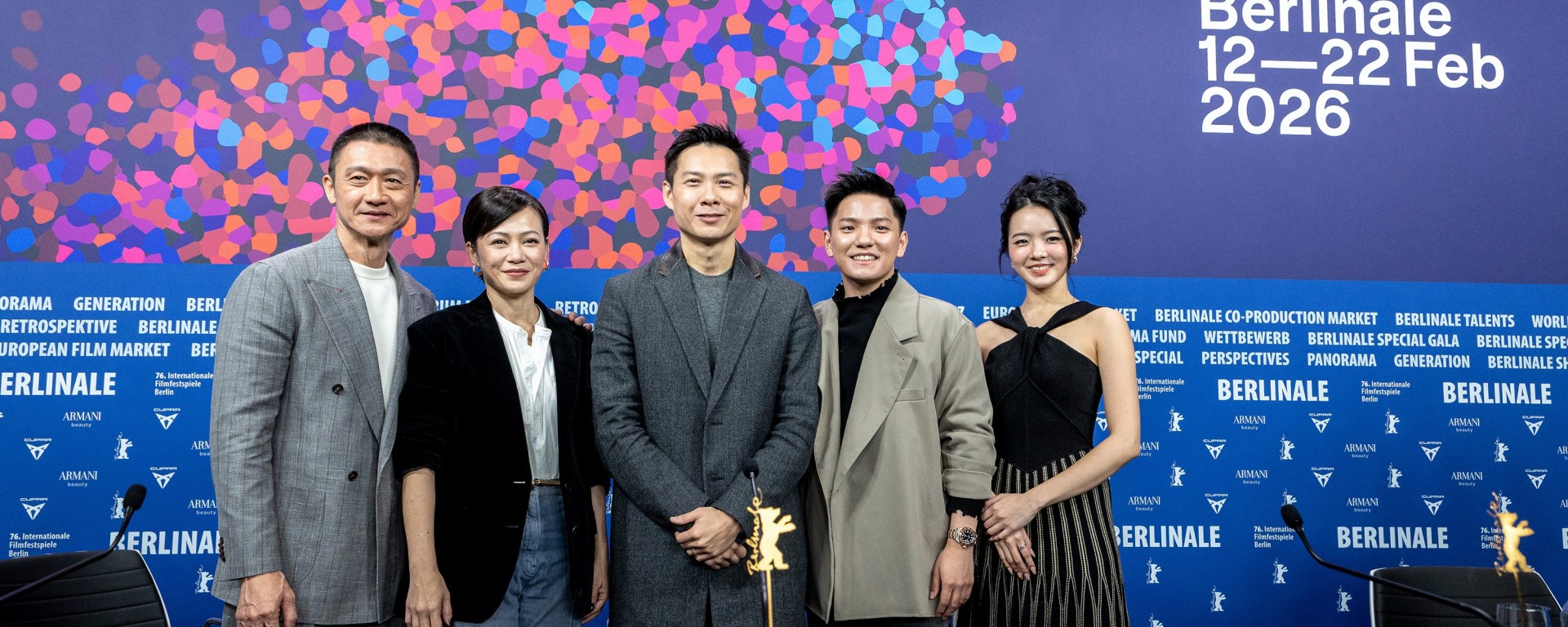
Seven years ago, when Anthony Chen last sat down to speak about Wet Season as the opening film of the 2019 Singapore International Fim Festival, he was reflecting on a film about longing, restraint, and quiet emotional fractures, hallmarks of a filmmaker deeply attuned to the rhythms of everyday life.
Today, the conversation feels both like a continuation and a turning point, with his latest film, We Are All Strangers (我们不是陌生人), having just made history as the first Singaporean title to compete for the Golden Bear at the Berlin International Film Festival, before opening the milestone 50th edition of the Hong Kong International Film Festival.
More than just a career high, the film marks the final chapter of his quietly ambitious “Growing Up” trilogy, which concludes after 13 years. Now 41, Chen finds himself at a different vantage point: no longer just the breakout director of Ilo Ilo, but a filmmaker moving fluidly between Singapore and the world, between intimate storytelling and larger canvases, and between roles as director, producer and mentor.
Yet, for all the scale his career has taken on, We Are All Strangers returns to something deceptively simple: the fragile, imperfect bonds between people, and the emotional truths of ordinary life in Singapore. In this interview, Chen reflects on completing a deeply personal trilogy, navigating international projects, and why he still believes the most local stories can travel the furthest.

Bakchormeeboy: We Are All Strangers has made history as the first Singaporean film in competition for the Golden Bear at Berlin, and now opens the Hong Kong International Film Festival. How does it feel to bring this story to such prominent international stages, and have you been surprised by the response so far?
Anthony Chen: When I started making films, I never imagined a Singaporean story about an ordinary life would one day compete for the Golden Bear. That’s not something we grow up dreaming about. To then open the Hong Kong International Film Festival in its Golden Jubilee 50th edition—it’s a tremendous honour. And yes, I have been surprised by the response. Not because I don’t believe in the film, but because it’s so deeply specific to a certain kind of Singaporean life. Yet audiences everywhere—from Berlin to Hong Kong—seem to connect with its emotional core. They cry in the same places. They laugh at the same small moments. That tells me we’ve touched something truly human.
The Far East Film Festival in Udine (the biggest Asian film festival in Europe) also just announced We Are All Strangers as opening film for their 28th edition at the end of April. Film programmers and distributors are clearly connecting with the film in a strong way. I’m really heartened.

Bakchormeeboy: Looking back at Ilo Ilo and Wet Season, and now completing your “Growing Up” trilogy with this film, how has your approach to storytelling or filmmaking evolved over the past decade? How does We Are All Strangers reflect that?
Anthony: I think I have built even more confidence and craft over the years, even though I have to say every film gets harder, not easier, because of the bigger ambition one is striving for. The biggest evolution is scope. Ilo Ilo and Wet Season are intimate, contained stories. We Are All Strangers spans over two and a half years and runs 157 minutes. It’s my most ambitious film. But in some ways my cinema still has not changed: it is still very much about finding poetry in ordinary life.
But many have told me that this is my most accessible and mainstream film to date. For me, it’s like a love letter to Singapore. And I’m hoping it will be for the everyday man and woman.

Bakchormeeboy: You’ve mentioned before how your films reflect your own life stages. At 41, how does We Are All Strangers capture your current perspective on life, family, or Singapore?
Anthony: My relationship with Singapore is as complex as one’s marriage. You love someone so much that you feel passion, but sometimes you argue, sometimes you’re disappointed, sometimes angry. Yet the love is always there. This film captures that. It’s not about the gleaming global success story of Singapore. It’s about the simple Singapore—the working-class citizens, the hawker in the Kopitiam, the public buses we ride on daily, the quiet struggles. I’m no longer interested in simple praise or criticism of my home. I want to hold both the love and the frustration together. That’s what being being in your 40s feel like: you understand that family, like a country, is something you commit to even when sometimes it breaks your heart.

Bakchormeeboy: The characters in your films feel lived-in and authentic. What inspired the central family and their journey in We Are All Strangers, and how did real life or personal experiences shape these portrayals?
Anthony: We Are All Strangers grew out of my concern for Jia Ler after we wrapped Wet Season. He had just turned 17 and decided to quit school. Beneath the charm of his naivety and recklessness, I worried about him being thrust into the brutality of the adult world. This film is about a young man forced to grow up, and about confronting the realities and harshness of life head-on. That was the starting point for this film.
But as with all the films in the trilogy, so much of my personal emotional are poured into it. It’s also a lot of my own coming of age from boy to man, from son to father.

Bakchormeeboy: Yeo Yann Yann and Koh Jia Ler return to this film. How did your relationships with your cast evolve in this final chapter, and did you approach directing them differently compared to earlier films?
Anthony: There are two families really. The constructed family on screen and our constructed family (me, Yann Yann and Jia Ler) behind the screen. Like all families, we give each other equal measure of love and hell.
Jia Ler has grown a lot over the years, two weeks into the film, for the first time, I felt he finally stepped into the shoes of an actor. He started to understand and grasp the craft of it. He will go far if he pushes himself. That changes everything. You stop giving child-direction and start having adult conversations about subtext. I still remember when he was this 11-year-old child on the set of ILO ILO and I will act out the scene and he will try and imitate or follow what I do.
Yann Yann is a real powerhouse. Like myself, she beats herself up a lot. Wouldn’t give up until she hits the notes that satisfies both our high expectations. She is an actor with the most professional work ethic I have ever met.

Bakchormeeboy: You’ve taken on projects beyond Singapore, including working with Cynthia Erivo on Drift and directing The Breaking Ice. How have these international collaborations influenced your creative process or expanded your perspective as a director?
Anthony: Those experiences were invaluable. Making Drift in Greece with Cynthia Erivo—that was my first English-language film, a refugee story that demanded a different kind of sensitivity. Then The Breaking Ice in China taught me how to work with a completely different crew culture. What did I bring back? Confidence. The ability to trust my vision even when I’m far from home. But more than that, these collaborations reminded me that human emotions are the same everywhere. I will certainly continue expanding my canvas internationally in the future.

Bakchormeeboy: Your films are deeply rooted in Singapore but resonate globally. How do you balance the local specificity of your stories with universal themes that connect with international audiences?
Anthony: I don’t balance them—I just lean fully into the specificity. The Hokkien dialect, the HDB flats and Kopitiam culture, the daily routine of heartland life—I never dilute those details. What happens is that international audiences sense the authenticity. They may not know Singapore, but they know what it feels like to worry about money, to struggle for one’s family, to hope for something better. By being absolutely true to my world, it eventually ends up becoming universal. You don’t reach the world by being generic. You reach the world by being deeply, unapologetically sincere, honest and local.
Bakchormeeboy: Your career now spans directing, producing, and mentoring emerging talent through Giraffe Pictures. How have you adapted to these various roles, and how have they continued to shape you as a person?
Anthony: I started Giraffe Pictures in 2014 because I wanted to create a home for young visionary filmmakers in the region. It’s not just about financing or connecting resources—it’s about saying, “I believe in you.” Over the years, we’ve supported films such as Kirsten Tan’s Pop Aye, He Shuming’s Ajoomma and Neo Sora’s Happyend. Working with these talents have made me a more patient and generous director. When you produce someone else’s debut, you remember how terrifying that first step is. You also learn that cinema isn’t a solo sport. These roles have shaped me into someone who thinks not just about my own films, but the ecosystem of Asian cinema. It’s so fragile, and will remain challenging as always.
Bakchormeeboy: Now that the “Growing Up” trilogy is complete, where do your original stories go from here? Are you drawn to new themes, genres, or perspectives, or do you see yourself returning to familiar territory in the future?
Anthony: That’s the million-dollar question. I honestly don’t know yet. This trilogy took 13 years (15 from the time of writing Ilo Ilo) of my life—it’s like closing a diary I’ve been writing since my twenties. I feel both relieved and energised. What I do know is that I’ll continue to move between Asia and international projects. I love the freedom of that. And I’m motivated by the slate of Singapore and Malaysian filmmakers I’m producing. There is so much talent in our region and their stories and spirit continue to inspire me.
Photo Credit: Berlinale
We Are All Strangers continues to tour the festival circuit, and is slated to release in Singapore later this year. Stay tuned for more details on Instagram
 Bakchormeeboy