
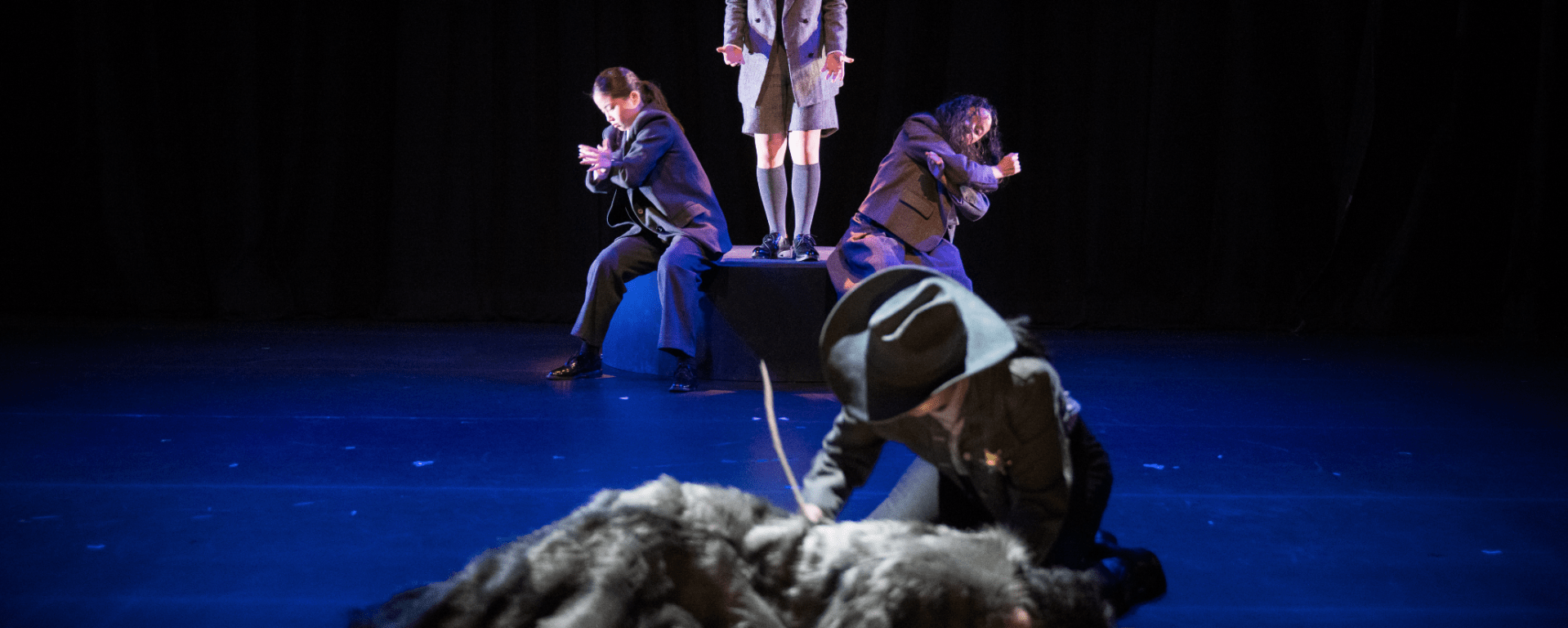
Expansion of one-man show into ensemble piece becomes confusing mess.
When Thom Pain (based on nothing) premiered in 2004, the one-man show received rave reviews and was described to be unlike anything else at the Edinburgh Festival Fringe that year. It’s a rather odd but endearing sounding script, wherein the long-suffering protagonist recounts the story of a bee sting, a boy with a dog that died, and his experience with a woman.

In the M1 Singapore Fringe Festival’s annual collaboration with NAFA, Edith Podesta and Yarra Ileto lead a cast of 17 students from the BA (Hons) in Performance Making programme to perform a very different version of Thom Pain, expanding it from a rambling monologue into a single character divided across the entire cast, while throwing in other artistic elements such as dance and choreographic movement as well.

In chopping and changing the monologue for such a large cast, there is something that feels almost forced about the way the lines have been divided, where the words end up corrupted and performative beyond its original sincerity. The entire show begins with the lighting of a match, revealing the 17 member ensemble, and as problematic as the concept is, the students do seem prepared and well-rehearsed, able to adapt to the many sudden mood swings experienced during the show, with smooth scene transitions. Yarra Ileto’s choreography is particularly sound, and adds to the mood and atmosphere of the piece when performed.

There is a clear bias in the division of labour, where there are only a few cast members who are privileged enough to get the meatier chunks of dialogue. At the same time, these seem to be woefully misplaced, as the actors performing the particularly emotional segments are weighed down by thick Chinese accents that garbled the words and whose enunciation causes the script to lose its power. As an ensemble, the students also lacked chemistry, resulting in a theatre that felt rather cold and disengaged from the audience.

Throughout the show, it feels as if the ensemble continually tries to draw you into the play’s almost absurd world, only to be met with resistance from the audience, simply because they themselves do not seem committed or believe in the world of their own creation. Much of the performance is, well, performative rather than felt, going through the motions, where even when breaking the fourth wall, it feels like something they have to do, rather than a genuine moment of surprise and engagement.

One particularly egregious error was the attempt at audience interaction; while the audience was already feeling disengaged, somehow the idea of bringing up an audience plant makes the whole idea feel even more facetious, and you begin to wonder about how much of life itself is staged, where the fiction ends and reality begins.

What Thom Pain manages to achieve by its end is to still leave us on a poignant note, utilising its ensemble to surround us, and have us thinking about the meaning of happiness, and how to find it in what little time we are given. A potentially powerful show let down by certain directorial choices, where we would rather have seen these students playing more to their strengths and showcasing their potential as an ensemble.
Photo Credit: Memphis West Pictures/Joe Nair
THOM PAIN (based on nothing) played from 18th to 21st January 2024 at the NAFA Studio Theatre. More information available here
M1 Singapore Fringe Festival 2024 ran from 17th to 28th January 2024 across various venues. Full line-up available here.
Production Credits:
| Director: Edith Podesta Choreographer: Yarra Ileto Performers: Anastasha Binte Muhammad Irhan Perry Abdullah (Nayah Perry), Audrey Chloe Hamdan, Bagalavan S/O Raman, Chen Siyu, Sean Loo Kok Wei, Shannon Kreissl, Sharifah Fatihah Aljunied (Dia Hakim K.), Jaime Lee Yuan Ching, Jane Seow Jia Mei, Lee Jasmine, Liu Qin Tong (Amelia), Mu Yanyu, Syamyl Nurmatin Bin Adam, Valencia Soo Jiahui, Xiong Wenjia, Zhang Yuheng, Zjanyanhi Binte Johan Kang Sound Artist: Jing Ng Lighting Designer: Tai Zi Feng Costume Designer: Max Tan Set Designer: Akbar Syadiq Production Stage Manager: Benjamin Lye |
 Bakchormeeboy