
Multidisciplinary artist Joshua Serafin is a force to be reckoned with. The 28-year old is already making waves across the festival circuit, with their provocative, viscerally-charged work often leaving a deep emotional impact on viewers as they reel from the sheer force of it. From performing at the Venice Biennale in 2024, to receiving nominations for the 2023 ANTI Festival International Prize for Live Art in Finland and the prestigious 2024 CIRCA Art Prize, the Brussels-based artist is also house artist of Ghent Arts Centre Viernulvier from 2023-2027.
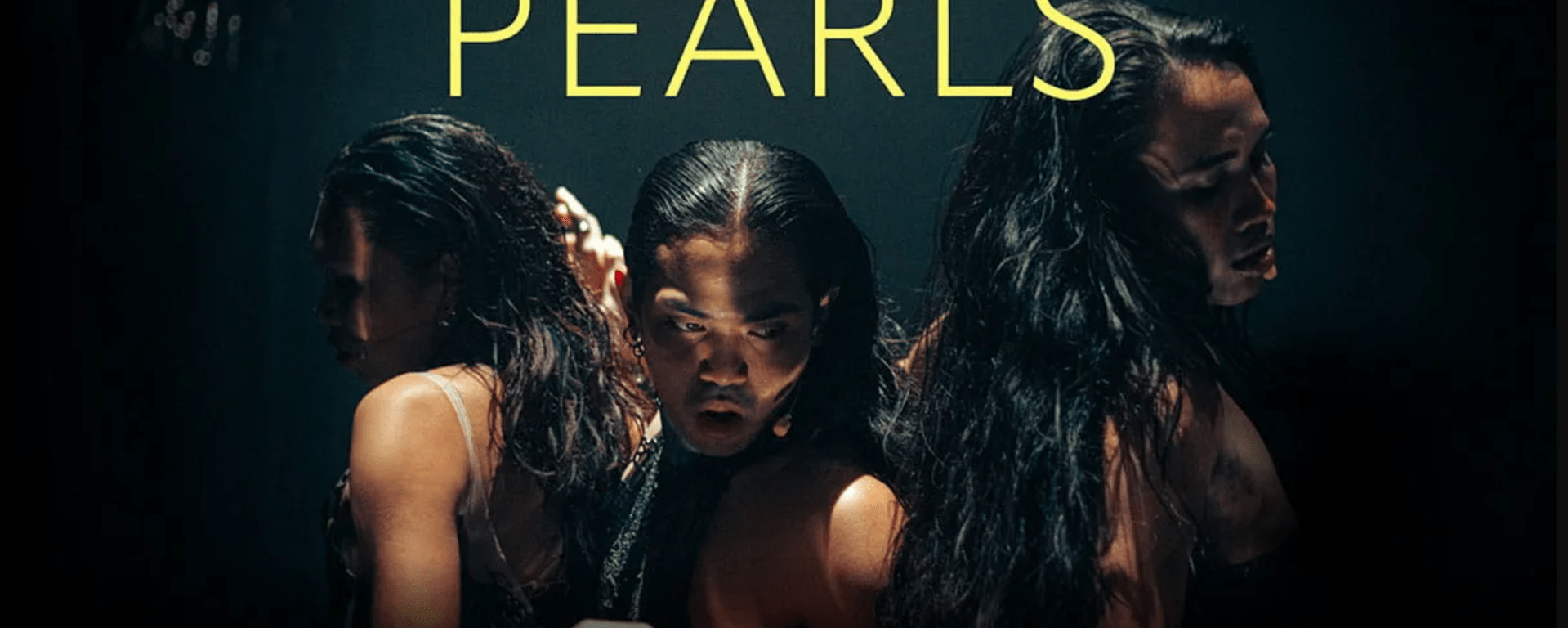
Much of this is due to the work they’ve been developing over the last few years, a series, or constellation, of projects known as the Cosmological Gangbang. Inspired by and grappling with the intersections between Filipino mythology and belief systems around gender and gender identity, the series is finally making its way to Singapore this weekend as part of the Esplanade’s Connect Asia Now dance programme, where the final work, PEARLS, culminates the entire process’ research materials and work produced into an hour-long performance.
PEARLS specifically sees Joshua collaborating with artists Lukresia Quismundo and Bunny Cadag, as they explore the concept of the non-binary and other non-normative genders, as celebrated in precolonial Philippines. Drawing from personal experience and anecdotes, PEARLS examines the fractures and wounds imprinted by empire on the body, soul, and community, as a means of seeking solace in the spiritual roots of Philippine history, in this Asian premiere.

“I’ve always wanted to reflect on the process of cosmology, and there was a desire for different iterations of the work and ideas. It started with visual materials—drawings, paintings—and exploring materiality and the idea of transforming one body into multiple bodies. I wanted to work with these paintings and create a series of films and performances,” says Joshua, on the idea of the series of works. “Many of these ideas emerged simultaneously, encapsulating different ideas of the entire cosmology, evolving and changing as the world around us does as well.”
“The middle work VOID was a solo piece that was more about lamentation, and so, we found that there was a need for healing. While filming in the Philippines, PEARLS was what emerged, as we explored trauma and history—our bodies as individual human beings, as queer, trans Filipino bodies,” they continue. “It was an invitation—a quiet healing process and journey, and also a question of how we can go beyond the individual, beyond the category and label of queer, trans bodies. Beyond queerness, beyond gender, the work wonders how we can talk about these bodies, how they’re formed and how the narratives of these bodies are like particles of dust being transformed into something organic and precious, like pearls. It’s a process of transforming trauma into something beautiful and healing. It’s about acknowledging everything that’s happening, seeing the narratives, and understanding the beauty and pain of what these bodies are going through in relation to the world.”
“It’s triggering to categorise the bodies I’ve selected for the narratives I carry. I’m careful about how we frame them, as that framing can create violence. Sticking to easy labels and definitions for the marketing, sure, but choreographically, it goes beyond those labels. These are bodies have experienced the most violent histories, beyond simple framing as ‘queer’ or ‘non-binary’, and we aim to present the thick, heavy narratives that informed that,” he continues. “The work is both heavy and light, and I think it’s important to acknowledge that in the space. How can the audience leave with hope? It’s about kindness, collective sisterhood, and community—not just heaviness.”

And so, PEARLS becomes a work that focuses on the process of finding solace and community, and reclaiming the power of the self as an act of healing. “The choreographic material is a lived experience, not just an idea. What does it mean to process a visa, leave the Philippines, and arrive in Europe? We belong to the sea and sun of the Philippines, but then we found ourselves in Brussels, in a black studio, in winter,” says Joshua. “It took six months of emotional labor and trauma to get there, and that experience—the journey of three bodies from a tropical paradise to a cold winter land—becomes part of the piece. That’s what makes the material precious and vulnerable. It’s about translating lived experiences onto the stage. It’s fragile, and that’s what makes it to the choreography.”
Joshua’s collaborators are both creatives in their own right, with Bunny also being a multi-disciplinary artist, and Lukresia (aka @thirdworldbb) not just a visual and performance artist, but also a model who has walked for the likes of Mugler after being discovered on Instagram. “I made the active choice not to work with dancers; Bunny is an actress and singer, while Lukresia is a performer. PEARLS is loosely categorised as a dance piece, but it goes beyond that – there’s a lot of vocality, video, film, and singing, and working with Bunny and Lukresia, the process was about discovering their skill sets, their stories and finding a language we all understood,” says Joshua. “In dance training, we often try to move the same, but we realized that wasn’t going to work for this piece. The power then comes from embracing each other’s differences and understanding the work in the same way, even if our movement isn’t identical. We do have dance classes and work out together, but the movement vocabulary is something the girls have the liberty to deconstruct, which leads to a unique expression in the work.”
Speaking of his position as a queer Asian artist working primarily in the West, Joshua considers the polarity and how differently the work might be received in a space closer to home. “How can we justify ourselves in terms of identity and unshackle ourselves from the need to explain? In Asia, it’s different. There’s no need to explain so much—we already know the topics, and spirituality is part of it,” says Joshua, on the spiritual elements involved in PEARLS. “I’ve always found it fascinating to navigate the polarity between the West and the East. It shows both division and connection. How can we create work that reads universally? There are moments that I resisted translating – the choice to not be understood is also a choice.”
“After all, the work is also about colonial history and the manipulation of language. If you want to understand what we’re talking about, learn the language. There’s a dynamic at play, and I tend to resist modes of accessibility. As such, PEARLS is chaotic, but in the Philippines, we’re used to chaos. Things can shift here and there, now and then, without introduction. The work assumes its own way of being read,” he continues. “I’ve been in Europe for nine years, but I’m Filipino. There’s a desire to unshackle myself from external expectations. What does it mean to be diasporic or Filipino? What nationalist propaganda are we presenting to the world? These are ongoing questions. It’s heartbreaking that we can’t present this work in the Philippines at the same scale as in Europe. I wish my people could see it, and I’m always thinking about how to bring it home.”
“I often find banana trees in flea markets, used as decorative elements. But in the Philippines, these beautiful banana trees keep blossoming. I sometimes think to myself: did I need to go to Europe to be seen? It feels like we still primarily receive work through a Western lens. That’s why I’m so happy to connect with Asia again. My heart is calling me back. It’s like a banana tree that won’t grow in Europe but thrives in the Philippines,” he concludes, on the opportunity that the Connect Asia Now programme offers.
“I want to continue my practice in the Philippines because the heart and soul are there, though I also confront the reality of structures, finances, and support systems that aren’t yet in place there. I’m hopeful for the future, and I miss having a community of Asian makers. Belgium doesn’t have as many of us. So I’m happy to be invited by Esplanade and to be with my people. There’s comfort in not being “the other,” in just being and sharing. My time in Singapore is precious for my team, and we’re excited to see how this work can be read, accepted, and resistant by this audience.”
da:ns focus – Connect Asia Now (CAN) 2024 runs from 4th to 6th October 2024 at the Esplanade. Tickets and full programme available here
 Bakchormeeboy