
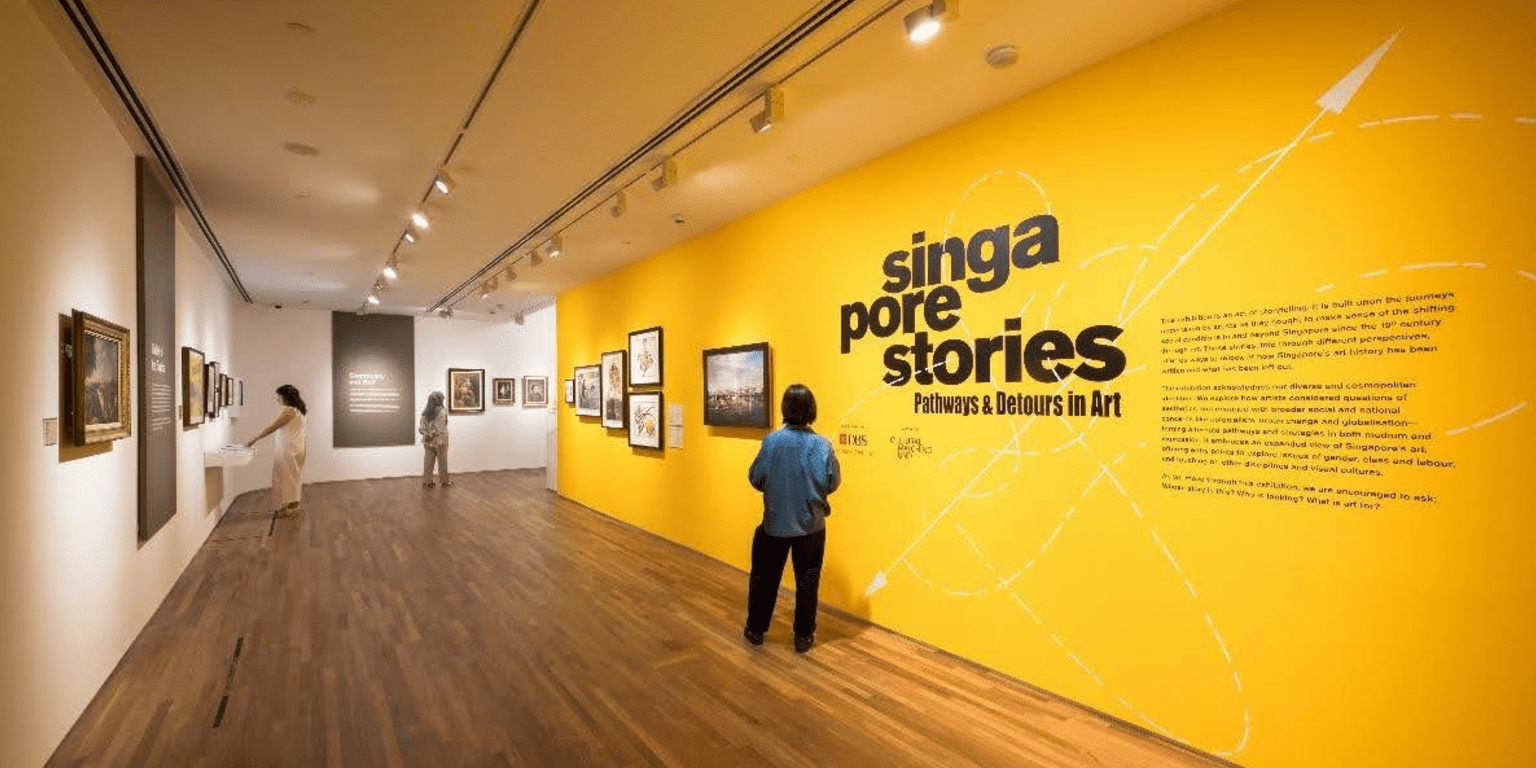
National Gallery Singapore presents the first part of its new long-term exhibition, Singapore Stories: Pathways and Detours in Art in the revamped DBS Singapore Gallery, where masterpieces and new artworks from the National Collection will be presented alongside loans from private and institutional collections. The exhibition explores Singapore’s stories through art, showing how artists have used their artworks to reflect and respond to societal changes over time.
Featuring over 200 artworks and artefacts across four sections, the exhibition examines how artists created art while addressing themes such as colonialism, urban change, and globalisation – experimenting in both medium and expression, underscoring the dynamic evolution of Singapore art. It juxtaposes familiar narratives with fresh perspectives, encouraging visitors to consider new ways of looking at art and reignite the public’s imagination through the stories that artworks tell.

The first part of Singapore Stories delves into Singapore’s art history from the 19th century to the 1960s, tracing pivotal historical moments including colonialism, and Singapore’s independence and urban development. This section celebrates key artists who embraced innovation, experimentation, and a search for identity during these transformative years. Featured artists include Chen Wen Hsi, Georgette Chen, Cheong Soo Pieng, Dora Gordine, Liu Kang, Annaratnam Gunaratnam, S. Mahdar, P. Ramlee, and more.

Dr. Seng Yu Jin, Project Director of Singapore Stories: Pathways and Detours in Art says, “This exhibition expands the narrative beyond just showing artworks to address themes such as class and labour, which were of great concern to the artists themselves. My team and I have tried to incorporate new entry points into visual culture, extending beyond painting and sculpture to include other disciplines such as graphic design, film, and literature. By including clusters of multiple works by individual artists, we bring focus to lesser-known artists and provide the room to rediscover familiar ones. For instance, we showcase Chen Wen Hsi’s versatility in representational and abstract styles through his oil and ink works, including Gibbons and Oasis.”

The first part of the exhibition is divided into four sections and opens with Market of the Tropics. This section portrays 19th-century Singapore as a vibrant hub for trade and cultural exchange. Visual depictions of Singapore in prints, paintings, and photographs emphasise Singapore’s colonial-era economic potential as a trading port and marketed its cultural diversity and image of a quiet fishing village as a tourist destination. Visitors can see rare posters that promoted the industrious railways connecting the region which served to entice tourists and market commercial exports such as tinned pineapples.

The second section, Community and Self, explores how local artists in Singapore embraced innovation and stylistic experimentation to tell diverse stories of individuals and communities. A unique feature of this section is a spotlight on moving images, showcasing Singapore’s vibrant local film industry. Visitors can sit on refurbished cinema seats and immerse themselves in excerpts from some of P. Ramlee’s most beloved films, such as Pendekar Bujang Lapok (1959). Such films, with their comedic tones, entertained audiences while exploring themes of class dynamics and the clash between tradition and modernity, offering an engaging blend of escapism and subtle commentary on urbanisation, poverty, and relationships.

The central section of the exhibition, Imagining Nation, invites visitors to reflect on what defines Singaporean art. It highlights works that explore themes of belonging and identity during a period of rapid societal change in the 1950s and 1960s. Art became a medium for negotiating personal and collective identities and reflected the everyday lives of those who made Singapore home. An example is Georgette Chen, whose iconic artwork Self-Portrait (1946) embodies her personal journey and the determination she brought to the significant contributions she would make to art in Singapore. Other key works such as Liu Kang’s Working at the Brick Factory (1954) and Chua Mia Tee’s Workers in a Canteen (1974) foreground the image of the labourer, drawing attention to much-overlooked individuals who shaped modern Singapore.

Seeking Connections, the final section, explores how both physical travel beyond Singapore and exposure to diverse aesthetic sources shaped artists’ styles and enriched Singapore’s artistic landscape. A centrepiece of Singapore Stories, Chen Wen Hsi’s monumental Gibbons (1977), measuring five metres in length, stands as a striking example of this influence. In preparation for its display in the first section of the DBS Singapore Gallery, the artwork underwent a meticulous 15-month conservation process at the Heritage Conservation Centre, funded by the Bank of America Art Conservation Project. Chen Wen Hsi’s spirit of innovation, experimentation and relentless pursuit of artistic identity is emblematic of the drive of many Singaporean artists from the 1950s through to the 1970s. His evolving style is further highlighted in Oasis (1972), a playful exploration of abstract forms through vibrant colours and shapes.
The story of abstraction, and how artists experimented with representation and form will continue with the full opening of Singapore Stories. Subsequent sections will trace how artists embraced diverse pathways as they charted their creative journeys.

Dr. Eugene Tan, Chief Executive Officer and Director of National Gallery Singapore says, “The Gallery reaches a significant milestone with its 10th anniversary in 2025. This date also marks a decade since we launched Siapa Nama Kamu? Art in Singapore since the 19th Century, which introduced Singapore’s modern and contemporary art to both local and international audiences. Our new exhibition, Singapore Stories: Pathways and Detours in Art, builds on this foundation to expand the narrative and deepen public appreciation of Singapore’s art, artists, and artistic heritage. This preview offers a glimpse of our upcoming long-term exhibition, which will expand to fill the entire second level of the Gallery’s City Hall Wing in July 2025 – just in time for Singapore’s 60th birthday celebrations.”
Photo Credit: National Gallery Singapore
The first part of Singapore Stories: Pathways and Detours in Art opens on 2nd December 2024, with the full exhibition opening in July 2025. The new long-term exhibition boasts a broader footprint and new spaces across Level 2 of the Gallery’s City Hall Wing, including a new project space for smaller, more agile narratives, and a digital immersive space. Admission is free for Singaporeans and Permanent Residents, while General Admission applies for other visitors.
 Bakchormeeboy
One thought on “Art What!: National Gallery Singapore opens new long-term exhibition ‘Singapore Stories: Pathways and Detours in Art’”