
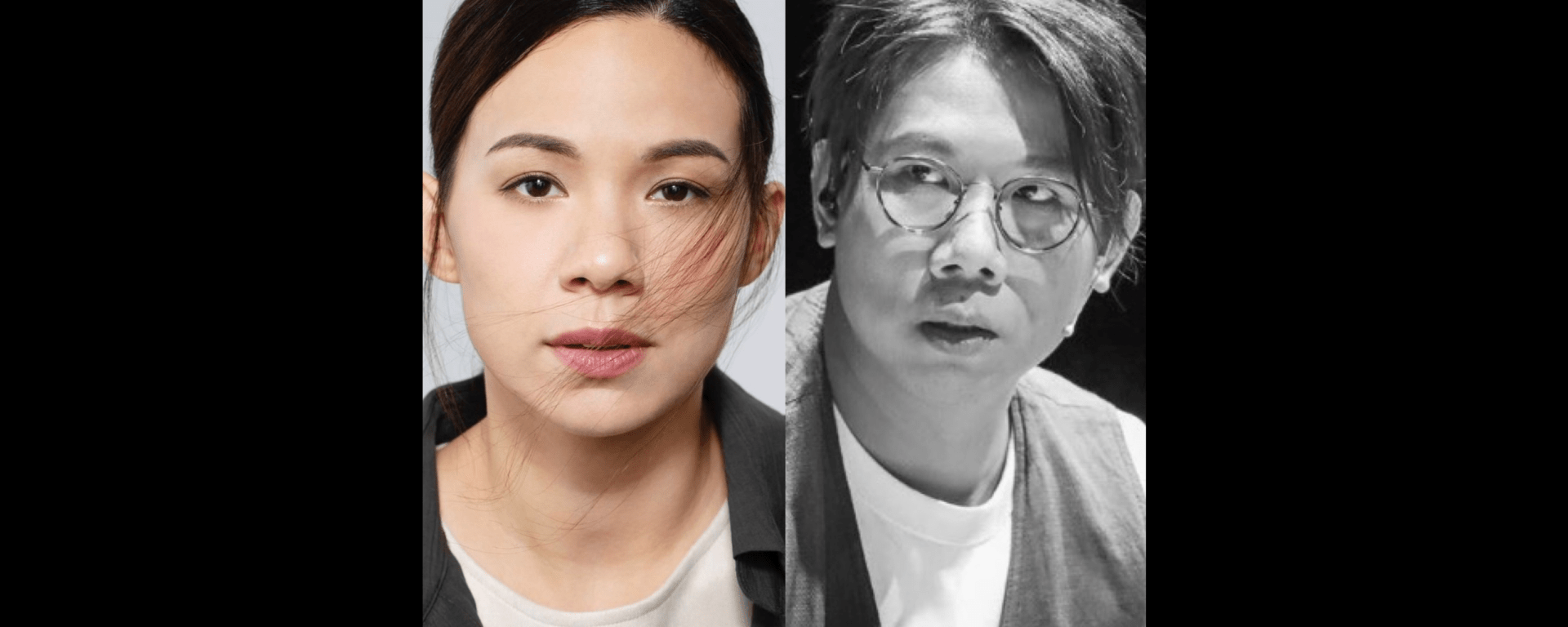
Rosa Maria Velasco has been to Singapore many times, but always in a hurry. The city, for her, has long been a place of arrival and departure; rehearsals folded into performance schedules, nights measured in curtain calls rather than conversations.
But this visit feels different. She is here not to perform, but to meet audiences, to talk, to listen, and to understand what it means to be seen outside Hong Kong. “I’ve been here many times,” she says, “but it was always because I had to perform. It was never just a pleasure trip.”
Without the pressure of an opening night, she finds herself asking questions she had never had time for before. “I never really had the chance to think: do I actually have fans here? How do Singaporean audiences see me?” The answer arrives quietly, through messages from strangers offering airport pickups, asking about her schedule, telling her they are happy she is coming. “I’m a little bit flattered,” she admits. “This time, I get to sit down, talk, share experiences. It feels like a very good opportunity to really meet people.”

Velasco is in Singapore with her husband: actor, director, and acting coach German Cheung, as part of the Hong Kong Film Gala Presentation, an event designed to bring Hong Kong filmmakers into conversation with Southeast Asian audiences at a moment when cinema everywhere feels uncertain. For Velasco, the difficulties facing film are not confined to one city or one industry. “I think it’s global,” she says. “Especially after the pandemic. All kinds of work were affected.”
In Hong Kong, cinemas have closed, investors are cautious, and projects take years to materialise. “It’s very, very difficult now,” she says, “to really find someone who is willing to invest money into a movie.” The way films are promoted has changed as well. Where once actors waited for the press to come to them, they now travel, appear at screenings, host Q&As, and maintain an online presence.
“In Hong Kong now, if a movie is already in cinemas, actors will come before or after the screening to do Q&As,” she explains. “Five years ago, we didn’t do this.” Visibility has become labour. “If we still want to be in the field, we need to be seen,” she says. “There’s not that much work coming out. I don’t want people to think I’m just at home because there’s no work. I want to show that things are still rolling.”
Yet as cinema struggles, something else in Hong Kong has begun to thrive. Cheung speaks with a quiet conviction when he talks about theatre. “Right now, in Hong Kong, the theatre scene is very active,” he says. “I think it’s the most active it has ever been.” Productions run for dozens of performances. Tickets sell out, even when prices climb. “There was a show recently with 50 performances,” he says. “The tickets were very expensive, but people still came.”

For him, this resurgence is not accidental. Film, he explains, often requires compromises, alongside funding structures, co-productions, and negotiations that can dilute language and intent. Theatre, by contrast, remains fiercely local and ground-up. “Because now, for movies, we don’t have enough funding,” he says. “We often need to cooperate with China. But theatre, theatre belongs to us.”
It is live, spoken in Cantonese, and unrepeatable. “It’s only for Hong Kong people,” he says. Velasco, who herself will be in Windmill Grass Theatre’s The Perfect Teamwork next March, adds that many film and television artists are now turning toward the stage, drawn by its immediacy and autonomy. “They want to try theatre,” she says. “Because it’s hard to make movies now.” In this inversion, cinema contracts while theatre expands, becoming a place where artists reclaim control over language, body, and audience.
At the gala, Velasco represents Golden Boy, a film she describes as “100% Hong Kong,” and the weight of that description is not lost on her. “To be here with this film today, that is a privilege,” she says. “If this had happened ten years ago, maybe it would be very common. But now, it’s not.”
The film took six or seven years to complete, sustained largely by the director Chan Wai-Koon’s own resources and persistence. “It’s been his mission,” she says. “So for me to be here, to help him share this movie, is a very special honour.” She laughs when recalling her role, a solicitor who slaps and kisses the lead, but her tone quickly steadies. “It was pretty fun,” she says, “but I take it very seriously. Because today, nothing comes easy.”
That seriousness has shaped Velasco’s career choices long before recognition arrived. Her recent Hong Kong Film Awards nominations marked a milestone, not because they changed her path, but because they affirmed the decisions she had already made. “For me, coming from theatre, to be recognised in film is already a big accomplishment,” she says. “It tells me I’m doing something right.”
The validation mattered personally as well. “My parents know I like to perform,” she says, “but they weren’t sure if I could really go all the way.” The nominations became, in her words, “a big tick,” not just for herself, but for the insistence on choosing work that felt meaningful. “I turned down many roles along the way,” she says. “I don’t want to be seen just for the sake of being seen. I want to be seen in good work.”
Many of those roles have been emotionally demanding: grieving mothers, women shaped by loss. “I cry a lot,” she says, laughing. “But I do hope people will see me in happy roles too. Or funny ones. Or maybe an assassin.” Cheung sees her recognition as something that extends beyond individual success. “It gives hope to young artists,” he says. “It tells them we can do this. We can be recognised.”

Their shared outlook is rooted in a long history. Velasco and Cheung met as students at the Hong Kong Academy for Performing Arts; he was a year ahead, and they began dating within a month. “Now it’s been 25 years,” she says.
Their marriage is inseparable from their practice. They watch each other work, argue over choices, offer blunt criticism. “We always have discussions,” Velasco says. “We say it’s too much, don’t do that.” That honesty extends into their teaching, where both are deeply engaged with younger actors and increasingly concerned by what they see. Cheung bristles at a phrase that has gained currency in Hong Kong: 認真便輸了 (if you take things seriously, you lose).
“I hate this saying,” he says. “Because if you don’t care, no drama will happen.” He leans into the idea, repeating it until it becomes a kind of manifesto. “If you don’t care, you cannot feel love. You cannot feel hate. You cannot feel broken.” His teacher once told him that drama is “the art of making mistakes,” and he has never forgotten it. “No mistake, no drama,” he says.
Velasco sees how fear of mistakes paralyses young performers. “They avoid making mistakes,” she says. “They think mistakes mean they are incapable.” To her, the opposite is true. “Showing your stupidity is very beautiful,” she says. “As an actor.” Cheung agrees. “I want young actors because they do things wrong,” he says. “And I love it.”

Both could have left Hong Kong. But both chose to stay. “We still have stories that need to be told,” Cheung says simply. “This is our nutrition.” Velasco speaks of identity shaped by constant change. “Hong Kong has endured so many transformations,” she says. “We try to hold on to what is ours, very dearly.”
Asked what stories feel most urgent now, her answer is immediate. “Understanding,” she says. “Mutual understanding.” In a climate where people are quick to judge and quicker to take offence, she believes drama must slow audiences down. Cheung expands the thought. “It’s very easy to take a stance,” he says. “But if it’s too easy, you stop listening.” Drama, for him, exists to resist that flattening. “To let people sit down,” he says, “and see how people think, how people feel, how fragile we are.” He pauses, then adds, “Even a joker, even a serial killer, he is still human.”
Velasco’s advice to young practitioners is gentle but uncompromising. “You’re not there yet,” she says. “Even for me, I’m still not there yet.” Cheung’s is expansive. “All the characters you play are already inside you,” he says. “Expand yourself.” He smiles, as if the thought still surprises him. “You can be so many things.”
In a time when cinema falters and theatre rises, when certainty feels scarce and attention fragmented, Velasco and Cheung offer something quietly radical: the insistence on caring, on making mistakes, and on continuing to tell stories, whether the world is ready to listen or not.
 Bakchormeeboy