
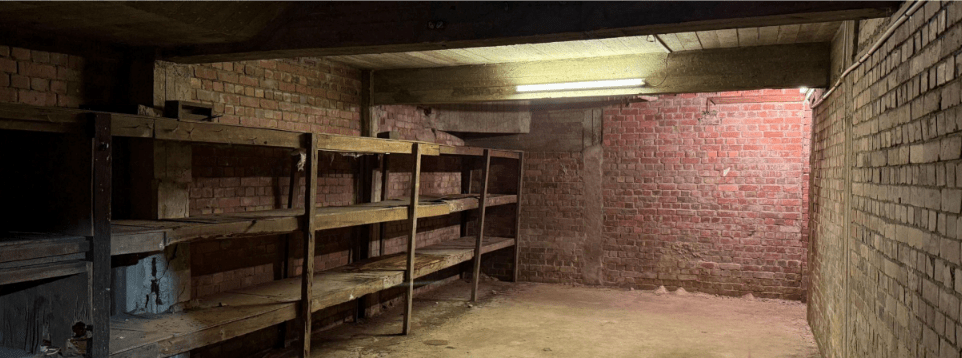
This January, one of Singapore’s most intriguing art experiences isn’t happening in a white cube gallery or a glossy museum hall. Instead, it unfolds underground, inside a rarely opened air raid shelter in Tiong Bahru.
From 19 to 26 January 2026, Digital Art Week Asia (DAWA) presents 99 Years, a new media art exhibition set within Singapore’s only surviving pre-war civilian air raid shelter, built in the 1930s. Curated by Warren Wee, the exhibition brings together artists from across Asia whose works explore time, memory, survival, and the fragile idea of permanence.

The phrase “99 years” carries a quiet tension. In Singapore and many parts of Asia, it’s the longest practical lease for property ownership; long, but never forever. At the same time, the number nine is considered auspicious in several cultures, its sound echoing the idea of longevity or eternity.
That contradiction between what endures and what inevitably fades runs through the entire exhibition. Set inside a space that once promised safety during wartime, 99 Years reflects on how human lives, cities, and memories are built on borrowed time.

The Tiong Bahru Air Raid Shelter is usually closed to the public. According to a 1939 press report, it was designed as a children’s playground in peacetime, and a functional shelter in moments of crisis. Inside, the original bricks—some from the now-defunct Alexandra Brickworks, remain embedded in the structure, carrying the physical residue of Singapore’s industrial past.
To walk through the shelter today is to step into layers of history. DAWA transforms this already charged environment into an immersive exhibition space, where contemporary artworks respond directly to the site’s atmosphere of waiting, protection, and uncertainty.

Many of the works in 99 Years are not static objects—they change, react, and even depend on the presence of visitors. Artist Jake Tan’s DATA-ST0RM responds to the movement of air itself. A projected sky remains calm until someone walks past, disrupting the stillness and causing the image to smear and fracture. It’s a subtle reminder that even invisible forces—like breath, wind, or time—leave traces.
Nearby, Tan’s MR(AI) turns intimacy into data. The work pulses in response to the artist’s real-time heart rate, borrowing the visual language of medical scans to question what it means to “look into someone’s heart” in an age of constant surveillance and machine learning.

Several artists in the exhibition explore how memory travels across generations—not just through stories, but through bodies and systems. Indonesian artist Boedi Widjaja presents both video and participatory works that merge science, poetry, and history. In A Tree Rings, A Tree Sings, he collaborates with a geneticist to imagine memory as something inherited through DNA. The generative video never plays the same way twice, mirroring the instability of remembrance itself.
In a site-specific installation, visitors are invited to stencil the words Arus (Waves) and Balik (Return) onto the shelter’s brick walls—or erase them on the final day. The work grows and mutates over time, shaped by collective choice: do we remember, or do we let go?

Singaporean artist Robert Zhao Renhui revisits a moment many in the local arts scene still remember: the cutting down of the Substation Banyan Tree. In This Tree We Must Save and Other Stories, Zhao returns to footage shot a decade ago and layers it with new images of a secondary forest quietly growing elsewhere.
The result is neither a clear lament nor a celebration. Instead, Zhao sits with discomfort, questioning the neat binaries of destruction and progress, preservation and loss. In the context of 99 Years, the work feels especially poignant, an ecological meditation on time that refuses easy moral conclusions, much like the shelter itself.

Hong Kong–based artist Bianca Tse’s AI-generated video Pong Lai reimagines her hometown as a mythological island built not by nature, but by waves of human survival. Refugees, builders, and migrants stack their lives vertically, creating a city that feels both miraculous and precarious. It’s a powerful reflection on leased land, temporary homes, and the emotional weight of cities that are constantly under construction.
For JinJin Xu, the air raid shelter becomes something closer to a ritual space. In Testimony: Tiong Bahru, metal basins filled with water sit throughout the shelter, animated by ghostly projections that suggest presence where there is absence.
Referencing philosopher Hegel’s line: “The owl of Minerva takes flight only at dusk”, Xu treats time as unresolved and non-linear. The installation blurs the line between past and present, activating the shelter as a threshold between worlds. History, in her work, is not something we move past; it lingers, quietly demanding witness.

South Korean media artist Seahee Chang shifts attention away from what we see and toward how we sense. Her video animation The Climate World: Sensing (with no eyes) explores perception as a relationship rather than an act of observation.
Emerging from her broader inquiry into climate, movement, and the body, Chang’s work suggests that to “see” is not simply to look, but to stand within a moment where the world reveals itself. In the dim, enclosed environment of the shelter, her piece feels almost meditative—inviting viewers to attune themselves to subtle rhythms and presences that often go unnoticed.

In one of the exhibition’s most unsettling installations, Malaysian artist Samantha Lee turns the bedroom into a stage for digital paranoia. Was this you? places viewers on a bed while a phone flashes endless security alerts and login warnings. Behind them, deepfake footage shows the artist committing acts she never did.
The work taps into a familiar anxiety: what happens when our digital selves begin acting without us? As our images, voices, and data outlive our bodies, Lee asks whether authenticity can survive infinite replication.

Not all the works rely on spectacle or technology. Thai artist Sareena Sattapon’s video You and me and everyone we have met gently draws attention to overlooked labour and invisible lives, connecting rural and urban worlds through reflection and pause.
Meanwhile, in Meaning White, Singaporean photographer Goh Chun Aik turns patches of white paint meant to erase vandalism into accidental abstract paintings, prompting questions about value, legitimacy, and what society chooses to conceal.

With Singapore’s January arts calendar packed with fairs and festivals, 99 Years stands out by slowing things down. It asks visitors to move through a space shaped by fear, hope, and resilience, and to consider how time settles into architecture, bodies, and data. And when you leave the shelter and step back into daylight, the world above might feel just a little more temporary and precious than before.
Digital Art Week Asia’s 99 Years runs from 19th to 26th January 2026, 11:00 to 18:00 (last entry 17:30). Entry is complimentary by online reservation through Digital Art Week Asia website Additional artist talks and programming will be announced.
 Bakchormeeboy