
Step into the cavernous halls of Tanjong Pagar Distripark and you are immediately aware of space, its vastness, its echo, its openness. It feels less like entering a gallery than walking into an unfinished sky. This sense of openness is no accident. Isang Dipang Langit: Fragments of Memory, Fields of Now, presented by Columns Gallery, takes its title from a phrase in a poem by National Artist Amado V. Hernandez: dipang langit, a sliver of sky. It’s a fleeting image, but one that carries weight, suggesting moments where memory, history, and imagination briefly align.
Rather than telling a single story, the exhibition unfolds like a walk through fragments: objects salvaged from coastal villages, boats pulled apart and rebuilt, paintings thick with symbols, bodies moving through history. Together, the group exhibition offers a textured portrait of contemporary Filipino art—layered, unresolved, and deeply human.

Large-scale installations anchor the exhibition, many of them built from materials that have already lived full lives. Oca Villamiel’s Bahay ng Mangingisda reconstructs the humble form of a fisherman’s hut using discarded nylon fishing nets. The nets, once tools for survival, now drape and sag, forming a fragile shelter that speaks quietly of poverty, labor, and endurance in coastal communities. Nearby, his work Traces presents hundreds of framed fish bones. Delicate at first glance, they linger in the mind as quiet reminders of scarcity and persistence.
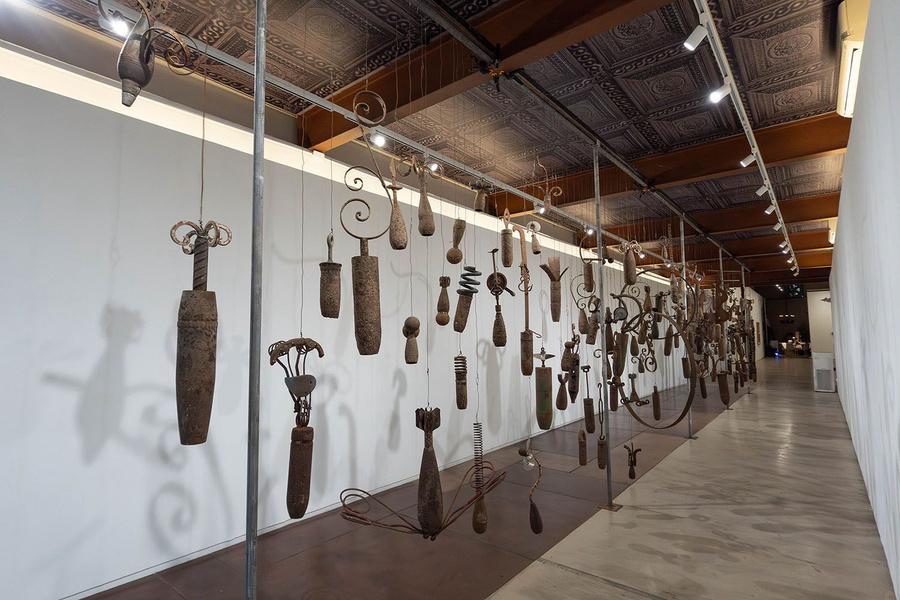
Pete Jimenez’s works also draw from the residue of labor and history. In Hard Rain, more than a hundred pieces of reclaimed steel, once part of industrial and military artefacts, are laid out like a solemn landscape. Collected over years from rural Philippine provinces, these fragments were once unearthed by villagers and sold for small sums, often to survive the day. Jimenez transforms them into something contemplative, where material memory becomes a testament to resilience. His towering sculpture TALL ORDER, assembled from old fishing boats, evokes both myth and reality—water as lifeline and battleground, sustenance and threat.
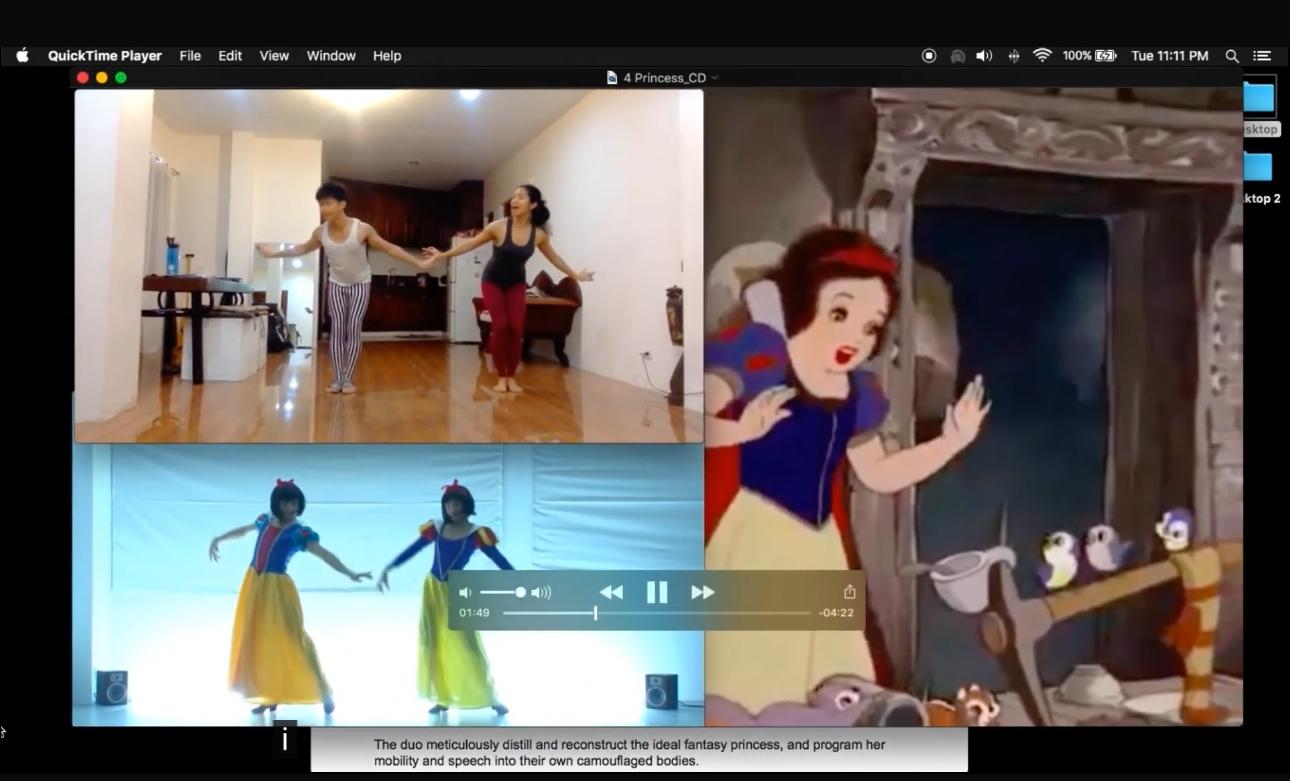
If some works speak through objects, others speak through bodies. Performance and film play a central role in Isang Dipang Langit, insisting that history is not only remembered but enacted. Eisa Jocson’s Corponomy Online takes the form of a video lecture, drawing viewers into the layered physical labor behind roles such as pole dancers, macho dancers, and Filipino entertainers abroad. What emerges is not spectacle but process, training, repetition, transmission, and a sharp awareness of how bodies are shaped by economics, desire, and power.

Russ Ligtas’ 90-minute video installation The Last Hapi is quieter, almost meditative. Referencing 1972, the year Martial Law was declared in the Philippines, the work resists clear narrative. A seated figure watches alongside the audience, turning the act of viewing into reflection. Is the Hapi a myth, a disappearing god, or a stand-in for something lost? Ligtas offers no answers, only space to sit with contradiction.
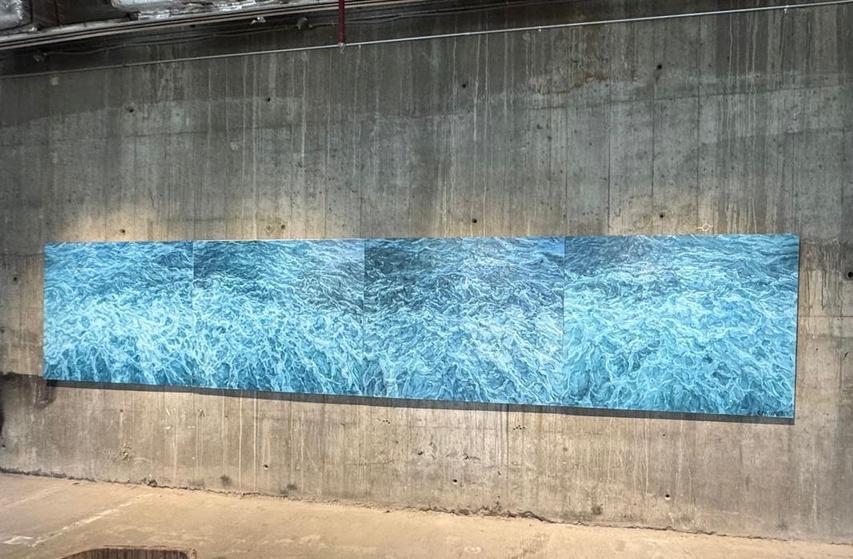
Painting provides another register of reflection. Elaine Navas’ sweeping seascapes capture the ocean mid-motion, thick with paint and time. Inspired by photographs yet resisting stillness, her works suggest movement frozen only momentarily, a reminder that nothing, even what looks calm, is ever truly still.

Manuel Ocampo’s paintings, still in progress for the exhibition, bring his signature collision of sacred and profane into the mix. Catholic symbols, colonial imagery, cartoon figures. Nothing remains pure. His canvases are loud, messy, and deliberately unsettling, mirroring the fractured realities of postcolonial identity.

Dominic Mangila turns to diaspora and migration, referencing early Filipino laborers in the United States, the Manong generation, shrimp farmers, and the contested history of the International Hotel. His painterly gestures feel performative, as if each brushstroke carries both memory and movement, history and the present body.
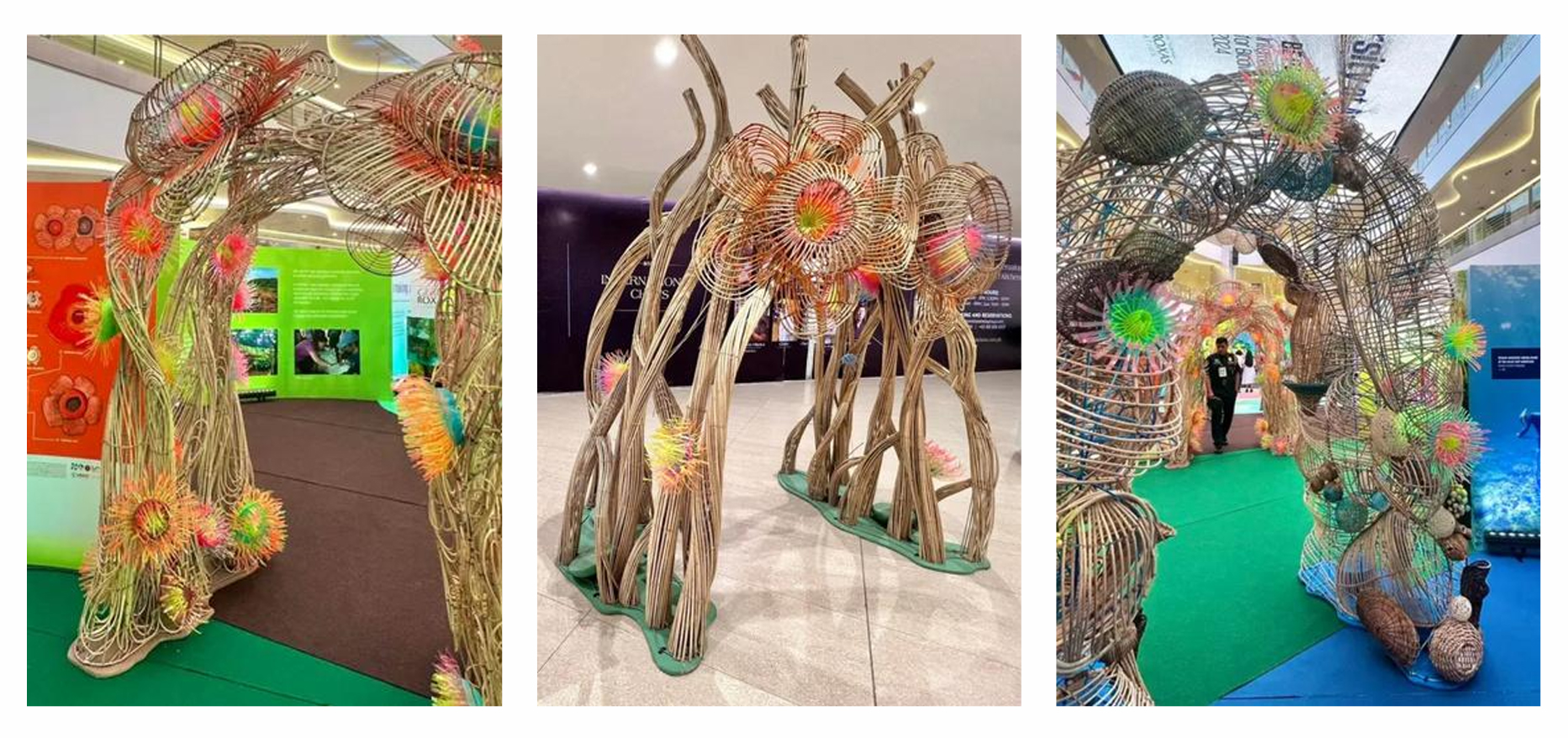
Closing the loop are Leeroy New’s installations, where recycled plastic, bamboo, and found objects are transformed into nest-like structures and floating boats. His works hover above viewers or sprawl organically through space, echoing bird nests, root systems, and island flotillas. They speak of environmental precarity, adaptability, and the ingenuity found in everyday survival. In New’s hands, trash becomes architecture, and leftovers become futures.

What makes Isang Dipang Langit compelling is its refusal to resolve. The works are dispersed throughout the industrial warehouse, not arranged in neat sequences but scattered like constellations. Visitors chart their own paths, lingering where something resonates, moving on when it doesn’t.
In the end, the exhibition doesn’t ask viewers to remember everything—only to notice what appears in that brief opening, that sliver of sky. Within fragments of fishnets, boats, bodies, and paint lies a way of seeing Filipino contemporary art not as a single narrative, but as an accumulation of lived moments—unfinished, contested, and alive.
Isang Dipang Langit: Fragments of Memory, Fields of Now runs from 20th to 31st January 2026 at Tanjong Pagar Distripark, Blk 37, #01-02. More information available here
 Bakchormeeboy