
A historic Singapore debut by the Shanghai Symphony Orchestra blends culinary-inspired modernism, Romantic virtuosity, and symphonic grandeur into an evening of vivid contrasts and sustained musical dialogue.
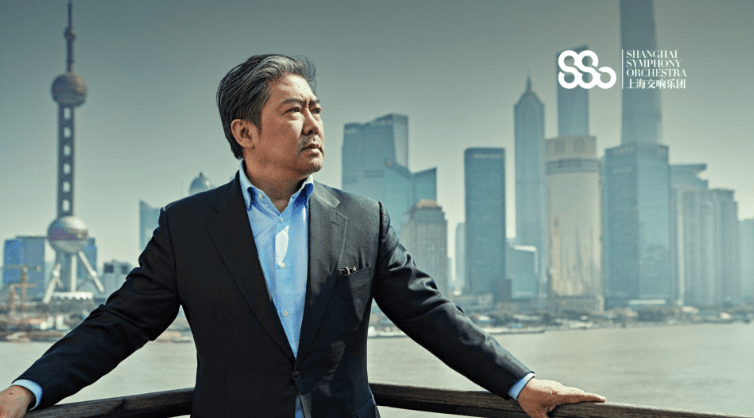
There was a palpable sense of anticipation at the Esplanade Concert Hall as audiences gathered for the Shanghai Symphony Orchestra’s first-ever performance in Singapore. As the final stop of its 2026 Asia-Pacific tour, the evening carried a quiet sense of occasion, one shaped as much by history as by expectation. Founded in 1879 and widely regarded as Asia’s oldest orchestra, the ensemble’s long-awaited debut drew a near-capacity crowd, the hall gradually settling into attentive silence before music director Long Yu took the stage to warm applause.
Long Yu’s conducting is defined less by flamboyance than by clarity and intent. His gestures are economical but precise, shaping phrases with a firm sense of architecture, an approach that served the evening’s wide-ranging programme well. The concert opened with the Singapore debut of Chinese Kitchen: A Feast of Flavours (2024) by Elliot Leung, a work commissioned to celebrate the orchestra’s 145th anniversary. Conceived as a sequence of musical “dishes,” the piece unfolded less like a conventional suite and more like a carefully curated banquet, each movement offering a distinct flavour, texture, and sense of occasion. Crisp brass and percussion captured the immediacy of high-heat cooking, their bright, rhythmic bursts evoking the kinetic energy of a busy kitchen, while more expansive passages lingered over slower, richly layered dishes such as “Buddha Jumps Over the Wall,” where the orchestration deepened into something almost tactile.
What held the work together was its sense of progression: from lighter, more playful textures to denser, more resonant ones, it moved like a meal gathering complexity and depth. Along the way, it suggested not just taste but context, glimpses of regional traditions, of labour and ritual, of memory tied to food and place. Rather than feeling episodic, the suite carried the audience across a kind of sonic dinner spread, each course distinct yet connected, the transitions handled with enough fluidity to sustain a larger arc. The orchestra played with evident relish, leaning into the vivid contrasts and colours without tipping into caricature.
From there, the programme turned to the familiar opening chords of Pyotr Ilyich Tchaikovsky’s Piano Concerto No. 1, a work whose popularity often risks overshadowing its structural boldness. Composed in 1874–75 and initially rejected by Nikolai Rubinstein, the concerto has since become a cornerstone of the Romantic repertoire. Its enduring appeal lies in its contrasts: monumental, almost declarative openings set against passages of lyric intimacy, and moments of turbulence that give way to folk-inflected warmth. The famous opening theme, grand yet fleeting, never returns, lending the work a sense of searching momentum, as though always pressing forward rather than looking back.
Featuring guest soloist Serena Wang, this performance leaned into that sense of journey. Her interpretation suggested not just virtuosity but an evolving inner voice: the opening carried a trace of unease, even vulnerability, before gradually finding footing. In the first movement, her playing moved between resistance and release, the piano at times pushing against the orchestral weight, at others weaving into it. The second movement offered a moment of reprieve, lighter, more intimate, its simplicity shaped with restraint rather than sentimentality. By the finale, the tone had shifted decisively outward, her playing taking on greater clarity and assurance as it met the orchestra’s rhythmic drive. What emerged was less a display piece than a narrative of becoming, one that traced a path from uncertainty to something more resolved, without ever losing its underlying tension.
Wang then performed an encore of Johann Sebastian Bach’s Prelude No. 1, providing a striking change of scale. Built on a continuous flow of arpeggiated harmonies, the piece is deceptively simple, unfolding with quiet inevitability rather than overt drama. Here, Wang allowed the music to breathe, shaping its gentle harmonic shifts with clarity and patience. After the emotional breadth of Tchaikovsky, the prelude felt almost meditative, its restraint and balance offering a moment of stillness, and revealing a more introspective, finely controlled side to her playing.
After the interval, Sergei Rachmaninoff’s Symphony No. 2 brought the evening to a close. Written between 1906 and 1908, the work emerged from a period of recovery and renewal: the disastrous premiere of his First Symphony in 1897 had plunged Rachmaninoff into a prolonged creative crisis, one he only overcame years later with the help of therapy and the success of his Second Piano Concerto. In this light, the Second Symphony can be heard as both a return and a reaffirmation, its expansive scale and lyrical generosity reflecting a composer rediscovering confidence in his voice. The recurring Dies Irae motif, threaded subtly through the work, lends it an undercurrent of unease, a reminder that even at its most sweeping, the music carries shadows of doubt and memory.
The symphony unfolds less as a sequence of movements than as a sustained emotional arc. The opening, emerging from the low strings, felt almost subterranean in its depth, dark, patient, and searching. From this, the winds, particularly clarinet and cor anglais, drew out long, arching lines that seemed to hover between introspection and release. The scherzo introduced a sharper energy, its rhythmic insistence cutting through the texture, yet even here there were moments of lyricism that softened its edges.
It was in the third movement, however, that the symphony found its emotional centre. The famous melody, carried by the strings and later taken up by the winds, unfolded with an unforced, almost vocal quality, less overtly sentimental than quietly sustained, as though allowing the music’s intensity to accumulate over time. The orchestra resisted the temptation to overindulge, instead letting the phrasing breathe, which gave the movement a sense of sincerity rather than excess. The finale shifted the atmosphere outward. Momentum gathered steadily, the music taking on a more extroverted, almost celebratory character. Here, the full ensemble came into focus: brass added breadth and brilliance without overwhelming the texture, strings retained clarity even in the densest passages, and percussion punctuated climaxes with precision. The effect was cumulative rather than explosive—a sense of arrival that felt earned through the symphony’s long trajectory.
A brief, reflective encore inspired by Shanghainese winter nights, introduced by Long Yu, offered a gentler close, its understated lyricism and distinctly Chinese inflection providing a moment of intimacy after the scale and sweep of Rachmaninoff, and bringing the evening to a quietly grounded conclusion. Throughout, Long Yu maintained a firm structural grip, allowing the work’s breadth to unfold without losing direction. The orchestra responded with playing that balanced richness with discipline, sustaining both the emotional weight and architectural coherence the symphony demands.
Taken as a whole, the programme felt thoughtfully shaped: contemporary and classical, East and West, intimacy alongside scale. It reflected the Shanghai Symphony Orchestra’s long-standing role as a cultural bridge, introducing Western repertoire to China while continuing to champion new works rooted in Chinese identity. In that sense, this debut felt less like a first meeting than the beginning of a relationship already rich with possibility. The audience response was generous and warm, seemingly mirroring the spirit of the evening itself. As the Singapore Symphony Orchestra prepares to return the visit in Shanghai later this year during their China tour, the exchange feels set to grow into something more sustained. If this concert was any indication, it was not just a memorable first appearance of the Shanghai Symphony Orchestra, but the start of an ongoing musical dialogue, one that will be well worth following in the years to come.
The Shanghai Symphony Orchestra played on 23rd March at Esplanade Concert Hall. More information available here
 Bakchormeeboy