
What goes on behind the pages of a novel? Quite a lot, as it turns out. And if the novel is The Original Daughter, it might involve ten years of writing, countless revisions, character profiles, research notes, elaborate spreadsheets, timelines and a writer who is, by her own admission, rather messy, and therefore very devoted to structure.
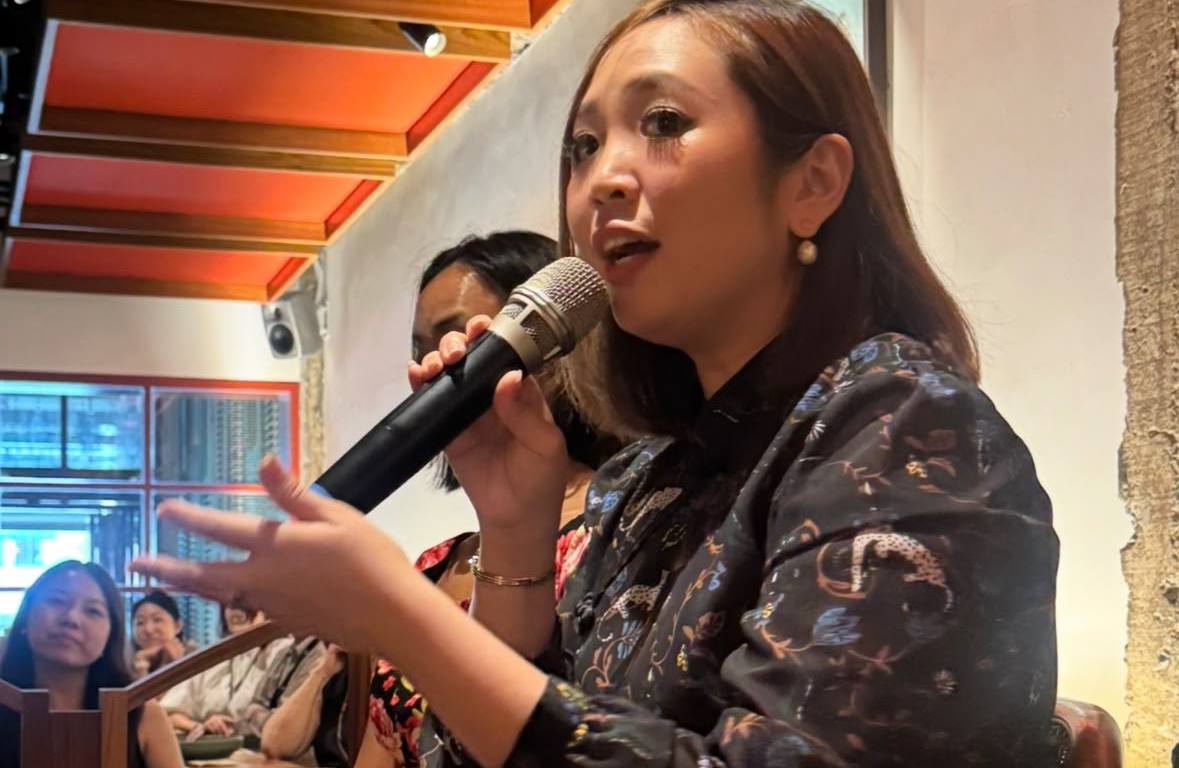
At a Singapore Writers Festival conversation at Sri Lankan restaurant Kotuwa at New Bahru, and with support from Charles & Keith, author Jemimah Wei sat down with fellow writer Meihan Boey for a generous and wide-ranging discussion about her debut novel, the craft of writing, the realities of sustaining a creative practice and the many questions that continue to occupy her as a storyteller. Candid, thoughtful and frequently funny, Jemimah offered a fascinating look into not just how she writes, but how she thinks about writing.
One of the most absorbing parts of the conversation was Jemimah’s account of the journey behind The Original Daughter. What eventually became a published novel began in 2014, and its path to completion was anything but linear. There were years of development, her MFA studies in New York in 2019, the interruptions of the pandemic, a completed draft in April 2021, and then another two years of substantial revisions.
Jemimah was refreshingly open about just how much goes into this process. She described an extensive system of notebooks, character notes, research documents and spreadsheets, including timelines to keep track of the many events and relationships in the story. Her organisational methods might sound almost intimidating to the uninitiated, but she explained them with a good deal of self-awareness. “I’m really obsessed with structure because I am messy myself,” she admitted.
It was one of the afternoon’s most memorable lines, and perhaps an apt description of the tension at the heart of creative work: the desire to let a story unfold organically while also needing to keep its many threads from unravelling.

Her approach to revision was particularly interesting. Jemimah spoke about the familiar idea of the shitty first draft, popularised by writer Anne Lamott, and the importance of accepting that an early version of a story is simply a starting point. A sentence might be beautiful, but that does not necessarily mean it belongs in the book. The larger questions matter: Does the scene work? Does the character’s decision make sense? Does the story move? Are the different parts of the novel speaking to one another?
It was a useful reminder that writing is not always the romantic business of waiting for inspiration. Much of it is patient, sometimes painstaking problem-solving. And sometimes, the writer has to be willing to let go of something they love in service of the story.
The discussion then turned to the people at the centre of The Original Daughter: Genevieve and Arin, two sisters whose relationship is shaped by family history, secrets, expectations and questions of belonging.
Jemimah shared that her initial interest lay in female friendship and the intensity of the bonds between women. She was interested in relationships that are often given less attention than romantic ones, despite how profoundly they can shape our lives. Friendships can carry enormous emotional weight, she observed, and the end of a friendship can sometimes be just as devastating as the end of a romantic relationship.
That interest eventually developed into a story about sisterhood and the arrival of an unexpected sibling. Arin enters Genevieve’s family at around seven or eight years old, having previously been given away. Her presence changes the family’s existing dynamics, bringing buried tensions and unresolved feelings to the surface.
Jemimah was interested in the fault lines that exist within families: the things left unsaid, the shame and secrets that shape relationships, and the ways people can hurt one another even when love is present. The question at the heart of these relationships is not simply whether people love one another, but what they do with that love when things become difficult.
As she asked during the conversation: “What does it mean to try to love somebody, to choose them over and over and over again, even when things are difficult?” It is a question that speaks to the emotional complexity of the novel, and to Jemimah’s interest in love as something that requires active choice rather than being a simple, uncomplicated feeling.

She also spoke about the very different inner worlds of the two sisters. Arin is quieter, shaped by the fear of being abandoned again and conditioned not to fight back. Her journey involves learning to accept that love is available to her without losing her sense of self. Genevieve, meanwhile, is driven and perfectionistic, constantly measuring herself against expectations and struggling with feelings of inadequacy. Her desire to make her mother proud is bound up with her sense of identity and place within the family.
Jemimah’s observations about these characters revealed the care with which she considers their motivations. Rather than treating them as straightforward opposites, she is interested in the insecurities, contradictions and histories that make each of them who they are.
Some of the conversation’s most poignant moments came when Jemimah reflected on childhood and the power adults have over the lives of children. She described it as “the great tragedy of childhood” to believe that you have agency, only to discover how little control you actually have over the circumstances of your life. Comparing it to Singaporean film Ah Girl, directed by her friend Ang gek Gek, she saw similarities in how they both portrayed children caught in the consequences of decisions and conflicts they had no part in creating. They become collateral damage in the unresolved difficulties of adults.
Jemimah was clear about her feelings on this: “I believe children should be protected.” She wanted readers to recognise that certain things should never happen to a child.
This concern also comes through in her treatment of the girls’ mother. Jemimah discussed how a decision made in the name of love when she was younger continues to shape her life and her relationships with her daughters. She wants to give her children a magical childhood, but her own history and emotional complexities inevitably influence the way she parents. It is this kind of contradiction that makes the family in The Original Daughter feel so layered: people can love deeply and still make choices that leave lasting wounds.
Beyond the novel, the conversation opened up a wider discussion about class, opportunity and the realities of pursuing a life in the arts. Jemimah reflected on the idea of being trans-class: moving between different class backgrounds, experiences and social worlds, and how these transitions shape one’s understanding of identity and belonging. In Singapore, narratives of hard work, scholarships and upward mobility are familiar. But the ability to pursue a particular ambition is not determined by talent or effort alone.
She considered the structural support that writers and artists need, and how access to time, resources, networks and financial security can influence who gets to make creative work. It was a thoughtful examination of the gap between celebrating individual achievement and recognising the conditions that make such achievement possible.
She also spoke about the opportunities created by social media, particularly for people who may not have inherited networks or traditional pathways into creative industries. These platforms can make it possible to find an audience, build a community and even create a livelihood in ways that were not previously available.

The discussion was a reminder that the literary world does not exist separately from the society around it. Who gets to write, whose stories are published and whose voices are heard are all shaped, in part, by the opportunities available to them. For someone who has spent so many years thinking through the architecture of a novel, Jemimah also has some clear ideas about what makes a story work.
She spoke about wanting readers to remain engaged with a book even after they have finished it – to keep discussing the characters, revisiting decisions and developing their own theories. She enjoys the idea of readers actively participating in the life of a story, rather than simply receiving everything the author has laid out for them. Her philosophy on endings was particularly well put: “A good ending is an ending that feels inevitable, but also surprising.”
An ending, in other words, should feel earned by everything that came before it, while still opening up new ways of thinking about the story. It should provide a sense of completion without necessarily closing down every possibility.
This interest in what readers take away from a book perhaps explains Jemimah’s enjoyment of lively reader communities and online discussions. She mentioned spending time on Reddit forums discussing anime, and the pleasure of seeing readers engage closely with a story, compare interpretations and theorise about what might be happening beneath the surface. It was a charming glimpse of her own readerly curiosity, as well as her interest in the many different ways a story can be understood.
What emerged over the afternoon was both a closer understanding of The Original Daughter and a portrait of a writer who approaches her craft with rigour, curiosity and a healthy dose of self-awareness, someone equally interested in the architecture of a story, the inner lives of its characters and the wider world in which those stories are told.
Singapore Writers Festival 2026: Hidden In Plain Sight runs from 13th to 22nd November 2026. Tickets and more information available here.

