
The Albizia tree is a common sight in Singapore, having been introduced to our country in the 1870s for its ability to grow quickly and provide additional shade and build up forests. However, thanks to its ability to spread its seeds by wind, it is now seen as an invasive species, and has found homes in environments as varied as wastelands to roadsides, forming their own secondary forests.
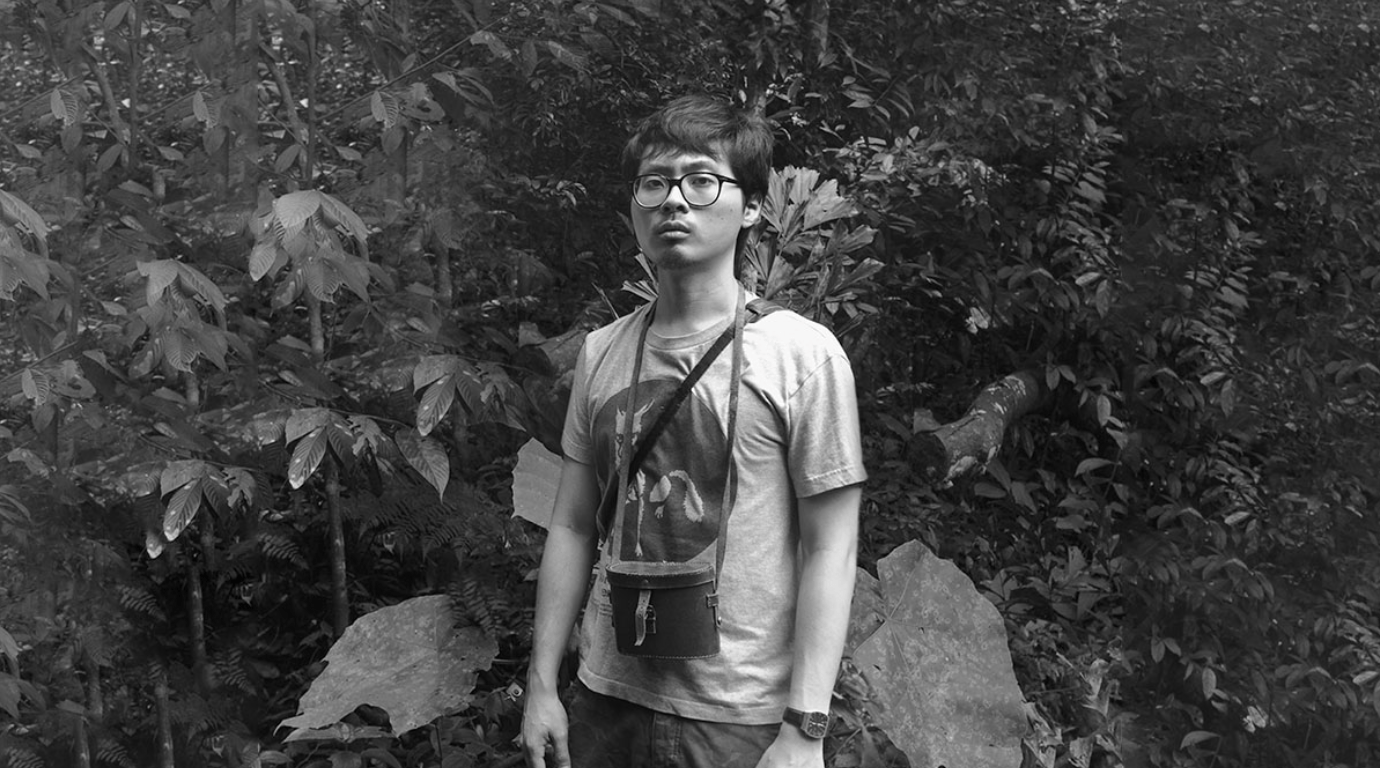
But as we discuss its future, perhaps one of the most important questions we really should ask ourselves is – what does an Albizia have to offer us? Best known for his nature-themed work, multi-disciplinary artist Robert Zhao Renhui now asks audience members to step into the shoes of an Albizia tree with his new immersive performance installation, aptly titled Albizia, to close the Esplanade’s 2023 season of The Studios, themed around land and our relationship with it.
“This isn’t the first time I’ve introduced theatrical elements into my work; previously, I’ve done things like being a tour guide on nature walks,” says Robert. “In this particular show, we’re making video screens work harder for the audience, where it almost becomes a nature walk within the Esplanade Theatre Studio, as they immerse themselves in the experience and observe their surroundings to observe certain species or behaviour that happens, all focused on in the theatre.”
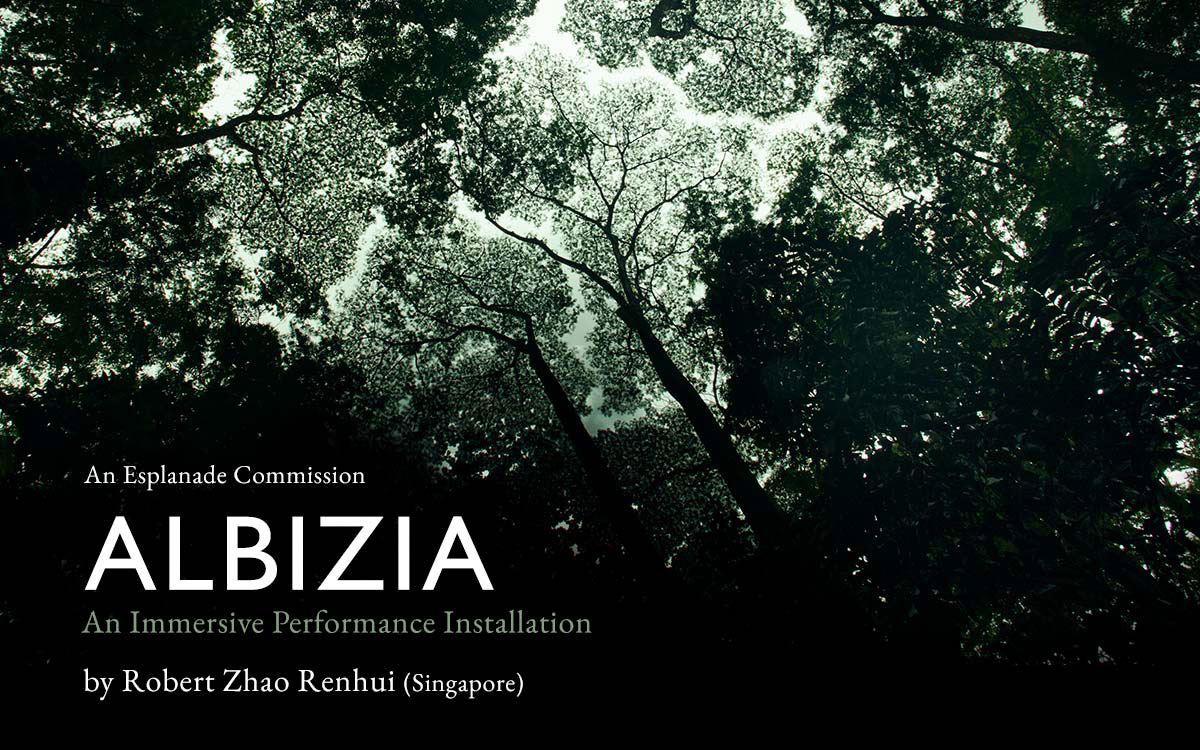
Combining videos, photography, and sound, the Esplanade Theatre Studio will be transformed into an immersive natural setting that recreates one of several secondary forests that fill Singapore’s landscape. Little interspecies dramas unfold over the course of the experience, as we witness the everyday happenings within our secondary forests, and consider the potential for life and regeneration in these forests on the margins of our island.
“The idea came about during the pandemic, when I was trapped in Singapore at home, where it overlooks the edge of the forest near Woodlands,” says Robert. “I think about how my window overlooks the secondary forest, which has the highway barricading it. It seems almost like an island, and I thought a lot about all the animal life in it, with birds and wild boars coming in and out as they cross roads and then return home. We always see animals trying to expand their territory as the forest gets smaller, because they have nowhere else to go but towards the roads and HDB blocks. So where I am exists as this boundary line between city and nature, between urbanised cities and wild secondary forests. It’s interesting how it feels like there’s this uncontrollable energy of nature, spilling into our area, and it doesn’t necessarily follow any particular goal except to simply survive and live on.”
“So in the same way, we’re trying to capture that with the installation, where we’re giving the Albizia tree a chance to showcase what it sees all around it, without judgment,” he adds. “Nature is messy, and our role is almost dramaturging all these stories that emerge as time goes by, and we really want to drive home the fact that nature is unpredictable, from the wild boars that end up in neighbourhoods to deer that appear on the roads. To us, there is this barrier between nature and the urban, but to the animals, that barrier simply doesn’t exist. During the show, people can sit down and just experience things around them, or explore to check out the smaller scenes, everything is fleeting, and you won’t be able to see everything in one sitting, and that really is the blink and you’ll miss it aspect of nature – that you have to be at the right place and right time to experience things.”
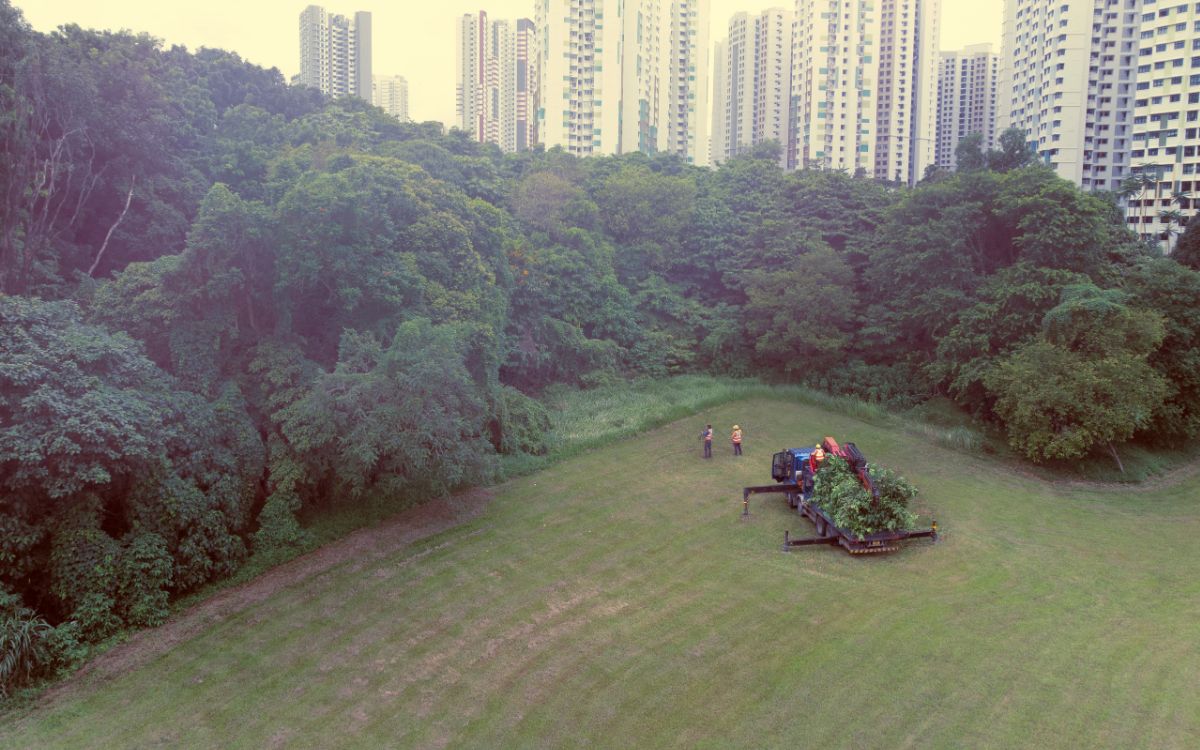
For most people in Singapore, their version of nature would be limited to television screens, where the narration from David Attenborough plays over mystical moments where we capture animals in strangely human-like acts, or soaring shots of a glorious landscape to make us better appreciate our planet. “There’s always a story to be told, and the way I crafted it, I saw it as not necessarily looking at the pristine side of nature, but looking at it from the perspective of abandoned plantations and kampungs and dumping grounds, and still seeing how nature emerges and lives there,” says Robert. “You will literally go in and think ‘wow there’s so much trash around’, and it really is the reality that these forests are messy, dirty places, but in the absence of human activity, have taken on a life of their own. There is this resilience in nature that can cope or tolerate stress, and survive all that we throw at it.”
Speaking about the process of collecting footage and preparing the work with the Esplanade, Robert, who often works in much smaller teams, found it quite different from his usual process. “A lot of things can happen while filming, and most of the time I just collect my own footage on my own or with fewer people, because nature is unpredictable and so often, nothing happens at all,” he says. “Now with the Esplanade and my own creative team, we have many things to consider, and a lot more we had to think about regarding how to guide audience members and lay things out as clearly as possible, compared to the more DIY approach to a gallery exhibition. There are so many conversations and concepts and ideas flying around all at once, and it’s quite exciting to see it all come together when each creative contributes their own magic to the project. In a theatre, we must be fully in control of everything, with everyone following a schedule and ensuring their part is in place so others can work on theirs, all this so that we can successfully bring the forest into the theatre.”
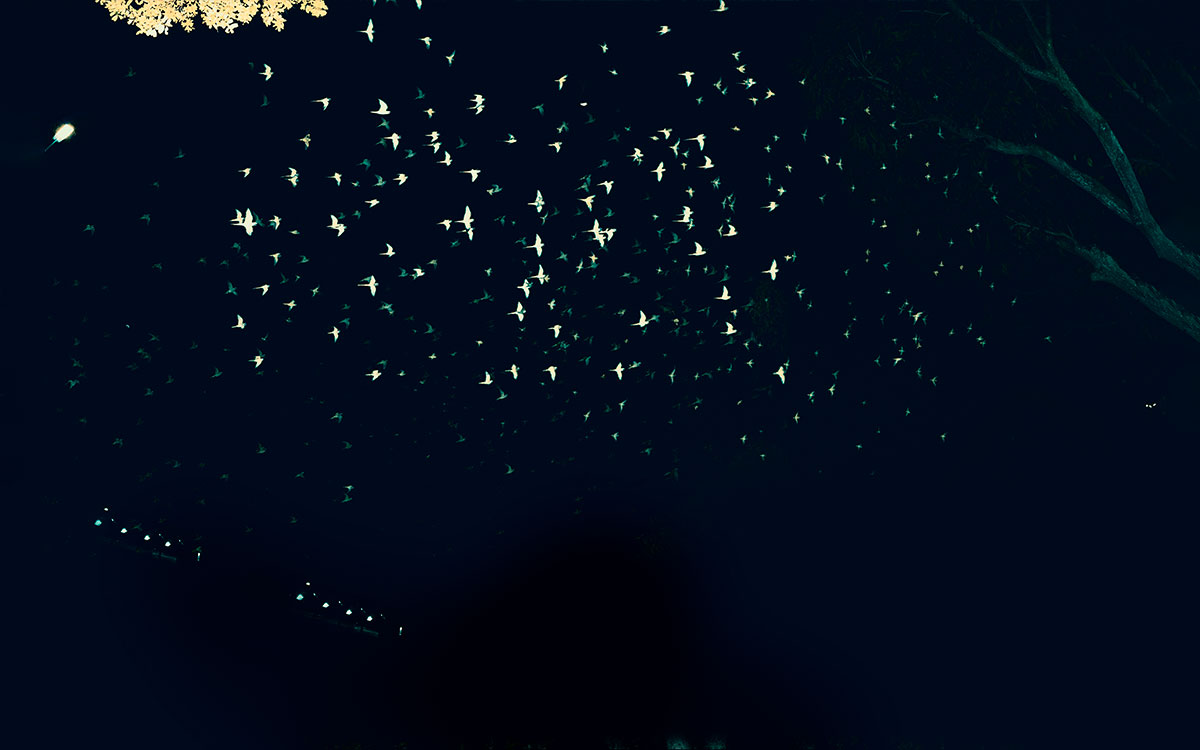
Is it then possible to consider a peaceful coexistence between man and nature when we’re constantly tussling for space in land-scarce Singapore? “One thing I’m doing is that I’m leading the birdwatching tour at Choa Chu Kang, which will take tourists to this one specific tree there, where without fail, you’ll end up seeing hundreds of parrots coming to roost in the tree every evening,” says Robert. “You end up wondering what they’re doing here, in the middle of this space with so many HDB blocks. It could be anywhere, but they somehow chose this one specific spot to gather over and over. It’s not logical either, because the sheer number of birds in one tree makes it dangerous, yet it’s been happening for the last decade. What’s also beautiful is how the local residents know that exactly 6:50pm, everyone in the area will stop to take a look at the phenomenon, and it’s almost like they’ve gotten used to it, and this symbiotic relationship people have formed with the parrots.”
In considering the Albizia tree’s place in Singapore then, as an introduced alien species, can we welcome it as a foreign entity that has taken root on our land? “The Albizia can grow very well in our climate, and tends to grow on rocks and tarmac, so it doesn’t have very strong foundations, often falling over during storms which poses a danger to road users,” explains Robert. “That’s why so many of them were removed from the roadside, but plenty still exist in the secondary forests. Secondary forests are seen as second tier forests, not native to Singapore, but they are more than a ‘rubbish landscape’. Albizias are still one of the tallest trees around, and grow fast enough to provide reliable shade and homes for animals. In fact, the Albizia can be attributed to the population increase in eagles in Singapore. Nature doesn’t give two hoots about what’s native or alien, they just want to make life, which the Albizia seems to embody very well.”
Robert goes on to talk about how trees are so integral to an ecosystem, where every time they fall, it completely transforms the environment, particularly in regard to animal homes or affecting the makeup of life in the forest. “We need to adopt a wider view of things, and not just protecting or destroying for the sake of it. I do think that Singapore actually serves as a model for the region, where we consider ourselves a city for its people, and problems can arise as well if we make it ‘too green’, such as wild boars attacking people, so there must be a careful balance,” says Robert. “But maybe we’re doing something right – a Taiwanese friend came to Singapore recently and marvelled how nobody wore caps or hats despite it being so hot, and it made me realise how integrated trees are in our landscape and infrastructure that we forget that they’re there and we really are immersed in nature. Of course there will be people who want even more of it, like how there are spaces we intentionally avoid pruning as a rewilding effort, and bring back certain species, and I guess we too just adapt and get used to how things are.”
“People really are quite tolerant of nature in their surroundings, like for the parrots, no one throws water at them or tries to chase them away. I think we have an inherent degree of respect for nature, and maybe that’s why people are interested in continuing to develop their relationship with it,” he continues. “At the Gillman Forest Nature Walk for example, people will probably be waking up at 6am on a Saturday morning to come down to GIllman Barracks, and perhaps it also stems from an understanding that to enter such a space, you have to mentally and physically prepare yourself too. Yet, they’re willing to do such things because if you do happen to experience something out there, it’s almost a miracle because whether it’s an animal encounter or something, it’s only going to happen once, and you have to be there at the right place and right time.”
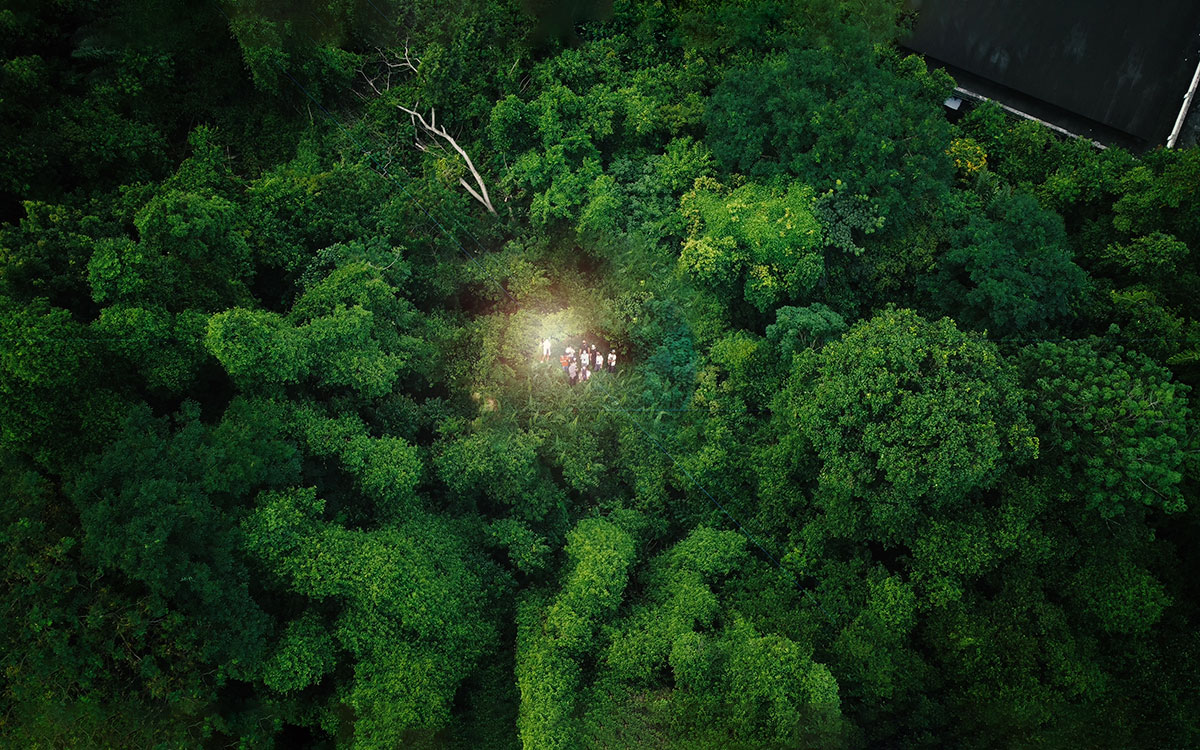
And in the same way, Robert too views his own work as a matter of being in the right place and right time, everything happening just when it needs to. “Things tend to fall into place, and I do like to just go with the flow. The way I plan for work, I simply respond to things that I hear about, or someone tells me about something that piques my interest,” he says. “I end up just exploring, researching whatever comes along, which is a more organic process for me, to concentrate on the things around me, documenting or paying attention to them, before it becomes too late and I no longer have access to them, or they disappear forever.”
Albizia runs from 31st August to 3rd September 2023 at the Esplanade Theatre Studio. Tickets available here
The Studios 2023 runs from July to September 2023 at the Esplanade. Full programme and tickets available here
 Bakchormeeboy