

One of Indonesian artist Melati Suryodarmo’s most iconic works is her dance work Exergie: Butter Dance (2000), in which she dances atop a pile of fast melting butter. It is a strange work to witness, as she increasingly loses her balance on the slippery, oily floor, meant to have her exploring the specific bodily sensation experienced in the single “delicate moment” where the body loses control before falling over.
But as futile of a Sisyphean task as it seems, as Melati stands up again after each fall, she emphasizes both the subjective nature of pain as part of a universal human experience and the importance of human will and determination at specific moments in life. The focus we realise then, is about the triumph of the human body, an idea that Melati continues to explore in her other works as she subjects herself to durational, sometimes torturous pieces that strain and stretch her body with wounds and bruises, unsure of her limits and capacity for pain.
Now in her 50s, Melati is stepping away from the spotlight, and instead taking on the role of choreographer instead, speaking through her dancers’ bodies in her latest work Lapse. Playing as part of the Esplanade’s da:ns focus 2023: CAN – Connect Asia Now, Lapse was initially released as two short films, and this performance marks its live stage debut.
“Both my parents are dancers, and I was always exposed to dance since I was young, where I was trained in Japanese Butoh dance since I was 11,” says Melati. “But I always had a strange relationship with dance, because my body type doesn’t suit the ‘ideal’ of the dancer, where it was much more masculine in comparison. Especially in traditional dance, the expectations are more rigid and I faced a lot of discrimination despite loving dance.”
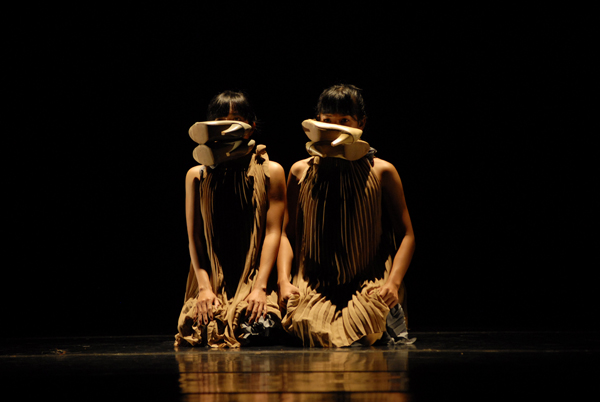
Despite all that, and even earning herself a degree in international relations, Melati never fully left her love behind, and ended up moving to Germany where she would pursue dance (under Anzu Furukawa) and performance art (under Marina Abramović) at Braunschweig University of Art. “I don’t think I ever really planned to be a ‘performance artist’ specifically, but I suppose my own practice took me towards extending beyond dance, to explore how to bring the body to different spaces in non-conventional spaces and the public,” she says.
“I tend to work solo, and it was only when I was doing works like Almost There (2011) that I started to explore dance-theatre, working with other bodies beyond my own that would involve more rehearsals and discipline, working with lighting and sound designers. Above all, it is not just me telling people what to do, but a collaborative process where I would get my dancers to explore their own journey of life in their bodies, and the emotions and inner landscape within.”
Lapse then, follows in the same vein, where Melati brings together dancers Razan Wirjosandjojo, Mekratingrum Hapsari, Gabriela Hasianna, and Yu Feng Lai, together with sound designer and live musician Yuen Chee Wai (from Singapore music collective The Observatory) to orchestrate a team effort that ‘connects via failures’, while collectively attempting a new ‘structure and alchemy of senses’.
“Choreography is more complicated, because you need to learn about each other and how you relate, accounting for people’s different mental spaces for both your dancers and musicians,” says Melati. “But my team is not my tool, I need to facilitate organic development and treat them as human beings who have the freedom to decide how to carry the concept of the work, and build that trust for themselves to enter their own inner world. Some of them weren’t trained like this, and find it difficult to let go and be themselves, and become very worried about imperfections. This especially applies to hip-hop or traditional dance, and part of my process is helping people learn to let loose and detach from that.”
“Sometimes, rehearsals can go up to eight hours, almost double that of what a solo work might involve, because we go beyond intensive physical work, and incorporate reading and talking and cooking, basically time spent together,” she adds. “Some of my dancers are the students of good friends, and it takes time for them to build up that chemistry with each other, and understand the different ways they use their bodies onstage. It’s about aligning that language of movement and giving each other space to improvise and enjoy being with each other, that builds up that process of trust. From there, you can tell a kind of story, and express yourself better. It doesn’t have to be perfect, but it has to be from you.”
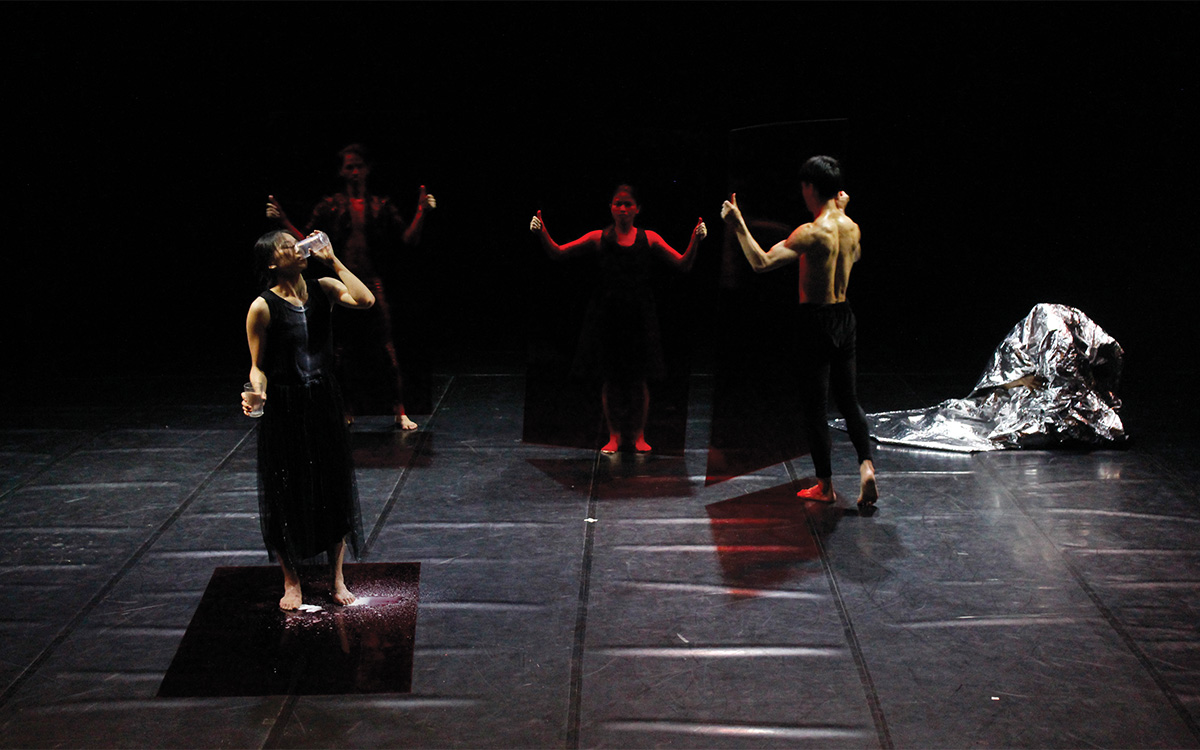
Drawing inspiration from by-products of chaos and situations that represent a gradual decline in the efficiency, stability, and overall functioning of society, Lapse signifies a transition from a state of order and coherence to one of disorder and confusion. It all sounds rather abstract, but Melati sheds some light on what it might all boil down to or concern. “Lapse is partially about observing chaos within our own reality, and is about the potential we have as human relationships to create collective chaos, which isn’t necessarily a bad thing,” says Melati. “There’s a process and method to this, where sometimes there are unspoken circumstances and happenings that make certain situations acceptable, like how in Indonesia, you can sometimes see a mother carrying a baby on a motorbike, while there is a child both in front and behind her, she’s not wearing a helmet and she’s driving in this crazy chaotic traffic.”
“It’s scary to be living like this, and it seems as if she’s putting everything at risk by not respecting the rules of traffic or vehicle allowance, but the more you see these, the more you realise that there is a system it all operates on, where people become part of the collective responsible for ensuring she is cared for,” Melati continues. “There is an unspoken understanding that she is doing this not because she wants to but has to, perhaps because she cannot find or afford a babysitter, and she cannot use other forms of transport. Everyone needs to slow down as a result, and understand that she is a mother trying her best. Lapse then is about decolonising our way of thinking, to change perspectives and see everything in context, and how all these invisible factors influence society. We cannot use a Western lens and system of values in Indonesia because of how different our circumstances are, whether in terms of gender or religion, and we must be aware of our own biases that cloud our perspectives.”
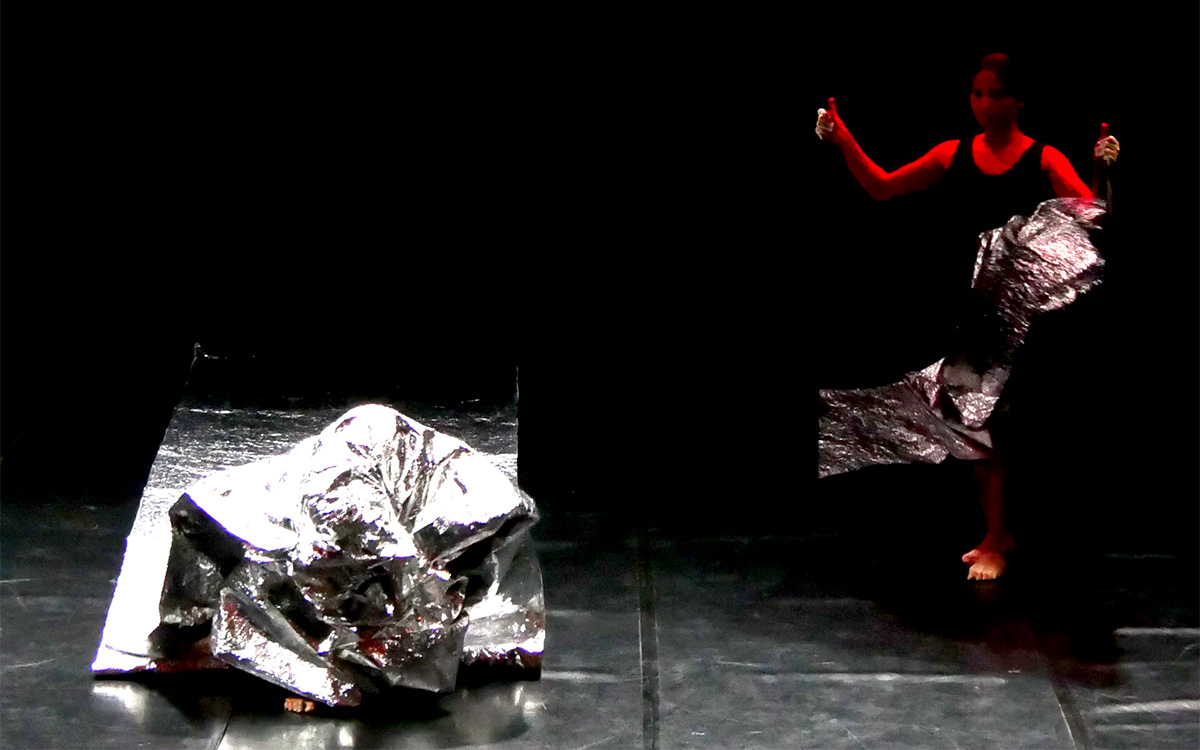
Lapse could be said to be about the symptomatic nature of systemic breakdowns, ethical decline and societal disillusionment of our time, where the lapses in society manifest through the decay of behaviour, diminishing social cohesion, ruptured institutions and the disintegration of moral frameworks, the work investigates the unpredictable space between reality and a vision of collective commitment towards change. We no longer live as a society, but for ourselves.
“That sentiment comes out in the choreography as well, where the dancers don’t really interact with each other onstage, but remain connected in some way. It reflects how sometimes the chemistry just doesn’t quite stick even when we meet in real life, or how there is that strange disconnect even when we interact digitally,” says Melati. “That trust I talked about doesn’t mean having to be friends, it just means being able to work together within the space, which I will try to bring the audience closer to via sound and objects. It becomes this mysterious liminal space, and I hope that it manages to mentally engage the audience as well.”
Melati draws parallels between Lapse and her own 2012 solo performance, I’m a Ghost in My Own House (2012), a 12-hour durational performance where she physically exhausts herself while crushing charcoal, reflecting her feelings of dislocation following her return to Indonesia after living in Germany for many years, but with hope for renewal and belonging again. “Many standards of living are determined by the United Nations, but do not mesh with the values and conditions of indigenous cultures, who are seen as uncivilised. Sometimes I wonder in turn, about whether the modernisation of our lifestyles then causes damage without realising it, both to ourselves or the environment around us,” she says.
In thinking about the future though, Melati is hopeful that things do get better, especially with regards to the dance scene. “I’m very optimistic that even with the advancement of technology, we will always miss our bodies. We can be wowed by AI and digital art and streaming now, but our bodies will always remain integral as long as humans exist, because we have this innate desire to touch and see. and smell, and to be there in real life, something that came up a lot during the pandemic,” say Melati. “On the other hand, I do hope that some things will change, especially with regards to national education, and to be able to no longer treat children as robots or products, but as fellow human beings. We need to give them the opportunity to grow and learn in a better world, and have freedom over indoctrination.”

Thinking about the Asian identity, especially with Lapse playing as part of CAN, Melati also passes commentary on the state of Asian dance. “Looking ahead, it’s important to really think about how we can communicate within Asia, and to others as well, to remove ourselves from the colonial way of seeing, and not to pit ourselves against each other like saying ‘oh Indonesia isn’t as good as China’,” she says. “Identity politics can be dangerous, as well as tribalism, and we have to learn to be more open to ideas while also not condemning certain groups as ‘primitive’. There is definitely so much potential for the arts, in Southeast Asia at least, and how we’re already so connected in our beliefs and cultures.”
“We don’t have to limit ourselves to false dichotomies like the traditional and the contemporary, and it’s not a matter of the two competing against each other. So you can see how even Lapse takes on animals as symbols, which borrows from ancient Indonesian beliefs, like the Garuda being our national symbol and of power,” she concludes. “Tradition is not exotic or the enemy, and it has always stayed with us. We must not become stuck in infrastructure or limit our ways of thinking, and must have collective respect for one another. And I’m happy because I do see young people reconnect to their roots and rediscover their heritage, and all that is what will help them know themselves, and strengthen and develop the future of artistic behaviour.”
Lapse runs from 13th to 15th October 2023 at the Esplanade Theatre Studio. Tickets available here
da:ns focus 2023: CAN – Connect Asia Now runs from 13th to 15th October 2023 at the Esplanade. More information available here
Production Credits:
| Concept, Choreography, Costumes and Installation: Melati Suryodarmo Performed by: Razan Wirjosandjojo, Mekratingrum Hapsari, Gabriela Hasianna, Yu Feng Lai Live music: Yuen Chee Wai Lighting design: Adrian Tan Rehearsal Coach: Razan Wirjosandjojo Production management: Studio Plesungan Technical and Stage Manager: Yasmina Zulkarnain Production Assistant: Achri Hendratno Technical Assistant: Annastasya Verina Sound system design: Yong Rong Zhao |
 Bakchormeeboy