
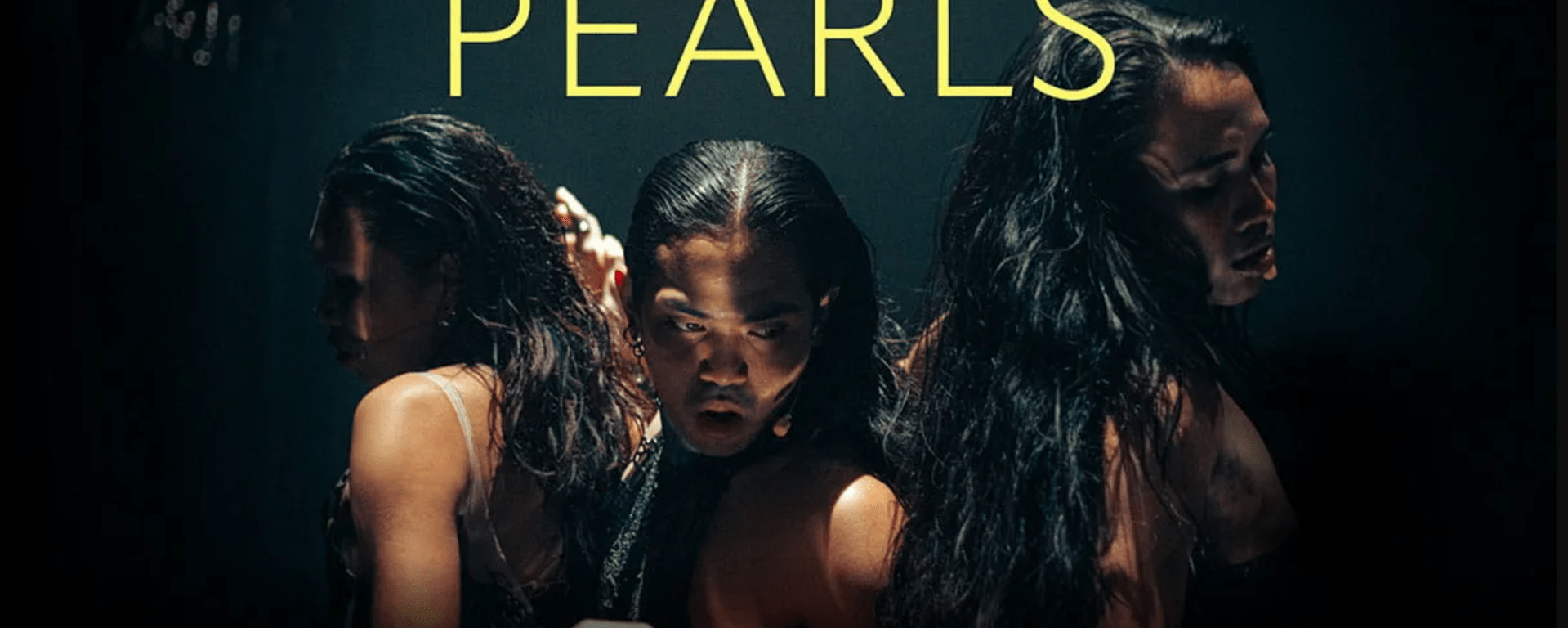
The non-binary body finds healing and solace in decolonisation and community.
To be queer is to resist norms, and to live as a queer person inherently means to stand apart from the majority, incurring curiosity and perhaps even fear in others. The queer existence then is one often fraught with pain and violence, to face prejudice on account of one’s differences, and a constant search for belonging that allows them the space to heal.
In the Asian premiere of Joshua Serafin’s PEARLS, which played over the weekend as part of the Esplanade’s 2024 edition of da:ns focus – Connect Asia Now (CAN), Joshua and fellow collaborators Lukresia Quismundo and Bunny Cadag came together to build and share precisely that sense of community, finding solace in each other’s presence, of trauma bonding and of recovery by rejecting the norm, of actively choosing to find joy in each other rather than fixating on the pain.
Multi-disciplinary in nature, PEARLS opens with a short film, as we glimpse footage of the Filipino landscape, wandering through water bodies, fields, beaches and more. It is perhaps a reminder of how the Southeast Asian identity is so inherently tied to the land and natural world, and how we draw so much energy and power from it. That ties back into the mysticism that seems to flow through PEARLS as well, as the film ends and ultraviolet light fills the space, revealing symbols, and all three performers lying on the ground, each one in a circle at the end point of an equilateral triangle, as if forming some kind of trinity.
Bunny Cadag utilises her powerful, expressive voice to sing, the sonorous melody filling the space and waking her fellow performers from slumber. All three appear similar to visual coherence, all sporting long hair worn loose, dressed in a black bodysuit and translucent black skirt, as they rise up and walk the space. Yet they are unique, each telling their own experiences of trauma, channeling it into their performance as they speak to us. There is agitation, frustration in their bodies as they remove their skirts, angered as they begin to speak out against their colonial past. Hitting the ground with their skirts, each strike is whip-like, ringing and perhaps a reminder of ill-treatment and pain at the hands of colonial masters, beating it out of the space.
But PEARLS is not merely about pain, but instead, about healing. The lights come on and all three come forward, addressing the audience directly and engaging us in conversation, finding the Filipinos among the crowd, talking about their love of food and their love of the beach, asking us to think of how we find peace through our own ‘ritualities’ when at our lowest. With this in mind, we are asked to join them in an act of spirituality, as we chant lines over and over again – ‘in the middle of the sea/go towards the sun/sink to the ends of the sea/she’s gone/vanishing away’, a spell that seems to unite us in the space, edging us towards mentally leaving the space and finding an imagined, promised land.
The performers retreat backstage, and soft music plays. In what is the most visually-stunning moment of the performance, white smoke begins spewing from a large, oyster-like structure hanging from the ceiling, clouding the space and cloaking it in mysticism. It is an invitation to meditate, to take a moment to relax away from one’s troubles and wounds. And then it happens – the oyster begins to drip relentlessly, forming a growing pool of white beneath it in the triangle. The sexual euphemism is not lost on us, but if anything, it seems to imply orgasmic joy that the oyster is experiencing to gush this much.
But what is it so happy about? All three performer re-emerge, now dressed only in undergarments covering their nether regions, but topless, showing off their non-binary bodies with pride and joy. They touch the white liquid, commenting on its temperature, its viscosity, and smiling. Their conversation is casual, unrehearsed, stiffening as they lay in the cold pool, before sitting up and playing with it. There is a sense of camaraderie between them as they begin to play in it, inviting us to join them, while they splash about, making ‘omelettes’ by rapidly spinning the liquid and tossing it. They are covered in this liquid joy, slipping and sliding, posing and spinning around like models – there is no other way to describe it beyond pure euphoria in each other’s presence.
This then is the crux of PEARLS – in an unkind world that one cannot change overnight or even in one’s lifetime, how does one continue to live and survive? It is in finding kindred spirits and souls who are experiencing similar ideas of loss, yet reverse that by having the company of each other, leading messy lives. The darkness of the past must give way to a white purity of spirit, and that is exemplified in a final short film we view, as the performers engage with locals, playing traditional instruments, naked or almost naked as they plunge into the waters, sit by a fire together, run through the tall grass, powerful as they parade themselves through the space.
It is healing of the best kind, by reconnecting with one’s roots, friendship and simply becoming one with nature and one’s people again. While we may not need to go to such extremes, as long as we find kinship, we simply have to learn to have fun, to take a moment to sing together, be with each other to find the joy that heals us, and we too can transform from painful grains into beautiful pearls.
PEARLS ran from 4th to 6th October 2024 at the Esplanade Theatre Studio. More information available here
da:ns focus – Connect Asia Now (CAN) 2024 runs from 4th to 6th October 2024 at the Esplanade. Full programme available here
Production Credits:
| Concept Joshua Serafin Performance Joshua Serafin, Lukresia Quismundo & Bunny Cadag Sound Pablo Lilienfeld Scenography RV Light Ryoya Fudetani Costumes Katrien Baetslé Video Federico Vladimir Strate Pezdirc Artistic Assistance Rasa Alksnyte Theory and Poetry Jaya Jacobo Outside Eye Arco Renz Co-production VIERNULVIER (BE), BIT Teatergarasjen (NO), HAU Hebbel Am Ufer (DE), beursschouwburg (BE), STUK (BE), WpZimmer & C-TAKT (BE), Theater Rotterdam (NL), Esplanade – Theatres on the Bay (SG) Supported by Vlaamse Gemeenschap, Vlaamse Gemeenschapscommissie Residencies Emerging Islands Acknowledgement Talaandig-Manobo community and Kulahi in Bukidnon The text includes translations by Christian Jil Benitez, Rica Paras and Macky Torrechilla. |
 Bakchormeeboy