
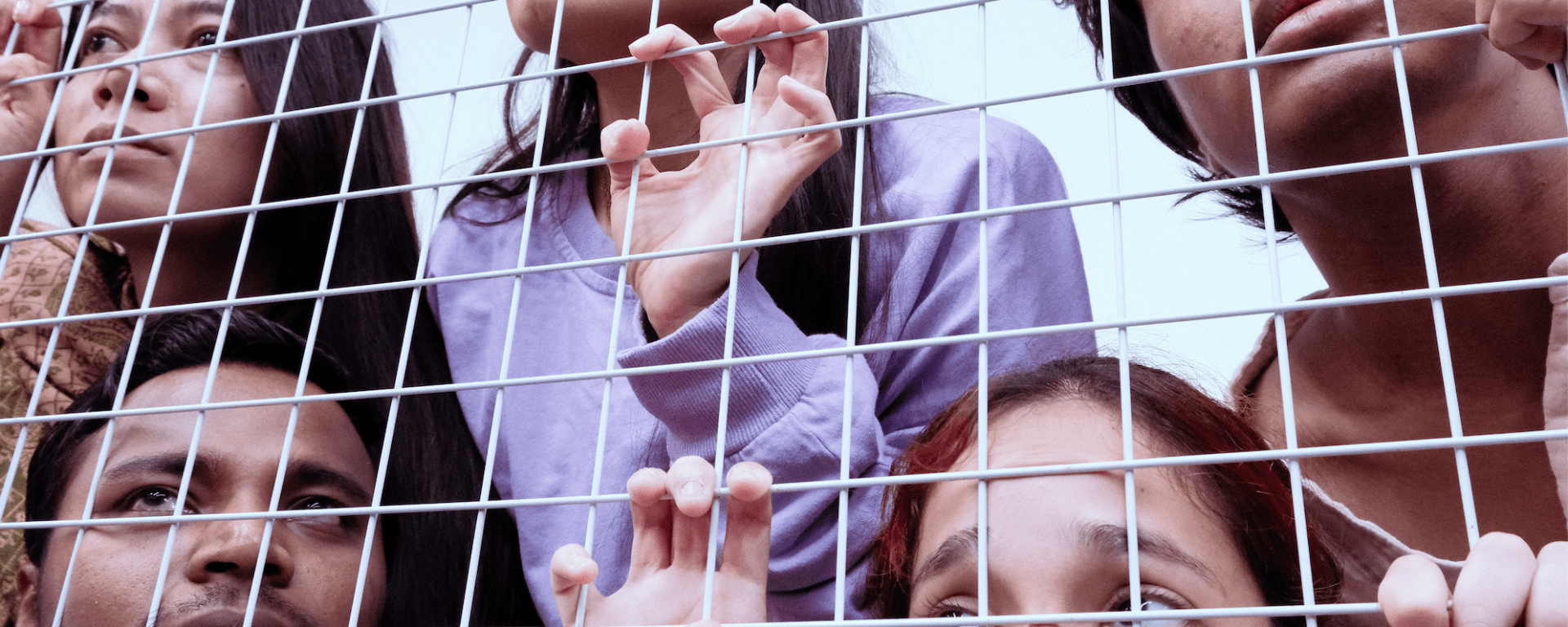
Comprising a group of theatre enthusiasts who also happen to be migrant workers, Birds Migrant Theatre is back for another edition of the M1 Singapore Fringe Festival this coming January. Following Foreign Bodies in 2023, which we described as ‘an unflinching, objectively written story that speaks truth to the limitations of being a migrant in Singapore’, the team is back withThe Troupe, yet another original work that now deals with a much bigger scope.
In The Troupe, watch as a troupe of performers put on plays that speak of current world issues—from war to the refugee crisis—and how people who are affected by displacement strive for a more positive future, realising that some of their stories hit much closer to home than they might initially think. Speaking to Birds Migrant Theatre members Ak Zilani, Deni Apriyani, and mentor Serena Ho, we found out more about the process and idea behind The Troupe, and what we can expect when it premieres next year. Read the interview in full below:

Bakchormeeboy: How much did life change for you after migrating to Singapore for work?
Deni: I’m not quite sure how much migrating to Singapore changed my life because, to be honest, I don’t have anything to compare it to. This is my first experience spending my adulthood working abroad; I really have no clue what my life would be like if I had migrated somewhere else or stayed in my home country. Maybe I’d be married with five kids by now – who knows?!
What I do know is that it’s hard for me to imagine leaving Singapore for good. I’ve got lovely friends, great employers… and money, of course, adulting is expensive. But I feel like it changed the atmosphere of our home. Having income stability makes our home feel more peaceful, I guess. Financial difficulties were one of the reasons for constant conflict in our home. Also, it changed the way our neighbours and relatives see our family. Sadly, it’s a clear sign that money changes how people perceive us. They now talk to us, you know?
Zilani: My life changed so much after I migrated to Singapore. The initial phase was full of difficulties, my work was physically demanding, and I was unfamiliar with many aspects of it. However, I gradually adapted to the situation and grew stronger both mentally and physically. After a decade of ups and downs, I can confidently say I’m a very different person now than I was ten years ago. Singapore has brought me both hardships and blessings. It gave me lifelong friends and a safe space in theatre, where I could explore the version of myself that goes beyond being just a worker.

Bakchormeeboy: How did the idea for The Troupe first come about? Where did the inspiration come from for the script and how the story would play out?
Deni: The idea for The Troupe came about in a similar way to our previous project, Foreign Bodies. We had a catch-up session after a long break from our previous show, and as we chatted and shared our life stories and experiences around us, the idea popped up.
Last year in December, we were invited by Mr. Haresh (Sharma) to have tea at a high-rise building (I’m embarrassed to say I forgot the name! And that was the highest building I have ever been to) But I do remember Mr. Haresh jokingly mentioning that it was a “no slippers and flip-flops” café haha. From there, our conversation turned to the topic of displacement, and the idea began to take shape. We started writing the script soon after.
Zilani: After the success of our 2023 show, we took a long break. Some of us returned home for the holidays or pursued other activities. Eventually, we decided to reconnect and work on something new, as the previous production was both meaningful and deeply cherished by us. During one of our catch-up sessions, the theme of displacement emerged in conversation. This led us to explore the ongoing global refugee crisis and mass displacement, delving into the root causes such as communal riots, racial conflicts, wars, and genocide. The story evolved to examine how these events impact human lives, psychology, empathy, nature, and geopolitics. It became a way for us to shed light on these critical issues through the lens of art and storytelling.

Bakchormeeboy: Is it difficult to handle the play sometimes, emotionally speaking, given how it is about a subject matter so close to all of your real lives?
Deni: Yes, there are moments when the emotions can feel overwhelming, and it’s tough to separate our personal feelings from the performance. It’s a delicate balance, but one that we’re committed to maintaining.
Zilani: It does get difficult at times, even though we are currently living far from any active global conflicts. As human beings, it’s impossible to ignore the reality of what’s happening in the world—wars and genocides carried out by powerful nations to serve their own interests at the expense of humanity. Being aware of these injustices makes it emotionally challenging to immerse ourselves in the stories we tell.

Bakchormeeboy: With how limited your rest time is, why do you still choose to dedicate it to making art?
Deni: In life, I seek the feeling of peace, a sense of home, and joy. Having a job that allows me to support myself and my family, and to share meaningful moments with theatre friends, brings me those precious feelings.
Zilani: Theatre gave me a sense of belonging in this country—it makes me feel at home. It’s something that brings me happiness and, at times, a sense of pride.

Bakchormeeboy: Serena, you’ve been facilitating and helping Birds Migrant Theatre for some time now – how has the team been growing and changing both as artists and as people?
Serena: Birds Migrant Theatre is a very special place for me. It is one of those places that anything is possible. Everyone has the “Yes And…” mindset. It never is just a result-oriented goal in mind. Whenever I embark on a project with them, it’s a “let’s set off and see where this takes us” sort of journey. The work I have done with them has always been a collaborative. They have so much to offer, so much to give – the spirit, the knowledge, the breadth of experiences. Words don’t give justice to what I personally have experienced. I am very grateful for a platform for them to share their point of view. I think, over the years, they have grown in confidence and found their own voice, sharing it to a wider audience. Their openness, humility, curiosity, awareness of society, and the world they live in will always be present in the work that they do.
Bakchormeeboy: Serena, could you describe how similar or different working with Birds Migrant Theatre is, as a form of community theatre? By giving migrants a platform to present a performance, how significant is that in the wider Singapore context?
Serena: I personally view theatre making as connecting with the people that I work with. I don’t deploy different methods of working. It’s about bringing the best out of the group of people that I work with, and this process is very important to me. How each person in the group is contributing or engaging. There must be something challenging about the work. If not, why do it at all? It is a responsibility that I, as a theatre maker, feel is important.
As for why Birds Migrant Theatre is important in the larger landscape of Singapore theatre? Diversity of voices. A lot of the work that we do will incorporate Singaporeans. Also, shifting perspectives or challenging assumptions is something the migrant community has a unique take on. I feel that I have grown significantly as an artist just collaborating with them for so long.

Bakchormeeboy: How do you personally relate to the theme of displacement, and how do you hope audiences might consider that after watching this production?
Deni: The theme resonates with me because I understand the fear and uncertainty that comes with being told you don’t belong. The fact that I can be told to go back to where I come from at any time is a reality that I’m deeply aware of. We hope the audience will gain a deeper understanding of the human cost of conflict and develop greater empathy for those affected. Let us choose love and work towards rejecting hatred in all its forms.
Zilani: As someone deeply involved with the Birds Migrant Theatre, the theme of displacement resonates with me both personally and creatively. Our work frequently highlights stories of migration, refugee experiences, and the human cost of forced conflicts, which has shaped my understanding of what it means to lose a sense of home or belonging. Displacement is not just physical but emotional and financial. It challenges identity and community. Through this production, I hope audiences will reflect on their own connections to these themes, whether it’s through personal experiences, family histories, or their role in a society that often downplays and marginalizes the displaced. I want them to leave with a deeper empathy for those who are forced to migrate from their beloved home and a desire to question the failed systems that perpetuate such crises.
Serena: For me, displacement is something we all go through. We all want a place to belong, a place to call home. A sense of self or identity and a search for something that will give a sense of security. This is also a reminder that there are so many people in the world that are subjected to a horrible predicament – they are denied a space to exist. I hope this show will be a reminder to us all that not everyone will ever understand peace in their lifetime.
Photo credit: Birds Migrant Theatre
The Troupe plays from 12th to 19th January 2025 at The Theatre Practice Black Box. Tickets available from Book My Show
The 2025 M1 Singapore Fringe Festival will run from 8th to 19th January 2025. More information and full line-up available here
To contribute towards the Fringe Festival Fund, visit donate.necessary.org or Giving.sg.
 Bakchormeeboy
One thought on “M1 Singapore Fringe 2025: An Interview with Birds Migrant Theatre on ‘The Troupe’”