
When National Gallery Singapore opened its doors in 2015, it represented a statement of intent. Housed in the beautifully restored City Hall and former Supreme Court buildings, it represented Singapore’s ambition to position art not at the periphery of civic life, but at its very centre.
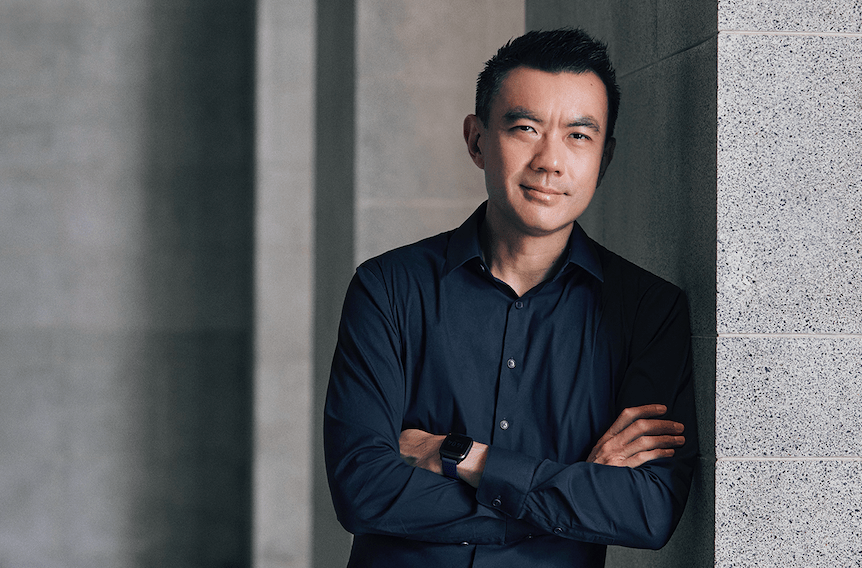
Now, as the Gallery marks its tenth anniversary with a weekend-long celebration the Gallery’s 10th Birthday Bash, CEO and Director Dr Eugene Tan reflects on how far the institution has come, and what it means for a nation still defining its relationship with art.

“Singapore has never had a museum of such a scale, and I would say ambition,” Dr Tan begins. “Using these two historic monuments, converting them into the National Gallery right in the centre of the city, that’s a big statement by the government that they feel art is something important for society.”
That conviction, he explains, was central to the Gallery’s founding vision: to create a museum that was also a civic space that belongs to everyone. “For me, a museum is a civic place,” he says. “It’s a place for everyone, a place for the people of Singapore.”

Since opening, the Gallery has welcomed over 14 million visitors, hosted blockbuster exhibitions such as Yayoi Kusama: Life is the Heart of a Rainbow and Tropical: Stories from Southeast Asia and Latin America, and earned recognition as one of Asia’s top museums. But for Dr Tan, the most meaningful transformation lies in the stories it tells, and the sense of self it helps to shape.
“For the first time, we have long-term galleries devoted to presenting the histories of art in Singapore and Southeast Asia,” he says. “This is a real game changer, because it allows our public audience, from students to adults to tourists, to understand how our art has developed and evolved over the last hundred or so years. It helps build a sense of identity for our people.”

From the beginning, accessibility has been at the heart of the Gallery’s mission. But Dr Tan is quick to clarify that making art accessible doesn’t mean diluting its meaning. “We don’t dumb down what we present,” he says. “We find ways to mediate across different types of audiences. from those less familiar with art to those who are more able to appreciate and understand it.”
That philosophy runs through everything the Gallery does, from free admission for Singaporeans and residents to a wide range of public programmes, guided tours, and digital experiences. “We like to think of ourselves as a museum for the people,” he says. “We want Singaporeans to embrace us as a public space; to feel comfortable here, to feel that this is a place for them.”
Dr Tan adds that accessibility also means creating an environment where everyone feels welcome. “All our staff are disability-trained, and we’ve just refreshed our F&B offerings so that our spaces are truly inclusive. It becomes a place where art is part of everyone’s daily life.”

Fittingly, the Gallery’s 10th anniversary celebrations are designed with that same sense of openness. The Birthday Bash, taking place on 15 and 16 November 2025, will transform the museum into a festival of art, music, food, and creativity. with free entry to more than ten exhibitions, including the much-anticipated Into the Modern: Impressionism from the Museum of Fine Arts, Boston.
“It’s hard to believe it’s already been ten years since we opened,” Dr Tan admits. “But at the same time, ten years is still very young for a museum. We want to celebrate all the people who have helped us get to where we are today — from those who helped establish the museum early on, to our volunteers, colleagues, artists, and everyone who has come through our doors and embraced us as part of their society.”
Calling it “a celebration of the people who make up what the National Gallery is,” he adds, “Ultimately, the Gallery is for the people.” The anniversary also brings with it Singapore’s largest-ever cross-industry collaboration between art and design, a partnership with thirteen beloved homegrown brands, from Bynd Artisan and Curious Creatures to Mr. Bucket Chocolaterie and Leica. “It’s exciting to see how art, design, and lifestyle increasingly intersect in Singapore,” he says.

At the heart of the anniversary celebrations is Into the Modern, the Gallery’s second major Impressionist exhibition. “The Museum of Fine Arts, Boston, has one of the best Impressionist collections in the world,” Dr Tan explains. “Being able to present that to audiences here will be a real treat.”
“Even though Impressionism is one of the most popular forms of art, we wanted to highlight how radical it was when it first emerged, how it looked at shifting landscapes, urban development, and changing gender roles,” he says. “That’s what art really is, and what artists do: they push the boundaries of their time.”
He smiles. “Plus, this exhibition opening on our anniversary weekend is intentional: it’s our gift to the public.”

Over the past decade, the Gallery has played a pivotal role in shaping global conversations around Southeast Asian art. “There’s been a growing interest in our region,” Dr Tan observes. “We see more artists from Southeast Asia circulating internationally, and through our collaborations with museums around the world, we’ve presented Singapore and regional art to new audiences. I’d like to think we’ve played some role in contributing to that awareness.”
Locally, he sees Singapore’s art ecosystem as entering an “interesting phase.” While the global art market faces uncertainty, he notes, Singapore’s scene continues to grow. “The amount of galleries moving into Singapore is increasing. We keep hearing of more international galleries setting up here too.

“The commercial side is growing, and it’s an important part of the ecology — artists need to sell their work. Patronage, when collectors buy works, is crucial. But beyond the market, we also see non-profit spaces and private foundations playing a strong role, alongside public museums.”
He acknowledges that artist-run spaces have dwindled in recent years but remains hopeful. “It’s something I regret, and I’d like to see more activity and development there. But Singapore isn’t an easy place for independent organisations. They need to find ways to support themselves.”

Another key to the Gallery’s success has been its willingness to embrace technology, from interactive digital guides to gamified filters that bring artworks to life on social media. “We have to be familiar with how people are using technology today and use it in ways that draw them to the Gallery,” Dr Tan explains. “Artists have always used the mediums of their time. Digital technology is the medium of ours.”
He’s careful, though, to strike a balance. “Ultimately, we want visitors to come here and have a primary experience with the artwork, and not just a mediated one,” he says. “One of the things we’ve just rolled out is an AI-enabled gallery guide that allows people to ask anything about the artworks. It responds in a conversational, familiar way, not overly academic. It makes our exhibitions more accessible to different members of the public.”

With more than 14 million visitors since opening, and an average of 2 million annually, National Gallery Singapore is firmly established as a cornerstone of the country’s cultural landscape. But Dr Tan believes the journey is only just beginning.
“While we’ve achieved a lot, I think many people still feel intimidated about coming to a museum,” he reflects. “We hope to dispel that perception, to see Singaporeans embracing the Gallery much more as a place for them.”

Beyond Singapore, he envisions the Gallery continuing to redefine art history from a regional perspective. “We want to promote Singapore and Southeast Asian art internationally,” he says. “It’s about reframing how we think of art history globally, but with Southeast Asia in the picture as well.”
Now, a decade on, the National Gallery Singapore stands as both a museum and a living symbol of what art can mean to a nation: a mirror, a gathering place, and a bridge between history and the everyday. As Dr Tan puts it simply, “The Gallery is for the people. And that’s what makes it special.”
Gallery’s 10th Birthday Bash takes place from 15th to 16th November 2025 at National Gallery Singapore. Full line-up and registration at www.galleryturns10.sg
Free admission for most programmes; registration required for selected sessions.
 Bakchormeeboy