

A masterful feat of storytelling drives home the importance of kinship across borders and that to be good, even imperfectly, is still the most enduring form of love.
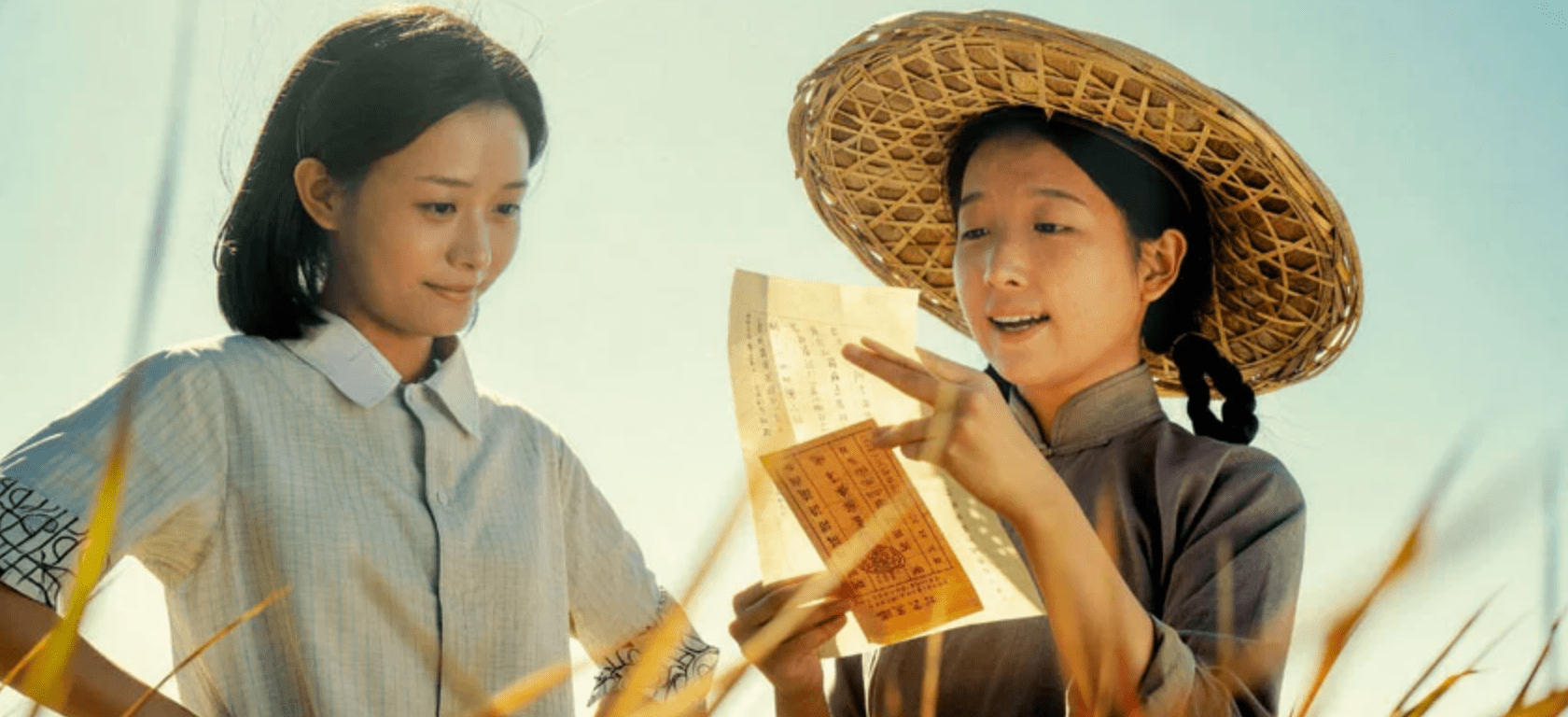
In an era where cinema often leans toward scale, spectacle, or stylistic excess, Dear You succeeds precisely because it does the opposite. Directed by Lam Hongchu, the film builds its emotional weight through restraint, patience, and an almost disarming sincerity. It is a story told not through grand gestures, but through letters, specifically qiaopi (侨批), remittance messages that once carried both money and memory across oceans—and through the quiet persistence of people trying, across decades, to remain good to one another. From its opening moments, the film establishes a tone of quiet intimacy that gradually pulls you in, until you are no longer observing these lives from a distance, but moving within them.
The film follows Teochew grandmother Ye Shurou of Shantou, who has spent her life believing her husband Zheng Musheng migrated to Southeast Asia and continued to correspond with her through decades of letters. When her grandson Xiaowei travels to Thailand in search of a presumed inheritance and a long-lost patriarch, what he uncovers is not a simple family reunion, but a buried history shaped by migration, survival, and emotional compromise. Musheng’s life, death, and legacy are entangled with Xie Nanzhi, a woman whose own story becomes inseparable from the letters that sustained Shurou’s hope. What begins as a factual investigation slowly transforms into something far more disorienting and affecting: a confrontation with how love can be sustained, reshaped, and even rewritten by silence, distance, and time.

What makes the film immediately remarkable is its ensemble cast, many of whom are first-time actors, yet deliver performances of striking emotional clarity. There is no sense of performance in the conventional sense; instead, the characters feel inhabited rather than acted. Onscreen chemistry emerges with an ease that feels unmanufactured, particularly in the interwoven relationships that span generations and geographies. Conversations do not feel delivered so much as discovered in real time, which is why the emotional pull of the film becomes so immersive; you are not watching reactions, you are witnessing connections form, fray, and reform in front of you. The Teochew dialogue deepens this effect even further. Even without full comprehension, its rhythm carries extraordinary emotional precision: the softness of certain endings, the clipped weight of restraint, the way meaning often sits just beneath the surface of words. In a film so fundamentally about communication, language becomes something more than expression, it becomes memory, carrying emotional truths that exceed translation.
This sense of immersion is strengthened by Lam Hongchu’s direction, particularly in how effortlessly the film moves across time. The decades-spanning structure could easily have felt fragmented, but instead the transitions unfold with a natural fluidity, as if memory itself were doing the editing. Flashbacks do not interrupt the present; they arise from it, dissolving boundaries between then and now. The result is a rare emotional continuity in which time feels layered rather than linear. This is where the film’s pacing becomes especially powerful: it allows moments to breathe long enough for warmth, humour, and sorrow to coexist within the same emotional frame. Nothing feels rushed, yet nothing feels static either, and you are gently carried through a world that seems to be remembering itself as it goes.
The strength of the performances becomes even more apparent in how the characters evolve within this temporal fluidity. Zheng Musheng, played by Wang Yantong, begins as a rough, uncertain young man shaped by circumstance and survival, but gradually settles into a portrayal of quiet moral steadiness. The transformation never feels imposed; it accumulates naturally, as though life itself is inscribing change onto him. Li Sitong’s Xie Nanzhi is even more compelling in contrast, initially guarded, pragmatic, and emotionally controlled, she slowly reveals a capacity for care that feels earned rather than revealed. Her performance is especially striking because it never smooths out contradiction; instead, it allows hardness and tenderness to coexist, often within the same moment. This interplay of performances creates a living emotional ecosystem, where each character’s growth is shaped through contact with others, and where relationships feel genuinely reciprocal rather than narratively functional.

One of the most unforgettable sequences follows Musheng’s death, when Nanzhi stands at a remittance office preparing to send news to his family. In that suspended moment, the film withdraws into near silence. The act of writing becomes a moral threshold rather than a narrative beat. She pauses, not simply hesitating, but weighing what kind of truth can be survived by those who receive it. What she chooses is neither simple honesty nor simple deception, but something far more complex: a decision to sustain hope by continuing the letters as if nothing has changed. The film resists moral simplification here. Instead, it allows ambiguity to remain intact, suggesting that care and contradiction are not opposites, but often inseparable forces within human action.
What follows is one of the film’s most quietly devastating ideas: that sustained care, even when built on altered truth, can produce real and lasting emotional consequence. Letters continue to arrive over the years, not only with money, but with bicycles, wedding savings, and small comforts like salted pork. Each gesture accumulates into a lived reality of warmth and stability, and you see Musheng’s widow and the titular grandmother burst into joy alongside her children. The film never resolves the tension between truth and fabrication, because it is more interested in something deeper: how emotional survival is often maintained not by certainty, but by continuity. In this sense, the letters become less about communication and more about endurance itself.
At the centre of the film is its guiding belief: 做人要有情有义 (one must carry feeling and righteousness in the way we live). This is not presented as sentimentality, but as lived practice, repeated across decades in small, unglamorous acts of endurance. It is present in the writing of letters, in the decisions made to protect dignity, and in the willingness to carry emotional responsibility across distance and time. The use of qiaopi grounds this philosophy in historical reality, turning the film into something larger than individual memory, and it becomes a reflection on diaspora life, where love, obligation, and survival were once inseparable threads in the same fragile correspondence.

Visually, the film reinforces this sense of continuity through meticulous production design. Old Thailand and Yaowarat (Bangkok Chinatown) are rendered with tactile realism, avoiding nostalgia in favour of lived texture. Streets feel inhabited rather than reconstructed, and the visual echoes between past and present quietly suggest that time does not divide experience so much as layer it. You begin to feel that these places are not being revisited, but continuously lived in across different moments.
What makes the film especially moving, however, is the way it draws you into its world until emotional distance dissolves entirely. The combination of chemistry, language, and pacing creates a sense of lived familiarity, and it’s not long before you begin to feel as though you know these people, not as characters, but as presences whose lives you are briefly allowed to share. By the time the story reaches its final convergence, it no longer feels like a narrative resolution, but like returning to a place that has quietly become emotionally familiar to you. The reunion between the older women is stripped of all spectacle, reduced to something almost unbearably simple: recognition, hesitation, and the fragile attempt to bridge decades of imagined distance. It is precisely this understatement that makes it so overwhelmingly powerful.
Dear You ultimately lingers because it reframes what endurance looks like. It is not loud, and it is not dramatic. It is the accumulation of small decisions to continue caring even when certainty has disappeared, and even when truth becomes complicated beyond easy resolution. In doing so, it becomes a film not only about the past, but about what survives it: the emotional traces carried forward through language, memory, and the stubborn persistence of human connection. This is what makes Dear You essential viewing: it understands that we do not simply remember the past, but we are still living inside the letters it left behind and the lessons passed down.
DEAR YOU 《给阿嬷的情书》opens in Singapore cinemas from 18th June 2026 at Golden Village. Additional Teochew screenings have been added to screen at Golden Village Vivocity from 25th to 29th June.


One thought on “★★★★★ Film Review: DEAR YOU 《给阿嬷的情书》dir. Lam Hongchun”