
Ang Geck Geck’s Ah Girl takes home Best Film at the Silver Screen Awards, as the festival closes with 27 sold-out screenings and a star-studded return to Capitol Theatre.
The 37th Singapore International Film Festival (SGIFF) has drawn its curtains on another landmark year, closing on 1 November with 27 sold-out screenings and a new box office record for the fourth consecutive year.
Over 12 days, the festival brought more than 100 films from over 50 countries to Singapore, offering audiences an opportunity to discover celebrated works from around the world, alongside more than 25 Singaporean productions and co-productions that have earned recognition at international film festivals including Cannes, Sundance, Toronto, Venice and Melbourne.
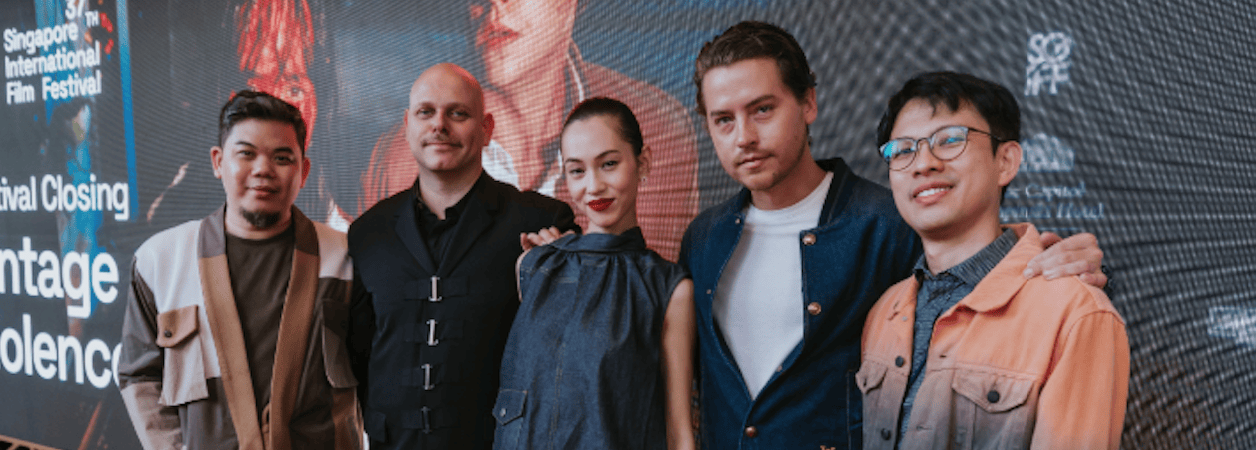
The festival’s closing celebrations were just as memorable. For the first time since 2014, SGIFF hosted a dedicated Festival Closing, bringing the Asian premiere of Vintage Violence to Capitol Theatre. Director Eugene Kotlyarenko and stars Cole Sprouse and Kiko Mizuhara made a red-carpet appearance, following an In Conversation With session at the National Museum of Singapore the day before.
Audience enthusiasm was evident from the outset. Look Back, the latest feature from Cinema Honorary Award recipient Hirokazu Koreeda, sold out within a day of public sales opening. Meanwhile, demand for Javier Ambrossi and Javier Calvo’s La Bola Negra was so strong that additional seats released were snapped up in just 15 minutes.
Beyond the screenings, the 37th edition introduced new ways for audiences to experience cinema. The Undercurrent programme brought more screen-based live performances into the festival, while Junior Explorers welcomed young audiences to their first sensory-friendly, relaxed screenings.
At the Silver Screen Awards on 31 October, Singaporean filmmaker Ang Geck Geck’s debut feature Ah Girl took home Best Film in the Asian Feature Film Competition. Set in 1990s Singapore, the film follows a seven-year-old girl navigating life between her separated parents. Its win marks a particularly meaningful moment for the filmmaker, as the project was first developed at the SGIFF Southeast Asian Film Lab in 2015.
The awards also celebrated emerging voices across Southeast Asia. Arief Budiman’s Golden Island, a Singapore-Indonesia co-production, won Best Southeast Asian Short Film, while Singapore God by experimental animator EXYL took home Best Singapore Short Film.
Both short films received the SGIFF Film Fund’s SEA-SHORTS grant in 2025. Together with Ah Girl, their achievements highlight the festival’s role in supporting filmmakers from early development through to the international stage.
The Audience Choice Award for Best Singaporean Film Programme or Co-production went to Singapore Panorama Programme 2: Second Life, Second Skin, a collection of five short films by Shara Tay, Ash Goh Hua, Syahmi Iman, Leon Cheo and Ewan Leong.
“What stands out in this year’s selection of winning films is the range of ways in which filmmakers are engaging with questions of identity, belonging, family and the societies around them,” said Thong Kay Wee, Programme Director, SGIFF. “From intimate personal stories to more challenging social themes, these films demonstrate how cinema can offer perspectives that stay with us long after the credits roll. It is this kind of filmmaking that the Silver Screen Awards seek to recognise.”
The Silver Screen Awards, presented on 31 October, brought together some of the festival’s most compelling stories and emerging talents, recognising achievements across Asian feature films, Southeast Asian shorts and projects in development.
Elsewhere in the Asian Feature Film Competition, Shahrbanoo Sadat was named Best Director for No Good Men. Makoto Nagahisa’s Burn received the Special Jury Prize, and the Best Performance award was shared by Pushpa Thing Lama for Elephants in the Fog and Putri Marino for Four Seasons in Java.
The Southeast Asian Short Film Competition also celebrated a diverse range of voices from across the region. Arief Budiman’s Golden Island, a Singapore-Indonesia co-production, was named Best Southeast Asian Short Film, while Singaporean experimental animator EXYL received Best Singapore Short Film for Singapore God. Ratchapoom Boonbunchachoke won Best Director for The Bovine Comedy, and Sarah Lingam received Best Performance for Flame of the Forest. The Special Jury Prize went to Berthold Wahjudi for “Vaterland” or A Bule Named Yanto.
The Audience Choice Award for Best Singaporean Film Programme or Co-production went to Singapore Panorama Programme 2: Second Life, Second Skin. The programme brought together five short films: Kiss Me Climax by Shara Tay, Subterranea by Ash Goh Hua, REANIMATOR by Syahmi Iman, Orang Minyak by Leon Cheo and Encik by Ewan Leong.
Beyond the festival screenings, the SGIFF Pitching Forum Awards recognised four promising projects. Beg, Borrow, Steal (不择手段) by Tong Khoon Mun and Zhou Ke Xin received the SGIFF Abroad Award supported by Sony, while Primal by Sam Chua Weishi and Rein Maychaelson won the SGIFF Abroad Award. Dear Son An by Lệ Diễm Hà received the SGIFF Pro Pitching Forum Award in association with the Asian Producers Network, while Agape by Shin Yamaguchi and Takuya Miyahara was awarded the SGIFF Pro Pitching Forum Award.
The festival also paid tribute to two influential figures in international cinema. Aamir Khan received the SGIFF Screen Icon Award, presented by Peter Chan during his In Conversation With session on 22 October 2026. Hirokazu Koreeda was presented with the SGIFF Cinema Honorary Award by Boo Junfeng during his In Conversation With session on 24 October 2026.
Together, the awards reflected the breadth of storytelling celebrated at SGIFF, from established cinematic voices to emerging filmmakers whose work is shaping the future of Asian cinema.
Beyond its public screenings, SGIFF continued to strengthen its position as a meeting point for filmmakers and industry professionals. SGIFF Pro, the festival’s professional platform, saw significant growth this year, with pass sales for the SGIFF Industry Days conference more than tripling compared with 2025.
Presented in partnership with Sony Singapore, the Embassy of France in Singapore and the Institut français, and with the patronage of The Ngee Ann Kongsi, the programme brought together established and emerging voices from across the industry.
The best-attended session was a masterclass with Japanese cinematographer and photographer Akiko Ashizawa. Other popular sessions included the Sales and Distribution Roundtable, the Pitching Forum’s Singapore and Indonesia session, and the Decision-Makers Roundtable.
This year’s SGIFF Pro featured five programmes: the returning SGIFF Industry Days conference and Asian Producers Network, alongside the newly introduced Pitching Forum, Off Campus and Parallax. The latter offered a free series of talks and demonstrations exploring the intersection of filmmaking and immersive technology.
At the Silver Screen Awards, SGIFF also announced that the Asian Producers Network will expand to the Pacifics in 2027, opening up new opportunities for collaboration and broadening the pool of creative talent and expertise available to filmmakers across both regions.

Some of the festival’s most anticipated moments came through its In Conversation With sessions, which brought audiences closer to two celebrated figures in international cinema.
On 22 October, Indian actor, director and producer Aamir Khan received the SGIFF Screen Icon Award from filmmaker Peter Chan during a session at the Sands Grand Ballroom, Marina Bay Sands Expo and Convention Centre. Known for films that combine popular appeal with socially conscious storytelling, Khan has built an influential body of work spanning Lagaan, 3 Idiots and Dangal.
Two days later, Japanese director Hirokazu Koreeda received the SGIFF Cinema Honorary Award from festival chairperson Boo Junfeng at the National Museum of Singapore. The Palme d’Or-winning filmmaker has spent three decades exploring family, memory and grief through films such as Shoplifters.
Both sessions sold out as soon as public sales opened. Khan’s appearance attracted 738 ticket holders, making it the most attended single event in SGIFF’s history.
The overwhelming response reflected audiences’ enthusiasm for meeting the people behind the films, and the festival’s ability to offer Singaporean filmgoers rare opportunities to engage with some of cinema’s most celebrated talents.
“Building on a record-breaking 2025, this year’s audiences showed us that the appetite for cinema in Singapore keeps growing,” said Jeremy Chua, Executive Director, SGIFF. “Seeing Ah Girl win Best Asian Feature Film is exactly why SGIFF exists – to support filmmakers early and stand by them. With the SGIFF Film Fund opening this month, backed by the Tan Ean Kiam Foundation, we want the next generation of Southeast Asian filmmakers to have that same support. Thank you to every filmgoer, filmmaker and partner who made 2026 such a special edition.”
As the festival looks ahead, its 37th edition leaves behind a year of record attendance, new audience experiences and meaningful recognition for filmmakers across the region. With Asian stories continuing to take centre stage, SGIFF remains committed to nurturing the next generation of cinematic voices while bringing audiences closer to the films and filmmakers shaping the future of cinema.
Photo Credit: SGIFF
The 37th edition of SGIFF took place from 21st October to 1st November 2026. For more information, visit sgiff.com. Follow SGIFF on Instagram and Facebook.

