
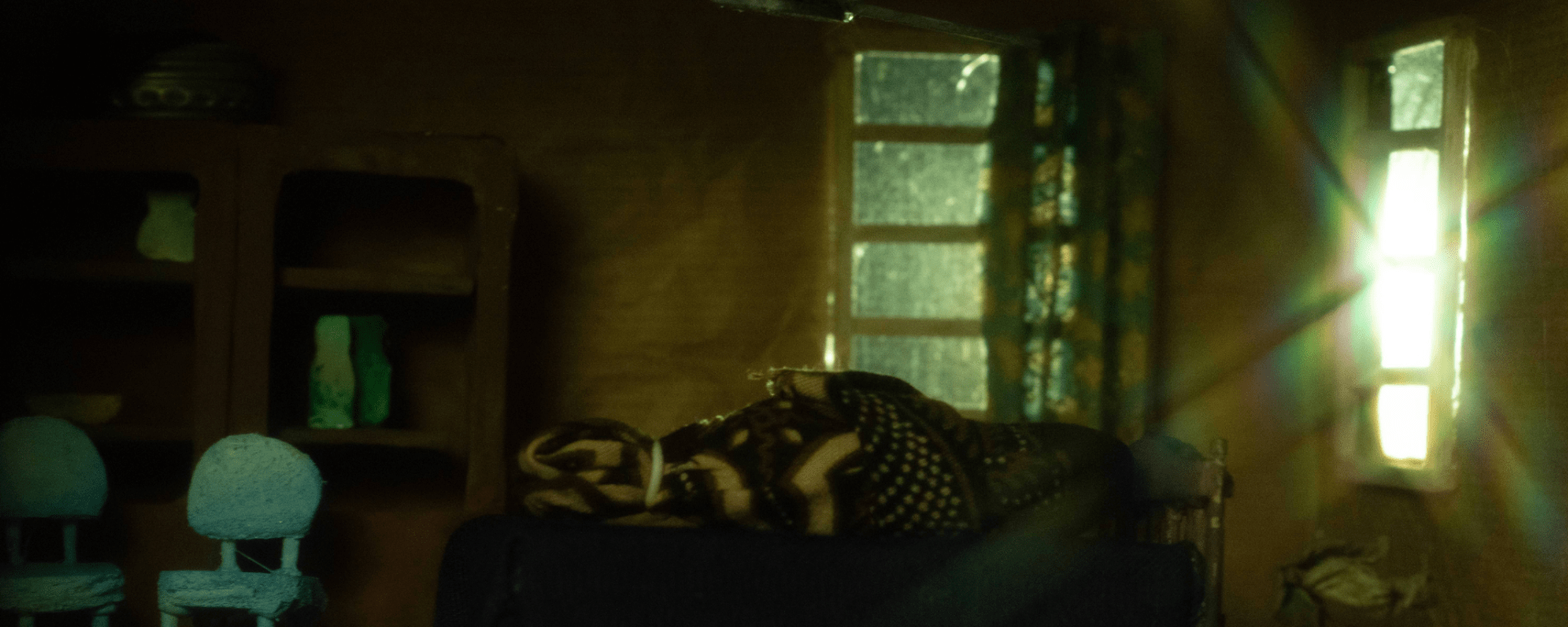
In the 2020s, suicide rates in Singapore rose to an all-time high. Is it because we live in a fast-paced, high stress nation? Is it that it often feels like there is no way out? And even when a suicide is completed, can we summon up enough courage to go past the shame and guilt surrounding it to talk about the aftermath, and how we can work together to help those left behind?
In Matter.Less’ new show, the team has engaged director Moli Mohter and playwright Danial Matin to produce a forum theatre piece that deals with suicide in the Malay Muslim community in Singapore. Playing as part of the 2024 M1 Singapore Fringe Festival, Here Where You Were features actors Suhaila Binte Mohamed Sanif Fadhil Daud, and Chng Xin Xuan, as they tell the story of the sudden death of Nenek, and the family left reeling in her wake. As with any forum theatre piece, audience members aren’t simply static spectators, but are given the chance to step in and interact with the characters, prompted to discuss and reflect on the events witnessed during the play (as facilitated by Adib Kosnan and Chng Yi Kai).
“We started Matter.Less as a writing group in 2018, but expanded beyond that to explore creation in other forms, engaging artists working in fields as diverse as film, movement and visual art, and wanted to see how text intersected with different mediums, and going from a pure Chinese medium to other languages as well,” says Lim Ci Xuan, co-founder of Matter.Less. “At the heart of what we do is creating content that young artists are concerned about, as we experiment with form and tackle different issues, and explore different ways of engagement, with the idea of co-creation at the heart of all we do.”
For Here Where You Were, the work itself started off as an experiment a little over a year ago, where the team planned and staged a series of productions related to mental health through a grant, with the goal of expanding the scope and profile of characters featured. “We found that certain races and class were underrepresented in many shows, and so we invited eight writers to contribute and explore other layers of mental health, from complex PTSD, how triggers are formed, or even how artificial intelligence can help in mental health,” says Ci Xuan.
One of those pieces ended up being Danial writing about suicide in the Malay Muslim community, which stood out to Ci Xuan and the team and eventually became Here Where You Were. “We really liked Danial’s work, and it was a very strong starting point for us to consider religion in relation to mental health, which complicates a lot of things. Danial eventually wrote a piece that was staged in August, and through audience reactions and post-show dialogue, we realised people wanted to talk about mental health but didn’t really know how to, and forum theatre ended up being our chosen format for bringing that idea of conversation to the fore.”

“The first prompt came from Ci Xuan, and it was specifically about the idea of grandparents, which made me think about how differently generations might think about suicide,” says Danial. “Originally I was writing about a grandson speaking to the spirit of his grandmother who had taken her life, and how he was trying to understand her feelings and intention, especially given that she was also a very religious person. What could she possibly have gone through that pushed her to suicide? It led to me considering how the grandson could be negatively affected by this, where he would be depressed and need therapy, and that too leads to another clash with religion and taboo.”
“Adapting it from that initial 15 minute short play, we saw the potential in turning it into forum theatre, and while it was my first time writing a forum theatre piece, I did my due diligence and research, removing the grandmother character and introducing new characters and points of intervention for the audience to step in,” he continues. “And discussing it with both Moli and Adib Kosnan, who was our dramaturg, we considered all the possibilities we could have and how we could facilitate them.”
As for how Moli came onto the project, Moli had already been known for her work on works with similar issues, such as Drama Box’s Both Sides, Now, and felt a personal stake in this when Ci Xuan invited her. “I’ve seen a lot of things regarding mental health in the Malay Muslim community, and I’d previously done facilitation for forum theatre, but never directed one before,” says Moli. “My focus was primarily on the discussions and how we could shape each conversation in the groups. As for the actors, it was important that we checked in with each other often, because there were so many heavy issues discussed, from faith to suicide, and to know where they stood on things.”
“In that same vein, when people come to watch the show, we want to give them space to have their voice heard, beyond just thinking about the best course of action for the character,” she adds. “People rarely get a chance to do it, and from my time with Both Sides, Now, you can see how everyone has never gotten the chance to speak so openly about it, because of how forbidden it is and how much fear and misinformation surrounds it, so there’s never a ‘right’ time to, until now.”

In preparation for the play, the team of course did their own deep research into the topic to ensure they knew as much as possible before embarking on it, and could represent it as authentically as possible. “We realised how there were actually very few papers published about the topic, and we ended up doing a call for interviews, working with Lepak Conversations and Impart,” says Ci Xuan. “We used the opportunity to talk to people and wanted to eventually publish a creative resource to amplify that work that our show would do, and hopefully generated content that can be distributed to others who didn’t have the chance to see the show.”
“In our research, we found that minorities supposedly had a higher incidence of mental health issues as opposed to Chinese, but we were also careful to consider how statistical data isn’t always accurate,” says Danial. “So that’s why all the informal conversations and interviews with people struggling with mental health issues were so important, down to the process of checking in to a hospital for suicidal tendencies. Some of these eventually ended up in the script, which comes to almost be this thesis of all the data we collected distilled down.”
“While the suicide rates peaked in 2022, I also realise that there’s increasing talk about mental health even among my students, and even for those that aren’t necessarily contemplating suicide, so many of them are going through trauma and struggles, and sometimes the smallest things can trigger them,” says Moli. “Times are very different now, and it feels more urgent than ever to address the issue, and that more people can find it in them to speak about it to people they trust.”
Within the scope of the play itself, the team and The Necessary Stage (who organise the M1 Singapore Fringe Festival) have ensured that there are enough resources to ensure the safety of all taking part, from quiet spaces to decompress, to having onsite counsellors as well. “At the end of the day, if we keep talking about it, I think it becomes more commonplace and people will become more willing to discuss it,” says Moli. “While there’s still that stigma where mental health issues means you’re weak, I believe that the mindset will change eventually, that it is something that could happen to anyone, and normalising talking about it can happen, just like how Both Sides, Now contributed to discussions on end of life issues in the community.”

“When I initially watched Drama Box’s Both Sides, Now, I was skeptical, and wondered who in Singapore would want to talk about death? But years on, and now having produced this, I think that we cannot wait for things to just happen, but to make the change we want to see, and activate those conversations,” says Ci Xuan. “It takes a long time, but we have to keep pushing for these conversations to happen, to trigger it, and use that as a springboard to build relationships with each other, and learn how to do it better.”
“Earlier today I was watching this video about a woman who was knocking on a neighbour’s door with a metal pipe because she was being too noisy, and while she seems to be the one at fault for being so agitated, it turns out that this woman actually had a baby two weeks ago, and it’s been causing her a lot of trouble sleeping because of the noisy neighbour,” says Moli. “If you read the comments, you see how many assumptions people are making, and blaming her, but at the end of it all…I think everyone just needs to learn to have better conversations and learn to talk properly to each other and make compromises for living together. That’s what I hope people care about more, and just be more friendly to the people around us and try to understand that we’re each going through our own struggles.”
“Before having the conversation with others, the first step is to accept that you are ready to talk about it, and I believe that at the show you’ll see very different reactions. Maybe some people might remain silent, but some might end up talking to friends and family about it, and potentially lead to a ripple effect,” says Danial. “Just putting the show out there is important for pushing the conversation further, and at least create awareness for it.”
“I think that Singaporeans do care about such issues, but we may not know how best to care, and sometimes what we do could inadvertently be hurtful, whether we realise it or not,” he concludes. “So we have to learn how to calibrate what we say or do, and figure out the best way how. And to me, theatre is a rehearsal for life, especially forum theatre, and in being part of such an experience, you rehearse what could happen or what we do in reality, and perhaps be better prepared for when we finally are ready to have that conversation.”
Photo Credit: loserwithdeadfish
Here Where You Were plays from 25th to 27th January 2024 at the NAFA Studio Theatre. Tickets available here
M1 Singapore Fringe Festival 2024 runs from 17th to 28th January 2024 across various venues. Full line-up available here, with tickets available from BookMyShow
 Bakchormeeboy