
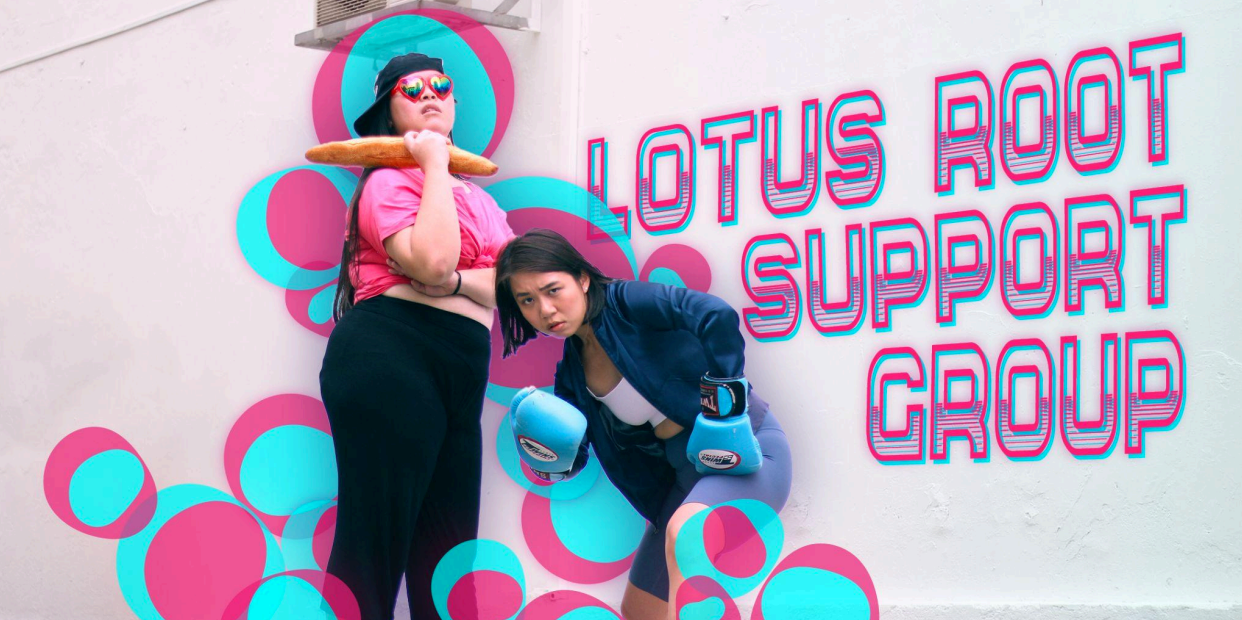
Back in 2022, fellow theatremakers Shannen Tan and Miriam Cheong found solace and friendship in each other over their shared pain – the fact that both of them suffered from Polycystic Ovary Syndrome (PCOS), a common yet often misunderstood endocrine disorder affecting up to 21% of women worldwide. Aiming to find a way to both educate others about the condition, while also sharing their own stories about living with it, the duo created original work Lotus Root Support Group, which found surprisingly strong resonance with its audiences.
But with a show this heavy that took so much out of both creators, there remained an emotional weight that was left sitting in both Shannen and Miriam’s subconscious, alongside other issues that caused friction between the two of them, and after the final run, the two never spoke of the work again. That is, until 2023, when the idea was broached again all of a sudden, and Shannen and Miriam joined forces once again, this time with Impromptu Meetings as producers, and are now ready to bring a brand new version of Lotus Root Support Group to life.

“After the show, we got tons of good responses from the audience. Our post-show survey, which people usually don’t like to do, received over 70 responses. People took the initiative—women who didn’t feel seen, who had PCOS, finally felt seen; and men whose girlfriends made them watch the show realized how tough it was to be a woman. We sold out the run, and still, people wanted tickets,” says Shannen. “Both of us always had the idea to restage it at some point, even during the run itself, but somehow, it just wasn’t in the works until Miriam came to me with a proposal.”
Before we get into that miracle moment, it makes sense to dive back into the often difficult devising process both Shannen and Miriam experienced, one that threatened to tear their friendship apart. “This came to me in a dream, on how different Lotus Root Support Group is between the 2022 and 2024 editions,” says Shannen. “2022 focused more on the Lotus Root part of the title (ultrasound image of PCOS ovaries look like lotus roots), which was more about the chronic pain and other problems we encountered as a result of PCOS. But in 2024, we’re focusing more on the Support Group part of the title, which is about how PCOS can be messy, but is also more about friendship, and more intersectional about our experience as women and as actors with chronic illness, and how we support each other in the doom and gloom of it all.”

Despite being discovered as early as 1935, PCOS remains a medical mystery to most doctors, where a 2022 study published in The Annals of the Academy of Medicine saw most Singaporean doctors who took part in the study unable to identify the clinical features of PCOS correctly. In addition, the psychological complications of PCOS were also not well-appreciated, and the symptoms of PCOS vary among individuals, ranging from physical appearance, to sense of self-worth, social relationships and sexuality. And for Shannen and Miriam, who had their own respective ways of viewing their condition and how they approached it, PCOS was also a source of tension.
“We couldn’t see it at the time, but we were hurting each other a lot, and being very defensive of our own views,” says Shannen. “We thought we came in with this mutual understanding and that we were both on the same wavelength, but it turned out we weren’t, and we ended up hurting each other in our talks and process, where it followed us into rehearsals, during lunch, on the way home, and eventually, our friendship also got affected..”
And of all things, it all came to a head with McDonald’s fries. Shannen admits that at the time, she was struggling with body issues, and true to her character, she would obsess, optimising her lifestyle, reading research papers and doing all she could to become a supposed ‘best’ version of herself. Miriam on the other hand told her it was a form of disordered eating stemming from an inherent sense of fatphobia (Miriam had previously staged a one-woman, autobiographical show about living. as a fat person), which only got worse from there, culminating in, of all things, conflict over McDonald’s fries.
“Shannen said it was fine for me because I was already comfortable in my own body, but I retorted that I had to go through so much to even be where I was today,” says Miriam. “We really weren’t holding space for each other at all. One day, we were ordering dinner from McDonald’s at Stadium, and Shannen subbed out her fries for the healthier option – corn in a cup, and when we were eating, she’d ask me if I could steal some of my fries.”
“Miriam would refuse, but I was upset because she literally had given someone else a fry, and then told me “If you wanted fries, you should have gotten them to begin with,”” says Shannen. “It got so passive-aggressive to a point where every time we had McDonald’s, she would eye my food if I ordered corn and ask if I was going to ask for her fries again, and went out of control, and she’d be like, “I see you ordered corn again… are you going to ask for my fries?” There was a lot of saltiness and unhelpful feelings, all of which was damaging our friendship.”

Still, the show had to go on, and both of them put a pin in it for the sake of the show. But all of it would feed into the show, and they could never really leave the animosity behind over these divisive views. “When we fought onstage, it felt so real. Even though we were playing characters on stage, they really were just mouthpieces for our real emotions, and in my head I’d be defending my character’s point of view because it felt like an extension of myself. It wasn’t healthy, and after the show we just stopped texting altogether, no memes or anything, and we needed a long break from one another.”
Ironically, things were patched up in, of all places, a McDonald’s in November 2023, after things had been given enough time to settle, and Miriam asked to meet to discuss the potential of a restaging. This time around, Shannen ordered fries, on top of the limited edition New Jeans new K-sweet & spicy McCrispy burger, and watching her order, Miriam simply said ‘wow, you’ve changed.’ The two of them were finally ready to confront the material again, and work out the kinks that almost destroyed their friendship to begin with.
“I brought my show Sunday School of Hard Knocks to the Melbourne Fringe in 2023, and for me that was a mind-opening experience, where the shows there made me think, hey Lotus Root Support Group could fit here, if we made it more absurd, more scrappy, more autobiographical,” says Miriam.
And while Shannen had never been to the Melbourne Fringe, she had gone up to the Edinburgh Fringe to perform in Gangguan!’s absurdist play Do Rhinos Feel Their Horns?, and had a similar experience and realisation that it was indeed possible to do something like this. “Even with just three people in the audience, you saw so many performers giving it their all, and the goal wasn’t necessarily to make it big in the industry, but to simply put your voice out there and there was something radical about that,” says Shannen. “So coming back, I felt something shift in me, and I felt a lot braver.”

So at McDonald’s, Miriam and fellow theatremaker Adeeb (Fazah) sat down with Shannen to discuss the possibility of restaging Lotus Root Support Group, reimagining it completely, and bringing it to Melbourne Fringe. This time, they would be presenting it under theatre collective Impromptu Meetings (headed by Adeeb), who would help with producing, and leave Shannen and Miriam to take full creative control, becoming directors, writers and creators in their full capacity. “Going to Melbourne made sense to me – Edinburgh is on the costlier side, while at least Melbourne is still in Asia-Pacific, so it’s a little more accessible. And honestly, there’s a scene there that we haven’t really explored before, and I’m very curious what kind of work ends up getting presented there,” says Shannen.
“I think compared to Edinburgh, which is much more international, you get more regional people coming down just for Melbourne Fringe, with a lot of shows then hopping on the Fringe circuit and going to say Adelaide Fringe after that,” says Miriam. “It’s interesting – last year I met someone who did tarot readings for his show, and he said you can tell a lot about which region of Australia they’re from based on the readings, like how Adelaide people choose violence every time. Then I watched a show there from Adelaide, and I saw what he meant —fake guts flying out, slapping each other with pool noodles.”
“So while there aren’t a lot of international artists, you really feel all these personalities coming through, this whole community that while smaller, feels a lot more tight-knit, all supporting each other during the run,” she adds. “That was also what made marketing and promoting my own show a bit harder, but I guess, it was literally about Jesus and dicks, and people were like “Okay, sure.” It was my first-ever international Fringe, and I was exposed to so many autobiographical comedy and cabaret acts, and it was very inspirational, and made me realise we could and needed to be wackier, more off-kilter, more balls to the wall. And one group in particular really stood out to me – High Pony, and they felt like how we would describe ourselves too.”

The plan was always to do a Singapore run first, then take the profits to help fund their trip to Melbourne, and go all out with their show. But before they could revisit the show proper, they needed to mend their friendship. “We bumped into each other a lot in dance class, and Miriam would always be there encouraging me to show up and stand out more during class,” says Shannen. “There are times we’d be on the MRT together, and there was once she was like, “Wanna play this game I played with Adeeb recently?”
“She called it the compliments game, where the best compliment wins. So, for example, I’d be telling you about Miriam and things I wish people would know about Miriam more. And she gave a compliment that shocked me—something healed, and we didn’t know these things about each other,” she adds. “This wasn’t the purpose, it was supposed to just be words of affirmation, but it definitely contributed to the mending process.”
In fact, it was essential to getting both of them to open up to each other again, discussing how they got to where they are, going over Friesgate, and how it all spiralled from there. “We hashed it out with each other, and this time around, going to Melbourne Fringe we were determined to try to hold more space for each other. We wanted to stay grounded. We’re there to learn, observe, and play, and show what we’re capable of,” says Shannen.
“Shannen even did an entire graph on the structure of our friendship, then I ended up ripping it up at the end and yelling ‘f*** graphs!’,” says Miriam. “We realised that very few people come back to write about the fights they have within the industry, because often the result is so debilitating they don’t come back together to do another play.”
Perhaps that is also why this new version really is completely reworked, where not only will Shannen and Miriam be playing versions of themselves and upping the autobiographical element, but even incorporating more metatheatrical elements as well, such as a slideshow, playing archival footage of the 2022 version onstage and passing commentary on it. In short, the work is now more daring than ever before, much more Fringe-ready, and as they put it – balls-to-the-wall. “People might watch and go “WTF?” But that’s really how we are. We’re yappers,” says Shannen. “We are in constant pain. Existential, physical, mental. And we’re still constantly navigating our relationship with each other as well.”
“I feel the new version is very true to us as people, and you can expect a lot of screaming and a lot of emotion,” says Miriam. “Some audience members might pause and go ‘hmm’, and that’s kind of what I want them to do – to laugh then pause and think ‘can I actually laugh or not?'”

As creatives, conflict doesn’t just result in pain, but acts as a creative force as well, and so much of the new Lotus Root Support Group stems from their conversations. “A lot of the script is our actual conversation, and we even have a third character commenting on our stuff through the PowerPoint slides with their own personality too. We always think, what is the entry point, especially for those who watched it, who know us, or don’t know us as friends,” says Shannen. “So we’re trying to signpost more, and we have dramaturg Sonia Kwek onboard as well, who’s giving us feedback on what makes sense and doesn’t.”
“Sometimes we end up asking ourselves – why are we friends? Is it because we both do theatre? Is it because we both know how to sing ‘SPECIALZ’ by King Gnu? Is it because we compare which anime boys are hotter? Or is it because we both faced a ton of trauma?” says Miriam. “There’s a lot that we’re unpacking here due to the autobiography format, and we’re always told to go deeper and deeper, until finally we confront the root of our issues to begin with – and that can be hard.”
“There’s been a lot of development and changes, and a lot of unexpected readings of each other’s scenes we end up having, considering we’re each other’s directors and continue to learn more about each other as people and actors as we continue along the process,” says Shannen. “There have been several times we ended up unintentionally crying after working on our own scenes because we realise we haven’t fully moved on from some experiences. But rest assured that we’re not trauma dumping on our audience, and even within the rehearsal space, we’re making space for each other, being safe, and using the creation as a way to process it.”

Lotus Root Support Group then is a show that could not possibly have been done alone, and requires an entire group of supporters in the background lending a helping hand to both Shannen and Miriam, just as they also now see themselves as anchors for each other. “We’re thankful to have each other – not only do we share this same unique pain and understand what’s going on with each other, but we’re finally on the same wavelength when it comes to making theatre for an audience in a genuine way,” says Miriam. “Plus, we buy bubble tea and waffles for each other too.
“We even have this entire team of people helping us out – Mark Benedict Chong doing sound, Lim Jun De editing our music video, and Lim Shien Hian coming in to help us gather props and even offering to help set up lights for us,” says Shannen. “And even when Adeeb put out an Insta story for front-of-house volunteers, we had so many people volunteering, some even buying their own tickets ahead of time and still wanting to support us in this way.”

In the two years since the last edition, both Shannen and Miriam also reflect on how much they’ve changed as people, and how that’s affected the show. “It’s not so much age, but more about the experiences we’ve been through that have shaped us. I think Miriam is much more comfortable occupying grey spaces and being less ‘defined’ now,” says Shannen. “She has such strong clear boundaries of what she will or won’t do, but everything in between is fair game. In essence, I’d say she is a multitude of universes.”
“Shannen is a lot braver now, and even though she still needs to be pushed, she will do it,” says Miriam. “Last time she might just yell ‘Ahh!’ and disappear, but now, she’ll go ‘Ahh!’ and lock in. She’s a lot more willing to put herself out there now. And I guess Shannen is right – I’m a lot more willing to try different facets of myself, to show the unglam and ugly bits of myself, and a lot more loose with my writing now and willing to try new things.”
“We’re constantly finding new things that will inform our artistry and now less afraid to let our artistic impulses take over, and just try whatever we want,” adds Shannen. “It’s so exciting – Lotus Root Support Group isn’t Miriam’s first playwriting credit, but it’s still mine, and seeing it as my show, for directing and even on the multimedia side, it’s exciting to be testing that on local and global stages, and see how people respond to it, and how it develops me as an artist and clarifies what kind of performance maker I want to be.”
“We’re here making something we want, which may not be what everyone wants, but that’s ok – it’s going to be interesting how the Melbourne audience reacts to us speaking Singlish, for example,” says Miriam. “I was nervous last year when I did Melbourne for the first time, but now, I think I’m ready to make connections and network more, and find potential collaborations, and have more people gravitating towards me. It’s going to be another eye-opening experience putting ourselves out there in the world.”
Commenting on the scene for young theatremakers like themselves and the trend towards forming collectives, both Shannen and Miriam concur that it’s tough out there, but it’s all they can do to keep speaking and making work that represents them. “There’s no such thing as a mid-career artist anymore – we’re all struggling in our own way, but it’s heartening to see how we’re moving on from just being actors, but becoming creators, all wanting to make our own work to put ourselves out there,” says Miriam. “We’re here to establish that we’re here and won’t just disappear, and will be seen and heard.”
“It takes a lot out of us, but it’s all we can do to keep working and hope we can support and sustain it, and find support in people in the community to help each other out,” says Shannen. “We come up with our own space, meet each other and collaborate, because how else do we carry on? We make it work, and we can’t keep waiting for something to happen – we just have to take things into our own hands and take action.”
“I was writing the blurb for the show, and I was watching Dan Olson on YouTube, and on his channel Folding Ideas, he was talking about friendships, and assuring us that as messy as they may be, they’re necessary for us all, because we cannot make it through life alone,” concludes Miriam. “Both in the show and in the process of creating it, I think that’s never been more resonant with us than ever.”
Photo Credit: Impromptu Meetings
Lotus Root Support Group plays from 28th August to 1st September 2024 at 42 Waterloo Street. Tickets available at Eventbrite. Lotus Root Support Group travels to the Melbourne Fringe Festival from 9th to 13th October 2024, with tickets available here
 Bakchormeeboy