
The sun never sets on an iconic musical.
Andrew Lloyd Webber’s Sunset Boulevard has always been one of the most strikingly gothic musicals in his canon, a sweeping adaptation of the original 1950 film that still resonates as an evergreen cautionary tale about Hollywood’s ruthless machinery that chews up and spits out anyone who dares to dream of making it big on the Sunset Strip. Even in 2025, there is a powerful echo of the hunger for fame and influence that continues to exist today, and in this new touring production at the Sands Theatre, Singaporeans can experience the classic in its full glory, proving that the show remains as hauntingly relevant as ever, peeling back the shimmering facade of Hollywood to expose the illusions and self-delusions beneath.

Directed by Paul Warwick Griffin, Sunset Boulevard follows down and out writer Joe Gillis, who winds up at the mansion of fading Hollywood star Norma Desmond while on the run from debtors. Initially agreeing to stay with her on the pretext of helping her out edit a self-written adaptation of Salome for a handsome payment, Joe soon realises that he’s being held hostage and essentially being kept to appease Norma’s obsession with him and his youth. While initially horrified by the idea, he eventually realises the advantages over his former life of entering into a relationship with her, and decides to remain romantically entangled, at least, before his Hollywood dreams come knocking at his door once again.

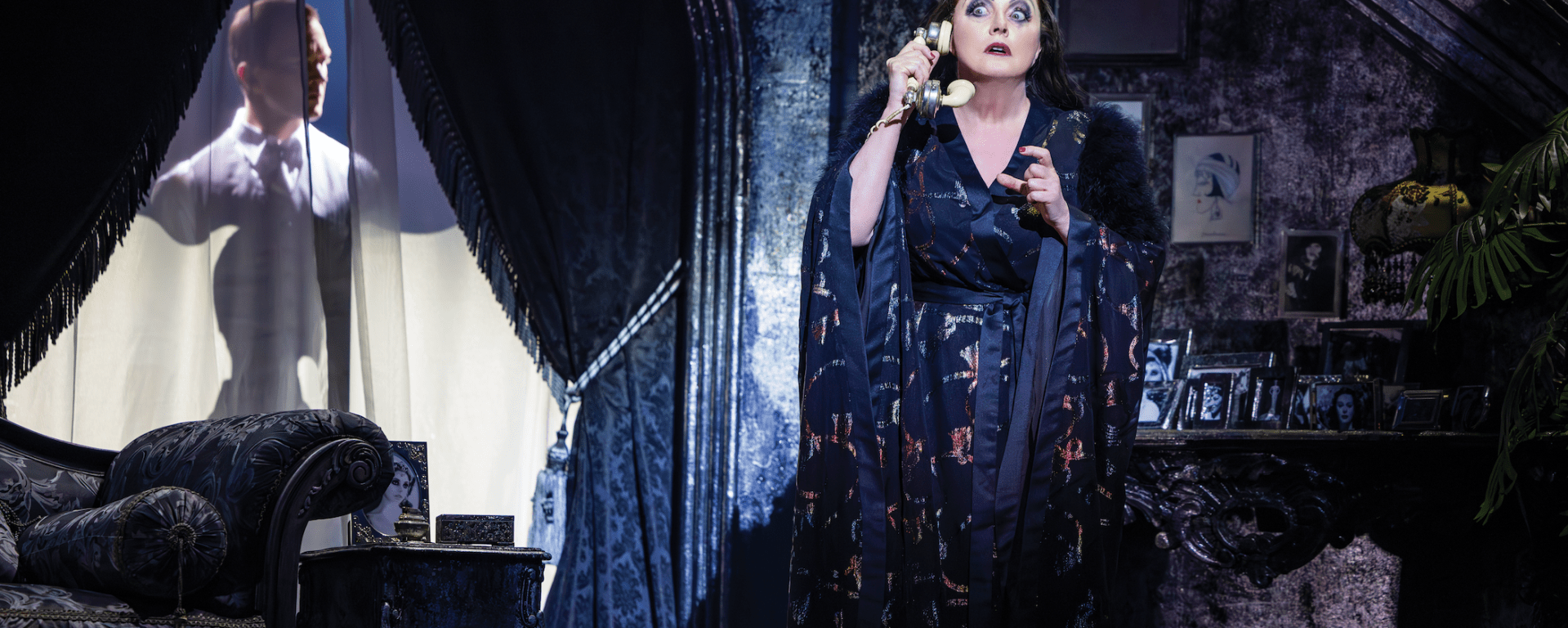
The biggest draw of this particular production is no doubt Sarah Brightman as Norma Desmond, who returns to theatre after a near three decade absence, with this run having begun in 2024 in Australia. Best known for originating the role of Christine in Phantom of the Opera, as a trained, professional opera singer, Brightman hits all the notes in her songs, and captures Norma’s unraveling psyche, knackering on about astrology and other mystic nonsense that makes it impossible not to feel immense pity for her. This only worsens when we watch her desperate attempts to remain relevant, not only from Paramount hiding their disdain for her and Norma lapping it all up, to also nipping and tucking at her body, applying a copious, ghostly layer of makeup that makes her seem almost spectre-like as she sweeps down the stairs. Brightman’s voice firmly sticks to the soprano range across her performance that lends an eerie beauty to songs like With One Look and As If We Never Said Goodbye. She is almost always entirely in her own world, oblivious to the hard reality of how little influence she has left in Hollywood.

Anchoring the show opposite her is Tim Draxl as Joe Gillis, a role that requires a delicate balance of cynicism and charm, and he certainly delivers in making us feel disgust but understanding of how he takes advantage of Norma’s fragility. As both protagonist and antagonist in Norma’s story, Draxl plays the part with a weary resignation that makes Joe’s choices feel inevitable rather than cruel, and a clear struggle in his eyes and voice when he sings the eponymous Sunset Boulevard, showing off a well-sculpted body by the ‘pool’ that makes it clear why Norma takes a lustful shine to him. His tenuous chemistry with both Norma and Betty Schaefer keeps the emotional stakes high, drawing us deeper into the show’s twisted web of dreams and ambition, such that we too end up feeling sorry for him and the Hobson’s Choice offered to him.

Speaking of Betty, Ashleigh Rubenach is a bright spot in the production, embodying the youthful optimism that Joe has long since abandoned. Her commitment to the role, combined with her stage presence and vocal clarity, makes Betty more than just a foil to Norma; she is the last glimmer of hope in Joe’s crumbling world he clings to and is doomed to fall for. The two of them share a momentary glimpse of a happy ending together in Too Much In Love To Care, with Rubenachas leaving it all on the floor with the emotional high in her voice. Meanwhile, Robert Grubb delivers a deeply unsettling turn as Max Von Mayerling, balancing devotion and menace with impeccable timing. His unwavering dedication to Norma’s illusions makes his performance all the more tragic, fighting back relentlessly against the inevitable fact that she will one day have to accept the end of her stardom.

Visually, the production is a feast of the noir, thanks to Morgan Large’s outstanding costume and set design. Norma’s wardrobe is particularly striking—drapey, decadent fits that become synonymous with the character, serving to externalise her darkness, hiding the flaws she refuses to acknowledge and cementing her as a fallen star who dresses according to how she feels. These motifs even extend to the stage curtains, which manifest as lacy black, also echoing Norma’s taste in colour and material. Meanwhile, her home looms as an architectural marvel a towering and expensive-looking mansion filled with furniture that resembles a gothic castle, mirroring her own isolation and imposing presence. The set is more than just a backdrop; it breathes with her moods, a grand monument to a past that refuses to fade. On the other hand, when the set switches to the studio lots, there is a clear sense of artifice that reminds us all of how constructed the world of Hollywood is, a beautiful bunch of lies meant to sell movies that everyone deludes themselves into believing to keep the machine running.

This is also a production that pays attention to small details such as using proper coupe glasses for champagne and martini glasses, with both drinks representing how much class and luxury Norma is used to. This casts a clear parallel to the New Year’s Eve party at Artie’s place, where despite not being as wealthy as Norma, still know how to have a good time with a bottle of Dom Perignon, reflecting the decadence and joy of Tinseltown in the Golden Age. Costume changes are done very smoothly, with both Norma and Joe showcasing quick costume changes in their respective scenes. Led by conductor Sean Huan Yuh, the live orchestra does well, capturing the grandeur of Andrew Lloyd Webber’s operatic score and lulling audiences into a dream-like state.

The musical’s pacing is what makes the musical so closely resemble a film from the era it is set in, the unrelentingly claustrophobic atmosphere immersing us in Joe’s plight, trapping us in the intoxicating, tragic world and hallucinations of Norma Desmond. The ensemble does a good job of making the world feel fleshed out as well, providing serviceable choreography in scenes set in a bar or a New Year’s Eve party that allows us to suspend disbelief and imagine these as the infinite number of Hollywood hopefuls looking to make their mark.

In the end, Sunset Boulevard remains a musical that lingers long after the final curtain, a sharp and mournful meditation on the nature of fame, illusion, and self-deception. It’s a tale as old as time – boy meets girl, girl goes mad about the boy, and if you are a fan of Brightman, then that certainly is reason enough to come see her perform live. This is a staging that brings the now classic production to life with style, emotional depth, and a reminder that, in Hollywood, everyone is using someone for something. Even in death, one might still find a chance to make a brilliant, opportunistic comeback, or as Norma might prefer – a return.
Photo Credit: Daniel Boud
Sunset Boulevard plays from 7th to 23rd February 2025 at the Sands Theatre at Marina Bay Sands. Tickets available here
 Bakchormeeboy