


Fresh from its acclaimed world premiere in Brisbane, Congratulations, Get Rich! makes its Singapore debut this October, a wickedly funny, heartwarming ghost story that celebrates the beautiful, chaotic mess of being alive. Co-produced by La Boite Theatre, Singapore Repertory Theatre, and Sydney Theatre Company, the play follows Mandy, a woman fighting to save her beloved karaoke business, only to have the night take a supernatural turn when her long-deceased mother show up. What follows is a karaoke-fuelled reunion that’s equal parts hilarious, haunting, and deeply human.
Written by and starring Merlynn Tong, directed by Courtney Stewart, and featuring Singapore’s own Seong Hui Xuan, the production brings together three powerhouse artists whose talents span continents and disciplines. We sat down with the trio to talk about the show’s journey from Brisbane to Singapore, the joy and chaos of family, the power of ghosts and grief, and what it means to tell a story that sings from the heart. Read the interviews in full below:
Merlynn Tong
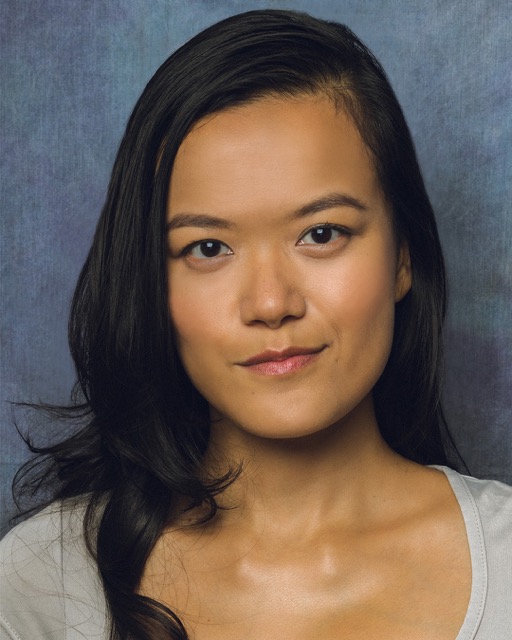
Bakchormeeboy: Your bio states that plays often touch on themes of family, longing, and inheritance. What personal experiences inspired Congratulations, Get Rich, and could you tell us more about the writing process and development of characters, like who or what inspired them? Was writing this play more cathartic, challenging, or both?
Merlynn: I grew up on karaokes in Singapore in the 90s. Those memories of my 6-year-old self running from room to room, before the doors officially fly open, will always stick with me. I’ve always wanted to write a play set in a Karaoke—and here we are finally!
On a personal note, my mother took her own life when I was a teenager. I think in one way or another, my entire artistic life has centered around this event. She appears in many of my plays, and this one is no different. I think with every show I write about her, I discover more about her, about myself and about family and the world.
This play truly straddles the lines of autobiography and fiction. I have based these characters on very real people but I have also allowed my imagination to run wild. This has created a perfect fuel of ‘fantastical autobiography’ where our audience will get to meet a suite of characters who feel authentic and real but are also part of a narrative that is outrageous, fun and phenomenal. I hope that this alchemic pressure cooker will hopefully create magic for the audience.
As an example, the character I play is a version of myself, with my anxieties and past obsessions ramped up. My mother’s character is a heightened version of my actual mother who I remember. I have never met my grandmother but I have heard some outlandish tales about her. She is the most fictionalised character and I’ve had such fun creating her. I’ve also married her backstory with some wonderful existing Singapore history of female gangsters in the 1960s. Finally, the character playing my partner in the show is based on a heightened version of my partner of more than a decade, Zachary Boulton (who is also an incredible performer himself) AND played by him. Zac recently proposed to me on stage during our closing night show in Brisbane!
I think writing this show has been cathartic and challenging in equal measure. Writing shows is hard as it is and when the personal is added in, there is an added layer of complexity. I also set myself the task of writing a comedy, and with songs about all this so it has been extra challenging but in many ways, also extra cathartic.
Bakchormeeboy: You’re both writer and performer here. How do you balance the vulnerability of telling your own story with the discipline of performing it? Once the play was in Courtney’s hands, did you leave it completely to her, or is there a more collaborative approach to how the work goes from page to stage?
Merlynn: This is my fifth autobiographical work to date (that I also perform in) and one thing that I have noticed along the way is that I have a separate writer and actor brain. I am deeply invested in the craft of writing and I love swimming in articles and ideas around structure, craft and character. Similarly, I am so obsessed with the art of live performance, of authenticity, of transformation and presence, especially for the stage.
When I hit the stage as a performer in my own work, I find that I suddenly develop a whole new relationship to the text. I sometimes even have to ask Courtney what a line means! I love working with a director, especially one as incredible as Courtney. For me, theatre is fundamentally a collaboration. Throughout rehearsals we do constantly edit the text together too. I find it such a delightful experience to unravel and share in the making of the work, even if the original words came from me.
Bakchormeeboy: Since your work has travelled across borders, what feels distinct about presenting this play in Singapore, your own cultural home ground?
Merlynn: It feels especially significant to me to get to present my play in Singapore. All the plays I write about are in some ways based in my time growing up in Singapore, so getting to present Congratulations, Get Rich! at Singapore Repertory Theatre really feels like I have been bestowed with all the riches that matter: affirmation, authenticity, homecoming and joy upon joy.
Bakchormeeboy: Could we talk more about what this play means to you as a relatively young theatremaker, and what your own hopes for the future are as an artist?
Merlynn: This play has been extremely significant to me. It is a story I care deeply about and getting to do a world-premiere across three cities, including an international tour that takes my story home to Singapore for the first time ever, is incredible. In the future, I hope to keep having the opportunity to write and perform in original stories. I hope to work more in Singapore and internationally. I hope to connect with people who resonate with my work. Ultimately, I hope to be able to keep making theatre and creating art.

Bakchormeeboy: This play is described as a “wickedly funny ghost story.” How do you personally relate to ghost stories or the supernatural? Any personal experiences you’d like to share?
Merlynn: I don’t know if you feel this too but ghosts feel way more present for me when I am in Singapore. They don’t seem quite as potent when I am in Australia. I think it has something to do with a collective cultural belief. I am fascinated by the notion of ghosts and the power and dramaturgical intrigue they can carry.
I have had a few ghostly experiences and all of them were in Singapore. I remember one particular one was when I had a very high fever, I was alone at home and I refused to ask for help. I heard a noise. When I turned to look at my door, I saw an eerie, scary ghost of my mother, that sent me into a full panic and made me reach out to a friend who promptly took me to the doctor. I was told my fever was getting very dangerous. That ghost could have been a hallucination or a literal fever dream, but I choose to believe it was my mother helping me in unconventional ways, perhaps that also describes the journey you’ll see in Congratulations, Get Rich!
Bakchormeeboy: Karaoke feels so specific and yet universal. How do you think local audiences will relate to it, and do you have a go-to karaoke song?
Merlynn: I agree! Karaoke is such a potent space! To me, it can even be a sacred space where you get to express emotions that may be hard to divulge outside its glittery walls. I hope locals will connect with this incredible location that has been a part of a lot of our lives and are ready for a wild journey that awaits them in the show. My go-to Karaoke song is all things Sun Yan Zi, particularly 開始懂了!
Bakchormeeboy: The show is about family, inheritance, and identity. How do you personally relate to or find resonance about the play? What do you think Singapore audiences will leave the theatre talking about?
Merlynn: I relate to it because a lot of the play is really exploration about my life. I do this in a more literal way here but I do believe most characters that writers write are all different facets of ourselves. For example, even though I am writing a character who is inspired by my mother, in many ways, she is a version of me. The play touches on the notions of suicide and because of what I have experienced, and the research around inheritance of such behaviour, I am endlessly curious about this topic.
I hope Singapore audiences will leave the theatre having had a great laugh and maybe even a good cry. I hope they will still be humming some of our original songs! I hope they will wonder about the different meanings of legacy and how we possess power and choice. I hope they will consider what being rich means, and perhaps discover they may already be holding the riches they desire.
Seong Hui Xuan
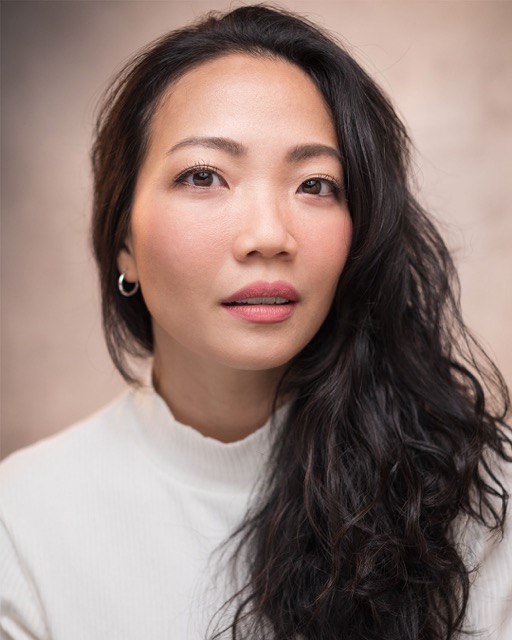
Bakchormeeboy: How different is stepping into the role of “Mum” compared to your past roles? How have you been preparing for the role, especially in terms of putting yourself in the mindset of a mother, and what personal discoveries or challenges came with embracing this part?
Hui Xuan: It’s been a thrilling shift! Most of my previous roles have had a youthful energy – carefree, wild, rebellious. But I’ve always been drawn to older, more complex characters: women who’ve accumulated layers of experience, contradictions, and hidden depths. The kind of stuff that makes them fascinating to unpack and delve into as an actor. So “Mum” is just the kind of role I’ve been waiting to grow into!
I’m not a mother myself, but having taught for nearly 20 years, I feel like I have mothered a lot of children in some odd way! Obviously it’s not quite the same as having actually birthed and raised a child, but it’s helped me relate to that protective, nurturing instinct – caring for someone’s wellbeing, wanting the best for them, even if your efforts don’t always land as intended.
At the same time, I’m also keenly aware of the crucial difference – at the end of the day, students go home. But as a parent, you are home. As a teacher you aren’t going to click with everyone, and that’s ok, you can move on. But with your own child, you don’t get that option. It’s a lifelong commitment, regardless of whether you fundamentally get along. That’s a permanence that honestly I find both beautiful and terrifying!
And the thing is, nobody’s perfect. Mothers make mistakes, daughters carry wounds, and somehow through all this hurt they have to keep showing up for each other. That’s what fascinates me about this role – these deeply flawed characters who are really just trying to make sense of it all while working through their own trauma. The play really digs into that inter-generational complexity, and it’s been incredibly rich territory to explore.
Bakchormeeboy: As someone who’s performed in Singapore, Australia, and internationally, how do you think Singapore audiences will connect with this story compared to others you’ve done abroad?
Hui Xuan: One thing that’s really struck me after working on several shows overseas, both as a performer and a creative, is how universal the human experience is. At our core, so many of us want the same things – to be loved, to feel heard, to connect, to matter. And when these needs clash or go unmet, that’s where conflict and hurt arise. That’s what drives the characters in this story, and I think audiences anywhere can recognize themselves in that struggle.
What’s beautiful about this play though, is how it layers culturally specific details onto that universal core – the Asian family dynamics, Singaporean references, and of course our favourite creole Singlish. These aren’t just flavour, they’re integral to how these characters navigate their world. When we premiered in Brisbane, I was genuinely surprised by how much audiences from diverse backgrounds connected with those specific elements. It really spoke to how multicultural and globally aware audiences have become.
But I’m especially excited to bring this home to Singapore, because audiences here will catch every linguistic nuance, every cultural reference, every unspoken family dynamic that might fly under the radar elsewhere. There’s a shared lived experience here that I think will make the story resonate on an even deeper level. It’s like the difference between understanding something intellectually versus feeling it in your bones, and that to me makes this homecoming all the more special.
Bakchormeeboy: What excites you most about collaborating with La Boite and what have you learned from this creative team?
Hui Xuan: Working with this team has been such a dream. What I’ve loved most is the combination of clear direction and creative freedom – we had a strong framework, but plenty of room to experiment and play within it. And I think this is only possible because everyone, from director to designers to performers, trusts each other to bring their best. There’s this mutual respect for what each person brings to the table which has been absolutely gorgeous to experience.
Witnessing how creative leaders like our director lead with conviction and clarity while still listening with genuine openness – that’s been incredibly valuable for me. It just creates this energy of trust and generosity in the room that makes everyone braver. It’s something I’m absolutely taking forward into my own practice, both as a performer and a creative.
Bakchormeeboy: The play has karaoke at its heart and you’re known as a choreographer – how does music or movement shape the way you approached your character?
Hui Xuan: I work as both a choreographer and a performer, and music and movement have always been at the heart of what I do – whether I’m acting, singing, dancing, or creating choreography. I spent many years primarily performing before expanding into creative work, so these two sides of my work are deeply interconnected.
It’s interesting that you’ve asked about music in relation to choreography, because if I were to get to the heart of the things that inspire my choreography, the core of why I move, really, is music. For me, it’s about finding the story in the music – the notes, the lyrics, the emotion – and then letting movement amplify and deepen what’s already there. Aligning music, movement, character, and story… that is something that is so important to me because that’s when something really powerful happens.
Because of my musical theatre background, integrating music and movement with character has always felt instinctive to me. So playing someone for whom music and dance are essential to who they are feels like a natural extension of everything I do. It’s been really fulfilling excavating that connection my character, Mum, has to song and movement, and understanding what karaoke means to her, what refuge it offers and what freedom she finds there. Getting into the heart of that has really opened up the richness of who Mum is for me.

Bakchormeeboy: This play is described as a “wickedly funny ghost story.” How do you personally relate to ghost stories or the supernatural? Any personal experiences you’d like to share?
Hui Xuan: I love playing ghosts and other spooky beings but I’ve personally never had a supernatural encounter – choy, touch wood! I think I have a healthy mix of fear and curiosity about these things. The funny thing is, I absolutely can’t watch ghost movies, especially the particularly creepy psychological horror kind, but in real life I’m actually pretty impervious to supernatural things. I’ve been in situations where friends around me swear they felt a presence or saw something while we were in the exact same place at the same time. But while they were freaking out I was just carrying on, completely oblivious. Which is probably just as well, because I hear theatres are full of spirits! At this point I’m not sure if I’d rather have an encounter to satisfy my curiosity or stay blissfully unaware. But honestly, I’m more likely to freak myself out with my own imagination than anything actually supernatural!
Bakchormeeboy: Karaoke feels so specific and yet universal. How do you think local audiences will relate to it, and do you have a go-to karaoke song?
Hui Xuan: I think local audiences will really enjoy all the karaoke references and jokes in the script – they’re so familiar and relatable. And the set design itself, with all its spot-on detail and clever little touches, will be a fun discovery for audiences. Even the lighting amuses me at points with how “KTV lounge” it is! There’s so much to recognize and connect with.
Believe it or not, I’ve never been to an actual karaoke joint! I mean, I understand the concept, and I’ve definitely belted out songs at house parties and in my own practice. But after learning that fact, my castmates have been determined to change that – we might actually go to a karaoke during our Sydney leg of the tour. So if that happens, I reckon I might sing an Adele or Celine Dion, though as a musical theatre nerd, my real go-to is usually a showtune!
Bakchormeeboy: The show is about family, inheritance, and identity. How do you personally relate to or find resonance about the play? What do you think Singapore audiences will leave the theatre talking about?
Hui Xuan: For me personally, what really speaks to me in this play is the complexity of intergenerational relationships, especially between mothers and daughters – the unwittingly-inflicted trauma on both sides, the unfulfilled needs and desires, and the unspoken love at the heart of it all.
It’s so interesting to me when we talk about inheritance and identity in the context of Asian family structures, particularly Chinese Singaporean families. I think we immediately jump to material inheritance – the family fortune, the business, the house. And in many ways, these things become tied to our identity: what’s your job, where do you live, what are you wearing, what holidays have you been on. This correlation between material inheritance and identity is, like it or not, a huge part of our wider cultural identity itself, something the play’s title directly addresses: Congratulations, Get Rich being the literal translation of “恭喜发财.”
But there are so many other forms of familial inheritance – genetic traits, personality quirks, family traditions, and of course intergenerational trauma. All these “inheritances” become so seamlessly woven into our DNA that we can’t always see them clearly. What resonates for me is that, like Mandy in the show, I’m also at that point in life where you start to question: can I be someone beyond what I’ve inherited? Something more, or something different? That journey to break and reforge new bonds, to discover who you are in spite of and thanks to the baggage of your ancestors – that journey is both overwhelmingly traumatic and deeply cathartic.
I think the wonderful thing about good theatre is that while the themes may be universal, the specific ways different audiences relate to them are beautifully varied, even amongst audiences in the same country. So while I think Singapore audiences will probably leave talking about the central themes – family relationships, mental health, intergenerational trauma, reclaiming self-determination – the way these conversations unfold and the opinions formed, will differ from person to person. And I think that’s what makes it powerful.
Courtney Stewart
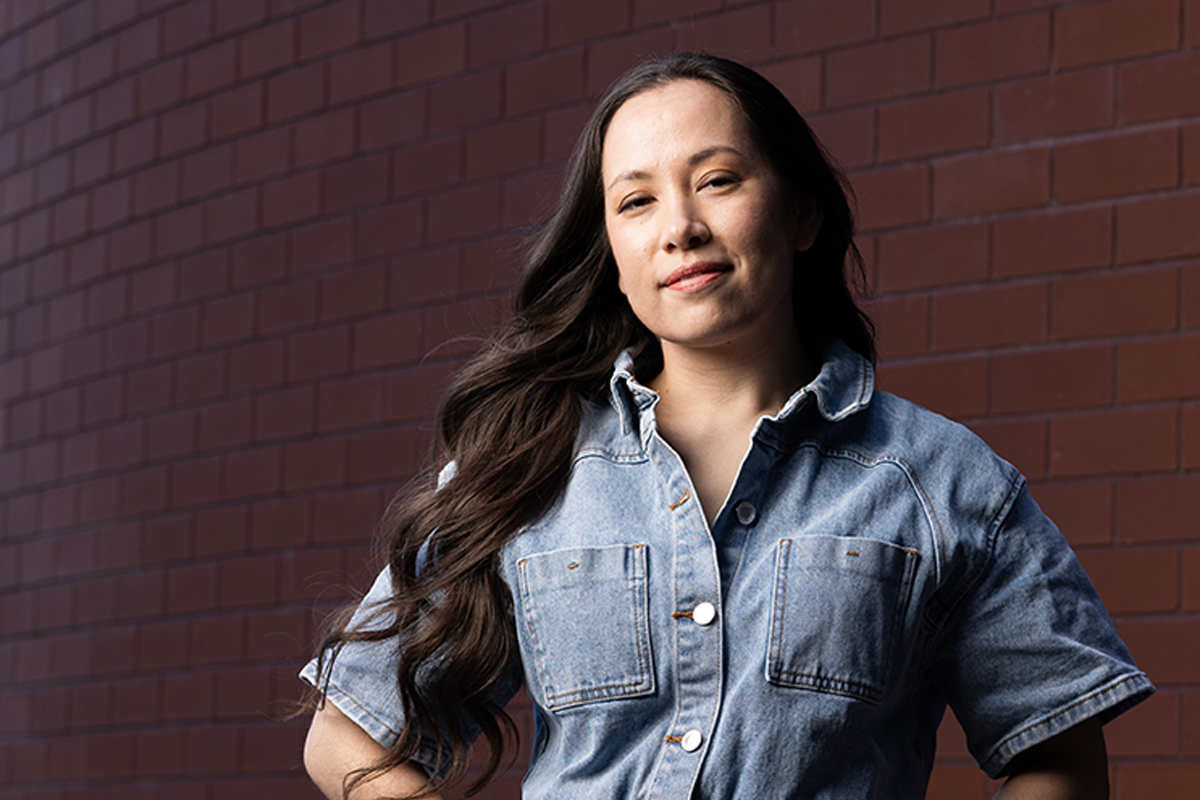
Bakchormeeboy: You’ve spoken about loving the “weirdness” and theatricality of this play. What surprised you most about Merlynn’s script once you got into the rehearsal room? How did you harness the ‘weird’ energy without losing its heart at the core of the script?
Courtney: I think Merlynn and I share a similar weird sense of humour. I’m not always searching for the “neatest” way to tie up a story beat. I think surprising jump cuts can be quite fun to land with an audience. I guess what surprised me about the script is that during that first read there was an incredible flow to the story, even though there were some bigger jumps in story beat. I didn’t leave me behind the characters, I still felt like I was right alongside them.
Bringing humour to any work is such a balance. A lot of my work pushes into physical moments of comedic and weird energy. I get inspired by the beats on the page, and find ways to continue this in the way the story is realised in 3 dimensions on stage. But at the front of my mind is always to privilege story. Any time we spend building a stage picture, must be time pushing the story forward.
Bakchormeeboy: As Artistic Director of La Boite, how do you balance nurturing new works like this with leading a century-old institution? How did this collaboration with SRT come about, and what does this production signify to you about the future of more collaborations and a working relationship with Singapore, especially when compared to the Brisbane scene and the opportunity to develop more work focused on Asian voices?
Courtney: La Boite has built its legacy on incubating new work and ushering them to the stage. So this balancing act is in the very DNA of the company. My practice is collaborative, so when the opportunity came to explore the conversation around working with SRT to bring this work to life, my mind exploded with possibilities. Mostly, it’s been incredible to cross-pollinate our collective creative practices. It’s been such an incredibly fulfilling and creatively nourishing process, from building the show through rehearsals, to co-producing the production with the teams at SRT and STC.
I can’t wait for our next collaboration. I’m so passionate about opening the door to creating more work that resonates throughout the Asia Pacific Region. That’s been a dream I’ve had since stepping into my role here in 2022, and it’s incredible to be working with SRT to make sure this work has that global impact.
Bakchormeeboy: Could we talk about your directorial process when it comes to this play – what was it like working with the cast and how you brought out the best in them? How do your own myriad artistic experiences as a performer shape the way you direct?
Courtney: The cast are world-class, and brought new ideas and thoughts into the room every day. When I start a new process, it’s really important to me that everyone working on the show, from the cast to the creatives to the marketing teams to the producers and beyond, all are plugged into the vision for the work. I spend a lot of time talking about the bigger questions a work is throwing up, what we are all collectively trying to achieve, and what our hopes and dreams are for what our audience will feel on the night.
Having started my career as an actor and dancer, I am hyper focussed on the realisation of the characters any work I do. I’m always interrogating how the characters land on the audience.
Bakchormeeboy: For you personally, what’s the most joyful or moving moment in Congratulations, Get Rich!?
Courtney: So many! I am obsessed with the song Burberry, and I love the big ghost fights and supernatural moments.

Bakchormeeboy: This play is described as a “wickedly funny ghost story.” How do you personally relate to ghost stories or the supernatural? Any personal experiences you’d like to share?
Courtney: I’m a scaredy-cat and find supernatural themes quite unnerving. But I look back at my body of work and ghost stories actually feature quite heavily. In fact, last year I directed a production of Closer by Patrick Marber and worked with my incredible designer to have a ghost like quality to the character of Alice. So even when a story sits in the realism genre, I’m trying to bring it into the supernatural realm!
Bakchormeeboy: Karaoke feels so specific and yet universal. How do you think local audiences will relate to it, and do you have a go-to karaoke song?
Courtney: I think audiences will be surprised because the songs are all original, so it will be a different experience to a more typical sing-a-long production. However, the songs have super catchy pop-inspired hooks (shout out to the incredible composer Guy Webster), so they will fast become ear-worms for audience members.
My go-to Karaoke song is ‘How Will I Know’ by Whitney Houston – because it’s a big song with big feelings.
Bakchormeeboy: The show is about family, inheritance, and identity. How do you personally relate to or find resonance about the play? What do you think Singapore audiences will leave the theatre talking about?
Courtney: My hope is that audiences will be able to appreciate their individual lineage, family lines, and identities. But also leave them with the invitation to remember that they have a say in what they choose to hold close and what they choose to let go of. We form our very identities through the stories we tell ourselves about ourselves, and being able to exercise your agency in that is sometimes the thing you need to set you free.
I can’t wait to share this work with audiences in Singapore!
Image credit: La Boite Theatre / Stephen Henry
Congratulations, Get Rich! runs from 29th October to 9th November 2025 at Drama Centre Theatre. Tickets available here
 Bakchormeeboy