
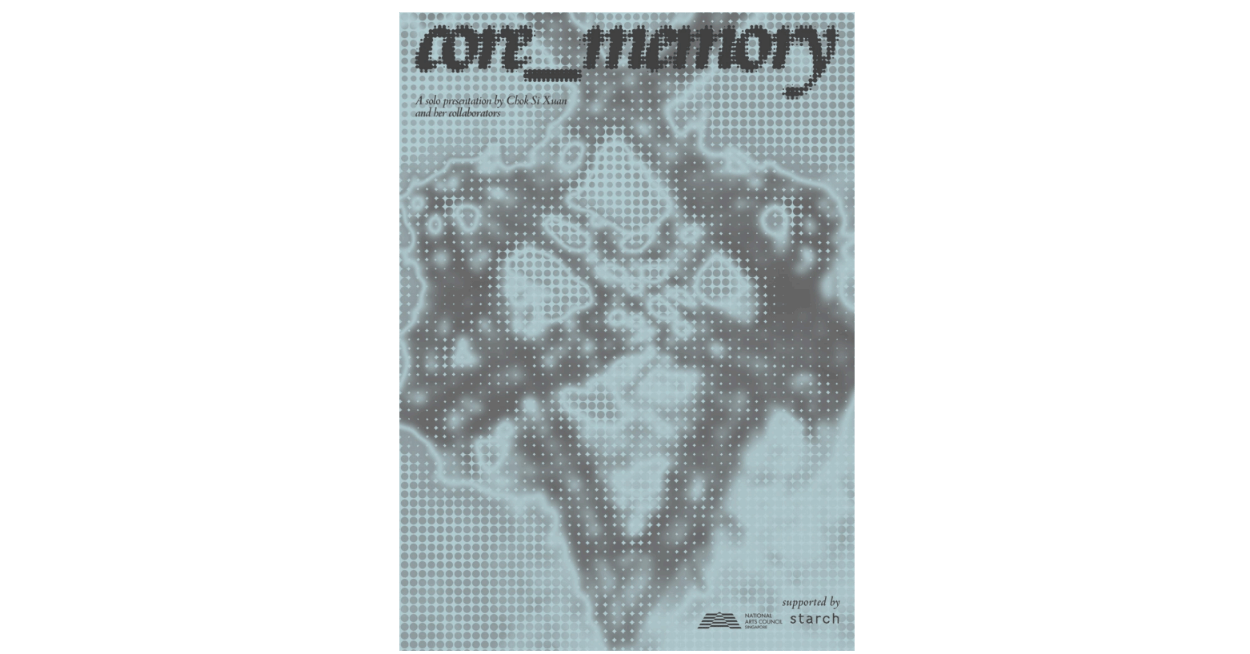
This April, a new exhibition is asking big questions about the devices we carry, the systems we depend on, and the invisible histories embedded within them. From 17 April to 17 May 2026, artist Chok Si Xuan presents core_memory, a solo exhibition at starch, a space known for pushing the boundaries of experimental art. But this isn’t your typical gallery show. It’s an immersive, almost tactile encounter with the hidden material life of technology.
We tend to think of technology as sleek, seamless, and intangible. But core_memory flips that perspective. Through two large-scale installations—solid_state (2025) and core_memory (2026)—Chok invites visitors to confront the raw materials and human labor that power our digital world.
Metals, minerals, crystals—these are the building blocks of the devices we use daily. Yet their origins, and the systems that extract and assemble them, often remain out of sight. This exhibition brings them to the surface, asking: What are our devices really made of? And what do they, in turn, make of us?
Walking into solid_state, visitors are met with a suspended, almost otherworldly environment. Floating sculptures, cables, and screens form a network that feels both mechanical and alive. Industrial materials like stepper motors and NiTiNOL—a shape-memory alloy—sit alongside everyday objects, blurring the line between the engineered and the familiar.
The installation draws on Singapore’s own history as a semiconductor hub, while also connecting to the rapid industrial rise of cities like Shenzhen. A silent video component traces these parallel transformations, linking global supply chains to personal experience.
The exhibition’s centerpiece, core_memory, takes a more intimate turn. Inspired by early computing systems—including those used in NASA’s guidance computers—the work recreates hand-woven magnetic core memory circuits. These delicate, almost textile-like structures actively encode and decode information in real time. It’s a striking contrast to today’s invisible cloud storage, and here, memory is physical, crafted, and fragile.
Chok draws a parallel between machine memory and human memory, suggesting both are fluid, reconstructive, and deeply subjective. In a city like Singapore, where technological progress is tightly woven into national identity, the question becomes personal: How do we remember—and what shapes those memories?
Beyond the installations, core_memory includes artefacts and reading materials that trace the evolution of technology from pre-semiconductor systems to today’s digital infrastructures. These contextual layers ground the exhibition in real histories, making the experience as educational as it is sensory.
A series of public programmes adds another dimension. Expect technical walkthroughs, workshops exploring weaving and cryptography, and film screenings that expand on the exhibition’s themes. It’s designed not just to be seen, but engaged with.
Chok Si Xuan’s practice has always been fascinated with cybernetics—the feedback loops between humans, machines, and living systems. Her installations often use found electronic objects, reassembled to reveal the relationships we already have with technology but rarely notice.
In core_memory, that exploration feels especially timely. As our lives become increasingly mediated by devices and infrastructures, the exhibition offers a moment to pause, and to look closer. Not just at the technology around us, but at the systems shaping how we live, remember, and relate to one another.
core_memory runs from 17th April to 17th May 2026 at starch. Admission is free, with opening hours from Thursday to Sunday, 12pm–7pm (or by appointment). More information available here
 Bakchormeeboy