
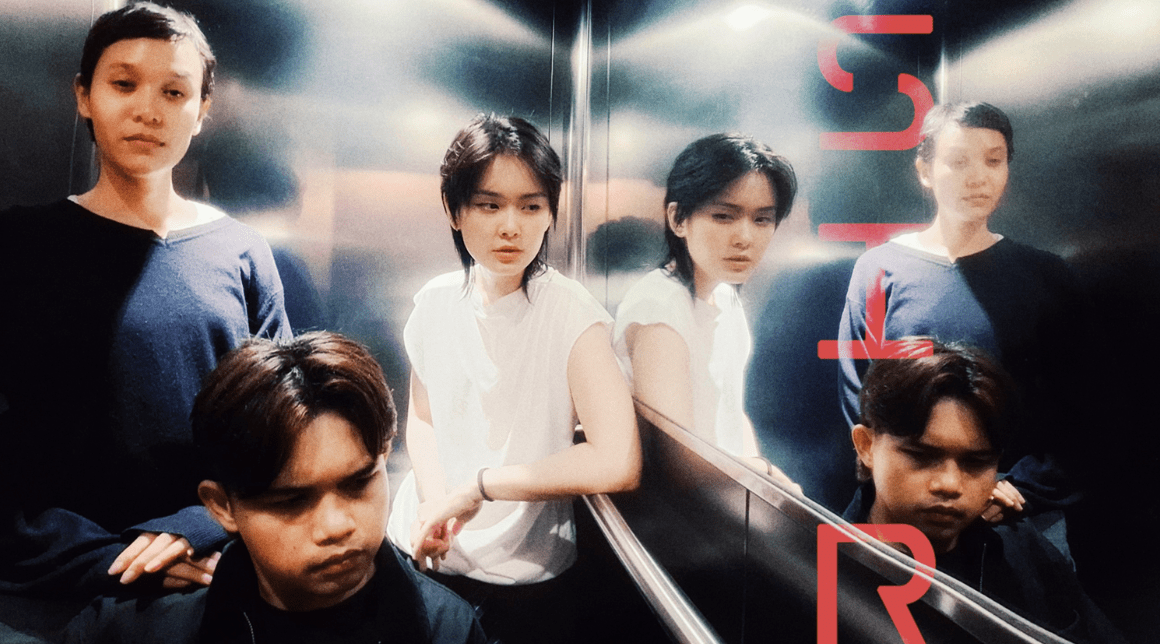
There is something fitting about the long journey of Teater Normcore: Odisi Romansa, a play about distance, time, and memory that itself had to wait years before reaching the stage. First written in 2019, the production was disrupted by the pandemic, before finally returning in 2026. And for playwright-director Ridhwan Saidi, that passage of time was never something to erase. “I wrote Odisi Romansa back in 2019. We were actually preparing to stage it in 2020, where we even had the cast, but then the pandemic happened. So the script just sat there for a while,” he says. “When we finally came back to it, it felt a bit like opening a time capsule.”
Staged at the Black Box, Damansara Performing Arts Centre (DPAC) this week, Ridhwan is pushing his ideas further than ever, as he explores the speculative vastness of a post-human universe. Odisi Romansa is a story about memory, love, and absence, unfolding in a future where humanity has long disappeared, leaving behind fragments of emotion and data. From within a silent server facility, two androids,Y-002 and Z-001, attempt to reconstruct what it once meant to be human, their journey shaped by kerinduan, a longing inherited from creators they never knew. As they drift apart across the cosmos, one drawn toward the ancient gravitational core of the Milky Way, the other departing Earth in search of a new refuge, the play expands into a meditation on distance, connection, and the fragile imprint of humanity.
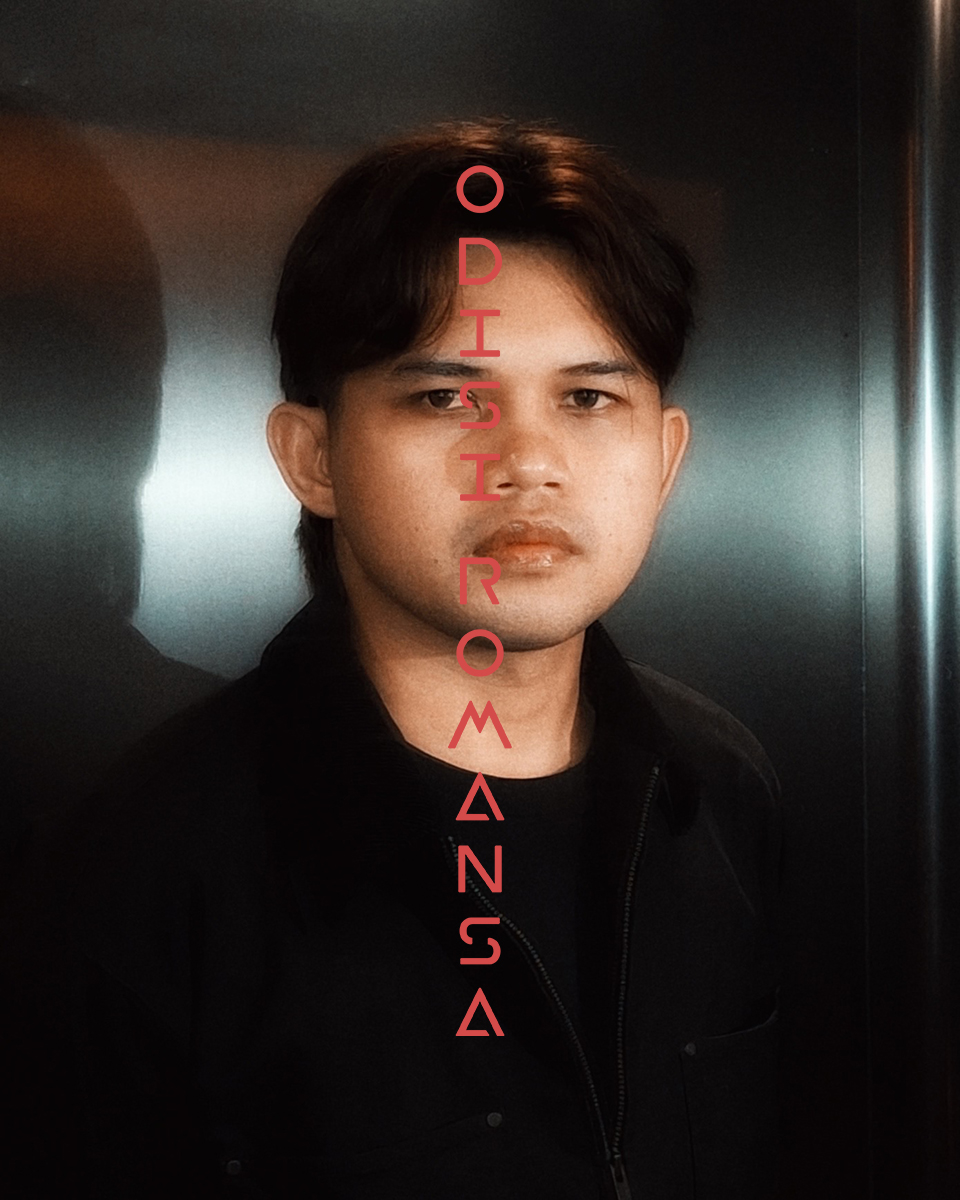
That instinct to preserve rather than overhaul became central to how the production evolved. “I could have rewritten it entirely, but I chose not to. I wanted to respect the thinking and instincts I had at that time,” he explains. “Of course, there were some adjustments, but the text itself remains largely intact. It became less about rewriting and more about directing around the script.”
What remains inside that “time capsule” is a speculative, post-human world where androids inherit the remnants of human existence. Yet for all its cosmic scale, the play is anchored in something deeply familiar: longing. “I was interested in how androids might try to understand humanity through fragments, memory, data, observation,” Ridhwan says. “In the play, their energy source actually comes from a kind of ‘memory server’ left behind by humans. So in a way, their existence is sustained by human traces.”
From that premise emerges a persistent ache. “One of the androids wants to become human, but there’s a fundamental limitation: they can’t reproduce, they can’t fully experience life the way humans do,” he continues. “So there’s this ongoing search for meaning, for continuation. That’s where the longing comes in.”
The emotional distance in the play is mirrored by a vast physical one. Across galaxies and timescales that stretch far beyond human comprehension, the androids drift apart. Ridhwan traces this sensibility back to an early influence: “I was really inspired by Makoto Shinkai’s Voices of a Distant Star and Christopher Nolan’s Interstellar. It plays with the idea of communication across vast distances, messages that take years to arrive.” In Odisi Romansa, that idea expands even further. “The androids exist over extremely long timescales, tens of thousands of years. That allows their journey to stretch beyond human imagination.”
What’s striking is how a text written before the current surge in artificial intelligence discourse now feels uncannily aligned with it. “When I wrote it, I was thinking in terms of algoritma, Malay for ‘algorithm’, and systems,” he reflects. “Now, with AI becoming more present in everyday life, some of those ideas feel more immediate, and maybe what I had even scarily prescient.” Still, his androids are less machines than mirrors. “I see them as quite human in their behaviour. They observe, they learn, they try to replicate. They’re almost like us; working, adapting, searching for purpose.”
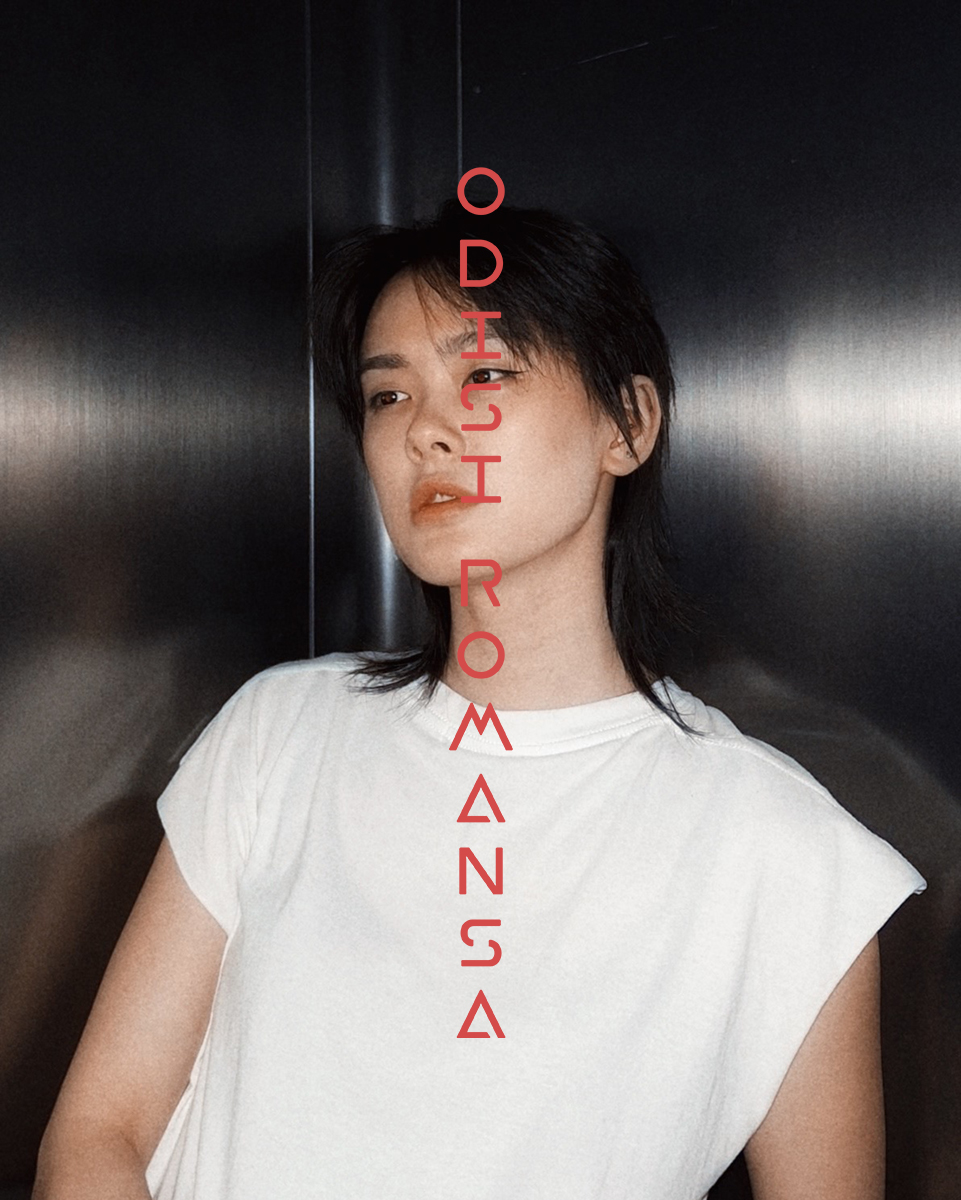
On stage, these ideas are rendered in typical normcore style: simplistic in idea, but skilfully brought to life through a careful interplay of form and material, thanks to set sculptor William Koong. Giant puppets loom, digital systems flicker into presence, and performers navigate a world that feels at once tactile and abstract. Yet for Ridhwan, even these elements are rooted in a longer-standing philosophy. “The puppets were always part of the idea. I needed a sense of scale, especially because the androids are imagined as being smaller than humans,” he says. “The puppets help create that contrast and expand the visual world.”
The integration of technology with collaborators FabU marks a newer step for Ridhwan and his team. “This is actually the first time I’ve worked so directly with digital technology in a production. It allowed us to think about the ‘computer’ or system as something present on stage, not just abstract.”
This tension between scale and simplicity also reflects the broader Normcore ethos that has shaped much of his theatre work. “Originally, Teater Normcore came from an interest in thinking about how we build sets and what happens to them after,” he explains. “A lot of productions use expensive materials that are discarded after the show.” His response is deliberately grounded: “It’s about working with what’s available, paper, plastic, reusable elements, and seeing how far we can go with that.”
If the materials are modest, the language is anything but. The script leans heavily on the poetic possibilities of Bahasa Melayu to construct its universe. “I rely a lot on the poetry of the words to hold attention and to build the world,” Ridhwan says. “When you’re dealing with something as abstract as space or time, language becomes the main tool.” He adds, “I think writing this in Malay gives it a different texture. If it were in English, it might come across as overly grand or even awkward. But in Malay, it feels fresh.”
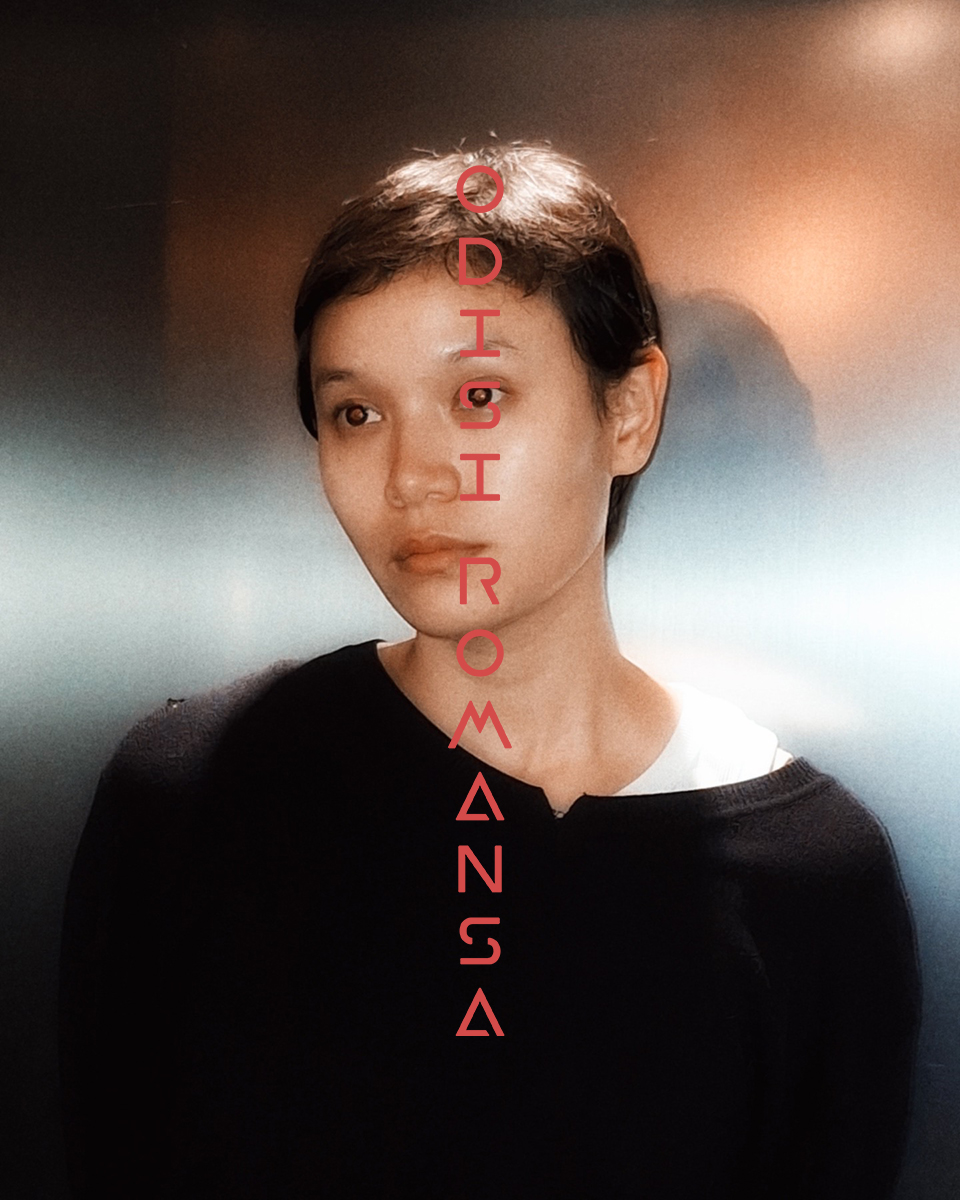
That sense of freshness also comes from working within a relatively underexplored space – sci-fi based in the Nusantara and Malay region. “There’s been a wave of speculative writing recently,” he notes, “but when it comes to Malay literature, there’s actually very little. Maybe fewer than 20 works, and many are geared toward young adults.” In that context, Odisi Romansa quietly extends the boundaries of what Malay-language theatre can imagine.
Even within its futuristic frame, traces of cultural thinking remain embedded. Ridhwan hints at subtle influences, including matriarchal structures drawn from Minangkabau culture, ideas that shape how different characters relate to exploration, care, and survival. These elements are not foregrounded, but they linger beneath the surface, much like the memory fragments that power the androids themselves.
And yet, for all its philosophical reach, Odisi Romansa never loses sight of its emotional destination. “I actually want audiences to feel a bit detached at first, from the setting, from the characters,” he says. “There’s a sense of alienation.” That distance, however, is only temporary. “By the end, I hope people start to reflect on Earth itself. To realise that what we have here is very specific, very rare.”
In that sense, the play’s journey is less about escaping than return. “You leave Earth for 75 minutes, and then you come back to it with a different perspective,” he says. “It’s about feeling something unfamiliar, and then recognising that it was about us all along.”
Even in a world where humans are gone, Ridhwan imagines that not everything disappears. “I like to think that even if humans are gone, something like music would still exist,” he says. “These vibrations and sounds are so universal. If there are other beings out there, I hope there’s still music for them.”
It’s a quiet thought to carry out of the theatre: that somewhere, beyond language and memory, something continues to resonate.
Teater Normcore: Odisi Romansa runs from 8th to 17th May 2026 at Black Box, Damansara Performing Arts Centre (DPAC). Tickets are available via CloudJoi

