

Singapore’s cinema scene is having a moment, and this year, the Singapore International Film Festival is bringing that momentum home. Returning from 21 October to 1 November 2026 for its 37th edition, SGIFF will open with South Korean thriller The Assassin(s), directed by Hur Jin-ho and starring Yoo Hae-jin, Park Hae-il and Lee Min-ho. Hur, alongside supporting cast members Shim Eun-kyung and Park Sung-hoon, will attend the Festival Opening.
But while the festival continues to bring some of Asia’s most recognisable cinematic voices to Singapore, this year’s edition is also looking inward. More than 25 Singaporean productions and co-productions connected to major international festivals including Cannes, Sundance, Toronto, Venice and Melbourne will be presented across the programme, creating a chance for audiences here to see how far Singapore filmmakers and film practitioners have travelled.
For SGIFF Executive Director Jeremy Chua, that balance is central to the festival’s next chapter. “We are thrilled to open our doors for the 37th edition of SGIFF. This edition brings to Singapore some of the most respected talents and consequential work being made across Asia. Around it, we have also reconsidered how audiences encounter a festival with new presentation formats and points of entry, a ticketing platform that is markedly more intuitive, an industry programme expanded into a resource centre for artists, technicians and storytellers at every stage of practice, and a new free-to-attend section at the intersection of creativity and technology, attending to the forms storytelling will take next.”
The festival’s international line-up remains a major draw. Aamir Khan will receive SGIFF’s Screen Icon Award and attend a special presentation and 25th anniversary screening of Lagaan: Once Upon a Time in India alongside director Ashutosh Gowariker. The 2001 Hindi-language epic, which was nominated for Best International Feature at the 2002 Academy Awards, follows a group of villagers who form an unlikely cricket team in a bid to challenge the British colonial authorities and escape crippling taxation. Meanwhile, Hirokazu Kore-eda, whose Cinema Honorary Award and Look Back presentation were previously announced, remains one of the festival’s key guests this year.
Other major names appearing across SGIFF include South Korean actor Shim Eun-kyung, Hong Kong filmmaker Peter Chan and Hong Kong actor Anthony Wong. Wong will take part in a post-screening dialogue following My Name Ain’t Suzie, which marks his first acting role.
The festival will also welcome filmmakers and practitioners including Nagi Notes director Koji Fukada, cinematographer Akiko Ashizawa, cinematographer Tom Harari and Cageman director Jacob Cheung.
Taken together, the guest list reflects SGIFF’s long-standing role as a meeting point for Asian cinema, bringing filmmakers, actors and creative practitioners into direct conversation with Singapore audiences.
Perhaps the most significant story of this year’s edition, however, is happening much closer to home. Singapore filmmakers and producers have increasingly been appearing on international festival line-ups, and SGIFF 2026 is putting that momentum front and centre.
Nine-year-old Ong Xuan Jing, for example, won Best Actress at the Hong Kong International Film Festival’s Young Cinema Competition for Ah Girl. The film’s director Ang Geck Geck also received the Youth Jury Award at the International Film Festival Rotterdam, before the film travelled to Toronto and Melbourne.
Nelson Yeo’s genre-blending feature The House on the Moon, developed partly with support from IMDA’s Virtual Production Innovation Fund, premiered in competition at the Locarno Film Festival.
Tan Si En of Momo Film Co. co-produced Nagi Notes, directed by Koji Fukada, which premiered in competition at Cannes. Daniel Hui edited two Singapore-linked co-productions this year — Sleep No More, directed by Edwin, which premiered at the Berlin International Film Festival, and The Burning Giants, directed by Phuttiphong Aroonpheng, which premiered in Venice’s Orizzonti section.
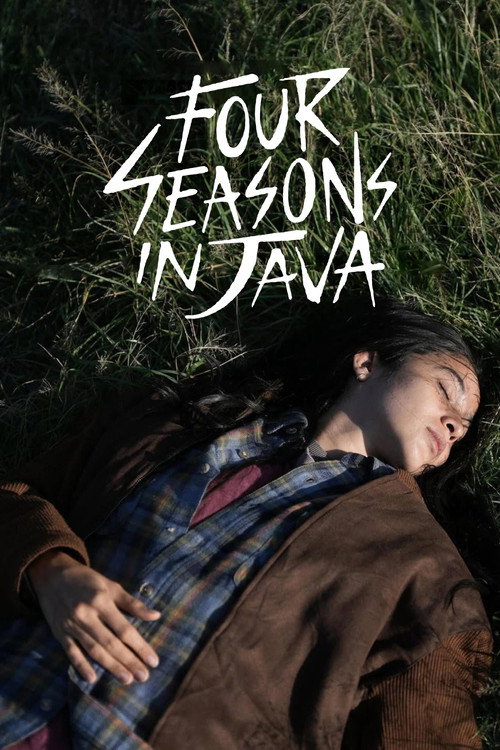
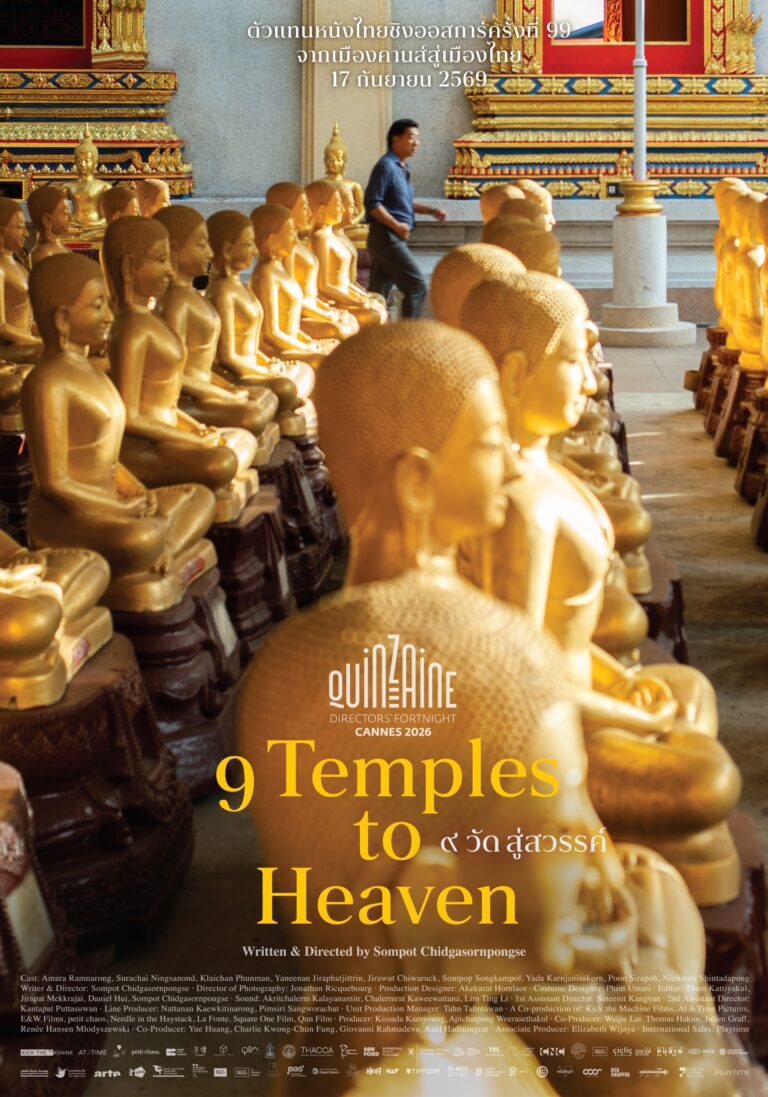
There are more Singapore links across the programme, including Anthony Chen of Giraffe Pictures as co-producer of Four Seasons in Java, directed by Indonesian filmmaker Kamila Andini, and Lai Weijie of E&W Films as co-producer of 9 Temples to Heaven, which premiered at Cannes’ Directors’ Fortnight.
Several of these films, Ah Girl, 9 Temples to Heaven, The Burning Giants and Four Seasons in Java, will compete in SGIFF’s Asian Feature Film Competition. SGIFF Programme Director Thong Kay Wee sees the moment as a kind of homecoming. “Singapore’s film industry is enjoying its hard-earned recognition on the world stage. This year’s selection of Singapore films and co-productions reflects an increasingly diverse creative ecosystem that is producing internationally competitive work. We are proud to share that many of these filmmakers found their first mentorships through SGIFF, so sharing their stories and work on Singapore screens this year is, in that sense, a homecoming.”
The festival’s local spotlight extends into animation too, with Singapore-made shorts including Singapore God by EXYL, RIP ME, LOL by Calleen Koh and A Tree by Mark Wee in the Southeast Asian Short Film Competition, alongside Everything’s Peachy by Nah Yee Chern and Kiss Me Climax by Shara Tay in Singapore Panorama. From felt stop-motion to charcoal and ink, the films point to a local animation scene becoming increasingly varied, and increasingly visible.
For audiences, SGIFF 2026 also marks a deliberate expansion of what a film festival can look and feel like. One of the most accessible additions is Junior Explorers, a new section designed for younger audiences. It will introduce relaxed, sensory-friendly screenings, beginning with the award-winning stop-motion animation Brave Cat, which follows a young forest cat searching for her lost family.
At the other end of the spectrum, the Undercurrent section will move beyond conventional screenings with three live performances that combine moving images with other art forms. Corporeal Forms: Four Stories incorporates Taiwanese puppetry; The Compression Zone brings live video gaming into the performance space; while Imagination + The Rest Is My Ghost combines analogue film techniques with music.
What SGIFF is doing is to expand the scope of what a film experience can be like, seeing it as a medium that can intersect with performance, technology and other forms of creative expression.
The expansion also continues behind the scenes through SGIFF Pro. As previously announced, the festival’s industry and talent development platform has expanded this year to include Industry Days, the Asian Producers Network, Pitching Forum, Off Campus and Parallax. The newest addition to that ecosystem is particularly relevant to the festival’s wider audience: Parallax will be free to attend, opening conversations around filmmaking and immersive technology to people beyond the professional film community.
Off Campus, meanwhile, brings students closer to the realities of the industry, while the Pitching Forum is designed to connect Singapore and international projects with potential co-production partners. All this sees SGIFF’s expansion of ambition, helping to promote film and to help create the conditions for the next ones.
That longer-term commitment is also visible in the return of the SGIFF Film Fund after a short hiatus. The Tan Ean Kiam Foundation, previously a patron of the Southeast Asian Documentary Grant, will now support both of the festival’s film grants under the Tan Ean Kiam Foundation-SGIFF banner: SEA-SHORTS and SEA-DOC.
SEA-SHORTS has supported emerging Southeast Asian filmmakers since 2018, with previous recipients going on to premiere work at Cannes’ Directors’ Fortnight and Critics’ Week. SEA-DOC takes a different focus this cycle, supporting feature documentaries in post-production, particularly projects engaging with sociopolitical issues and demonstrating a clear plan for social impact. The open call for both grants runs from 5 November to 5 December 2026.
Tan Keng Leck, Vice Chairman of the Tan Ean Kiam Foundation, said the expanded support is intended to meet filmmakers at different points in their careers. “Southeast Asian cinema thrives when its storytellers are given the room for more creative freedom and expression, whether the project is a filmmaker’s first short or the final cut of a documentary years in the making. As we extend our support to SEA-SHORTS this year, we are looking to bring a bigger impact in supporting young, emerging careers and backing artists at every stage of their journey.”
The through-line across this year’s festival is perhaps less about adding more films than about widening the number of ways people can enter the world of cinema. There are films that have travelled from Singapore to Cannes, Venice and Locarno and are now coming home. There are international filmmakers and actors meeting local audiences. There are sensory-friendly screenings for younger viewers, live interdisciplinary performances for audiences looking beyond the cinema screen, and free public conversations about where technology may take filmmaking next.
And there is the continuing work of supporting the people who make those films, from students and emerging filmmakers to producers, technicians and established practitioners. As Assistant Chief Executive of IMDA’s Media Industry Group Yvonne Tang puts it, “SGIFF is an important platform for talent development and content discovery, connecting Singapore filmmakers with leading international practitioners and the wider industry.”
For Singapore cinema, the significance of this year’s festival lies in that two-way movement. The world is coming to Singapore, but Singapore’s filmmakers are increasingly travelling out into the world, and SGIFF is creating a space where those journeys can meet.
Photo Credit: SGIFF
The 37th SGIFF runs from 21st October to 1st November 2026. More information and lineup available via their website here

