

Hur Jin-ho speaks truth to power in this action-packed, tension-filled political conspiracy thriller about the 1974 Liberation Day assassination attempt.
Duration: 131 minutes
In the grand tradition of making journalism look like the most badass career in the world, Hur Jin-ho’s The Assassin(s) is a magnificent piece of political thriller filmmaking, a gripping procedural about the pursuit of truth, and a reminder of the magic of cinema. This is the kind of film that makes you want to stand up and applaud the people who risk everything to do the right thing. It’s also the kind of film best experienced in a cinema, where every revelation lands like a punch, every chase leaves you breathless, and the tension becomes almost unbearable.
Set against the attempted assassination of South Korean president Park Chung-hee on Liberation Day in 1974, the film follows a detective, a rookie reporter and a newspaper editor as they uncover discrepancies in the official account of the shooting. For those unfamiliar with this particular episode of Korean history, there’s plenty to discover here, not least the political context surrounding the Park regime and the historical legacy of his daughter, Park Geun-hye, who was impeached and removed from the presidency in 2017. But what makes the film so compelling is how it turns a historical mystery into an increasingly labyrinthine conspiracy, one where every answer only raises more troubling questions.

Comparisons to other unsolved mystery films are inevitable, though what fascinates here is less the prospect of solving a puzzle than the terrifying possibility of just how many people might be involved in concealing the truth. Initially, you think you know what happened. There’s a gunman, an attempted assassination, an official explanation. Then the inconsistencies begin to emerge, and suddenly the very institutions entrusted with uncovering the truth become the ones you have the most reason to distrust. Even the title takes on clearer meaning as the investigation progresses, opening up an entirely new world of suspicion. The film never needs to spell everything out to leave you deeply unsettled.

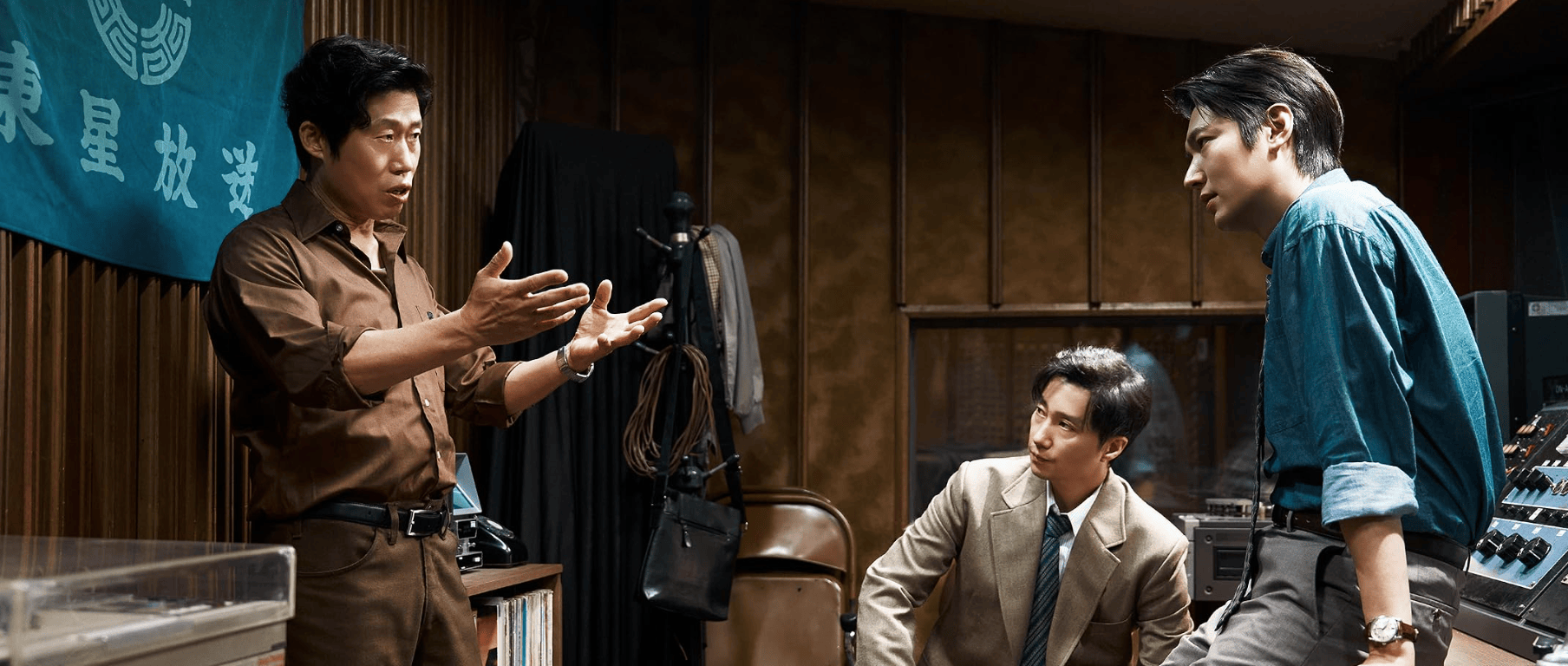
What really grounds this increasingly paranoid mystery, though, is its three fantastic leads, each of whom approaches the pursuit of truth from a different place. Yoo Hae-jin is terrific as Park Cheol-gu, a police superintendent whose introduction immediately establishes his patriotism through a lovely domestic scene involving his children learning the national anthem. Initially, you might expect him to be another unquestioning functionary of the state, but his character quickly becomes much more interesting. On the day of the shooting, he nearly stops the eventual assassin from entering the theatre, only to be overruled by the presidential security detail. When the authorities subsequently begin twisting the facts and mistreating his brother-in-law, Cheol-gu finds himself caught between the institution he has devoted his life to serving and the truth he can no longer ignore.
Watching him gradually realise the extent of the lie he has been defending is one of the film’s greatest pleasures. He’s a man who takes immense pride in his work, and even as he suffers the consequences of standing by his principles, he refuses to abandon them. His pursuit of a suspect through Seoul’s narrow alleyways is an absolute thrill, but it’s the quieter moments that really stick with me. There’s a particularly wonderful callback towards the end, when the national anthem plays during a flag-lowering ceremony and the other guards dutifully salute. Cheol-gu simply chuckles in disbelief and walks away. It’s such a small gesture, but it says everything about how profoundly his faith in the system has been shattered.

Then there’s Lee Min-ho as Han Young-il, the rookie reporter who proves to be a genuine revelation. Best known to many for his romantic leading-man roles, he demonstrates a real aptitude for this kind of drama. Young-il initially seems to have every reason not to get involved: he’s privileged, well-connected through his older brother, and could easily settle into a comfortable career. Yet after witnessing the events of that fateful day and learning of the death of a young choir member he had spoken to, he chooses to pursue the story anyway. There’s a lovely balance to Lee’s performance, with that cheeky, almost playboyish charm offset by a growing seriousness and conviction. His chemistry with the other cast members is excellent, and his investigation takes him all the way to Japan, where his encounters with Shim Eun-kyung’s character lead to some particularly exciting developments. He’s a young man who could have chosen the easy life, but instead discovers what he’s willing to risk for what he believes in.

Park Hae-il, meanwhile, is magnificent as newspaper editor Kim Jae-hwan. His introduction, being abducted and dumped in the countryside after publishing an article that displeases the authorities, tells you everything you need to know about the dangers of his profession. He’s intelligent, principled and utterly committed to the idea that the press exists to hold power accountable. Park gives him a quiet dignity that makes his defiance all the more powerful, especially in the film’s climactic confrontation, when he insists on reading a declaration defending journalistic truth even as agents close in on the newspaper office. His relationship with the other journalists, including Ryu Hye-young’s Seo Yoon-hee, is equally enjoyable, as is his friction with the more cautious figures within the paper who understand exactly what publication might cost them.

There’s something deeply satisfying about watching these people simply do their jobs well. A detective follows the evidence. A reporter asks questions. An editor refuses to let a story die. Yet in a society where the state can dictate the official version of events, these otherwise ordinary professional responsibilities become acts of extraordinary courage. The film understands that heroism doesn’t always require a gun or a dramatic speech. Sometimes it means refusing to look away.

And Hur Jin-ho knows how to make all of this cinematic. The 131-minute runtime flies by because the film is so assured in how it parcels out information, carefully controlling what we know, what we suspect and what remains hidden. Every new discovery shifts the ground beneath our feet. There are terrific chase sequences, wonderfully staged confrontations, clever little moments of investigative ingenuity, and even a few unexpected laughs amid all the grimness. One sequence involving Cheol-gu pursuing a suspect through the rain, with the rhythmic clatter of typewriters woven into the scene, is a perfect example of how the film turns even the process of investigation into something thrillingly visual and auditory.
The cinematography makes excellent use of darkness, tight spaces and claustrophobic framing, creating the constant sense that someone is watching, someone is listening, and nobody can be entirely trusted. The action is never gratuitous; it always emerges from the characters’ attempts to get closer to the truth. Even the quieter investigative scenes have an almost unbearable tension to them, because you know that asking the wrong question in the wrong room could have devastating consequences. The whole film feels like a pressure cooker, the temperature rising steadily until you wonder how much longer anyone can possibly hold out before everything explodes, with far too many shadows and secrets hidden out of sight for comfort.

And that’s before getting to the film’s most fascinating dimension: its relationship with history itself. The Assassin(s) dramatises a real event, but its suggestions about the possible involvement of people within the government and intelligence services have proved controversial in South Korea. The film does not establish these suspicions as historical fact. Instead, its real power lies in examining the discrepancies, the silences and the mechanisms through which a government can control a narrative. The questions it raises are compelling precisely because the film understands the difference between an official account and the whole truth.
Which brings us to the film’s significance as the opening film of the 2026 Singapore International Film Festival. There’s an especially striking irony in a film about the suppression of truth and freedom of expression opening a festival amid calls for it to be withdrawn over its portrayal of history. SGIFF stood by its selection, and the decision feels entirely in keeping with what the film itself is about: the importance of allowing difficult stories to be told, even when they make people uncomfortable. Cinema need not be a courtroom, and a film need not be a definitive historical verdict to deserve to be seen, discussed and challenged.

Ultimately, what makes The Assassin(s) such a spellbinding film is that it manages to be both an immensely entertaining thriller and an impassioned tribute to the people who refuse to surrender their principles. It’s about speaking truth to power, about the courage required to challenge institutions that seem untouchable, and about the cost of doing so when the odds are stacked against you. It leaves you angry, exhilarated, unsettled and, somehow, inspired.
The ending, which brings us back to the actual historical footage and updates, is particularly effective. After spending more than two hours caught up in this meticulously orchestrated web of suspicion, the reality of the events hits with renewed force. The mystery may not offer the neat resolution we instinctively crave, but perhaps that is precisely the point. History does not always hand us satisfying answers, and justice is not always served. That doesn’t mean we stop asking questions.
A superb political period thriller, a showcase for three outstanding performances, and a reminder of what cinema can achieve when craft and conviction work hand in hand. One walks away breathless, furious, and thoroughly convinced of the importance of the story it had told. Long live the journalists who refuse to stand down, and long live cinema.
The Assassin(s) played on 21st and 22nd October 2026 as part of the Singapore International Film Festival. More information available here
The 37th SGIFF runs from 21st October to 1st November 2026. More information and lineup available via their website here

