
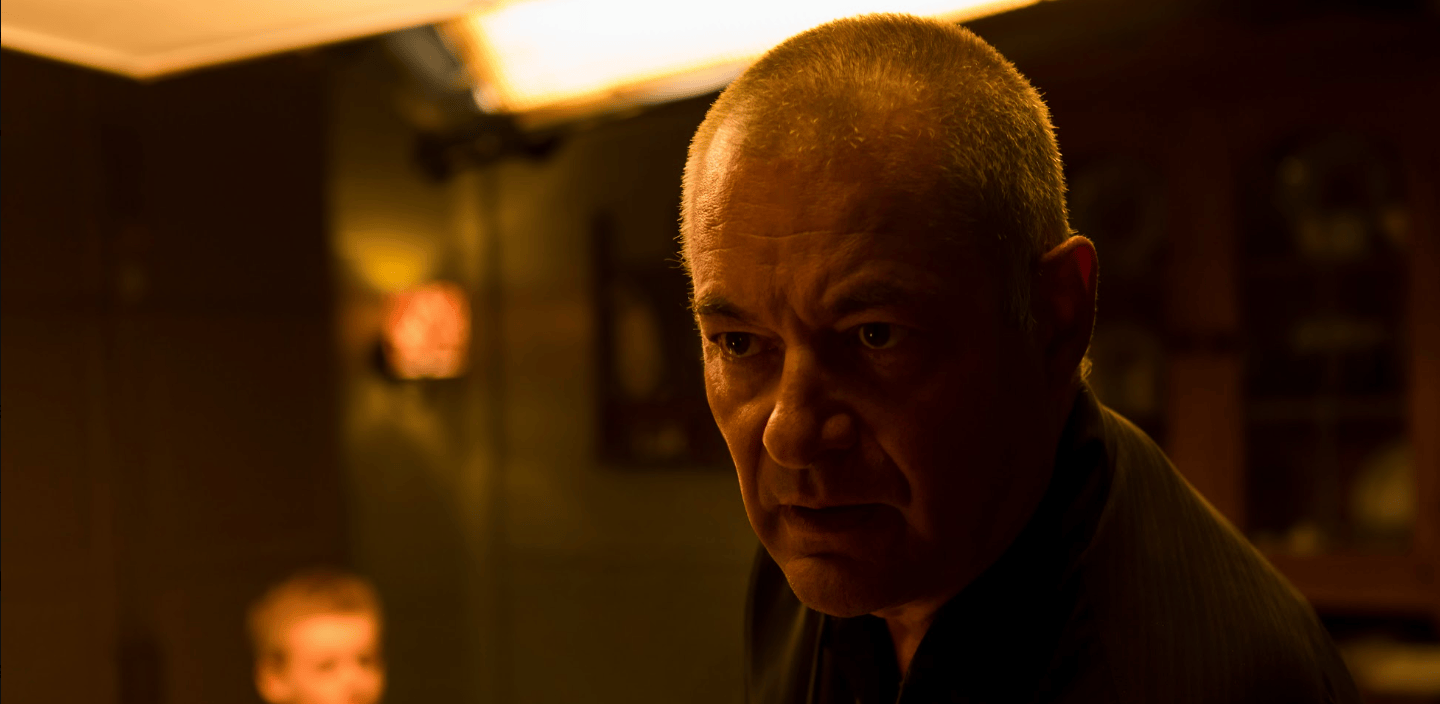

The celebrated French filmmaker behind Amélie and A Very Long Engagement turns to grief, memory and the peculiarities of everyday life in Violette, his latest feature and one of his most personal adaptations yet. Speaking ahead of its presentation at the French Film Festival, Jeunet discusses his connection to the novel, his reluctance to confront mortality, and why making films will always be a form of play.
“I hate cemeteries. Initially, I thought I wouldn’t be able to shoot in one,” says French director Jean-Pierre Jeunet. Best known for creating some of French cinema’s most whimsical and visually distinctive worlds, from the eccentric Montmartre of Amélie to the fantastical wartime landscapes of A Very Long Engagement, the filmmaker has long demonstrated an affection for life’s peculiarities. His latest feature, Violette, however, finds him in considerably more melancholic territory. Centred on a cemetery caretaker navigating the aftermath of personal tragedy, it is a film about grief, loneliness and the possibility of finding happiness again, albeit without quite abandoning the director’s characteristic fondness for the absurd.
Jeunet has described Violette as his most realistic film yet, an interesting distinction for a filmmaker whose work is so closely associated with fantasy. Yet the film’s more restrained approach does not feel like a complete departure from his earlier sensibilities. Rather, the whimsy has been relocated to the world around its protagonist. There are still unexpected coincidences, eccentric characters and moments of visual beauty, but they exist alongside the more difficult realities of loss and human frailty.
The connection Jeunet has to the material, it turns out, is more personal than one might expect. Adapted from Valérie Perrin’s novel Changer l’eau des fleurs, the film came about through an immediate affinity between the filmmaker and the source material. Perrin grew up in a small town in Burgundy, where Jeunet himself used to spend his holidays with his grandmother. His grandparents were buried in the local cemetery, which also served as the inspiration for the cemetery in the novel.
The geographical and emotional connection was enough to convince him that the story was meant for him. “The author told me, ‘This book is for you.’ And indeed, when I read it, I fell in love with every page. I said to myself that she was right.”
It was a rare instance of an adaptation feeling almost predestined, and Jeunet was determined to preserve what had drawn him to the novel in the first place. “All the components of this film are in the book. When I make an adaptation, I absolutely want to be faithful to the novel.”
That fidelity extends to the film’s unusual narrative construction. Violette unfolds in fragments, moving between different periods in its protagonist’s life as memories and revelations gradually fill in the gaps. It is a structure that can occasionally be disorientating, but one that seems particularly suited to a story about the unpredictable nature of grief. Memories rarely arrive in an orderly fashion, and the film’s shifting chronology reflects the way the past continues to intrude upon the present.
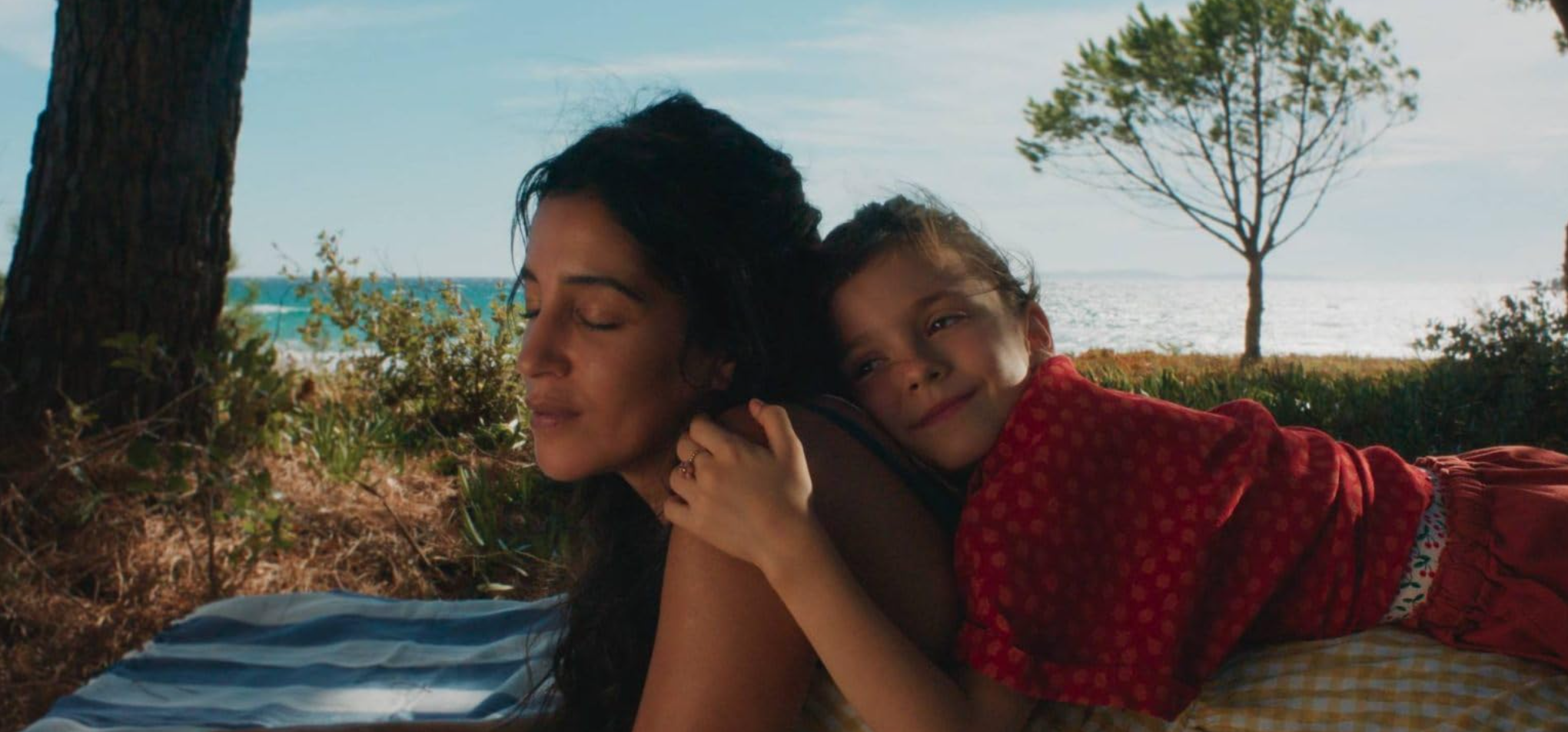
For Jeunet, however, this was not necessarily an invention for the screen. “The nonlinear structure was already in the novel. I wanted to remain faithful to the book and respect the way the story was constructed.” He also explains that the voiceover is taken directly from Perrin’s writing, providing another connection to the original material. In fact, he suggests that the novel’s construction was even more fragmented than the film’s.
While Violette spends much of its time contemplating loss, Jeunet himself appears less inclined to dwell on mortality. Asked whether making the film had changed his personal understanding of grief, he offers a surprisingly candid response. “It’s a story. It doesn’t exist, so I don’t really concern myself with it in that way.”
He is, however, more forthcoming about his own relationship with ageing. “In my own life, I’m getting old. I’m 73. The only recipe I know is to work, because working is like playing for me.”
He then recalls a remark attributed to Orson Welles, who once described making a film as the best electric train one could give a child. It is an image that clearly resonates with him. “I feel exactly the same way. I’m still 12 years old when I make a film. I continue to play.”
It is altogether rather endearing to see this insistence on retaining a child’s sense of wonder, particularly from a director whose latest film is so preoccupied with death. “I don’t want to think about death or anything like that, because now it’s getting close. I’m 73, so I’d rather avoid thinking about it.”
Perhaps this is also why the cemetery, despite being so central to the film, was not an immediately comfortable setting for him.

Living in Provence, Jeunet eventually visited three small villages with particularly beautiful cemeteries, taking photographs as he explored their visual possibilities. What initially seemed like an inhospitable location gradually revealed an unexpected aesthetic appeal. He became fascinated by the ceramic flowers, the old photographs on gravestones, and the way they had been gradually worn away by rain and time. “There were such beautiful lines and compositions. At that point, I began to feel more at ease with the idea.”
It is a very Jeunet-like way of approaching an otherwise sombre environment: finding beauty in the smallest details, even in a place he would ordinarily prefer to avoid. There were, of course, practical complications too. Filming in an actual cemetery required permission from the families associated with every grave that appeared on screen. The production eventually resorted to placing little red, green and yellow flags throughout the grounds to identify which graves they had permission to film. “It was a very long process,” he recalls.
The film’s emotional centre rests largely on Leïla Bekhti, whose portrayal of Violette requires a considerable amount of emotional restraint. Much of the character’s suffering is expressed through her physical presence rather than dialogue, making Bekhti’s ability to convey emotion particularly important. Jeunet is effusive in his praise of her, although he also makes an interesting observation about the collaborative nature of their working relationship.
“When it comes to directing actors, every director will probably tell you the same thing: you have to make the right casting choices. If you don’t make a mistake with the casting, half your work is already done.”
He describes Bekhti as exceptionally good at accessing emotion, particularly when it comes to crying on cue. “Even if you do ten takes, she can deliver the emotion at exactly the right moment every single time. That’s something very special about her.”
But Bekhti was not simply a performer following instructions. Jeunet notes that she brought plenty of ideas to the production, and he was more than happy to accommodate them. One of the film’s most striking sequences came about through precisely this kind of exchange. When Violette receives devastating news, the original script called for her to collapse to the ground. Bekhti suggested that she should keep walking instead. Jeunet agreed, eventually placing her in front of a passing train. Now, he considers it one of the most beautiful shots he has ever made.
Another example came during a beach scene, when Bekhti suggested introducing a summer rain. The idea immediately brought back a personal memory for Jeunet, recalling a holiday with his fiancée when they had to find shelter from the rain. These seemingly spontaneous contributions helped shape the film’s visual language, demonstrating that even a director with such a distinctive aesthetic is willing to leave room for unexpected discoveries.
It also brings the conversation back to Jeunet’s understanding of filmmaking as play. For him, the subject matter is almost secondary to the creative experience itself. “I’ve made science-fiction films, comedies, and even something about artificial intelligence for Netflix. I’ve made romantic stories like Amélie. It’s never a problem, because every film is simply an opportunity to play.”
The subject can be dark, light or funny; what matters is the opportunity to explore something different. “It’s just a pretext for playing.”
He is also conscious of not wanting to become too comfortable within a single genre. “I don’t want to make only comedies or only dark films.” His next project, he reveals, will be another adaptation, this time involving children. He describes it as a beautiful story and is already excited by the prospect of playing with its possibilities.
For a filmmaker who has spent decades creating worlds that are at once fantastical and deeply human, perhaps this is the most revealing thing about Violette. Its preoccupation with grief and mortality might suggest a more sombre chapter in his career, but Jeunet himself seems largely unchanged in his approach to the work. Even when confronting life’s more painful realities, he remains interested in the little details, unexpected encounters and moments of beauty that make existence worth examining.
And perhaps there is something reassuring about that. Violette may be his most realistic film yet, but it is still unmistakably a Jean-Pierre Jeunet film. The magic has not entirely disappeared; it has simply learnt to live alongside the sadness.
Violette plays at various cinemas till 29th November 2026 as part of the 2026 Voilah! French Film Festival. Tickets and screenings available here
The 2026 Voilah! French Film Festival runs till 29th November 2026. Full film lineup and schedule available here

