
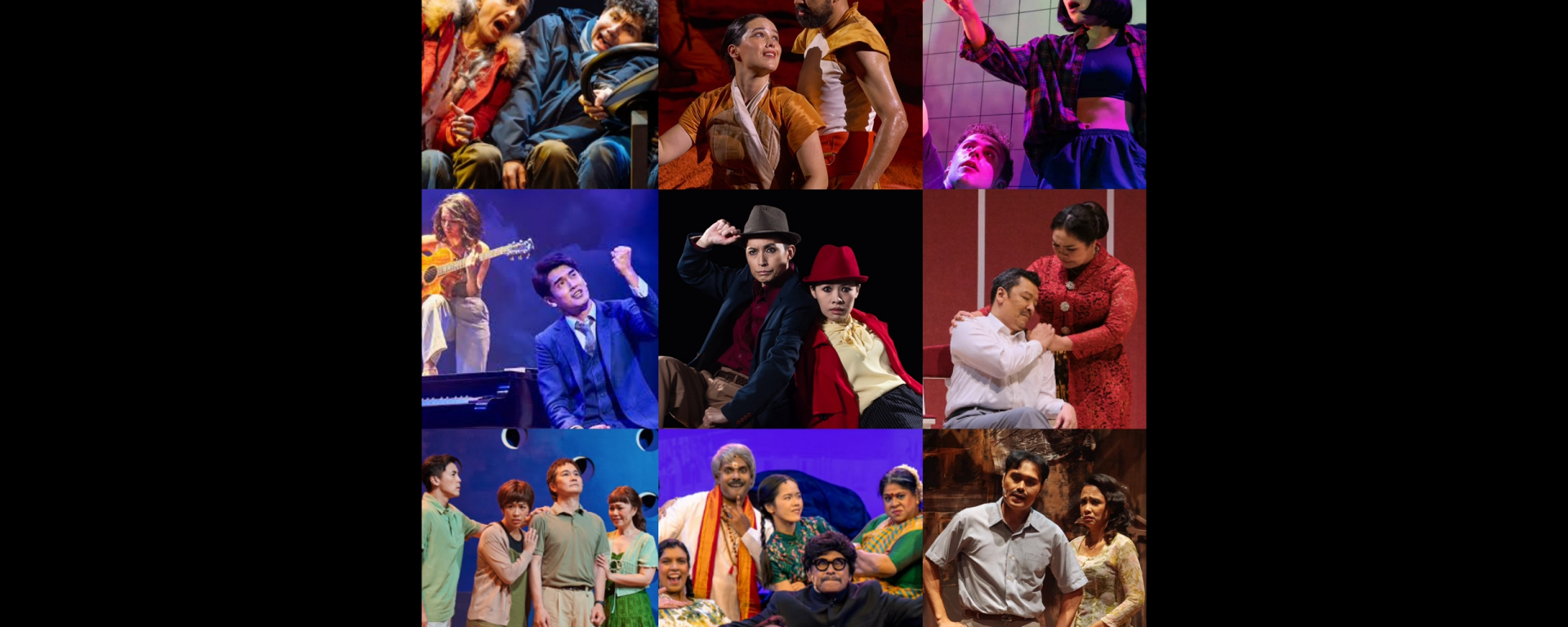

It’s been sixty years since Singapore’s independence, a milestone that reminds us how young this country still is, and how much artistic possibility should still lie ahead. Yet 2025 has felt like a strangely uncertain year for theatre, one where our artists have found themselves caught between commemoration and complacency. Not quite an anniversary year, but treated as one nonetheless, it became a season where many companies reached backwards instead of forwards, leaning heavily on familiar titles and proven names, revisiting old works or tried and tested favourites, as if repetition itself might stand in for reflection. Success was varied, with many works that felt either rehashed, or not fully thought through before making the leap from page to stage.

Across the year, the pattern became increasingly clear. Restagings dominated the calendar, from what may be the final outing of Wild Rice’s Hotel, to Nine Years Theatre’s Twelve Angry Men, arguably the work that first shot them into the mainstream. National history was revisited with Teater Ekamatra’s new staging of Yusof, while Toy Factory attempted to once again tackle the Lee Kuan Yew story with Moonlit City, while others such as Partial Eclipse of the Heart leaned openly into nostalgia, mining collective memory rather than confronting the present.

Yet this was not a year without invention. New works arrived at the hands of emerging playwrights such as Chong An Ong and Myle Yan Tay, while we also gained access to some deeply personal pieces from theatremakers such as Cheryl Ho, Hafidz Rahman, and Claire Wong also contributed to the theatre canon. Bold new works that toed the line between theatre and performance art emerged, such as Umbilical and Waiting For Audience, while others attempted to subvert and question our thinking, whether it was The Necessary Stage or Wild Rice. We also saw an uptick in non-traditional theatre formats, whether it was Sight Lines Entertainment continuing their Crack The Case series, or both SRT and Dream Academy exploring the dinner theatre scene.

In short, this was not a year devoid of ambition, nor was it entirely without joy. But too often, many works felt cautious where it should have been curious, and more reverent where it might have been interrogative. And even those that dared ask difficult questions felt like they fell short in terms of artistry and development, angrily shouting instead of coalescing that energy into something greater. In a year that implicitly asked what sixty years of nationhood might mean, our stages frequently chose comfort over risk, and provocation over polish.

Perhaps that is because we remain in an arts scene that demands so much from its participants – a KPI of a number of productions to create in a year, the high cost of doing art, and an increasingly crowded landscape where everyone is fighting for the same piece of the pie, with very little space to let work breathe, develop, or make mistakes without taking a huge swing and miss. The result is an awards list that feels narrower than usual, and a conversation that feels more urgent than celebratory. But without further ado, here’s our round-up of our favourites of the year:
Best Costume Nominees
Leonard Augustine Choo – A Doll’s House Part 2 by Pangdemonium!
Rafil K. – Salina by Teater Kami
Max Tan – Partial Eclipse of the Heart by The Theatre Practice
Sufiyanto (Kebaya Societe) – Yusof by Teater Ekamatra
Akbar Syadiq and Aida Sa’ad – Umbilical by Rizman Putra, Zul Mahmod and thesupersystem

Costume design this year revealed itself as one of the clearest sites of dramaturgical thinking. With many productions leaning on familiar texts, costume became a crucial tool for re-contextualisation, signalling period without nostalgia, identity without stereotype, and transformation without excess. We looked for designs that did more than clothe bodies: work that articulated power, class, gender, and psychology, and that understood costume as an active storytelling device rather than decorative flourish.
Malay-language theatre stood out this year for its attention to period, class, and cultural specificity. Both Salina and Yusof featured exquisitely tailored kebayas and suits that grounded their narratives in lived histories without lapsing into pageantry. Elsewhere, Partial Eclipse of the Heart embraced a more conventional but no less effective approach, using clothing to externalise character psychology with clarity and restraint. A Doll’s House Part 2 delivered museum-worthy garments rich in texture, pattern, and silhouette, while Umbilical pushed furthest into abstraction, offering costumes that oscillated between futuristic spacesuits and sculptural forms, blurring the line between clothing and concept.
And our winner is…
Leonard Augustine Choo – A Doll’s House Part 2 by Pangdemonium!

Amidst a strong field, Leonard Augustine Choo’s work on A Doll’s House Part 2 distinguished itself through its extraordinary level of detail and historical sensitivity. These costumes reward sustained looking: patterns, colours, and cuts not only articulate character but embody the tension between restriction and agency. Despite their apparent weight and formality, the garments allow for fluid movement, enabling performance rather than constraining it. They are striking onstage, but more importantly, dramaturgically precise, costumes that think as much as they dazzle.
Best Multimedia Nominees
NONFORM – The Serangoon Gardens Techno Party of 1993 by Wild Rice
Flex Chew – Dreamplay: Asian Boys Vol.1 by Wild Rice
Koo Chia Meng & Andrew Ng – Supervision by Wild Rice
thesupersystem – Umbilical by Rizman Putra, Zul Mahmod and thesupersystem
Zaki Zainudin – My Name Is (Not) Khan by Hafidz Rahman
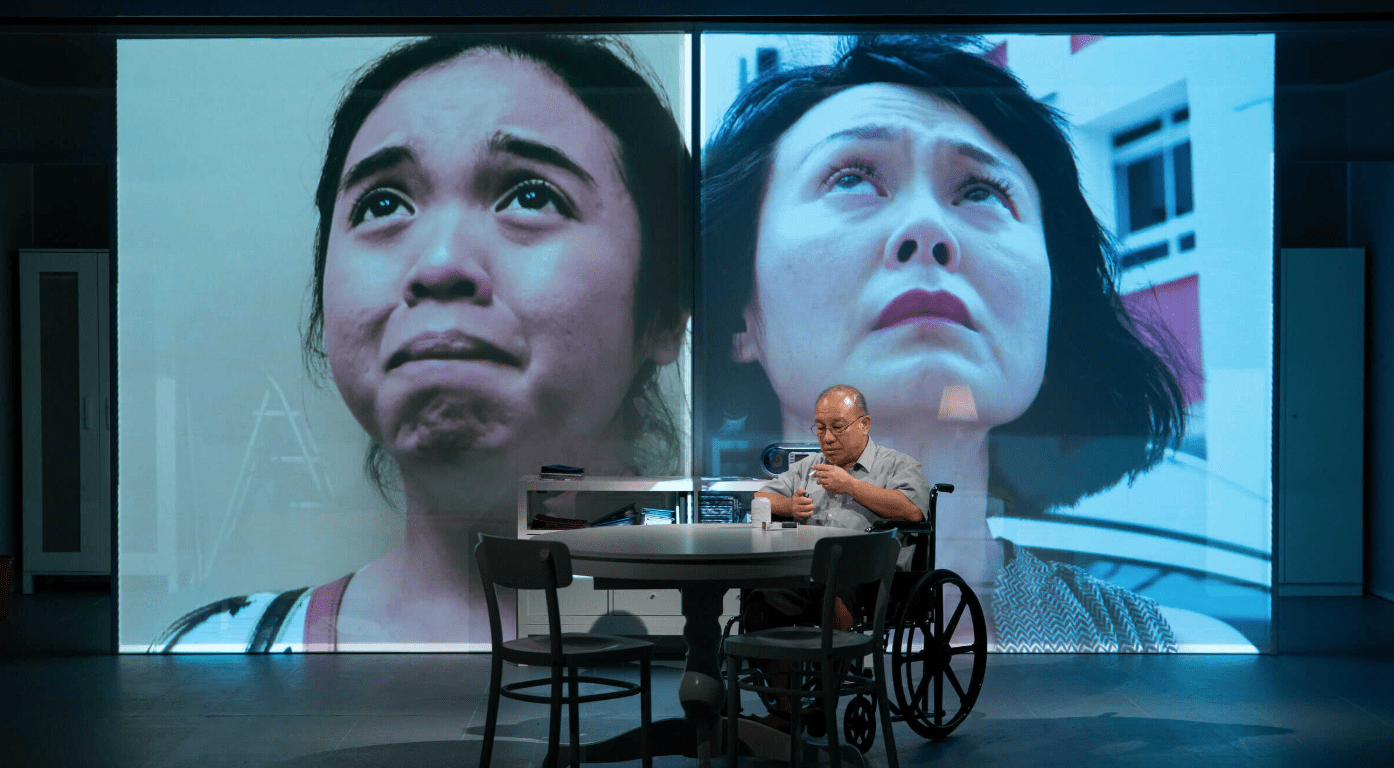
As theatre continues to negotiate its relationship with technology, multimedia emerged this year as both a provocation and a risk. We were drawn to works where digital elements were structurally necessary rather than ornamental, where projections, live feeds, soundscapes, or interactive systems reshaped how the audience perceived time, space, and presence. In a year where experimentation was often cautious, these nominees stood out for trusting form as much as content.
Multimedia work this year ranged from playful homage to deeply unsettling speculation. thesupersystem continued to establish itself as a defining artistic presence, crafting disorienting, textural visuals for Umbilical while extending its practice beyond theatre into interdisciplinary collaborations. Zaki Zainudin’s dedication to Hafidz Rahman’s Bollywood dreams was apparent in his presentations in My Name Is (Not) Khan. Meanwhile, Wild Rice dominated this category with three distinct approaches across The Serangoon Gardens Techno Party of 1993, Dreamplay: Asian Boys Vol.1, and Supervision, each production employing multimedia to radically different ends, from nostalgic reconstruction to surveillance and control.
And our winner is…
thesupersystem – Umbilical by Rizman Putra, Zul Mahmod and thesupersystem

In Umbilical, thesupersystem’s projections are not supplementary but foundational. They thrust audiences into alien landscapes and speculative futures, including chillingly plausible AI-generated visions of Singapore yet to come. Through layered filters, unstable textures, and relentless visual intrusion, the multimedia amplifies Rizman Putra’s central performance, positioning him as a figure caught within, rather than commanding, the systems around him. It is immersive, destabilising work that understands technology as both spectacle and form of power.
Best Sound Design Nominees
Bani Haykal – Scenes from the Climate Era by David Finnigan and Ellison Tan
Tini Aliman – National Memory Project by Teater Ekamatra
Syed Ahmad – Yusof by Teater Ekamatra
Zul Mahmod – Umbilical by Rizman Putra, Zul Mahmod and thesupersystem
Lee Yew Jin – Macbeth by Singapore Repertory Theatre

Sound design in 2025 frequently carried emotional and political weight where text hesitated. From immersive sonic environments to spare, unsettling interventions, this category recognises artists who treated sound as architecture, shaping rhythm, tension, memory, and atmosphere. We looked for clarity of intention and sensitivity to silence, acknowledging that restraint often proved more powerful than volume.
This year’s sound design nominees represent some of the most seasoned practitioners in the field. Bani Haykal and Tini Aliman once again demonstrated their mastery, crafting sonic worlds that were both emotionally resonant and politically charged in Scenes from the Climate Era and National Memory Project respectively. Syed Ahmad brought a measured reverence to Yusof, balancing historical weight with intimacy. Lee Yew Jin faced the challenge of an expansive outdoor venue in Macbeth, using atmospheric sound to draw audiences into its desert-like terrain, while Zul Mahmod’s work on Umbilical functioned as a central pillar of the entire production.
And our winner is…
Zul Mahmod – Umbilical by Rizman Putra, Zul Mahmod and thesupersystem

There is a method to Zul Mahmod’s apparent chaos in Umbilical. His sound design operates as a living presence, shaping emotion, signalling danger, and anchoring the audience within an unstable world. Drawing from techno and industrial traditions, the score propels the work through shifting psychological and spiritual states, guiding us through an experience that is at once abrasive and hypnotic. It is a sonic journey that resonates long after the performance ends.
Best Lighting Design Nominees
Gillian Tan – The Last Five Years by Singapore Repertory Theatre
Alberta Wileo – National Memory Project by Teater Ekamatra
James Tan – Kimberly Akimbo by Pangdemonium!
Andy Lim – Umbilical by Rizman Putra, Zul Mahmod and thesupersystem
Gabriel Chan – Macbeth by Singapore Repertory Theatre

Lighting design proved quietly essential this year, where the strongest work understood light as narrative; sculpting bodies, guiding focus, and shifting emotional registers with precision. We valued designers who resisted the temptation of visual excess, instead using light to support dramaturgy, rhythm, and the lived experience of performance.
Andy Lim’s work on Umbilical oscillated between the brutal and the intimate, overwhelming the senses before pulling focus back to the human body. Gabriel Chan transformed Fort Canning Park into a hostile, desert landscape for Macbeth, evoking cinematic scale within a live environment. Alberta Wileo’s lighting in National Memory Project acted almost as an unseen narrator, dictating emotional shifts scene by scene. In the musical realm, both Gillian Tan (The Last Five Years) and James Tan (Kimberly Akimbo) demonstrated exceptional control, navigating complex transitions while sustaining narrative clarity.
And our winner is…
James Tan – Kimberly Akimbo by Pangdemonium!

James Tan’s lighting design for Kimberly Akimbo is integral to the musical’s emotional architecture. From icy skating rinks to suburban interiors and neon-lit fantasy, his work seamlessly transports audiences across spaces and moods. The lighting not only supports spectacle, including a full-bodied Broadway-style number at the end, but heightens intimacy, allowing the story’s quieter moments to land with precision. It is a design that enables escape while remaining deeply grounded in character.
Best Production Design Nominees
Richard Kent – Macbeth by Singapore Repertory Theatre
Szu-Feng Chen – Partial Eclipse of the Heart by The Theatre Practice
Eucien Chien – Kimberly Akimbo by Pangdemonium!
Russell Goh – My Name Is (Not) Khan by Hafidz Rahman
Wong Chee Wai – Twelve Angry Men by Nine Years Theatre

Production design in 2025 was marked by uneven ambition. Where it succeeded, it provided not just a backdrop but a conceptual framework, shaping how audiences moved through space, time, and story. This category recognises designers who created coherent visual worlds that served the production’s core ideas, even when resources were limited or the text itself was well-worn.
Production design this year ranged from immersive spectacle to claustrophobic realism. Eucien Chien once again delivered assured, imaginative work for Pangdemonium, with Kimberly Akimbo featuring multiple set pieces that balance complexity with clarity. Partial Eclipse of the Heart’s revolving beach chalet and punctured walls became potent visual metaphors for emotional absence. Russell Goh’s work on My Name Is (Not) Khan offered a convincingly lived-in domestic space, while Wong Chee Wai’s courtroom in Twelve Angry Men trapped both characters and audience in escalating tension. Macbeth, staged outdoors, embraced maximalism: a gothic, sci-fi-inflected world that leaned fully into spectacle.
And our winner is…
Richard Kent – Macbeth by Singapore Repertory Theatre

In a year where Shakespeare In The Park is staged, it’s almost assured that SRT will pull out all the stops to transform Fort Canning. Richard Kent’s production design for Macbeth is immersive in both scale and intention. The rust-red sands, towering monoliths, and shadowed recesses of Scoalan construct a world that feels ancient, hostile, and spiritually charged. The design does more than impress, where it establishes mythology, danger, and moral decay in its visual language. By transforming Fort Canning Park into a fully realised parallel universe, Kent’s work anchors the production’s ambition, making spectacle feel purposeful rather than ornamental.
Best New Script Nominees
Waiting For Audience – Nelson Chia
Singapore, Michigan – Ong Chong An
Partial Eclipse of the Heart – Jonathan Lim and Ng Mun Poh
The Serangoon Gardens Techno Party of 1993 – Joel Tan
Mission Malligapoo – Syed Ashratullah & Karthikeyan Somasundaram

Despite a broader climate of caution, playwrights continued to test form, voice, and structure, interrogating intimacy, memory, nationhood, and spectatorship itself. We looked for scripts that took risks in how stories were told, not just what they were about, and that trusted audiences with ambiguity rather than resolution.
This year’s nominated scripts reflect a wide spectrum of concerns, from audience complicity and memory to migration, nostalgia, and structural experimentation. Nelson Chia’s Waiting For Audience interrogates spectatorship itself, while Ong Chong An’s Singapore, Michigan explores displacement and longing with quiet precision. Partial Eclipse of the Heart blends musical form with emotional fragmentation, The Serangoon Gardens Techno Party of 1993 interrogates memory and youth through the lens of teenage rebellion, and Mission Malligapoo offered a community-rooted narrative shaped by oral histories and lived experience, daring to reach into the darkness after pulling the carpet from under us.
And our winner is…
Waiting For Audience – Nelson Chia

Waiting For Audience distils the existential anxieties of art-making into a deceptively simple structure. Through metatheatrical wit and emotional clarity, the script interrogates why artists persist, even when spaces disappear, audiences dwindle, and validation never arrives. Its strength lies in its refusal to moralise; instead, it allows humour, competition, and vulnerability to coexist. Nelson Chia’s writing trusts absence as much as presence, crafting a text that lingers in its questions rather than resolving them.
Best Ensemble Nominees
Hotel – Wild Rice
Macbeth – Singapore Repertory Theatre
Partial Eclipse of the Heart – The Theatre Practice
Kimberly Akimbo – Pangdemonium
Twelve Angry Men – Nine Years Theatre
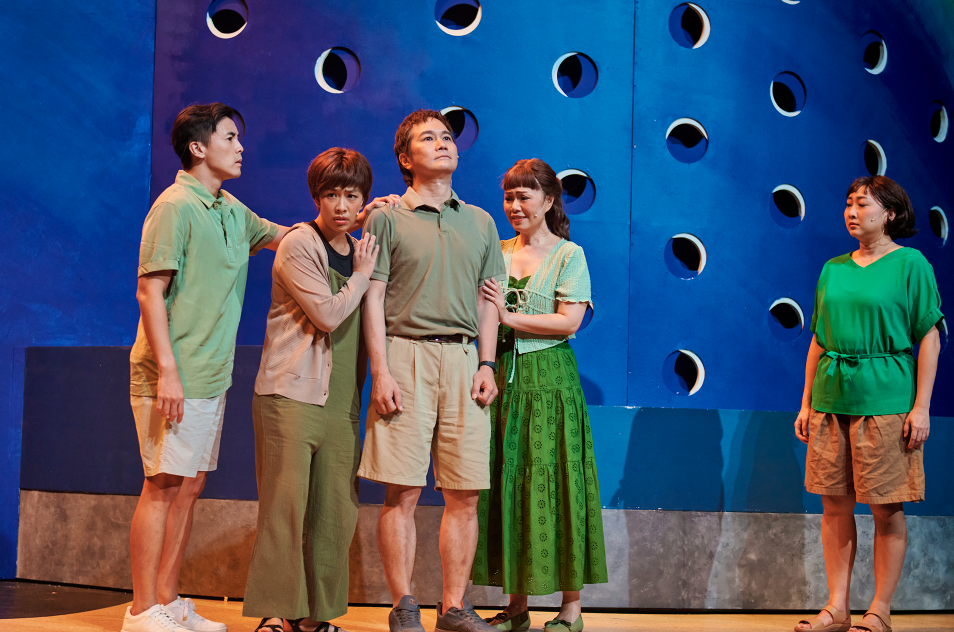
In a year that often leaned on individual star power or brand recognition, ensemble work reminded us what theatre does best: collective presence. This category honours companies and casts who demonstrated deep listening, shared responsibility, and a commitment to storytelling larger than any single performance. We valued cohesion over polish, and process over perfection.
Ensemble work this year reminded us of the power of collective storytelling. Hotel and Partial Eclipse of the Heart demonstrated deep trust between performers, while Macbeth required cohesion across a physically demanding outdoor space. Kimberly Akimbo balanced individual arcs within a tightly integrated cast, and Twelve Angry Men relied entirely on group dynamics to sustain tension, proving that ensemble precision can be as gripping as spectacle.
And our winner is…
Twelve Angry Men – Nine Years Theatre
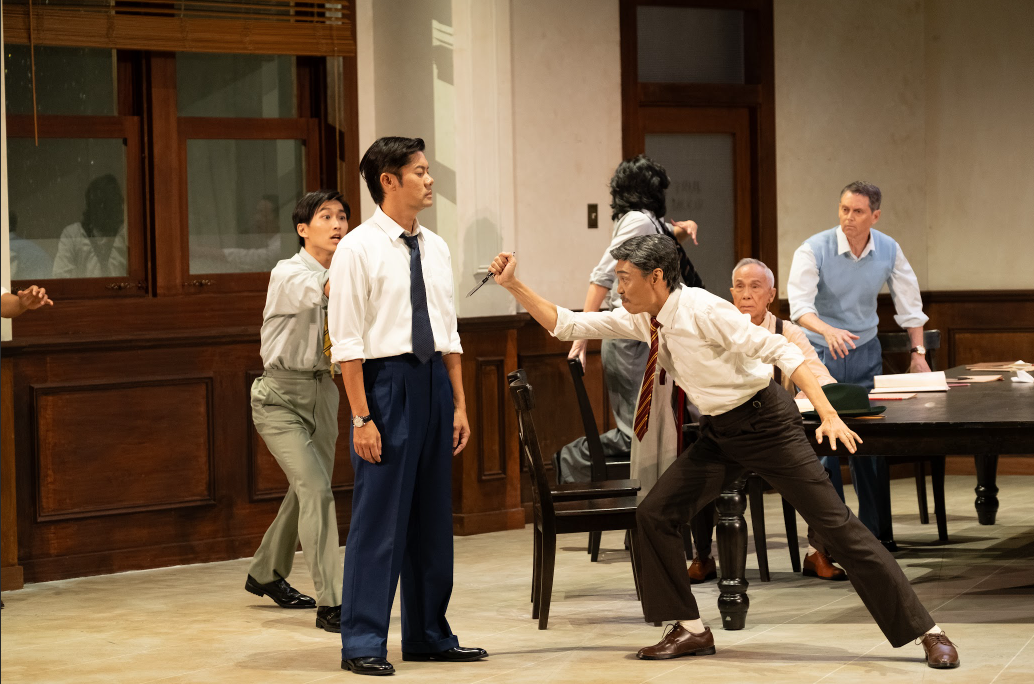
The ensemble of Twelve Angry Men may be varied in experience, but exemplifies collective precision at its highest level, where tension is sustained not through spectacle but through listening, timing, and shared responsibility. Every performer contributes to the production’s moral pressure cooker, calibrating shifts in alliance, resistance, and doubt with meticulous control. While there are standout moments, no single performance dominates; meaning emerges through accumulation and buildup of tension; glances held too long, silences thick with implication, and arguments that evolve organically rather than explosively. The cast functions as a single, interdependent organism, demonstrating how ensemble discipline can transform a familiar text into a gripping study of civic duty and human fallibility.
Best Actor Nominees
Nathan Hartono – The Last Five Years by Singapore Repertory Theatre
Ghafir Akbar – Macbeth by Singapore Repertory Theatre
Sani Hussin – Yusof by Teater Ekamatra
Fir Rahman – Salina by Teater Kami
Tay Kong Hui – Twelve Angry Men by Nine Years Theatre
Nelson Chia – Waiting For Audience by Nine Years Theatre
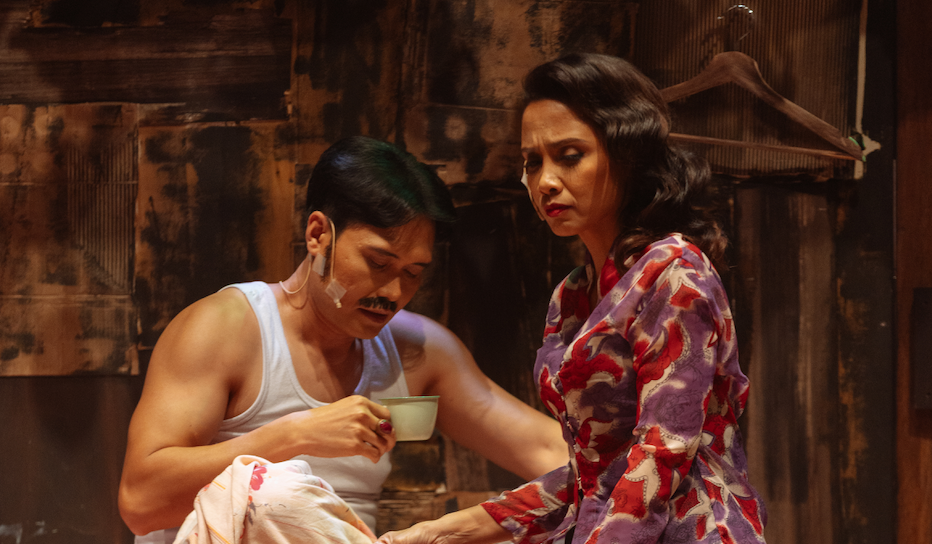
This category recognises performances that went beyond technical proficiency to reveal vulnerability, transformation, and genuine risk. In a year dominated by revivals and familiar roles, we looked for actors who resisted imitation: finding new emotional textures, rethinking character relationships, or sustaining compelling inner lives even within conservative frameworks.
Nathan Hartono navigated the fractured chronology of The Last Five Years with vulnerability, wit, and vocal assurance, while Ghafir Akbar endured the physical and psychological extremities of Macbeth, charting ambition’s slow rot under punishing conditions. Sani Hussin brought restraint and quiet authority to a historical figure in Yusof, grounding ideology in lived humanity. Fir Rahman embraced the unsettling immediacy of villainy in Salina, refusing easy redemption, while Tay Kong Hui anchored Twelve Angry Men through calibrated intensity and emotional pressure. Nelson Chia, in Waiting For Audience, turned self-reflexivity into performance, exposing artistic insecurity and endurance with disarming clarity. Together, these performances reflect a year where strength lay not in excess, but in control.
And our winner is…
Sani Hussin – Yusof by Teater Ekamatra
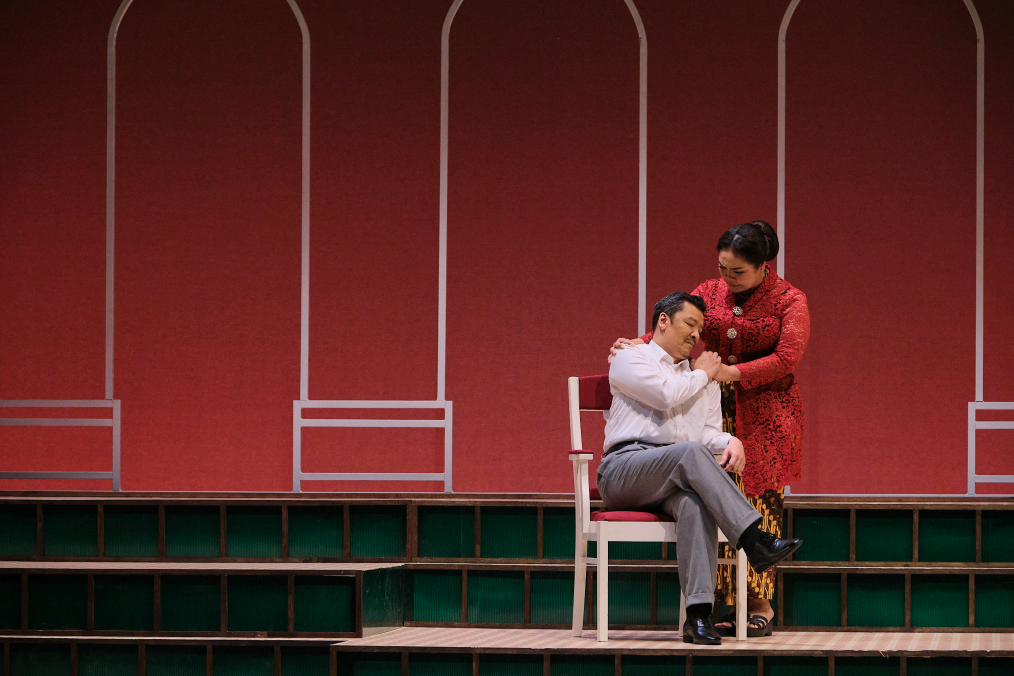
Sani Hussin’s performance in Yusof is a powerful showcase of restraint and moral clarity. In a role that risks slipping into reverence or rhetoric, he instead offers a deeply human portrait shaped by patience, listening, and quiet authority. His version of Yusof is grounded in considered gesture, measured speech, and charged silences that allow ideology to emerge through lived experience. By resisting excess, while still showcasing the occasional flash of Yusof’s fabled temper, Sani anchors the production with dignity and emotional intelligence, reminding us that history resonates most powerfully when it is embodied rather than proclaimed.
Best Actress Nominees
Genevieve Tan – Hedda Gabler by The Winter Players
Julie Wee – Macbeth by Singapore Repertory Theatre
Menchu Lauchengco-Yulo – Kimberly Akimbo by Pangdemonium!
Frances Lee – Kimberly Akimbo by Pangdemonium!
Ariati Papar – Salina by Teater Kami
Coco Wang – The Serangoon Gardens Techno Party of 1993 by Wild Rice
Mia Chee – Waiting For Audience by Nine Years Theatre

The strongest performances by actresses this year balanced precision with openness, navigating roles that demanded emotional endurance, psychological complexity, or political awareness. We were drawn to work that refused easy sympathy, instead embracing contradiction and tension. These performances stood out not because they were showy, but because they lingered.
This year’s nominated actresses demonstrated remarkable control, versatility, and emotional acuity, often finding power in precision rather than excess. Genevieve Tan’s Hedda Gabler was icy and volatile, her melancholy sharpened into something quietly destructive, while Julie Wee brought a haunted gravitas to Macbeth, charting Lady Macbeth’s psychological unravelling with unsettling focus. Menchu Lauchengco-Yulo anchored Kimberly Akimbo with luminous sincerity, embodying vulnerability and resilience in equal measure, as Frances Lee provided its anarchic counterpoint, providing a riotously comic turn that seized attention without sacrificing depth. Ariati Papar infused Salina with steadiness and moral weight, carrying the production through restraint rather than force, while Coco Wang’s performance in The Serangoon Gardens Techno Party of 1993 crackled with irony, confidence, and youthful vitality. Rounding out the list, Mia Chee’s work in Waiting For Audience offered a quietly searching presence, that seemed to help us see theatre itself in a new light.
And our winner is…
Frances Lee – Kimberly Akimbo by Pangdemonium!

Frances Lee is awarded Best Actress for her scene-stealing, fearless performance as Aunt Debra, a character who could easily have remained a caricature but instead becomes one of the musical’s most electric forces, even more so than lead Menchu at times. With razor-sharp comic timing, vocal power, and complete physical commitment, Lee turns Debra into a whirlwind of chaos, charm, and moral ambiguity, commanding attention the moment she enters the stage. Her Motown-inspired number “Better” is a show-stopping masterclass in musical theatre confidence, yet what elevates her performance is its precision; every gesture, glance, and beat is calibrated for maximum impact without excess.
Best Musical Nominees
The Last Five Years – Singapore Repertory Theatre
Partial Eclipse of the Heart – The Theatre Practice
Kimberly Akimbo – Pangdemonium!

Musical theatre in 2025 existed in a space between craft and courage. We looked for productions where musicality, narrative, and staging worked in dialogue rather than hierarchy. where songs advanced character and story, and where form was treated with seriousness rather than nostalgia. In a year of safe programming, these works distinguished themselves through intention and integrity.
Musical theatre in 2025 revealed three markedly different philosophies of form and feeling. The Last Five Years embraced intimacy and emotional exposure, relying almost entirely on performance and vocal storytelling to chart the disintegration of love across fractured timelines. Anchored by two demanding solo turns, it trusted stillness, memory, and emotional precision over spectacle. Partial Eclipse of the Heart took the opposite approach, expanding the musical into a large-scale, ensemble-driven meditation on friendship, nostalgia, and time, weaving Mandopop classics into a cohesive narrative that spans decades. Its ambition lay not just in scale, but in its ability to transform familiar songs into shared emotional memory. Kimberly Akimbo, meanwhile, synthesised these approaches, combining ensemble warmth, narrative clarity, and musical playfulness with profound emotional honesty, demonstrating how craft, sincerity, and cohesion can coexist without compromise.
And our winner is…
Kimberly Akimbo – Pangdemonium!

Kimberly Akimbo wins Best Musical for its rare ability to balance laugh-out-loud comedy with profound emotional truth, creating a work that feels both life-affirming and quietly devastating. Pangdemonium’s production treats its unlikely premise with sincerity and restraint, allowing Jeanine Tesori’s luminous score and David Lindsay-Abaire’s tender writing to unfold without sentimentality. The musical trusts character, pacing, and emotional honesty. Anchored by a deeply affecting central performance by Menchu Lauchengco-Yulo and supported by cohesive design, choreography, and ensemble work, Kimberly Akimbo transforms what could have been whimsical novelty into something profoundly human, a musical about time, mortality, and courage that leaves audiences lighter, braver, and deeply changed.
Best Director Nominees
Daniel Jenkins – The Last Five Years by Singapore Repertory Theatre
Atin Amat – Salina by Teater Kami
Nelson Chia –Twelve Angry Men by Nine Years Theatre
Kuo Jian Hong – Partial Eclipse of the Heart by The Theatre Practice
Tracie Pang – Kimberly Akimbo by Pangdemonium!
Ivan Heng and Glen Goei – Hotel by Wild Rice
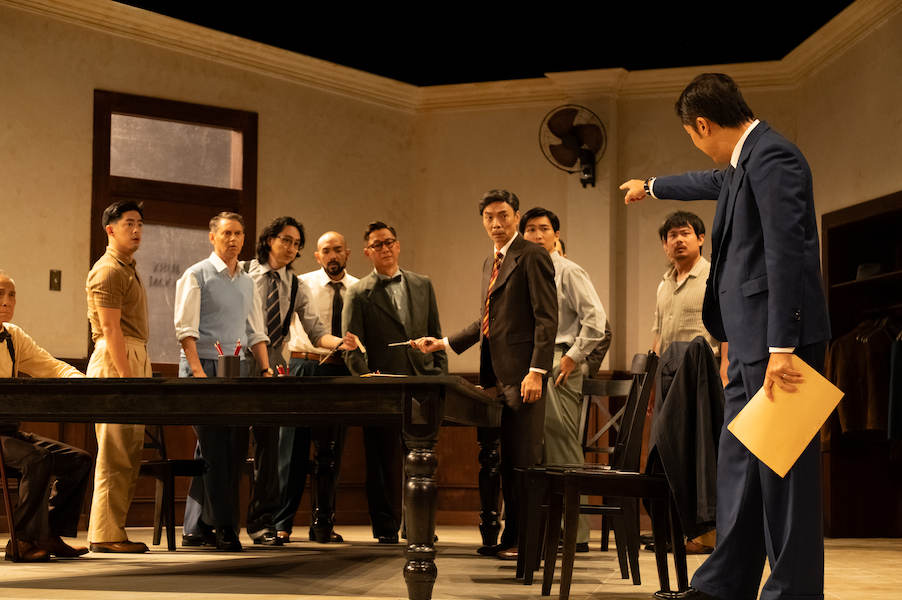
Directing in 2025 often revealed the tension between reverence and reinvention. This category honours directors who demonstrated clear artistic vision — not necessarily through radical reinterpretation, but through thoughtful orchestration of performance, design, and rhythm. We valued directors who asked difficult questions of their material, rather than relying on familiarity to do the work for them.
This year’s nominated directors demonstrated varying approaches to leadership — from careful stewardship of familiar texts to bold reconfigurations of form. Whether navigating large casts (Hotel), intimate emotional terrain (Salina), or tightly wound moral drama (Twelve Angry Men), these directors exhibited clarity of vision and trust in their collaborators.
And our winner is…
Ivan Heng and Glen Goei – Hotel by Wild Rice

Ivan Heng and Glen Goei’s direction of Hotel reaffirms that great theatre does indeed endure. Restaged a decade after its SG50 premiere, this month-long revival was no museum piece but a living, breathing epic, reanimated with a newly integrated cast and sharpened urgency. Steering a five-hour production across multiple eras, languages, tones, and performance styles requires not just vision but extraordinary orchestration, and Heng and Goei deliver with precision, generosity, and emotional clarity. Their direction binds veterans and newcomers into a seamless ensemble, sustaining momentum while allowing each vignette to resonate on its own terms. In revisiting Hotel during SG60, they offer both reflection and closure, tying a bow on an era of nation-building theatre while reminding us that identity, like theatre itself, is never static; it is continually reimagined through those willing to retell the story with care, scale, and conviction. Will this be the last we see of Hotel?Hopefully not.
Best New Play Nominees
Waiting For Audience – Nine Years Theatre
Macbeth – Singapore Repertory Theatre
The Serangoon Gardens Techno Party of 1993 – Wild Rice
Mission Malligapoo – AGAM Theatre Lab

“Newness” this year was not always about original text, but about original thinking. This category recognises works that offered fresh perspectives — whether through reimagined classics, experimental structures, or unconventional dramaturgies. In a season shaped by repetition, these plays insisted on relevance, urgency, and the possibility of renewal.
The nominated works approached “newness” from markedly different angles. Waiting For Audience dismantled theatrical expectation itself, foregrounding absence, process, and spectatorship as dramaturgical tools. Macbeth, though textually familiar, reasserted relevance through scale and environmental immersion. The Serangoon Gardens Techno Party of 1993 is a throwback and interrogation of memory, responsibility and maturity. Mission Malligapoo rooted its originality in community storytelling, drawing from oral histories and lived experience to reshape authorship, and was a fitting tribute to those who sacrificed so much for our peace today. Together, these works argued that innovation is not confined to new text, but emerges from new ways of seeing, staging, and listening.
And our winner is…
Waiting For Audience – Nine Years Theatre

As a complete theatrical work, Waiting For Audience is both intimate and expansive. Nine Years Theatre’s production transforms a bare, memory-laden space into a meditation on impermanence, collaboration, and belief. The staging foregrounds performance over excess, allowing imagination to do the heavy lifting. As the audience slowly disappears within the story, the play reframes theatre not as spectacle, but as an act of faith, one sustained even in silence. Few works this year articulated so clearly why theatre continues to matter. It’s the kind of work that leaves you breathless at how well Nelson and Mia work together onstage, going back to basics with this markedly unusual work for Nine Years Theatre that still feels unabashedly them, and you learn to fall in love with theatre and the art of threatremaking all over again.
If 2025 revealed anything about our performing arts scene, it is that we are at a point of quiet reckoning. We are losing motivation as the arts scene becomes increasingly crowded and more expensive to maintain, even as we gain technical sophistication, international visibility, and institutional support. What we seem to lack, still, is a collective appetite for risk: for failure, for discomfort, for work that does not already know how it will be received.
The theatre that endures is not the theatre that commemorates itself endlessly, but the theatre that asks what it has yet to become. As we move into 2026, the hope is not simply for more productions, but for braver ones, work that understands and trusts audiences with complexity, that invests in new voices beyond tokenism, and that remembers that innovation is not a luxury, but a necessity for survival.
For now though, as always, from all of us at Bakchormeeboy, we thank you for reading, arguing, watching, and caring. Here’s to more theatre, more dance, more music, and most of all, more difficult, necessary art, in the year ahead.
Summary of Awards:
| Best New Play – Waiting For Audience by Nine Years Theatre Best Director – Ivan Heng and Glen Goei for Hotel Best Musical – Kimberly Akimbo by Pangdemonium Best Actress – Frances Lee for Kimberly Akimbo Best Actor – Sani Hussin for Yusof Best Ensemble – Twelve Angry Men by Nine Years Theatre Best New Script – Waiting For Audience by Nelson Chia Best Production Design – Richard Kent for Macbeth Best Lighting Design – James Tan for Kimberly Akimbo Best Sound Design – Zul Mahmod for Umbilical Best Multimedia – thesupersystem for Umbilical Best Costume – Leonard Augustine Choo for A Doll’s House Part 2 |
 Bakchormeeboy