
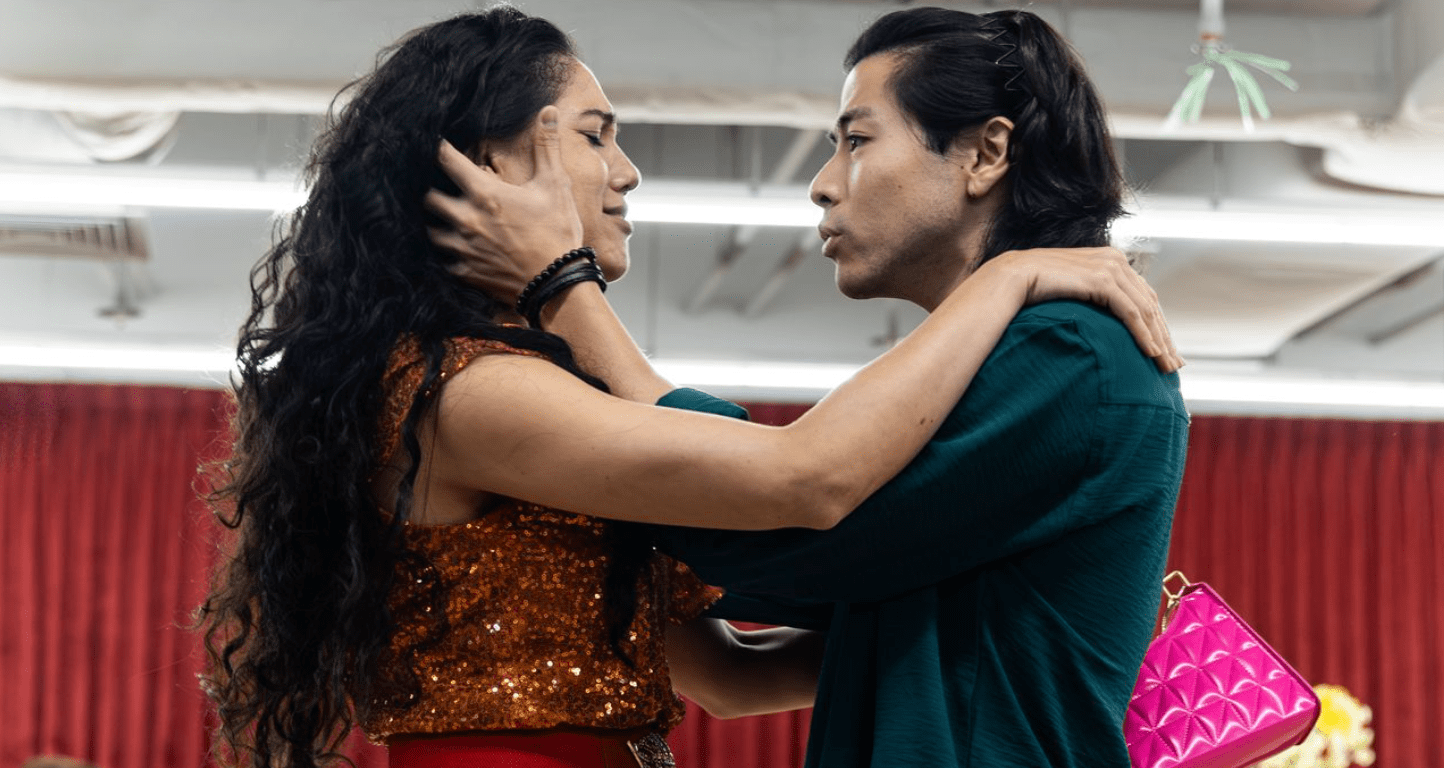

In its final season, Pangdemonium returns to a writer who has haunted stages for more than a century: Anton Chekhov. But this is not a museum piece, nor a reverent period revival. Force Majeure, written by Stephanie Street and adapted from Three Sisters, relocates the ache of Chekhov’s provincial dreamers into a contemporary landscape of global drift and fragile belonging. The soldiers and samovars are gone; in their place are the quieter pressures of modern dislocation; careers stalled, relationships frayed, identities stretched across borders. Three sisters circle one another in a house thick with memory and expectation, their brother faltering under his own illusions, friends and lovers orbiting in patterns of longing and escape. It is, as director Tracie Pang describes it, “a play that’s all about learning how to move forwardL about how we get beyond the grief they are suffering, and how they journey on with the rest of their life.”
Chekhov’s original sisters yearned for Moscow; Street’s characters yearn for something less geographically specific but no less urgent: a sense of momentum, of possibility, of home. “Back and look at the play,” Tracie says. “That’s what this family are working out. How do we move forward? How do we get beyond the grief? How do they journey on with the rest of their life? That’s the journey that Stephanie Street and I looked at when we were creating this piece. How do we retell it in this modern age? How do we take it away from Russia, Moscow, and the soldiers and bring it into the modern world and make it relatable?” She leans into the thought, as though testing its weight. “It’s about how, as a society, we keep moving forward, how we evolve from the person we are now to the person we’re going to become. That’s where it sits for me.”

In that sense, Force Majeure feels uncannily aligned with the moment in which it is being staged. The production opens not only as the first play of Pangdemonium’s final season, but as a meditation on the end of eras: familial, artistic, personal. Yet the mood in the rehearsal room, by Tracie’s own insistence, is not one of funereal retrospection. “Celebration depends on the grief,” she reflects. “You find positivity in what is next. How do you evolve? How can I make the person I’ve lost proud of the human being I’m becoming? That’s the celebration: moving forward while honouring what’s precious.” The company’s closure hovers in the background, acknowledged but not indulged. “Adrian and I have given so much in the last fifteen years. It’s been hard. But we chose to go on our terms, to leave while we still love the work, to leave space for the next generation. I want to maintain joy, energy, collaboration. That’s what drives me.”
That drive is visible in the stripped-back staging she has conceived. There is no backstage army smoothing transitions, no band cushioning emotion. “They’re the only people on stage, no stage crew, no band,” she says of her cast. “They’re storytellers. I wanted multidisciplinary people who would bring everything to the stage and be willing to collaborate. It’s not just me saying, can you please do this? Can you add that? It’s about bringing what they bring to the table.” The rehearsal process, she admits, has been exacting. “It’s emotional, heartbreaking. If it doesn’t tear me apart, I haven’t told the story properly. It’s confronting, beautiful, brutal.” And yet she smiles as she says it, as though the brutality is precisely the point. “We explore what it means to bring everything to the stage while hitting the emotional depths I always like to go to. I’ve stretched them all. It’s about growth, challenge, and exploration.”

For Benjamin Kheng, returning to Pangdemonium after several years away carries its own emotional undertow. Best known in music circles but no stranger to theatre audiences, he describes the experience as grounding rather than nostalgic. “It feels so recentring to come back to theatre,” he says. “I’ve been seeing the world, growing older, and that informs my feelings about this story.” Age, experience, heartbreak, these are not abstract tools but lived realities. “Living through heartbreak and life gives you the ammunition this play demands. This story is about what we carry on, the inevitable passage of time, and the present, and what we make of it. It feels like kismet, like the right time.”
He speaks, too, of craft, and the physical and aesthetic totality the production demands. “Storytelling is storytelling, intent is intent. Mechanics differ between film, music, theatre, but truthfulness remains. We’re very involved aesthetically. Everyone uses their whole body as instruments. It’s holistic. That’s what makes it so thrilling.” Later, reflecting on one of the play’s recurring ideas, he adds, “There’s a line in the play: what do artists do? They create all the time. Going back isn’t about space or chronology — it’s about posture, about truthfulness in creation.” He pauses, then extends the metaphor outward. “There’s a fine line between drowning in sentiment and holding it while moving on. Saying goodbye to a home like this is similar. Honour, move on, hold the memory, don’t drown. And you only get by with the people around you.”

For Sharda Harrison, whose history with the company runs deep (last seen in the tour de force People, Places, & Things), Force Majeure resonates as both artistic challenge and personal reckoning. “One of my lines is about shaping conflict and heartbreak into something beautiful,” she says. “I wake up every day and I can choose to be upset about the state of the world, or I can create beauty to survive.” The urgency is not rhetorical. “This family is constantly trying to love and forgive each other. That feels urgent because the world is suffocating sometimes. We have to make art to endure.” In rehearsal, she watches her fellow actors push themselves into raw terrain. “I watch my friends go to real places emotionally, and I just want to hug them. The more you share the burden, the easier it becomes. That’s a commonality in the play, to carry grief, memory, and hope together.”
Home and what it is, who gets to claim it, and whether it can ever be reclaimed, runs like a quiet bassline beneath the production. “We live in a universal world,” Tracie muses. “Borders, walls, protectionism, it’s not just overseas, it’s here too. This family lived abroad for twenty years and returns to their motherland. How do they call a new place home? Singapore is protective of the idea of home. Why do we think negatively of those who explore elsewhere?” These are Chekhovian questions refracted through a 21st-century lens. The yearning for Moscow becomes a yearning for rootedness in a world that insists on motion.

And yet, for all its meditations on loss and longing, Force Majeure resists despair. “The text doesn’t sensationalise grief,” Ben observes. “You laugh one moment, cry the next. Life just keeps moving, and this play captures that.” Sharda offers her own image of resilience: “You transition from drowning to journeying, and there’s always a beautiful garden waiting.” Tracie returns to that idea of evolution. “How do you evolve? How do you move from the person you are now to the person you’re going to become?” she asks again, as though the repetition might carve a path forward.
If Chekhov wrote of characters who dreamt of a future that never quite arrived, Pangdemonium’s Force Majeure feels determined to claim the present instead, messy, painful, luminous. The company’s final season becomes less an ending than a threshold. “I just want to put on good shows,” Tracie says simply. “Tell the story honestly. Respect the audience. Treat the work with heart and soul. Whether you like it or not, I hope you see the quality and the care. That’s what theatre should be! A conversation, a mirror, a garden where the audience can reflect and grow.”

As the sisters on stage wrestle with their disappointments and dare to imagine something beyond them, the parallels are impossible to ignore. An institution prepares to close one chapter even as it opens another; artists stand in the half-light between farewell and possibility. There is grief, yes — but also velocity, intention, and a stubborn belief in what comes next. In that charged space between elegy and anticipation, Force Majeure finds its pulse: not a lament for what has been lost, but a bright, insistent invitation to move forward together into whatever future awaits.
Photo Credit: Pangdemonium!
Force Majeure plays from 6th to 15th March 2026 at the Victoria Theatre. Tickets available here


Thank you for the countless stories you’ve told us over the past 15 years, Pangdemonium. You will be dearly missed.
LikeLike