
More than five decades after Andrew Lloyd Webber and Tim Rice first brought Jesus Christ Superstar to the stage, the musical continues to ask audiences to look beyond the icons at the people behind them.
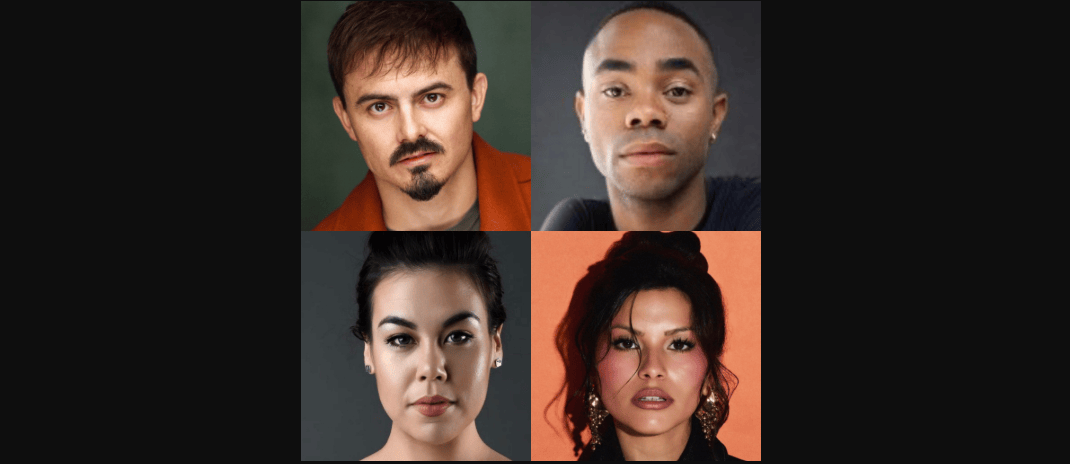
For the cast of the international touring production arriving in Singapore, that human element is at the heart of the show. Luke Street, who plays Jesus, sees a man grappling with doubt and loneliness. Javon King, as Judas, wants audiences to question the centuries-old perception of him as simply a villain. And Singaporean performers Frances Lee and Tabitha Nauser, who alternate as Mary Magdalene, are each finding their own way into a role whose story is told almost entirely through song.
For Street, the musical’s enduring relevance comes down to just how recognisable its themes remain. “Because none of it’s actually dated; fame, pressure, being betrayed by people close to you, having to be what everyone needs you to be,” he says. “If anything, I think it lands harder now than it used to, with how public everyone’s life is and how quickly people turn on someone. Jesus’ story feels weirdly current to me most nights. Also, the music is timeless!”

That sense of humanity is particularly important to Street’s interpretation of Jesus. Having previously covered both Jesus and Judas, he brings an unusual perspective to the central relationship at the heart of the musical. Street has previously played both sides of the Jesus-Judas relationship, and says the experience changed his approach to Jesus more than he expected. “It has changed it more than I expected it to,” he says. “By playing Judas, I actually believe what he believes, and not just to play him as “the bad guy” – I can’t play Jesus now and pretend I don’t know that anymore.
That understanding changes the way he sees the betrayal between the two characters. “Every time he confronts me on stage now, I know exactly where he’s coming from. So the betrayal doesn’t feel like a plot twist to me; it feels more like watching two people who love each other run out of road, and it was all destined to happen, and Judas was just a chess piece in the story.”
It is a perspective that also informs the way Street approaches Jesus himself. Rather than focusing solely on the iconic figure audiences may already know, he is drawn to the character’s vulnerability. “The doubt and loneliness,” he says. “It’s the fear in Gethsemane, the tiredness, the ‘why me’ that I keep coming back to. I think that’s the bit people actually recognise in themselves when they watch it – not the icon, but someone trying to do the right thing while not being sure they can.”
“My Jesus leans into the ‘human’ behind the iconic figure that he was just a man, so I hope audience members can resonate with him in some way.”

For Javon King, who plays Judas, the same impulse to humanise a character lies at the centre of his performance. “I was hoping to be able to bring a different layer to him; layers that people don’t usually expect,” King says. “Judas is one of those characters that people come into the theatre assuming they know his whole story. I wanted to try and humanise him as more than just a character that people have villainised for centuries.”
His goal is to challenge the audience’s assumptions about Judas. “It is my goal that the audience leaves the show with a different perception of him to what they thought when they sat down at the beginning of the show. The title of the villain was given to him, however, he never thinks of himself as a villain.”
The relationship between Jesus and Judas is therefore not simple binary, and certainly not a battle between hero and villain. For King, it is a relationship that depends on trust both between the characters and between the actors playing them. “I love Luke,” he says. “I will admit it was very daunting to embark on this tour, with a show like this, with a completely new and different Jesus to the one I had worked with on the Australian tour.”
The two actors, however, hit it off immediately. “I think as our friendship has grown outside of the show it has made our working relationship significantly easier. To do a show as heavy as this one is all about trust, and I know that I can trust Luke with the weight of the characters and their stories, and hopefully he feels he can trust me in return.”The two actors, however, hit it off immediately. “I think as our friendship has grown outside of the show it has made our working relationship significantly easier. To do a show as heavy as this one is all about trust, and I know that I can trust Luke with the weight of the characters and their stories, and hopefully he feels he can trust me in return.”

The emotional demands of Jesus Christ Superstar are matched by its physical and vocal challenges. For Street, the production’s stripped-back nature makes presence particularly important. “There’s nowhere to hide,” he says. “It’s a blank canvas to play on, and the audience is just watching your face, and your breathing does the work.”
“For me, the challenge isn’t really the singing; it’s staying present,” he adds. “You’ve also got to pace yourself like you’re training for something, because vocally and physically it just doesn’t stop.”
King has his own methods for maintaining the stamina required for Judas. Having performed the role more than 300 times, much of the preparation now happens away from the theatre. “The majority of the preparation for Judas happens outside of the theatre nowadays; I’ve done the role over 300 times, so naturally there’s a lot of muscle memory happening when performing the show,” he says. “I try to have a very active lifestyle outside of work; I love running so I use that as a way to stay fit and continue maintaining and building my endurance for the show.”
His previous work in physically demanding productions has also influenced his approach. King has appeared in shows including Hairspray and Back to the Future: The Musical, where singing and dancing simultaneously required considerable stamina. “Something that I always strive for when doing any show, regardless of the choreography/staging, is never sounding out of breath while dancing and singing at the same time,” he says.
For those heavier dance shows, King would run on a treadmill while singing the songs from the production, deliberately pushing himself to perform while out of breath in order to build the required stamina. “I used a similar tactic to tackle Judas’s vocal gymnastics,” he says.

For Street, one of the most demanding moments is the showstopping “Gethsemane”, a song whose emotional and vocal demands have continued to evolve throughout the tour. “It’s just an amazing song. The range of emotions that you go through, and how vocally challenging it is – you can’t just rely on muscle memory,” he says. “It’s never quite the same twice, and I’ve stopped trying to control that and just let it happen – every night a different emotion may be heightened depending on how I’m feeling that day or show – sometimes more sadness, disappointment or anger.”
That unpredictability extends to the audience too. “You really do learn how different a room can be city to city,” Street says. “It can see audience members hiding behind their hands in moments or in tears at the end which informs me we are doing our job. For me, the most amazing thing is the silence after the crucifixion, and that silence stays with me, it’s very powerful.”
The response doesn’t necessarily end when the curtain comes down. Street says meeting audiences at the stage door has also been rewarding. “I get asked lots of questions about the show, which is what we want; we want the audiences to go away asking questions on who these people are to you, you can make up your own story.”
King has noticed differences in audience responses for another reason: their relationship with faith. “The audience response varies drastically from country to country depending on their connection to faith,” he says. “I’ve learned that some audiences come to the show to hear the music that they’ve grown up listening to, while other audiences come to see the story itself.”
For him, however, both experiences are equally fulfilling. “Every experience is fulfilling for me as an actor because at the end of the show it is obvious how much the performance has impacted audiences.”

For Singapore audiences, one of the production’s most distinctive features will be the two performers sharing the role of Mary Magdalene. Frances Lee and Tabitha Nauser are both Singaporean, but come to the role from different artistic backgrounds. Their shared casting means audiences will have the opportunity to experience two interpretations of the same character on different nights.
For Nauser, the opportunity is also a chance to showcase the depth of Singapore’s performing talent. “It means a lot,” she says. “Singapore has such incredible talent, and it’s exciting to be part of an international production that showcases what local performers are capable of. I’m proud to represent Singapore on a stage like this, and I hope audiences see that our theatre scene has world-class artists.”
For Lee, the experience is an opportunity to learn from an international team. “It’s an unbelievable opportunity to learn from a seasoned international cast and artistic team,” she says. “It is slowly sinking in, and I really think it’s all going to come together on opening night, and it is a huge honour.”

The two performers have approached Mary differently, too. Nauser says she deliberately tried not to become too focused on the legacy of the role. “I went back to the script and the lyrics and asked myself, ‘Who is this woman in this moment?’ Once I focused on telling her story honestly, rather than trying to live up to previous performances, everything started to feel much more natural.”
Lee, meanwhile, has found herself particularly focused on the fact that Mary’s story is told entirely through music. “The role is completely sung, so I feel like the reason why each interpretation is so different is because the story is told through song,” she says. “The tune is always the same, but you focus on the voice to give the character life, there is no other avenue for you to tell her story except through song.”
The two Marys haven’t actually had much opportunity to see one another work yet. “We haven’t really gotten to see each other in rehearsals except blocking recaps, I think we’ll only get to see each other on opening night!” Lee says.
Still, having another Singaporean performer alongside her has made the experience easier. “But being able to share this experience with Tabitha has been very comforting and made the experience far less daunting.”
So what will audiences notice if they see the show twice to see both Marys in action? Lee’s answer is characteristically candid: “I have no idea! I haven’t seen her interpretation! But it will be different because we are different, and I’m sure they wouldn’t have cast two different Marys if they felt like our deliveries were similar.”
Nauser is equally reluctant to define the difference before audiences have had the chance to decide for themselves. “I think that’s probably a question for the audience rather than me! Haha,” she says. “Every performer brings their own life experience and instincts into a role, so naturally there’ll be differences. My focus has simply been on telling Mary’s story as truthfully as I can.”

Both performers face the biggest test and opportunity in “I Don’t Know How to Love Him”. The song is one of the most recognisable pieces in the musical, carrying with it decades of performances and audience expectations. Nauser admits there is some pressure. “Of course there’s a little pressure because so many people know and love that song. But I realised quite quickly that I couldn’t sing it with everyone else’s versions in my head. I had to approach it as Mary’s thoughts in that moment, and once I focused on the emotion instead of the legacy, it started to feel like my own.”
For Lee, the pressure comes during preparation. “You feel the pressure in the preparation of the song, but then you let it go once you sing it, you have to,” she says. “The song needs to be sung with honesty; it is a moment she only shares with the audience, no one else. The beauty of the song is that everyone who sings it makes it their own, and its impossible not to put a little bit of yourself in singing it.”
That idea of putting something personal into the character is particularly relevant for Nauser, who is returning to musical theatre after some time away. “I’ve done a few musicals before with Pangdemonium’s RENT being the last, but yes it’s been quite a while,” she says. “Coming back with Jesus Christ Superstar, and with a role as iconic as Mary Magdalene, just felt like the right challenge at the right time. I love projects that push me out of my comfort zone, and this definitely does.”
Coming from a background in music, Nauser has found that the fundamentals of preparing for a musical are not completely unfamiliar. “Not too different, the fundamentals are the same,” she says. “But I would say the biggest difference is that you’re serving the character before you’re serving the song. I find that in theatre, sometimes the most truthful moment isn’t the most polished one vocally, and that was a really interesting shift for me.”

For audiences who know Nauser primarily as a singer, the role offers the chance to see a different side of her. “I hope they see me as a storyteller first; acting asks something different of you; it requires vulnerability and restraint in a different way,” she says. “If people walk away believing Mary as a person rather than seeing ‘Tabitha the singer’, then I think I’ve done my job.”
Lee has similarly found that one aspect of her experience has become particularly important in approaching Mary. “The show is completely sung; this is an epic rock concert merged with an epic story,” she enthuses. “The gentle storytelling through song is something that I’ve had to awaken in me in order to do the role justice!”
For Lee, performing in Jesus Christ Superstar with an international touring cast while also performing in Singapore is something she expects to carry with her. “Being part of an international cast, and performing in Singapore, at home, is an experience that I will cherish for the rest of my life.”
Both Nauser and Lee also hope the production might introduce new audiences to theatre itself, and that the Singapore engagement is an opportunity to demonstrate what local performers can bring to a major international production. “I hope that people going to the theatre for the first time to watch this show fall in love with theatre just like I did when I was young, and continue to explore our local theatre scene,” says Lee.

For Street, the Singapore leg offers a different kind of anticipation: seeing how a completely new audience responds to the show. “On stage, I’m just curious what a new audience makes of it, every city has its own energy and I genuinely don’t know what Singapore’s is yet, which is exciting.”
He also hopes to have some time to experience the city itself rather than only seeing the hotel and stage door, something he notes is more often the reality of touring than audiences might realise. “And honestly? I’m looking forward to the food,” he adds.
Ultimately, the four performers arrive in Singapore with four different perspectives on a story audiences may think they already know. Street brings the experience of having inhabited both Jesus and Judas, finding humanity in the relationship between them. King wants audiences to reconsider the villain they thought they understood. Lee approaches Mary through the storytelling possibilities of a completely sung role, while Nauser seeks to put aside the weight of previous interpretations and discover the woman in each moment.
And that is what allows Jesus Christ Superstar to continue resonating more than 50 years after its creation. The characters may be iconic, but the emotions are recognisably human: doubt, loneliness, pressure, love, betrayal, fear and the desire to be understood. The aim is not necessarily to give audiences a definitive answer about who these people are, but to leave them asking questions. To quote Street once more, in watching the show, “You can make up your own story.”
Jesus Christ Superstar plays from 19th August to 6th September 2026 at the Sands Theatre at Marina Bay Sands. Tickets available here

