
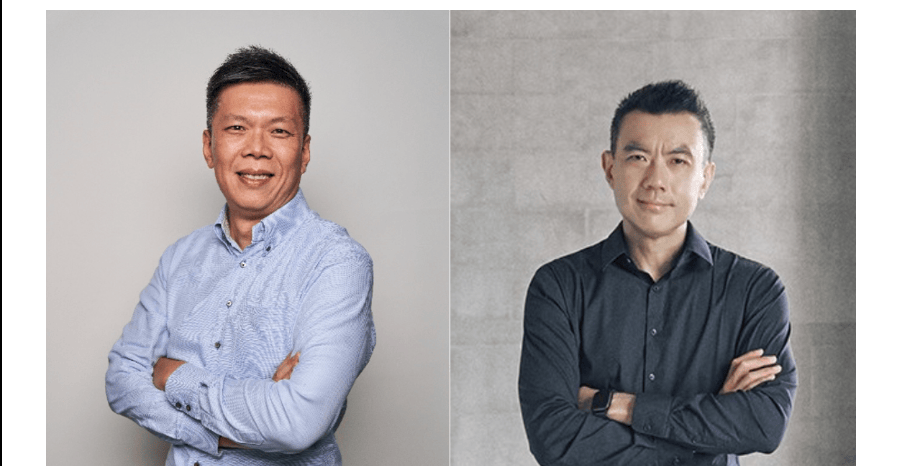
Singapore’s visual arts landscape is entering a new phase, with National Gallery Singapore and Singapore Art Museum set to move forward under dedicated leadership from January 2027.
Mr Chng Hak-Peng will be appointed Chief Executive Officer of National Gallery Singapore, succeeding Dr Eugene Tan, who has led the institution as Chief Executive Officer since 2024. Dr Tan will remain with the Gallery until the end of December to support the transition before turning his full attention to Singapore Art Museum, where he will serve as Chief Executive Officer & Director.
The leadership transition reflects the growing ambitions of both institutions as they develop their next chapters. While the two museums will have separate leadership, they will continue to work closely together, sharing resources, collaborating on initiatives and finding new ways to strengthen Singapore’s wider visual arts ecosystem.
For National Gallery Singapore, the appointment brings in a leader with more than three decades of experience spanning the arts, public and private sectors. Chng Hak-Peng previously served as Deputy Chair and Chief Executive Officer of the Singapore Symphony Group from 2014 to 2022, overseeing a period of transformation that included strengthened governance and digital capabilities, as well as the transition between music directors during the COVID-19 pandemic.
During his tenure, the Singapore Symphony Orchestra received international recognition, including being named among the world’s best orchestras by BBC Music Magazine in 2022. The year before, it placed third in Gramophone magazine’s Orchestra of the Year Award, making it the only Asian orchestra among the nominees.
Before entering the cultural sector, Chng spent a decade at management consultancy Bain & Company, where he advised chief executives and private equity funds on strategy and execution. He currently serves on the boards of Library and Archives Solutions, a subsidiary of the National Library Board, and Duke-NUS Medical School, and chairs the advisory council of Chua Chu Kang Secondary School.
His connection to the arts has also extended beyond professional leadership. A long-time volunteer docent at local museums including the Asian Civilisations Museum, Chng has pursued academic interests as a PhD candidate in History at the National University of Singapore and is a Fellow of the Ministry of Culture, Community and Youth’s Culture Academy.
For National Gallery Singapore Chairman Peter Ho, Chng’s combination of cultural experience and strategic leadership makes him well placed to take the institution into its next stage. “Eugene has been an important part of the Gallery’s growth since 2013, and we are deeply grateful for his stewardship these past 13 years,” said Ho. “In looking to the Gallery’s next chapter, we sought a leader who could match this ambition with renewed drive and found this in Hak-Peng.”
He pointed to Chng’s record with the Singapore Symphony Group as well as his private-sector experience, adding that the Gallery was “in good hands as it continues to grow its voice for Singapore and Southeast Asian art.”
For Chng, the appointment is an opportunity to build on an institution whose role extends beyond Singapore’s museum landscape. “I am honoured to be appointed the next Chief Executive Officer of National Gallery Singapore, an institution I have long admired for its role in championing Singapore and Southeast Asian art and artists on the global stage,” he said.
Chng also acknowledged the wider cultural community that has shaped his own work, describing the appointment as an opportunity to continue making the arts “accessible and meaningful to our communities.”
He added that National Gallery Singapore is “uniquely positioned to tell the stories of Singapore and Southeast Asia through art” and said he hopes to build on the foundations established by Eugene Tan and his predecessor, Chong Siak Ching. “I look forward to working with everyone at NGS and across the visual arts community to build a Gallery that Singapore continues to love and be proud of.”
For Dr Eugene Tan, the transition marks a change in how his time and energy will be divided rather than a departure from Singapore’s visual arts institutions. Tan has been Director of National Gallery Singapore since 2013 and of Singapore Art Museum since 2019, before becoming Chief Executive Officer of both institutions in 2024. From January, his focus will shift fully to SAM as its Chief Executive Officer & Director.
The move comes as Singapore Art Museum develops its own next phase, with a stronger focus on global contemporary art while maintaining its Southeast Asian perspective. “We are pleased that Eugene will be able to devote his focus on SAM,” said Singapore Art Museum Chairman Edmund Cheng. “SAM is entering an exciting new phase as it deepens its focus on global contemporary art with an international outlook, while remaining rooted in a Southeast Asian perspective.”
Cheng described dedicated leadership as key to advancing that mission, while looking ahead to the museum’s continued growth and its role in nurturing a deeper appreciation of art and artists in Singapore. For Tan, the separation of leadership comes at a natural point in the development of both institutions. “I am grateful to have had the privilege of leading both NGS and SAM, and to see both institutions grow in ambition and international standing,” he said. “As both museums enter a new phase of growth, I believe this is the right time for each to benefit from dedicated leadership, while I devote my energies to leading SAM through its next chapter.”
At the same time, Tan sees the transition not as a division between the two institutions, but as an opportunity for their relationship to evolve. “I am also convinced that the synergies between the two museums will continue to grow, and I remain committed to working with Hak-Peng as partners to build the visual arts cluster,” he said.
He will support Chng through the handover, adding that he has “every confidence that NGS will continue to thrive under his leadership.”
The transition comes at a moment when both National Gallery Singapore and Singapore Art Museum are looking beyond the next few years and towards what their institutions can become in a changing cultural landscape.
For National Gallery Singapore, Chng takes on an institution with an established international profile and a mandate centred on Singaporean and Southeast Asian art. His experience combines cultural leadership with strategy, organisational transformation and long-term institutional planning.
At SAM, Tan will be able to concentrate on a museum whose contemporary art programme is increasingly international in outlook while remaining grounded in Southeast Asia. The two institutions may be moving into distinct chapters, but the announcement makes clear that they are not moving apart. Their continued collaboration, shared resources and complementary roles are intended to strengthen the broader visual arts ecosystem — giving each museum space to sharpen its own identity while retaining the partnerships that have connected them.
For Singapore’s museums, the coming year will therefore be characterised by the widening of possibilities: two institutions, two dedicated leaders and a shared ambition to deepen the country’s place in the regional and international art world.

