
From a heritage shophouse gallery where collectors become artists to a family-run framing business that helps artworks find their place in the world, two behind-the-scenes encounters offer a more personal look at the people and relationships shaping Singapore’s art scene.
Art can be many things: a way to express something words cannot, a reminder of a place that no longer exists as we remember it, or simply a piece that makes us happy every time we walk into a room. Yet for those who have never bought an original artwork, the idea of collecting can still feel intimidating. Where do you begin? How do you know what is worth buying? And what happens after you decide to take a piece home?
These were some of the questions explored during the Affordable Art Fair Singapore’s pre-fair media sessions, which offered a glimpse into the people and processes behind the artworks visitors will encounter at the fair this November.
Rather than simply walking journalists through an exhibition, the sessions invited us into the working worlds of two very different businesses: Art Forum, the longstanding gallery founded by veteran art dealer Marjorie Chu, and Impress Gallery, a family-run business that has spent decades helping artworks make their way from artists’ studios to collectors’ walls.
Across both encounters, a common idea emerged. Art collecting is not just about buying something beautiful. It is about learning to look, developing an understanding of what resonates with you, and discovering the people who can help you along the way.

Tucked into a 1920s terrace house at 82 Cairnhill Road, Art Forum feels a world away from the intimidating image some people might have of a contemporary art gallery. The predominantly white exhibition space gives artworks room to breathe, while the house itself lends the experience a warmth that feels distinctly domestic. There is space to wander between the works, but also an easy invitation to sit down, settle in and stay awhile.
That sense of openness carried into the media session. We began with wine and small bites before moving upstairs to a living-room-like space for a conversation led by Affordable Art Fair director Alan Koh. Joining him were Marjorie and collectors-turned-artists Eugenia Tan and Dr Kamalakannan Srimalan, better known as Kamal.
Marjorie has been an art dealer since 1971, building a reputation for discovering and championing emerging artists across Singapore and Southeast Asia. More than five decades on, her approach remains grounded in a deceptively simple principle.
When asked how she chooses which artists and artworks to exhibit, her answer is “by eye”. It is not, she explains, about chasing famous names, high prices or the approval of others. Her eye has been shaped by years of experience, encounters with artists and their techniques, and a willingness to travel and understand the cultural contexts from which different works emerge.
For Marjorie, helping people develop that same ability to look is part of the gallery’s purpose. “The job of the gallery,” she explained during the conversation, is not simply to sell. It is about explaining and helping people understand why a work is good, rather than relying on the fact that an artist is famous or that everyone else seems to like a particular piece.
It is a philosophy that makes art collecting feel less like a test of knowledge and more like a relationship that develops over time.

Eugenia and Kamal are perhaps the best examples of what can happen when that relationship is given room to grow. When they first walked into Art Forum, neither had much knowledge of art. They were not seasoned collectors with an established understanding of artists, movements or techniques. They were simply curious enough to look around, and, as it turned out, to buy something.
Kamal recalled how they found themselves lingering in the gallery, unsure of how to approach Marjorie while she was busy with other visitors. Eventually, they managed to tell her that there was a work they wanted. They did not necessarily know much about the artist or how to articulate what they liked about the piece. Something about it simply spoke to them.
That first purchase became the beginning of a much longer journey. They returned to the gallery, developed friendships with the people there, and eventually asked Marjorie if she could teach them to paint. Rather than immediately encouraging them to pursue their own styles, she introduced them to an artist whose disciplined approach to still life would give them a grounding in the fundamentals.
Marjorie wanted them to understand the principles of composition, colour and contrast, and to appreciate that there was more to painting than putting an appealing image on a canvas. “You have to start with the discipline,” she explained, describing how she wanted them to learn the foundations before finding their own ways of working.
She also offered a memorable way of thinking about still life: “It’s a life that you want to understand that is in the painting. The painting has life.” It is an idea that extends beyond the act of making art. Learning to appreciate a painting means looking beyond its subject matter to understand the decisions, relationships and sensibilities that give it meaning.
For Eugenia and Kamal, the lessons eventually led somewhere neither had initially planned. Their collecting developed into a desire to create, and their involvement with Art Forum grew to include helping at exhibitions and art fairs, from setting up booths to speaking with customers about the work on display. They saw firsthand how an artwork moves through the world, and how the relationship between an artist, a gallery and a buyer goes far beyond a simple transaction.
Eventually, both began exhibiting their own work. In 2026, they will present their work at the Affordable Art Fair for the first time. For Kamal, having his work selected for a solo exhibition was an important moment of affirmation. The decision of a gallery he respected helped him see his artistic practice in a new light.
Marjorie, meanwhile, had watched their work develop over the years. She describes how their earlier paintings shared a common foundation, before their individual styles began to diverge. Selecting work for their exhibitions meant recognising not only what they had learned, but also where each artist was beginning to go on his or her own.
Their story is a reminder that collecting need not be the end point. It can be the beginning of a much deeper involvement with art, whether that means learning more about an artist, developing a personal collection or eventually trying to create something yourself.

Of course, not everyone who buys art will want to become an artist. Nor does everyone need to. What matters, according to the discussion, is finding work that means something to you.
Marjorie encourages new collectors not to feel compelled to buy works simply because an artist is famous or because other people insist that a particular piece is desirable. An artist who is well known today was once young and relatively unknown, too. Instead, she encourages buyers to pay attention to their own responses, including the possibility of discovering something meaningful in a work by an emerging artist.
Eugenia offered a complementary perspective, describing how familiar subjects can open up unexpected conversations. Fish, for instance, appear in her work not merely as objects to look at, but as a way of prompting people to share their own memories and associations. One viewer might think of a grandmother who loved fish; another might recall a childhood experience. The work becomes a meeting point for different personal stories.
Kamal’s paintings of the Singapore River similarly explore a place through memory and emotion. The river can evoke different experiences depending on the time of day, from late-night gatherings to the quiet hours of the early morning. It is a familiar landmark, but also a deeply personal landscape. These examples suggest that the appeal of contemporary art does not depend on a viewer having specialist knowledge. Sometimes, it begins with recognising a feeling, a memory or a place.
The afternoon ended with a live-drawing session led by Eugenia and Kamal, with model and dancer Ruby Jayaseelan. After listening to the artists discuss their journeys, we were invited to pick up our own pencils and try drawing.
It was a fitting conclusion to a session about making art feel less distant. You did not need to be particularly good at drawing, or even have much experience, to participate. The point was to try, observe and experience a little of the creative process for yourself.

If Art Forum explored how people come to appreciate and create art, the session at Impress Gallery looked at what happens after an artwork has been made. Founded in 1986 by James and Jessica Tay, Impress Gallery began in framing before expanding into art sourcing and advisory services. Today, its work includes helping private collectors, corporations and institutions select and frame artworks for their spaces.
The conversation, also moderated by Alan, brought together the couple, artists Terence Tan and Showfu, and the people responsible for ensuring that an artwork is ready to be displayed, transported and lived with.
It is easy to overlook framing when admiring a finished piece. At an art fair, we see a painting hanging neatly on a wall and imagine taking it home. But between the artist completing the work and the buyer displaying it, there are numerous practical decisions that can affect both its appearance and its longevity.
James has spent decades working through those details. His account of the business also offers a glimpse into how art collecting in Singapore has evolved. When he first started, customers tended to buy posters and limited-edition prints, often as affordable ways to decorate their homes. Over the years, as incomes rose and people travelled more, he observed a growing interest in original works and in collecting art by local artists.
Art depicting familiar places could carry particular significance. A painting of the Singapore River, for example, might preserve a memory of how the area looked while someone was growing up, even as the landscape around it changed. What began as a way to decorate a wall could become something more personal: a connection to a place, a time or a particular chapter of someone’s life.

For James, the guiding principle is straightforward. “Framing is just a complementary work,” he explained. The frame should help bring out the best in the artwork, not compete with it.
He compares it to dressing for an occasion. A frame that is too elaborate or visually dominant can distract from the work it is supposed to enhance. Sometimes, a simple, neutral frame is the better choice, allowing the artwork to stand out while remaining versatile enough to suit different interiors. This is particularly important at an art fair, where buyers may decide to purchase a work without knowing exactly where they will hang it at home.
Terence, a former professional photographer who began producing his current body of work after COVID disrupted his photography work, has come to appreciate just how much these considerations matter. His colourful compositions are produced on fine-art paper, which comes with limitations around print sizes and production. Framing materials also have their own dimensions and constraints. Making a larger work is therefore not simply a matter of scaling up an image; it may require rethinking how it is produced and how the finished piece will be supported and protected.
As Terence explained, “Being able to create is one thing. But presenting in its final form actually is a whole set of different business.”
Working with James and Jessica has helped him understand that presentation is not something to leave until the very end. In fact, he now considers framing as part of the creative process itself.
Actually, for me, knowing how the work will be framed actually helps me in creating the work,” he said.
The relationship has also helped him establish a more consistent approach to presenting his work. Smaller and medium-sized pieces can follow a familiar framing format, while larger works require more consultation to ensure that the materials and dimensions are practical.
It is a collaboration that benefits both sides. The artist can make more informed decisions, while the framer gains a better understanding of the work’s intentions and requirements.

One of the most interesting points raised during the session was the importance of making framing reversible. In simple terms, this means ensuring that the artwork can be removed from its frame without being damaged, allowing the owner to reframe it in the future.
A piece of paper can be permanently glued to a backing for convenience, but that may make it impossible to remove without tearing or otherwise damaging the original work. The type of adhesive, the mounting method and the materials used can all affect how well an artwork survives over time.
For a collector, that might not seem especially important at the moment of purchase. Years later, however, they might want to change the frame to suit a different home, or they might need to transport the artwork separately.
And for an artist, the consequences can be even more significant. A work that cannot be safely reframed may be permanently compromised by an avoidable decision made at the outset. These are the sorts of details that make a knowledgeable framer valuable, even when the work they do is intended to go largely unnoticed.
James also emphasises that good framing does not need to be expensive. A straightforward, well-considered frame can be both attractive and functional, while keeping the overall cost of owning art manageable. The objective, after all, is to preserve and present the artwork, not to make the frame the main event.

The session also highlighted how the relationship between a gallery and an artist can extend beyond practical advice. Showfu, who combines traditional calligraphy with a more expressive approach influenced by her exposure to European art, was introduced to Impress Gallery through Terence. She recalls how James recognised the strength of her strokes and encouraged her to pursue that quality in her work.
That encouragement helped her understand what made her art distinctive. “I think I started to believe in myself since then,” she shared.
It is a small but revealing example of what can happen when someone with experience looks at an artist’s work and sees something the artist is still learning to recognise in themselves. Showfu also describes the relationship as a form of emotional support, extending beyond the practicalities of framing and presenting a finished piece. Artists, galleries and framers each contribute different expertise, but they are ultimately working towards a shared goal: helping the work reach an audience.
That idea brings the two sessions together. At Art Forum, Marjorie helps collectors and aspiring artists develop their own understanding and confidence. At Impress Gallery, James and Jessica help artists make informed decisions about how their work is presented and preserved. Both relationships are built on trust, experience and a willingness to share knowledge.

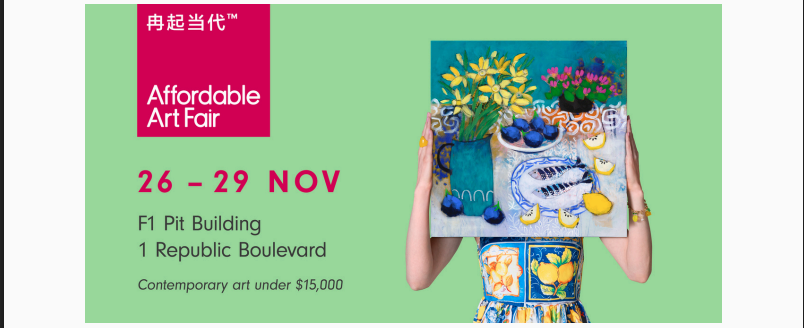
The Affordable Art Fair Singapore returns to the F1 Pit Building from 26 to 29 November 2026, bringing together 97 featured galleries. The fair follows a record-breaking 2025 edition, when 95 galleries participated and art sales reached S$5.7 million. This year’s expanded line-up will offer visitors further opportunities to encounter contemporary art, discover artists and find works that speak to them.
But the pre-fair sessions suggest that the experience of buying art can begin long before a visitor steps into the fair itself. It might start with a conversation at a gallery, a recommendation from someone whose judgement you trust, or an artwork that catches your eye even when you cannot quite explain why. It might lead to a first purchase, a growing collection or an unexpected interest in making art yourself.
And once you find a work you want to bring home, there are people like the team at Impress Gallery who can help ensure it is presented and preserved properly. Together, the sessions offer a broader understanding of what makes an art scene work. Artists create, galleries help people discover and understand their work, framers ensure that it can be displayed and protected, and collectors give the work a life beyond the studio.
For anyone who has ever wondered whether art collecting is for them, Marjorie’s advice is a useful place to begin: look for something that genuinely speaks to you, rather than something you feel you ought to like. You do not need to know everything about art before you start. Sometimes, all it takes is one piece that you cannot stop thinking about. And perhaps that is the real promise of the Affordable Art Fair: not simply the chance to buy art, but the opportunity to discover what art might mean to you.
Art Forum is located at 82 Cairnhill Road, Singapore. Impress Gallery is located at 429 East Coast Road, Singapore.
Affordable Art Fair Singapore 2026 runs from 26th to 29th November 2026 at the F1 Pit Building,1 Republic Boulevard, Singapore 038975. Tickets and more information available here

