

HONG KONG – Over the course of two months, from November 2024 to January 2025, the Sai Kung Hoi Arts Festival transformed Hong Kong’s coastal landscapes into a living, breathing canvas of creativity. Organised by the Tourism Commission, supported by Hong Kong Geopark, and curated by One Bite Design Studio, the Festival returned for its third and final edition with a triumphant send-off, embracing the theme “Joy Again, Gather.”
Building upon the momentum of its past successes, this edition of the Festival brought together 27 site-specific art installations across five locations: Yim Tin Tsai, Sharp Island, Kau Sai Chau, High Island, and Sai Kung Town. The Festival became a meeting point for artistic exchange, featuring a compelling mix of new commissions, returning works, and immersive performances. For the first time, an overseas artist, Juhyung Lee, was invited to participate, introducing an international dimension to the Festival’s mission of fostering dialogue through art.
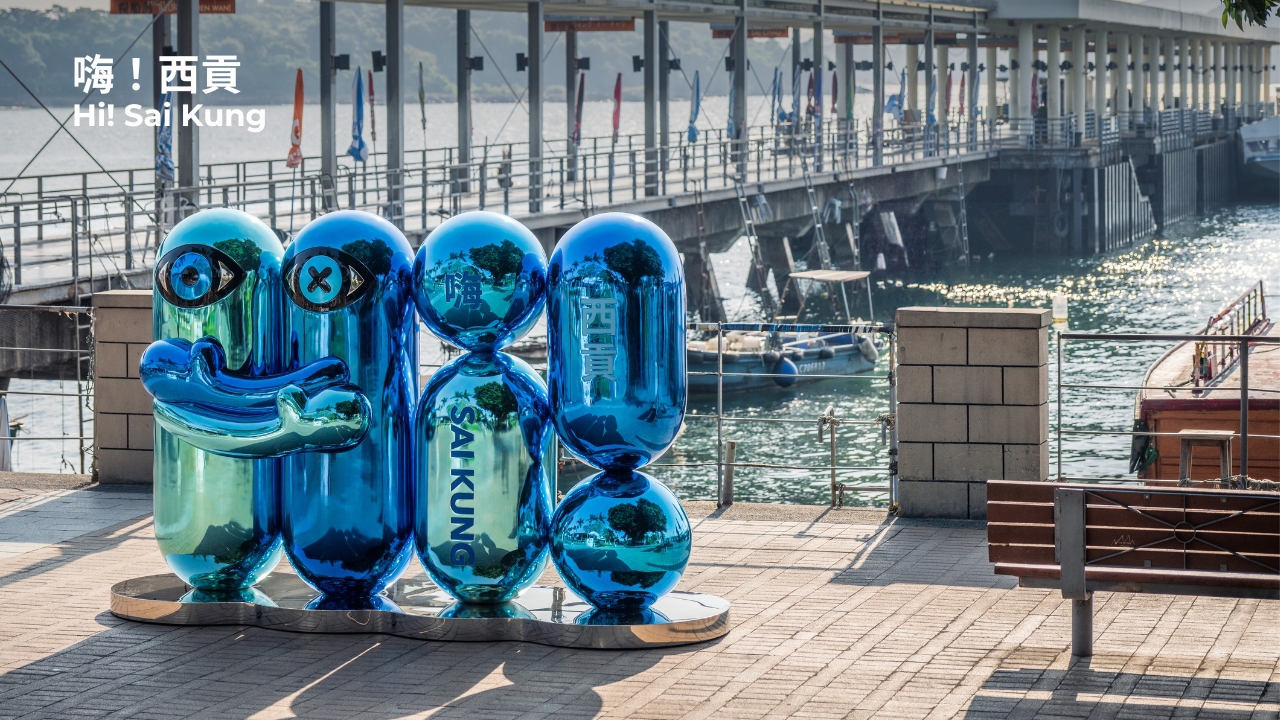
Artworks across the Festival drew inspiration from the land itself, blending contemporary artistic expressions with the rich histories of the region. In Sai Kung Town, Hong Kong designer Ken Lo unveiled “Hi! Sai Kung,” a striking blue fiberglass sculpture inspired by the surrounding waters. Having lived in the area for over three decades, Lo envisioned the piece as both a greeting and an invitation, welcoming visitors into the artistic embrace of the Festival.
On Yim Tin Tsai, an island known for its Hakka-Catholic heritage, two standout installations redefined the way visitors engaged with the village’s past. Meet’n Meal by O&O Studio and REhyphenation transformed an abandoned Hakka house into a visual and tactile feast, where wall mosaics of traditional dishes evoked the communal experience of food and memory.

For Christopher Chan, a ninth-generation villager of Yim Tin Tsai and a core member of 「X-ARt」, art is more than just expression—it is a way to navigate the complex ties between past and present, land and identity. His latest work, Through the Years to Touch You, is deeply personal, rooted in the stories passed down by his father and the ever-evolving nature of the village he calls home.
“My father left Yim Tin Tsai for better opportunities, like so many others,” Chan reflects. “At one point, there were more women than men left here because the men had moved away. Some went to Kowloon, some studied abroad—my father, for example, studied physics in London. But no matter how far people go, this place remains a part of them.”
This push and pull between departure and belonging is something Chan himself grapples with. “It’s hard to gauge what being a ‘generational villager’ really means. People talk about revitalization, but the truth is, it’s not easy for those who’ve left to return and participate again. I grew up hearing these stories, and they shaped my understanding of where I come from. Even so, every time I return, I know this is my father’s home, but I have no idea what it was like for him to truly live here. It’s a homecoming, but not quite.”
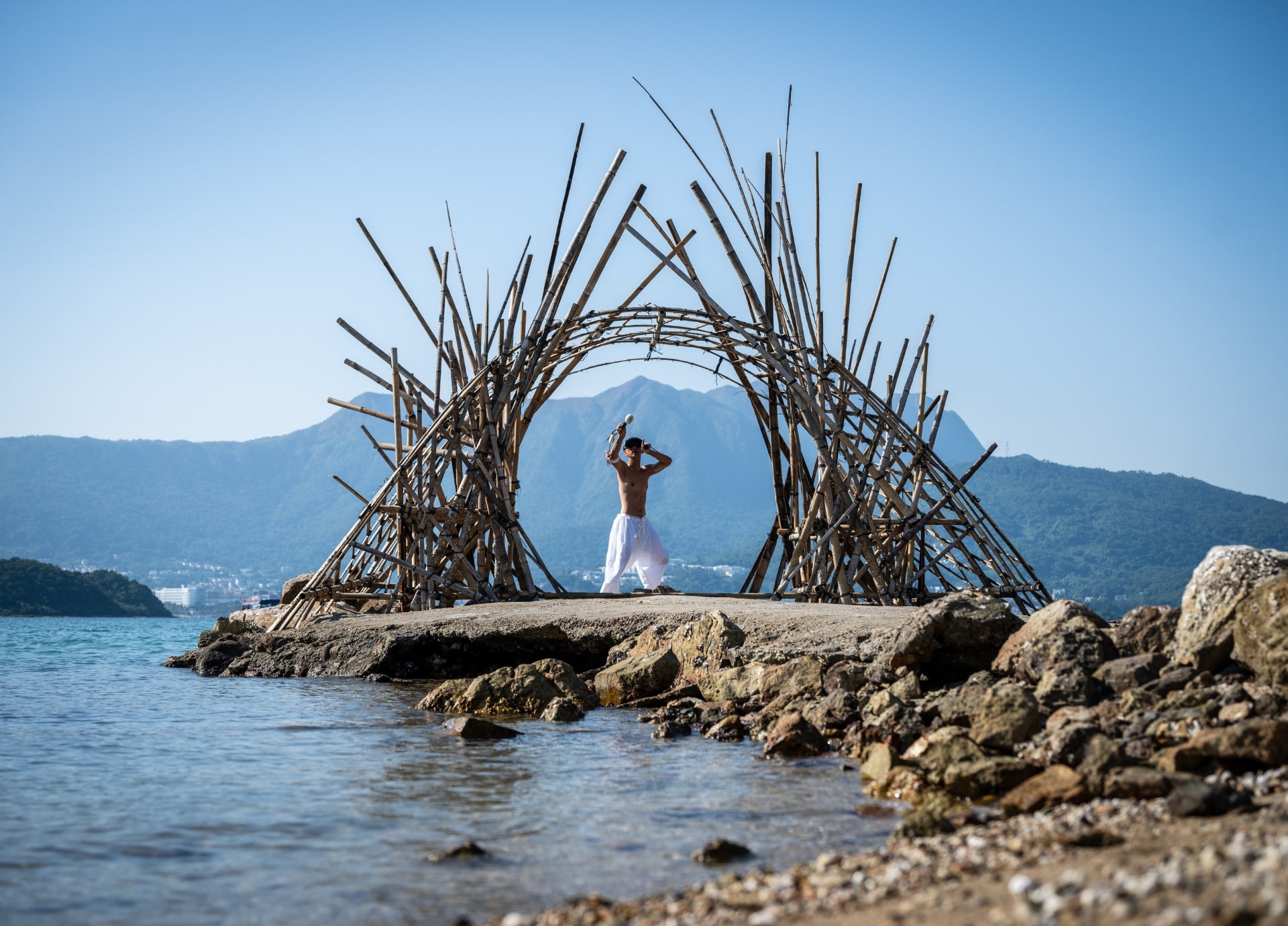
Through the Years to Touch You is an ambitious multimedia experience that merges bamboo sculptures, augmented reality (AR), and live performance. The work reflects the transient nature of the physical world, where buildings decay and landscapes shift, while memories and emotions endure.
“The physical side of the village is slowly fading, but it’s the people, their stories, and their passion that anchor it,” Chan explains. “That’s where the digital element becomes significant to me—it preserves what we can’t always touch. Think about marriage customs here: a bride comes to the pier, settles into the village, and with her, she carries the weight of transition and emotion. We wanted to capture that sense of movement and change in our work.”
Unlike traditional gallery-based art, Through the Years to Touch You takes full advantage of the landscape, layering natural land art with AR technology to create a deeply immersive experience. “Some of our previous shows were staged in indoor spaces, but this piece is different. It’s collaborative, site-specific, and exists both physically and digitally. We wanted to explore how humans and machines interact in these two realms—what disappears, what remains, and how we perceive it all.”
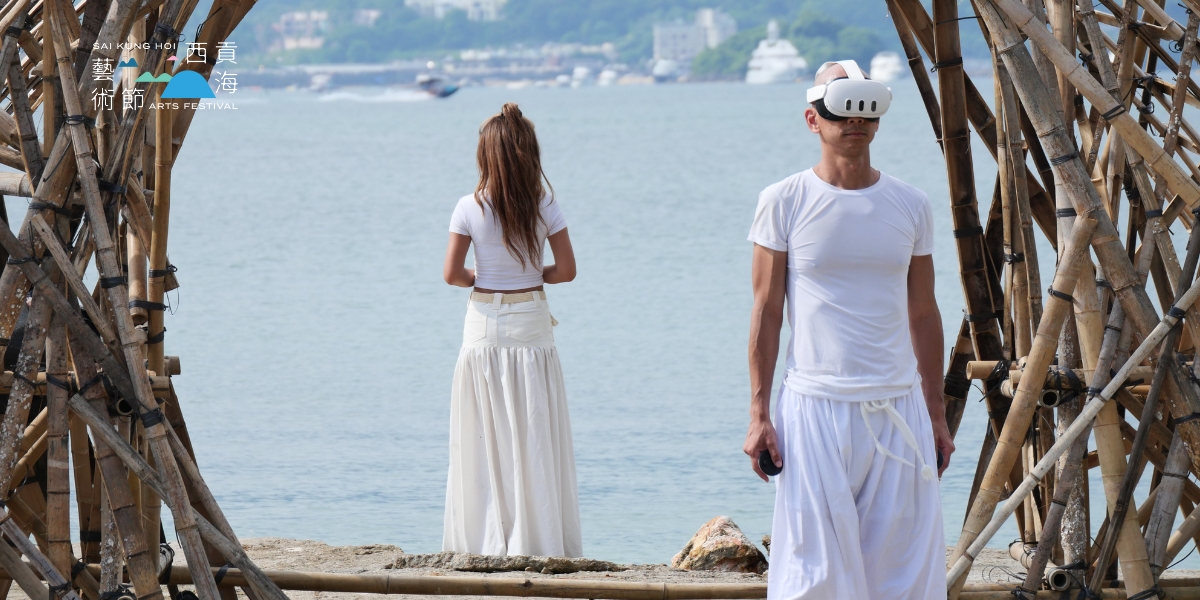
At the heart of Through the Years to Touch You is an innovative AR platform that Chan and his collaborators, including Tristan Braud, have developed. The system allows audiences to engage with the artwork in real time through custom-built software and hardware.
“The AR system works in two parts,” Chan explains. “First, we have a software application that enables performers and users to interact with the sculpture through an app. It raises questions about perception—does it just look like a scribble, or is there more to it? Can different perspectives change how we see it? We’re also experimenting with larger tablets and screens to enhance the experience across different performances.”
The second part of the system integrates haptic feedback technology, offering a more tactile way to interact with the digital space. “It’s hard to ‘paint’ in midair with an AR brush because there’s no physical resistance. So we developed a gyroscopic haptic feedback system that creates a sense of touch—when you swing the brush, it reacts. It makes the experience feel more natural, more believable.”
For Chan, this work isn’t just about technology or revitalization—it’s about rediscovering his own connection to Yim Tin Tsai. “This is a personal journey for me,” he says. “It’s not about coming in and ‘fixing’ things, but about understanding where I come from. I’d love to invite all my cousins here, to have them experience this place, hear the stories, and feel it for themselves. Because at the end of the day, Yim Tin Tsai isn’t just about the land—it’s about the people who remember it.”
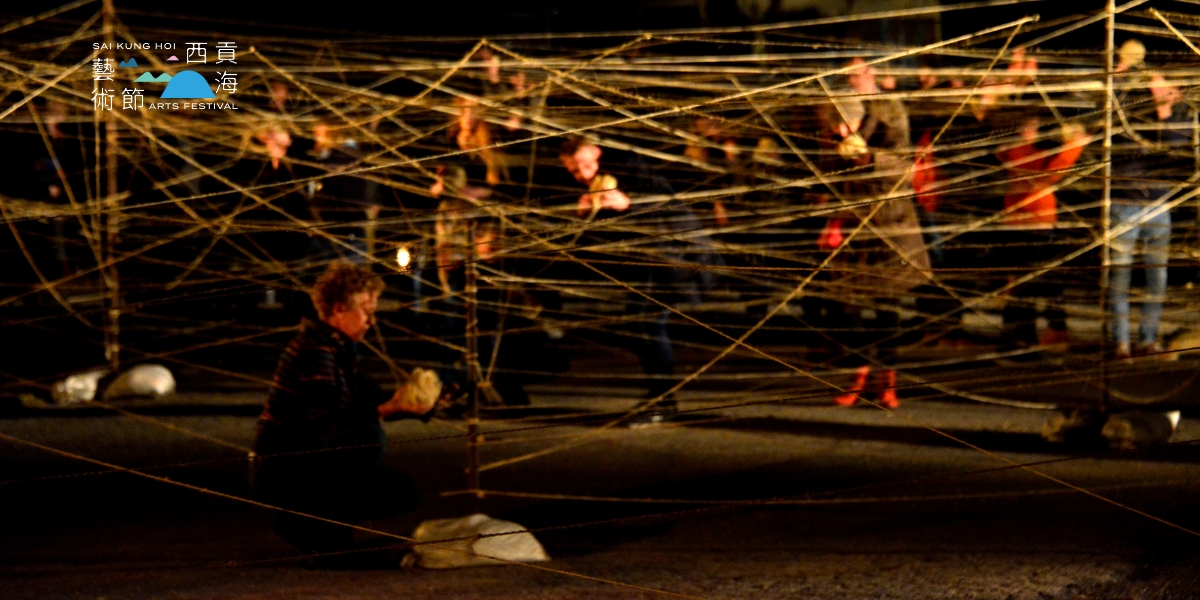
Sharp Island served as the Festival’s gateway to international artistic dialogue with the introduction of Juhyung Lee, a France-based Korean artist whose interactive installation, “It’s Not Here, It’s Over Here,” made its Asian debut outside Korea. Having toured over 90 exhibitions across 14 countries, Lee’s rope installation invited visitors to move within and manipulate the structure, reinforcing the Festival’s ethos that art is not simply something to be observed but something to be experienced. His work became a powerful metaphor for collective effort and shared journeys, drawing audiences into a dynamic play of balance and connection.
Lee explains how the installation came to be: “I was presenting my work at an artist market when I met someone who said, ‘Your work would be perfect for this festival.’ That’s how I got involved, and it was an exciting moment for me. The ropes symbolize something essential: individuality and group dynamics. They act as a medium through which I explore this tension.”
This installation, which has now been performed on a beach for the second time, offers something distinct. “The first time it was presented, the setting was incredible,” Lee recalls. “Every time we perform, this installation holds the performance, which lasts about 45 minutes. This is the first time we’ve done it for such a long period, and I’m amazed by how committed and engaged the participants were—even under the hot sun all day long. By the end, the sense of collective effort and shared experience was palpable.”
Lee’s path to becoming an artist was not direct. “I was originally studying law,” Lee says, “but something inside me knew it wasn’t what I wanted. I ended up turning to public performance art and site-specific works. I wanted to engage with people in a way that felt real and immediate, not just in the confines of museums and galleries.”
This decision wasn’t just about the type of art, but about the people Lee wanted to reach. “There are so many people who never step into a gallery or theatre. When I began my career, I felt I was so far removed from art, and I wanted to bring it closer to everyday people. I wanted to reach those who might not normally have time to engage with art in their lives. That’s how I found my true calling, and it was a chance encounter at a festival in South Korea that changed my life.”

As an artist living in France but working across different cultures—including Hong Kong—Lee sees art as a connector between people. “Art can connect people, no matter where they are from. It brings them together, breaks down barriers, and allows for shared experiences. As a Korean artist based in France, I feel this deeply. The ability to move between these different cultural worlds and bring people together through art is a gift that I value deeply.”
Lee reflects on his upbringing, where the pressures to conform were notably absent. “In my generation, there’s less prejudice. I never felt pressure from my parents to be a certain way. I was always a good student, but my parents told me, ‘Life is hard no matter what you choose, so you might as well do something you want to do.’ That has stayed with me throughout my life and art journey. It’s why I find it so important to create work that reaches people who might not usually encounter art.”
It’s Not Here, It’s Over Here, invites visitors into a dynamic space constructed from ropes. It is a place where movement and connection are the focus, where boundaries blur, and individual identity merges with the collective experience. Through this installation, Lee not only invites viewers to connect with the artwork but to reflect on the connections between themselves and others—creating a unique space where art becomes both an experience and a catalyst for deeper understanding.
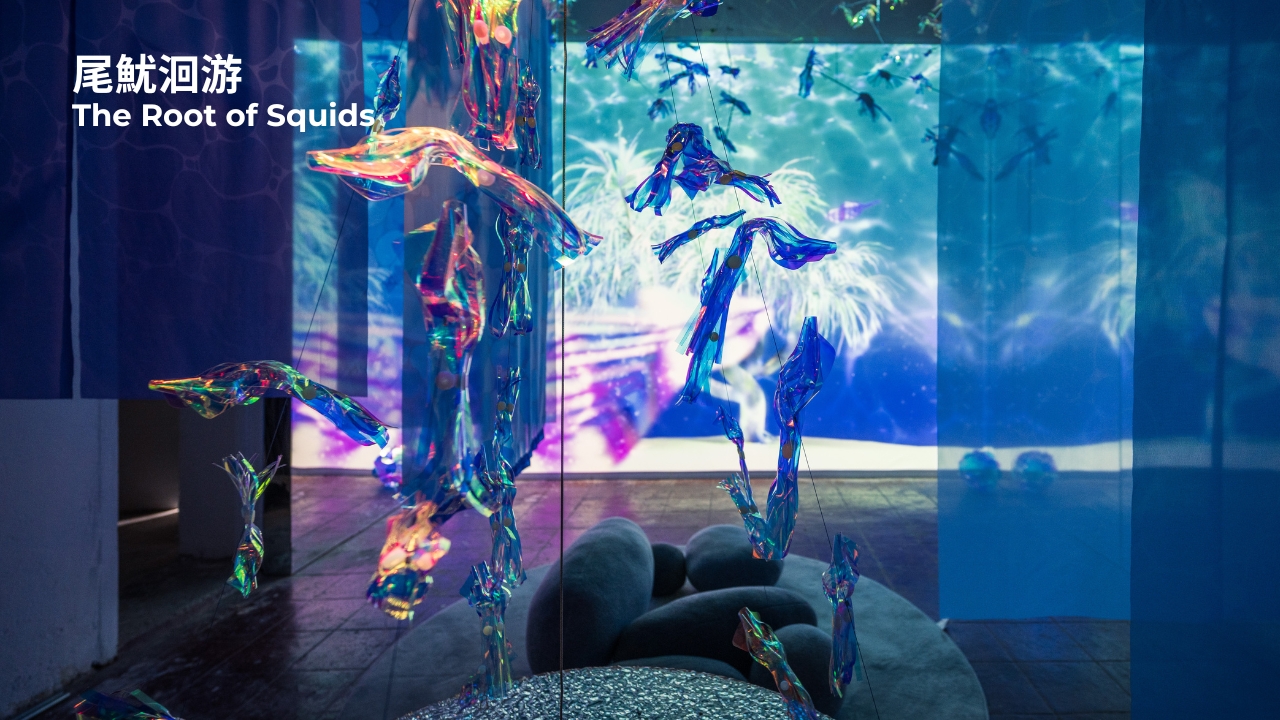
With the revival of the kaito ferry service, which had been out of operation for over 20 years, Kau Sai Chau continued its transformation into an artistic hub that paid tribute to its maritime roots. This year, the spotlight fell on The Root of Squids by Kelvin Ho and Jenny Tse, a multisensory ecological installation that immersed visitors in the migration patterns of the bigfin reef squid, a species integral to the local fishing industry. Another standout work, Village Whisper by Beyond Vision International, provided a tactile experience for visitors, translating oral histories into sculptural and auditory elements. These pieces exemplified the Festival’s commitment to making art both site-responsive and inclusive, ensuring that the stories of the islands could be experienced by all.
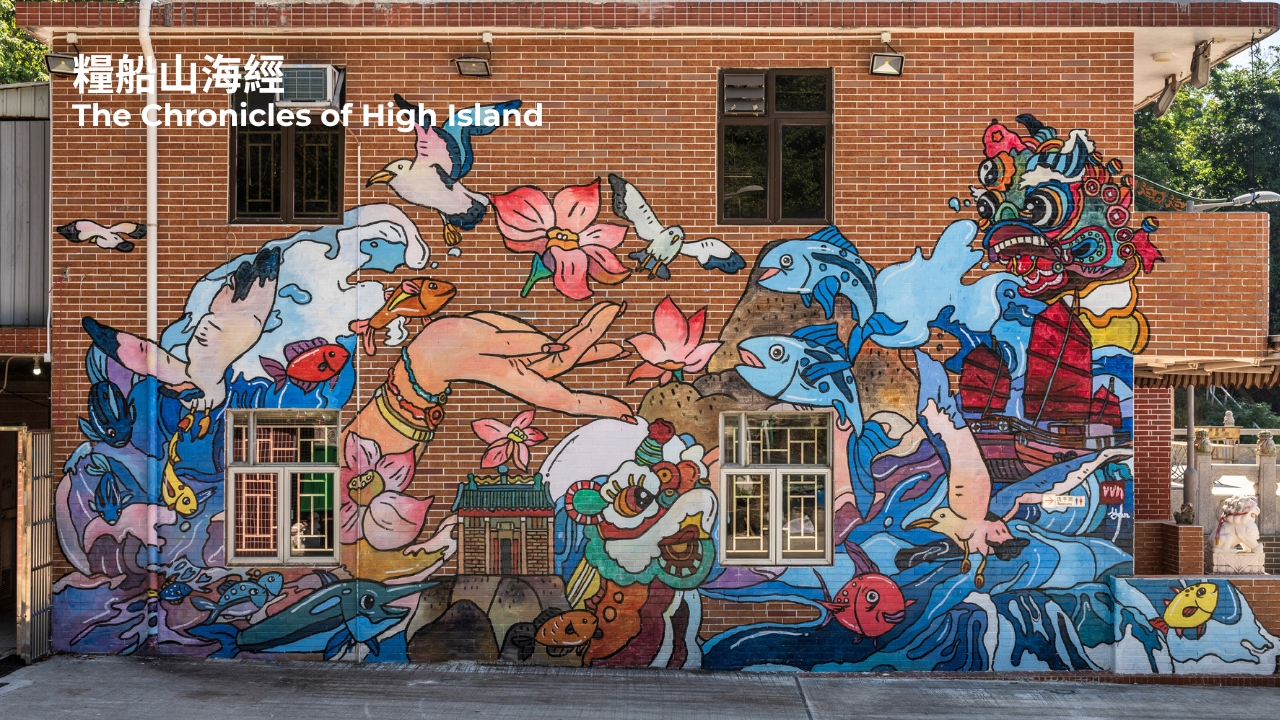
High Island, known for its dramatic landscapes, embraced myth and folklore as its central theme. Vivian Ho’s mural series, The Chronicles of High Island, painted vibrant scenes of local legends, weaving together flora, fauna, and village tales into a narrative tapestry. Meanwhile, the mirrored surfaces of Prismatic Rainbow Mascot by Ban Zhang and ZLAB stood in striking contrast to the historic Tin Hau Temple, reflecting light and movement as a tribute to the Goddess of the Sea. Elsewhere on the island, Fung Wai Keung and Stefan Chui’s Dance with the Wind at Kwong Wo Yuen resurrected the memory of the now-abandoned Tung A Village, using traditional flags and a 22-word store sign to evoke the spirit of a once-thriving community.
But perhaps the most visually striking piece is Rhythm of the Dragon by Shi Qi Tu and Adrian Siu, which saw a massive dragon sculpture rise from Tung A beach, its scales made from recycled plastic, shimmering in the light as waves powered its movement. It was a fitting metaphor for the Festival itself—where history, nature, and innovation converged, and was an artwork that reflected the island’s deep-rooted connection to the dragon boat tradition, blending local history, environmental consciousness, and the spirit of collaboration.
Once known as “Dragon Boat Bay,” High Island has long been a hub for fishermen, where boats resembling traditional dragon boats were used to transport supplies. One of the most striking elements of Rhythm of the Dragon is its sustainable use of recycled materials. The installation is crafted using eco-friendly plastic scales, which were sourced from recycled plastic. These scales are painted in colors that represent the diverse villages on High Island, symbolizing the unity between the island’s communities. The use of plastic in the artwork, including materials like contact lens cases and plastic bags, aligns with the artists’ intention to raise awareness of ocean waste and promote recycling.
Shi Qi Tu explains the innovative approach: “We’ve never done anything like this before. We used a technique where we melt plastic to blend the colors, and then we mold it into shapes. It’s a slow, complicated process, but it’s all worth it, especially with the ocean waste surrounding us.” This unique approach, utilising Hong Kong’s local recycling facilities, allows the artists to create something meaningful while reducing the environmental impact.

Set on a beach where the land meets the sea, the installation is designed to respond to the island’s tides. The dragon’s tail is submerged at high tide, only to be revealed at low tide, allowing the work to shift and evolve in sync with the changing environment. The dragon scales gently sway with the wind, creating a graceful rhythm that mimics the natural ebb and flow of the water. This dynamic relationship between the installation and its surroundings makes the piece a living, breathing part of the landscape.
Adrian Siu describes the concept behind the movement: “When we visited the site and saw plastic bags floating in the water, they seemed so out of place, not harmonizing with nature. Our design was intended to transform this into something harmonious. The movement of the dragon, shaped by the wind and tides, invites visitors to experience the flow of nature in a poetic way.”
A central theme of Rhythm of the Dragon is community involvement. To strengthen the connection between the installation and the local residents, the artists invited them to participate in the creation of the dragon scales. Siu shares, “We wanted to co-create with the villagers. The dragon symbolises their memories and passions, and their stories helped shape the design. It’s about connecting land and water, the past and present, through their involvement.”
In addition to being an artwork, Rhythm of the Dragon serves as a performance space, where locals and visitors can gather, celebrate, and share experiences. Whether at sunrise or sunset, the installation offers a space for joyous celebrations and meaningful encounters, capturing the vibrant spirit of the community. Both Adrian Siu and Shi Qi Tu also have personal connections to the project that add depth to the work. For Siu, who began his architectural training in Hong Kong before pursuing a master’s degree in the UK, this project was a way to give back to his home: “This is a privilege. It’s an opportunity to contribute to Hong Kong by bringing together artists and villagers to show the world the beauty of these islands. It’s not just about the famous villages—it’s about the hidden gems, the soul of Hong Kong.”
For Shi Qi Tu, the project also marks a pivotal moment in her life. “I left my job and started my own business half a year ago, and just after quitting, I learned about this opportunity. It felt like everything came together. It’s an honour to work on something so meaningful, and I’m incredibly happy to be a part of it.”
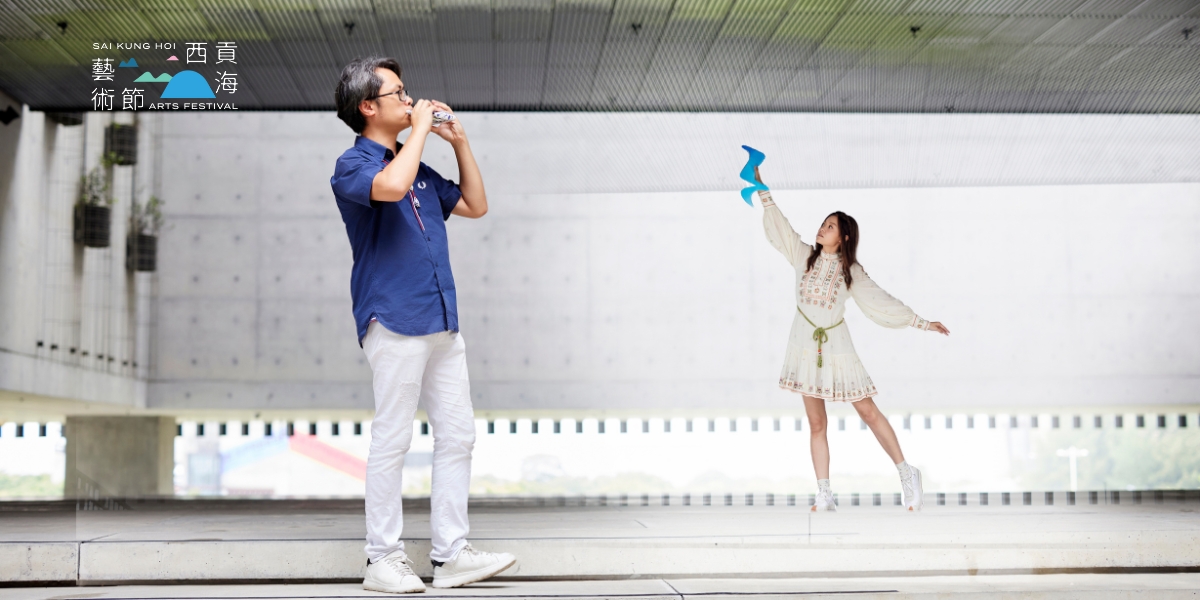
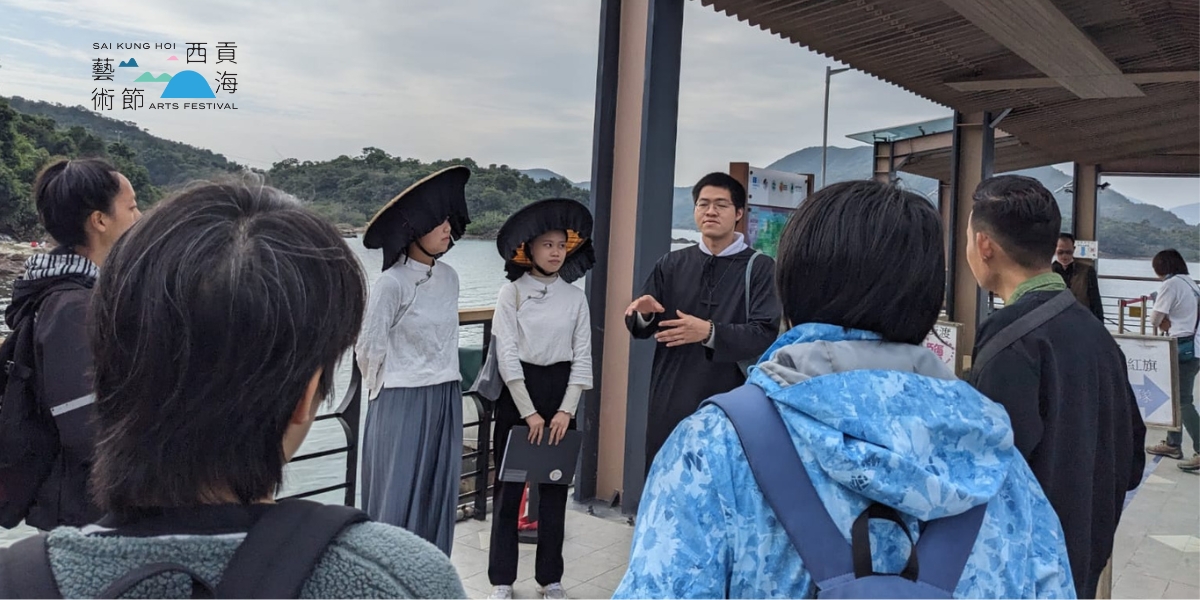
The Festival was not just about static artworks but lived experiences, offering over 400 guided tours and more than 90 free performances and workshops. Theatre played a significant role, with the Yim Tin Tsai Theatrical Tour bringing audiences into the heart of the island’s history through immersive storytelling, while performances like Soul of Hoi combined sculpture, dance, and ocarina music to create hauntingly beautiful landscapes of sound and movement. A Golden Cage, a solo theatre work, explored themes of family, love, and self-identity.
Inclusivity remained a key focus, with the introduction of four new guided tours designed for specific communities. These included an accessible tour for wheelchair users, a sensory tour for elderly visitors with dementia, an eco-exploration tour for SEN students, and a cultural discovery tour for non-Chinese speakers. By ensuring that the Festival could be experienced in different ways, these programmes reinforced the belief that art should be for everyone.
Beyond the art and performances, the Festival created lasting memories through its “Travel Log”, a collectable keepsake that allowed visitors to stamp their journey across the islands, turning their experience into a tangible record of discovery. Special Enjoy Good Food experiences also connected visitors with the region’s culinary heritage, from traditional Hakka dishes to locally sourced seafood specialties.
Now that the Sai Kung Hoi Arts Festival 2024-25 has drawn to a close, its impact continues to ripple through the communities and landscapes it touched. The Festival was more than an art event—it was a bridge between past and present, land and sea, and people and place. For those who experienced it, the memories remain, as vivid as the waves that continue to lap against the shores of Sai Kung Hoi.
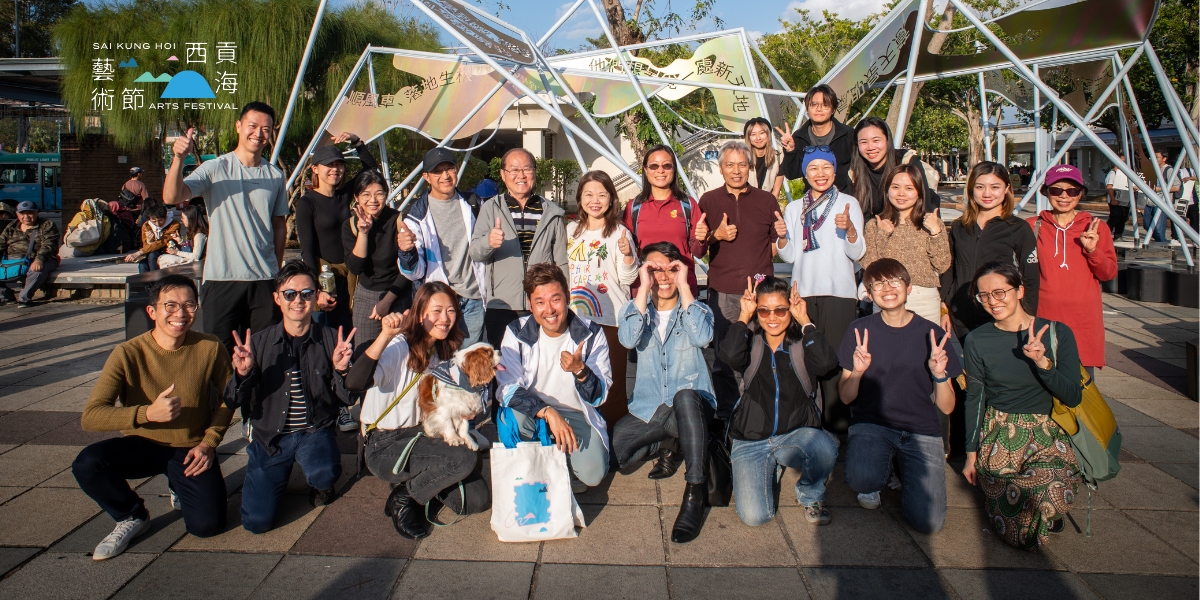
Sai Kung Hoi Arts Festival ran from 13th November 2024 to 12th January 2025. More information available here
 Bakchormeeboy