
For any Singaporean, food is always a topic that’s on the tip of our tongues, whether it’s deciding what to eat for dinner, debating which tze char restaurant reigns supreme, or the hidden gems we so fiercely gatekeep. But for someone actually in the F&B industry, facing rising rental prices and new generations who would rather not take over the family business, the fear that something will be lost in the near future becomes all too real.
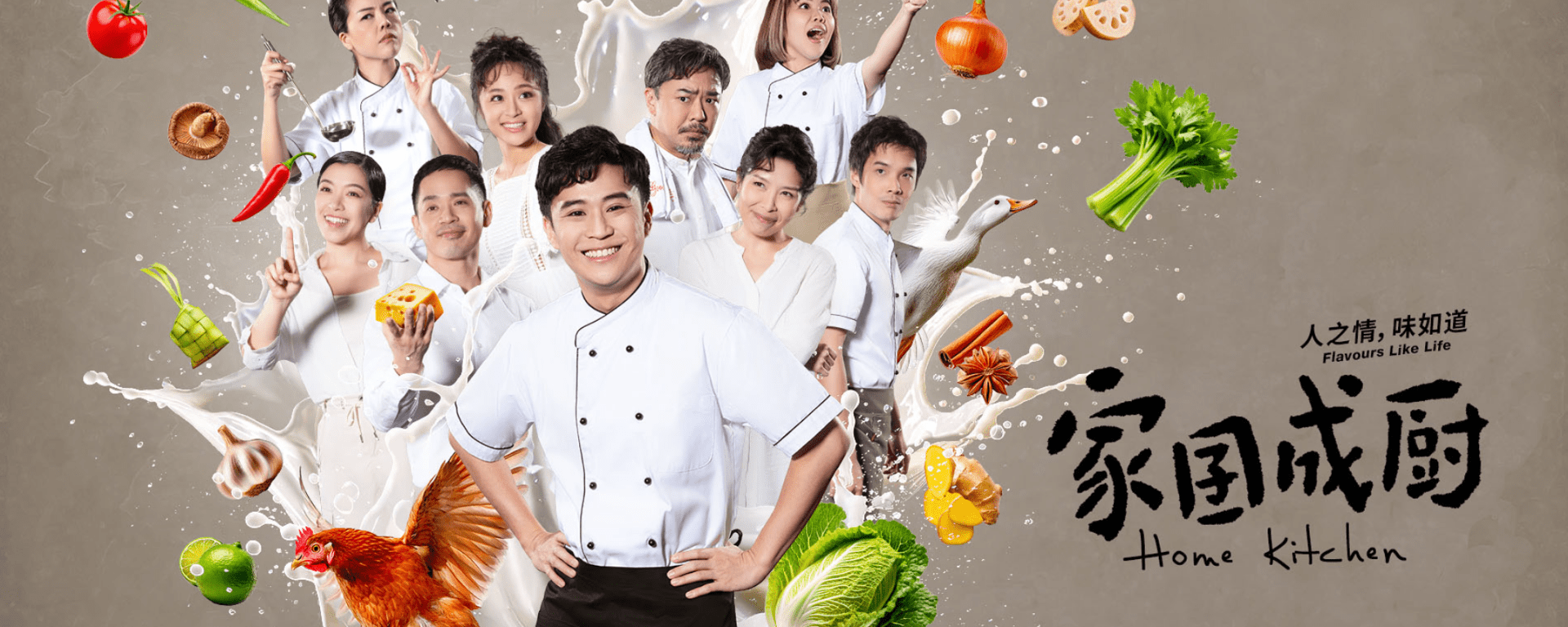
Tackling all that and more is Nine Years Theatre (NYT), who will be presenting original play Home Kitchen this May, as part of the Singapore Chinese Cultural Centre (SCCC)’s annual Cultural Extravaganza. Written and directed by Nelson Chia, Home Kitchen follows a three-generation Teochew Restaurant, run by head Lau Dua Gim. But with times changing, he begins to worry if the restaurant can survive the next era. And as the prodigal son Zhi Ren returns from culinary training in Paris, the entire family begins to wonder and debate how exactly the restaurant will live on.
“The idea for this show originally came to me about a year or so ago, where I kept thinking about writing a show about the universal idea of food and cooking, and link that to human relationships. So when the SCCC commissioned us, it made sense to bring this idea to life,” says Nelson. “During the writing process, I thought a lot about heritage brands in Singapore, and how a lot of them were folding, even the 100 year old ones, because of so many reasons, from the next generation not wanting to take over, to declining customer numbers, to rising rent, and it’s quite tragic how the government needs to roll out a heritage fund to preserve them – so it’s clearly a cause for concern.”
Nelson admits that he isn’t great at cooking, where wife and fellow NYT co-founder Mia Chee is often chiding him for using the wrong crockery or doing some steps wrong. But if it’s one thing Nelson knows how to do, it’s to put on a great show, with the runaway success of shows such as See You, Anniversary. “This is a show that’s all about the storytelling, where the actors really bring to life the history and importance of this Teochew restaurant, which naturally becomes a metaphor for larger things, like the idea of inheritance and legacy,” says Nelson. “We won’t be using any real food onstage, but we’ve been rehearsing in such a realistic way that people even get hungry during rehearsals, where they can practically imagine people actually cooking onstage and make us believe it’s there, right down to how they handle and hold the food.”
At the centre of the entire play is Rei Poh and Joel Tan, who play father-son duo Lau Dua Gim and Zhi Ren respectively, whose ideological differences are precisely what puts the restaurant at risk. “When I read the script, it resonated a lot with me,” says Rei, who is also Associate Dean of NAFA’s School of Theatre. “There’s a parallel to how I’ve been feeling fears about the loss of Chinese theatre in Singapore in, and playing Dua Gim, I feel a similar sense of responsibility and importance towards passing down traditions and skills. The play offers insight into how we might be able to move forward, and seeing all these young student actors, it’s been heartwarming to know that companies like NYT are still inspiring them to do what they do and pursue it.”

For Joel, who graduated from LaSalle in 2021, his journey into theatre is just beginning, and he came to Chinese theatre out of a genuine interest. “One big reason why I auditioned for Home Kitchen is because I’d been watching how NYT has been shifting from translating classical work to doing more original works, like Everything For You, and I unabashedly love local shows,” says Joel. “When I first read the script, there were times I couldn’t physically contain my emotions, and the kind of show I knew would have mass appeal, and that I would call my family, my teachers and my friends to come watch because I know it would resonate with them.”
Joel goes on to talk more about how, having been trained from a mostly classical, Western point of view, as an actor, he also wanted to explore his Asian roots more. “I felt this need to reconnect more with local theatre, and decided I would do anything in my power to deepen my working relationship with such shows, which led to me doing Four Horse Road with The Theatre Practice two years ago,” he says. “And at that time, I was relief teaching and offhandedly invited a colleague along to the show, even if she didn’t really watch theatre. After the show, she was wowed, and I thought to myself, this is precisely the kind of reaction I think local theatre can and should inspire in audiences, and what motivates me to do such shows.”
On the challenges staging such a show has, Nelson notes that the liberal use of dialects in the show posed a problem for some actors, who had never spoken it much in their life. “We do have actors like Jodi Chan and Audrey Luo who are conversant in Cantonese and Hokkien, but then you have actors like Janice Pang who, although Hainanese herself, had to ask her dad how to pronounce certain lines,” says Nelson. “I wonder, in ten years, can this show still be staged? Maybe actors won’t be able to speak dialects much when the previous generation is gone, with no more frame of reference. I think we’re losing something as we’re putting on this show, and I’m very aware of how unsustainable Chinese theatre can feel, with only so many companies still actively staging and producing work. But as I keep telling Mia, so long as we’re still around, we won’t let it die.”
Both Joel and Rei echo this fear. “There’s a lot of students these days who have never watched or read any Kuo Pao Kun works, with local theatre courses that completely omit his work from the syllabus, and even fewer people might know about our companies’ histories, like Drama Box. I wonder if we need to accept that we’ll have increasingly fewer Chinese theatre work in future,” says Rei. “I once watched a show that starred two Malaysian Chinese actors, while Singaporeans were helping out backstage, and a Chinese student was managing and producing it. Maybe we just have to accept that the future of Chinese theatre is more layered and multifaceted, and not necessarily defined by the number of works that emerge each year.”
“My mother tongue is Hokkien, and growing up, I spoke both Hokkien and Mandarin. But in primary school, I actually used to be fined in class for using dialect, and it made me more fearful of using it in public,” says Joel. “If we police the use of language, if we’re stuck in a time where we forbid the use of certain languages, then it’ll be lost before we know it. And I wonder if I’m the only one left speaking it, performing it, then will I be the one weird uncle in future going on and on about Kuo Pao Kun? Especially being just 30 years old, there’s almost this sense of responsibility to inherit this community and culture of Chinese Theatre from Nelson and my other forebears, and carry it on. But what can I do, what must I do?”
That being said, the sentiment on the ground is that the rehearsal process has been more than enjoyable, with a cast that ended up feeling more like a family than they could have imagined. “Every night, we go makan together outside of rehearsals to get to know each other better, and that really feeds into our onstage chemistry and understanding of how each other works,” says Joel. “Sometimes onstage, Rei would give me a look, and I will try to support that direction he takes the performance into, and it makes it easier to trial and error different styles of performing the same scene, and in turn, Nelson can also adjust his direction better. It really helps that Rei is such a giving actor, and as a younger performer, I always feel so privileged to be in his presence.”
“We’ve formed a really tight-knit team, and even though we all have different experiences and come from different backgrounds, there is no judgment, especially with all these younger actors who really love being part of Chinese theatre. It’s interesting; Regina Toon plays my daughter, and in the script, she’s actually the favourite, so that contributes to a lot of ease with each other onstage. But in the scenes with Joel, because of how much push and pull there is, it’s been reminding me a lot of my relationship with my own father,” says Rei. “Over the last ten years, whenever I play an older character, I end up thinking about my father and playing them that way, this consistently grumpy person, and my own mother would even tell me I remind her of him when she watches my shows. I grew up telling myself I would never become my father, and in a way, playing these older characters, it’s been helping me expand my idea of him by adding all these dimensions and layers, and in a way, I think I might understand my father more than ever through these performances.”

Of course beyond the men in this show, the women also play an all-important role, and perhaps, even more so than the leads, both onstage and off. “The female characters are really the enlightened ones, and after a while you realise that the men are really clueless sometimes in the show,” says Nelson. “I do think that sometimes, women really do have better insight into things than men do, because men might be too burdened to see what’s around them.”
“Jodi Chan acts as this glue for the whole cast, and you really respect and admire her. And that expands into her character as well, where she’s always this mother figure taking care of all these different personalities day in and day out, whereas I might probably explode if I were in her position, and I wonder if that’s something I can take with me into real life, if I become a father in future,” says Joel.
“In my real life, Zee (Rei’s wife) has been a huge influence on me, and after watching her in G*d Is A Woman, I was like, I need to get back onstage too, along with how I’ve been increasingly interested in feminist work,” says Rei. “And Regina (Toon), I’m so impressed by how talented she is. She’s a singer outside of theatre, and actually, she auditioned for the role with an original song called ‘Guai’ (which roughly translates to strange or blame), and Nelson and Mia liked it so much, we’re going to be incorporating the song into the show as well.”
Coming back to the idea of sustenance and the future, all three remain hopeful, and believe that as of now, there are definitely people willing to support Chinese theatre, such as the SCCC itself. “SCCC’s mission aligns with ours, where we want to celebrate the multicultural identity of being a Singaporean Chinese, and they’ve been very supportive with offering venues and resources and funding for our work,” says Nelson. “On our end, we’re always happy to teach and share our knowledge with others, such as this long-term training course we’re currently designing for actors who want to perform in Mandarin, or how I would be happy to give feedback to people who want to write plays or just make theatre. I just hope that that passion doesn’t fizzle out, and people are willing to commit themselves to producing a good piece of work, and continue training themselves to become better than before.”
“Being in an institution where mentorship comes naturally and I’m seeing the next generation so often, I often find myself wondering what happens after they graduates,” says Rei. “Many of them are in a dilemma whether to find a full-time job or continue their studies, but to me, I think we’re also existing in a time where there are other options available now, where freelancers can explore other routes and paths. It’s not easy though, and I’m always finding ways to help them through, and to motivate them to continue in the arts.”
To end off the interview, we asked all three about their favourite tze char restaurants and go-to dish. “There’s a Hokkien mee that I really like at Kovan, at the coffee shop with Punggol Nasi Lemak, and they serve up a great chili,” says Nelson.
“I have a special connection to Ah Yat Seafood Restaurant at the Turf Club, because my mother likes going there for her birthday, and I’ve always enjoyed their White Pepper Crab, which I really enjoy over Chili Crab for some reason!” says Joel.
“There’s no specific restaurant I love, but whenever I work with Drama Box, we end up going downstairs where there’s a restaurant with red chairs, and another one near Chinatown we call blue chairs, and we always ended up getting claypot mee tai mak,” says Rei.
Whatever one’s favourite food is, one thing’s for certain. Home Kitchen is set to bring about a different sort of kitchen nightmare, with a dash of nostalgia and generous serving of chaos, as this family battles out issues of father-son rivalry and all important questions of heritage and what comes next. Promising hilarity and heart, as NYT has proven with its family dramas, things are about to get messy, but always, end on what is hopefully, a sweet note.
Photo Credit: Nine Years Theatre
Home Kitchen plays on 10, 11, 17 and 18 May 2025 at the Singapore Chinese Cultural Centre Auditorium. Tickets available on SISTIC
As part of NYT’s efforts to grow interest and encourage audiences to watch Mandarin theatre in Singapore, NYT is bringing back its popular 9-Fan membership schemes for Home Kitchen. Members enjoy an exclusive 25% discount on tickets.

