
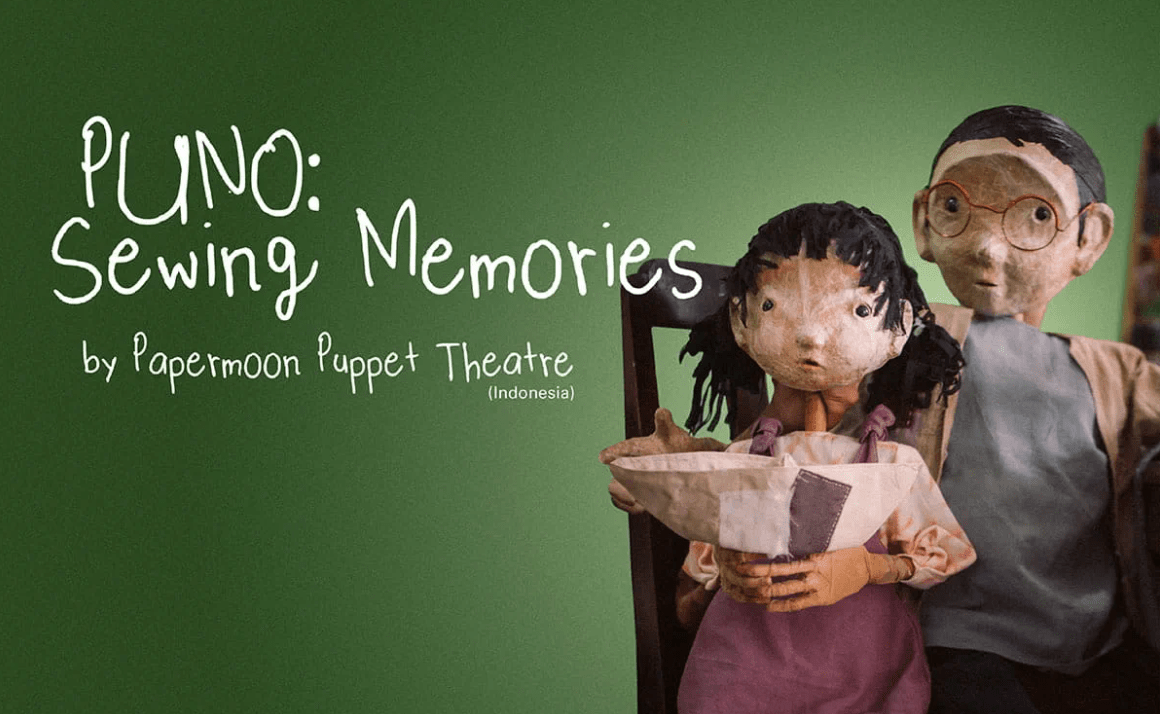
Twelve years ago, the story that would become PUNO: Sewing Memories began with a promise. Back in 2013, Papermoon Puppet Theatre was planning a collaboration with a close friend from the Philippines: puppetry artist Don Salubayba. “It was kind of like, wow, it’s amazing that we have so much in common, let’s do something together,” recalls director and playwright Maria Tri Sulistyani, also a co-founder of Papermoon. “And he was the one who said, ‘Ria, if we collaborate, let’s make something about langit.’”
Langit means “sky” in Bahasa Indonesia. In Tagalog, it means both “sky” and “heaven.” “There were a lot of connections,” Maria says. “Lots of exploration of our respective and shared aesthetics, and excitement over potential experimentation.”
But in March 2014, just months after that conversation, Salubayba died suddenly from an aneurysm. He left behind two young children. “It was a heartbreaking moment,” Maria says quietly. “He had two young kids he left, and I kept thinking about them. Eventually we decided, let’s do it. Let’s make Langit.”
That project became the precursor to PUNO, titled Letters to the Sky, which premiered in Indonesia in 2014. For Maria, the work became inseparable from her own history. She lost both her parents when she was 18, just 20 months apart. “Death must happen in people’s lives, right? But it’s something none of us are really talking about,” she says. “As a teenager, when I first experienced that… the adults around me didn’t know how to cope with that, or with me. And neither did I know how to.”
Losing her parents, she says, was “the worst nightmare in life. It was the end of my world at the time. Very tough, very hard for me to continue my life when I was 18.” Perhaps, she reflects, if we talked about death more openly, if we saw it not as something terrifying but as something inevitable, we might be better equipped to face it. “Maybe if we discuss it more, and see death not as something scary but as something OK, we know we will face it. And how these people passed away can make you stronger, to make your own decisions. This theme, these issues, are very important to be shared.”
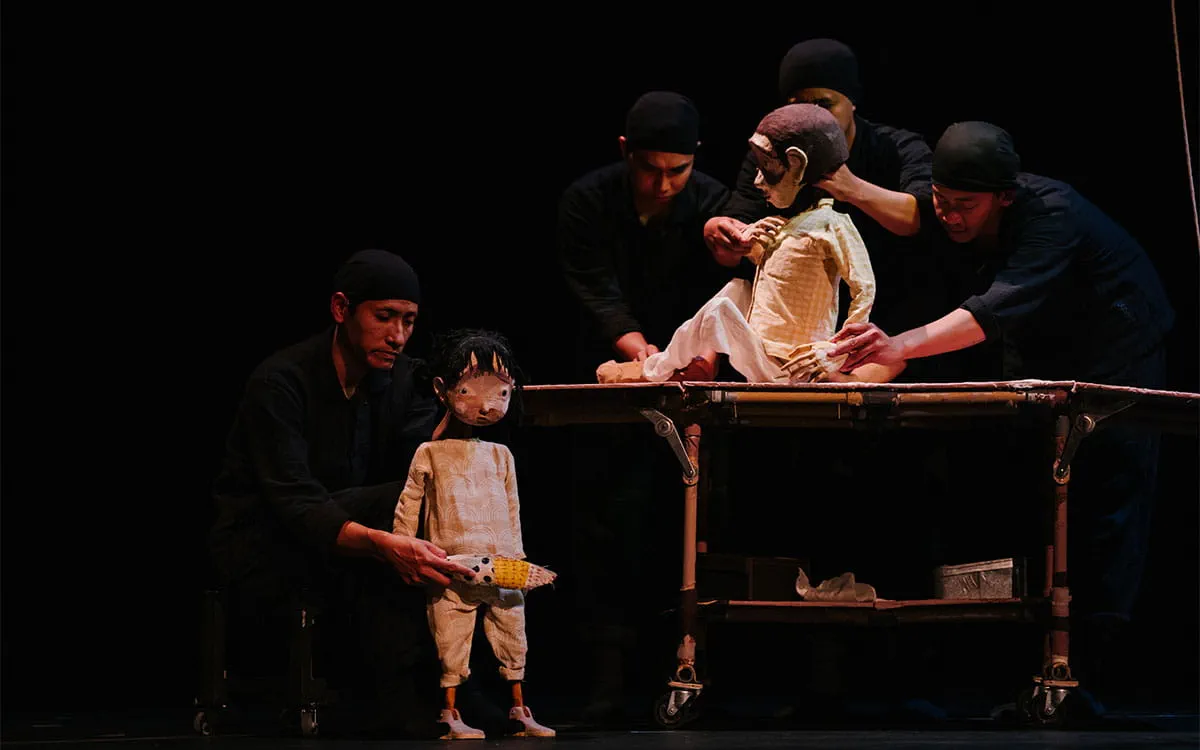
Now, 12 years later, PUNO arrives in its third incarnation, presented as part of Pesta Raya – Malay Festival of Arts at Esplanade – Theatres on the Bay, the work has deepened as its makers have changed. “At the time, I didn’t have kids yet,” Maria says of the early version. “Then in 2018 I had my first child. I started to think about myself as the parent, and wondered about how one day, what if I couldn’t touch my son’s hair anymore?”
And now, as all the members of Papermoon have become parents, the piece belongs to the whole ensemble and finds deeper resonance than ever with the company. “When we discuss it with our kids, it’s very moving. And on the other hand, it makes us appreciate what we have today.”
That, she believes, is the role of art: “A little torch in the darkness. A light. A magnifying glass to what you might not pay attention to. To see a loved one. To treasure them.”
In this latest version, Puno, the single father of a young daughter, once a postman, then an illustrator, is now a tailor. The change was deliberate.
“When we leave, we are putting patches in our lives for our loved ones,” Maria explains. She refers to sashiko, the Japanese stitching technique used to mend worn fabric. “We try to keep something already broken, but to let it stay. Like a blanket, to stitch it and try to keep it together.”
The metaphor of sewing became central. “To stitch our stories, to keep this person alive in our own memories. We decided it’s not about losing, but about creating memories and preserving them. That’s the metaphor.”
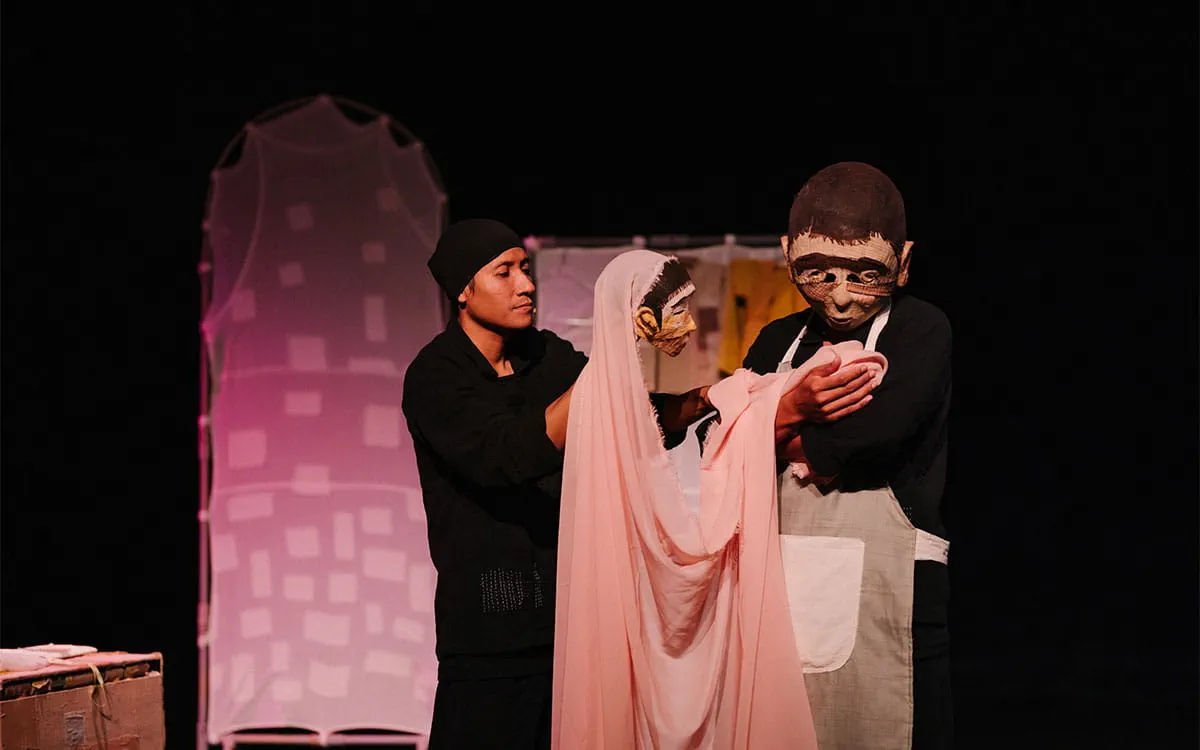
The production is entirely non-verbal, a hallmark of Papermoon’s work since 2018, when Maria made the radical decision to erase spoken language from their performances. “The language of puppets lies in gestures,” she says. “Our voices are the puppeteers’, not the puppets’. It’s about emotive sounds: laughing, crying, calling names. But the gesture makes it bolder and stronger.”
In the silence, something remarkable happens. When PUNO toured the United States, including New York, audiences began recognising themselves onstage. “A lot of people saw Puno as someone they knew,” Maria says. “With non-verbal dialogue, it becomes an emotional journey for the audience. There’s independence and liberation in projecting your own story onto the stage.”
Because the piece is not didactic, not pinned to a specific culture or spoken language, it becomes porous. “Maybe they see themselves, or their relatives, as a character onstage. It’s very close.”
Maria describes her approach as “emotional dramaturgy,” a term she has used since 2010. She once wondered why films so easily evoked tears, while theatre often left audiences analysing lighting or performance technique. “Why every time we finish a theatre piece we feel like, oh, the actor was nice, the lighting was nice, very analytical, very brain?” she asks. “But movies can really evoke emotions.”
For Papermoon, the answer lay in personal storytelling. “A story brought by Papermoon needs to be personal, to speak to audiences; what do they think, how do they feel? How does this story belong to them?”
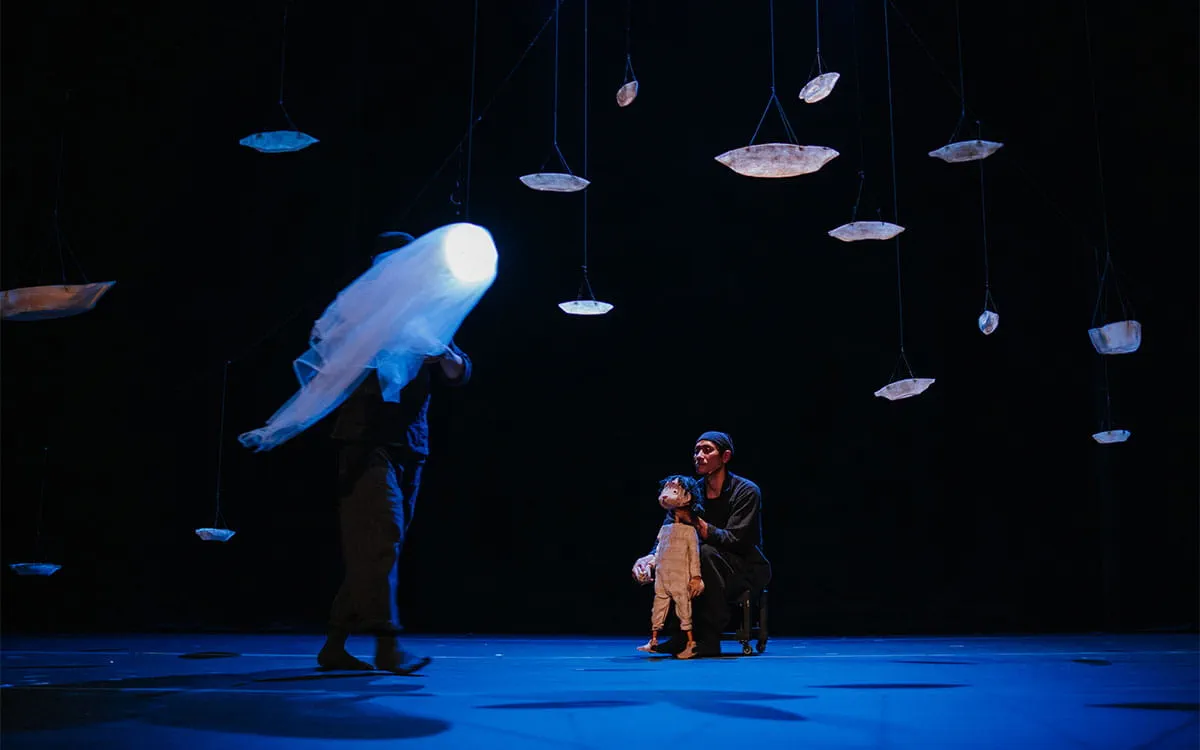
That question was tested unexpectedly in Bangkok in 2018, when PUNO was performed in front of children from an orphanage. “Parents and kids seems like a universal idea,” Maria says. “But these orphanage kids who have never known parents, how would they react?”
Midway through the show, a young boy leaned against her. “He started to lean on me,” she says. “And I hugged him. And he fell asleep on my lap.” Her voice still catches at the memory. “Maybe he was too tired. Maybe too bored. But this gesture of just wanting to lean on someone, it was strong.”
In Taiwan, at the Kaohsiung Arts Center, that sentiment was similarly observed from the back of the theatre. “While just sitting together but apart at the beginning, parents and kids started to lean into each other during the show,” she says. “It provoked a physical reaction, because I think they allowed themselves to feel vulnerable and just appreciate each other.”
Some audience members even thanked her for allowing them to cry in public, providing a cathartic experience. “In Asian culture, we’re not allowed,” she says. She remembers standing by her parents’ caskets, being told she would be fine. “But I wasn’t. I needed to express it. You need to release.”
Puppetry, for Maria, is uniquely suited to this release. Inspired in part by Japanese kuruma ningyo and bunraku, where multiple manipulators bring a figure to life, Papermoon has adapted these techniques to its own aesthetic. “We don’t just borrow,” she says. “We sew it into our own body.” In their version, even a single puppeteer can create startlingly alive gestures, movements that feel fragile and human.
Music, too, is a crucial thread. Composer Yennu Ariendra has worked with the company for 16 years, and the original score remains, stitched through with new details by music director Iwan Effendi. “Music brings a very strong influence on the journey,” Maria says. “It stitches the music and the scenes, not just here and there. We listen to the music and choreograph the puppetry. It’s like a dance piece, but a mix.”
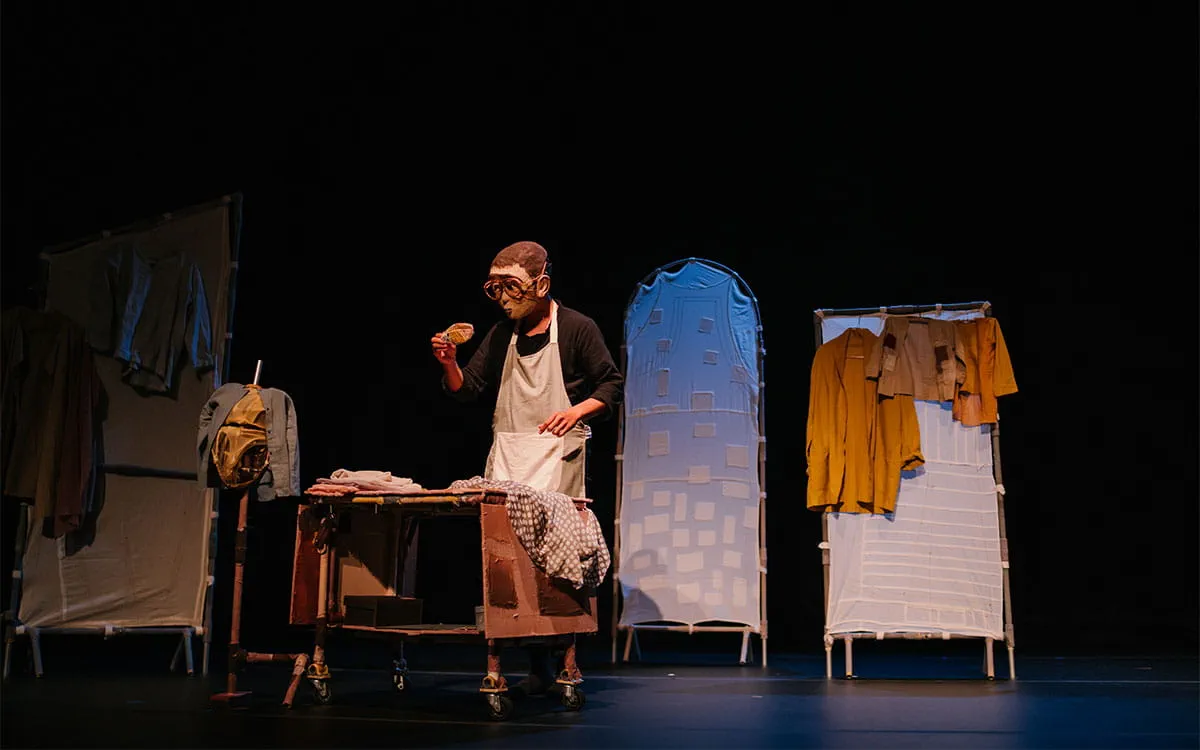
The result is less a narrative than a shared ritual. In a world she describes as “absolutely insane,” where grief can be reduced to a passing headline before we scroll to the next distraction, Maria sees theatre as an act of resistance. “Nowadays, we’re very quick to anger on social media,” she says. “But to come into a space and experience something together, to sit with someone you don’t know, and share the energy in the room, it helps us understand we’re not living in a little screen. We share this world.”
Spending an hour together, watching others remember and mourn, becomes “a ritual of understanding and feeling who we are as human beings.” In the past, she notes, festivals were communal gatherings, neighbours coming together. Performing arts can still offer that: “To be with other human beings and share the beautiful energy among us.”
While it may seem thematically on the heavier side, PUNO: Sewing Memories is festive in its own way, tender, warm, even joyful. It celebrates happiness while acknowledging that “the other side of the coin is always waiting.” Birth and death. Presence and absence. The ones who fly away, and the ones who remain.
“We’re not being naïve and saying everything will be OK,” Maria says. “But to be conscious of what we’re choosing and thinking today. To celebrate with happiness, and also to remember someone we love beside us. To be thankful.”
Ultimately, she says, the piece is about empathy. About allowing ourselves to sit in grief long enough to feel it. About stitching what is broken, even if the repair is visible. “That’s why we at Papermoon keep making theatre,,” she says. “And we hope that people keep coming to theatre as a form of ritual. To feel human again.”
Photo Credit: Rangga Yudhistira
PUNO: Sewing Memories plays from 17th to 19th April 2026 at the Esplanade Recital Studio. Tickets available here
Pesta Raya – Malay Festival of Arts 2026 runs from 16th to 19th April 2026 at the Esplanade. More information and tickets available here
 Bakchormeeboy