
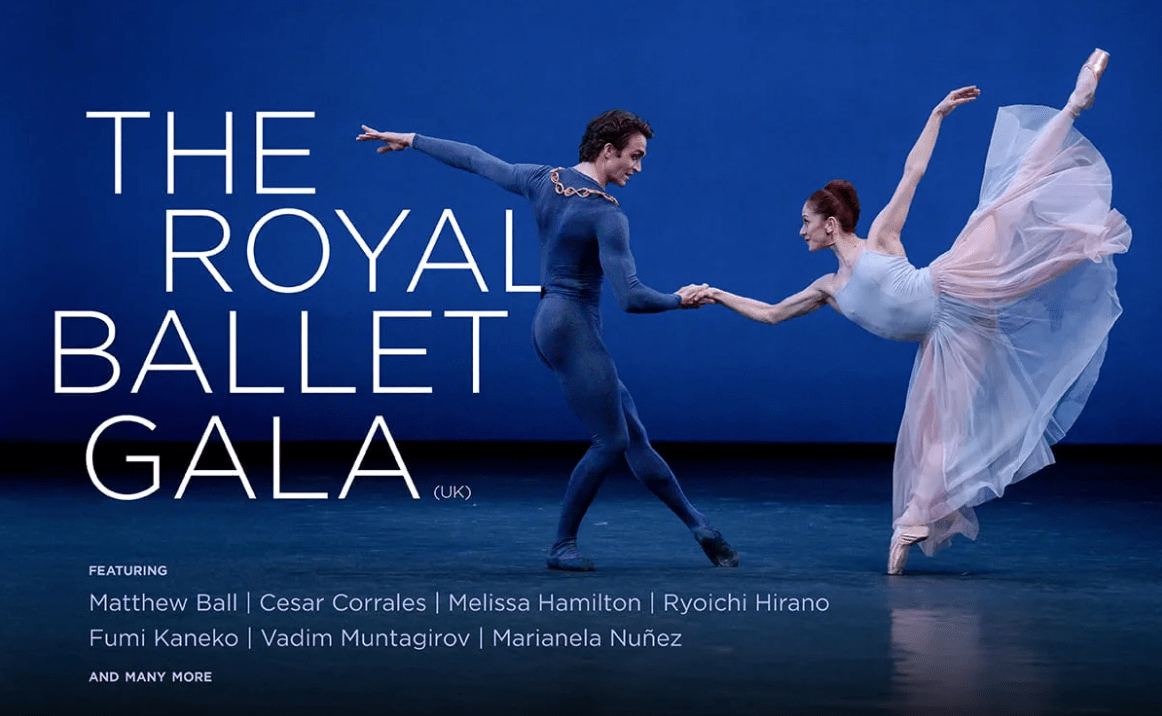
For Kevin O’Hare, director of The Royal Ballet, the long-awaited return of the world class British ballet company to Singapore this June goes far beyond just another international stop on a touring calendar. More than two decades have passed since the company last performed here, and the scale of The Royal Ballet Gala, part of the Esplanade – Theatres on the Bay’s da:ns focus – Ballet by the Bay programme, reflects both the anticipation surrounding that return and O’Hare’s larger vision for what ballet can be in 2026: technically rigorous yet emotionally open, rooted in tradition yet constantly evolving.
“There’s been conversations with the Esplanade’s team over the years with the hopes to make it happen,” says Kevin O’Hare. “It’s logistically very demanding, and so many plans have fallen through for various reasons. But what we always remembered is the brilliant theatre; a setup the Esplanade has that includes a studio to work in that’s so wonderful for a ballet company, and how the audience was very warm in seeing the company. So when the opportunity finally arose and things came together, we grabbed it.”
The company is bringing more than 30 dancers to Singapore, including 19 principal dancers, an unusually high concentration of talent for a touring gala. O’Hare grins slightly when describing the programme. “In the last few years going on tour, we did a few of these highlights performances, with galas in America, Korea, Italy, and Japan,” he says. “But this is the biggest and boldest yet, with such a large number of principal dancers performing, and really delivering a real gourmet buffet of a programme to show the Singaporean audience.”
O’Hare talks about ballet less as a rarefied institution than as something vivid, expansive and deeply alive. Under his directorship, The Royal Ballet has become increasingly defined by that breadth: preserving the company’s classical inheritance while simultaneously pushing its dancers into new artistic terrain.
“More than any other company, we have such a broad repertoire,” he says. “We present classical ballet like Giselle, Swan Lake, and this amazing heritage like Frederick Ashton’s work, and Kenneth MacMillan, who basically reinvented dance. Heritage works are performed every year, but I also wanted to drive forward new work like Wayne McGregor and Christopher Wheeldon and other young choreographers within the company.”
That balance between inheritance and reinvention seems central not only to O’Hare’s programming philosophy, but to his own identity inside ballet. Born in Yorkshire, he trained at The Royal Ballet School before joining the company that would later become Birmingham Royal Ballet, where he rose to become a Principal dancer performing major classical lead roles including Prince Siegfried in Swan Lake, Albrecht in Giselle and Romeo in Romeo and Juliet.
Looking back now, he speaks with the strange perspective of someone who has spent half a century inside the same artistic ecosystem, first as a student, then a dancer, and now as the director responsible for carrying the institution forward. “It’s been 50 years since I went to The Royal Ballet School,” he says, laughing softly. “It’s crazy. It was a very different world back then with a very different way of teaching back then.”
O’Hare belongs to a generation that worked directly with many of the defining figures of British ballet history. He danced under directors including Peter Wright and worked closely with choreographic giants such as Kenneth MacMillan and Frederick Ashton, while still close enough to the founding generation to absorb the culture established by Ninette de Valois. “All the last generation, I worked with them a lot,” he says. “I was lucky to be chosen by Kenneth to do so many things. It’s all in my DNA because I know so much about the history.”
Yet he resists the idea of ballet as preservation alone. Again and again, he returns to a phrase that has clearly stayed with him throughout his career. “There was a brilliant saying: ‘Respect the past and look to the future, but concentrate on the present.’ If you do that in life, that’s pretty good,” he quips.
That philosophy now underpins the way he leads the company itself. O’Hare speaks fondly of collectivity, and how there’s a welcome, notable shift in an art form historically associated with rigid hierarchies and authoritarian structures. “There’s still a hierarchy, the principals and director and staff of course,” he says. “But I hope that we have a broader collective aim within the company.”
It is perhaps here that his years as both dancer and administrator become most visible. After retiring from the stage in 2000, O’Hare entered arts management through a traineeship with the Royal Shakespeare Company before eventually returning to The Royal Ballet in leadership roles. That unusual trajectory seems to have shaped a directorship as focused on people as on productions.
He speaks passionately about creating an environment where dancers can sustain long careers physically and psychologically, describing a company culture increasingly informed by sports science, health and collaboration. “We’ve got a brilliant artistic team, a brilliant healthcare team,” he says. “We really push forward with understanding more about the dancers’ bodies, that even with the occasional injury, we’re not going to forget about or sideline you – it’s an opportunity to take a moment to pause and go in a different direction, taking time to recover before returning stronger than ever.”
Today’s dancers, he notes, train with a level of athletic sophistication unimaginable when he was young, so much that even the likes of the Arsenal FC manager have been bowled over by their dedication. “These days, the dancers are already here an hour and a half before class, doing Pilates, in the gym, constantly honing their bodies,” he says.
What matters to him, though, is not merely physical perfection but emotional freedom, and the idea that technical mastery should ultimately disappear into expression, where openness is the key. The dancers of The Royal Ballet today, he says, are defined not only by virtuosity but by a kind of communicative immediacy that audiences instinctively respond and connect to.
“They’re all extraordinary dancers,” he says. “But what’s special is that there is an openness to them, and the brilliance and the knowledge of technique and body and expertise means they can be freer onstage to be what they want to be.”
The distinction matters deeply to him. Ballet training, in his view, should not culminate in visible technical display for its own sake. “The technique becomes secondary to connecting with the character, the audience, the physicality of what they’re doing,” he says. “That’s what makes audiences connect with them.”
This openness also explains why O’Hare has consistently expanded the company’s contemporary repertoire, inviting choreographers such as Wayne McGregor into a historically classical institution. “We’ve just come off the back of a triple bill of Wayne’s work,” he says. “And without exception everyone said how brilliant the dancers were, the incredible technique and what they can give.”
Far from threatening classical ballet, O’Hare believes these encounters with the contemporary deepen it. “When you get a choreographer from a different world, they’re amazed by what these dancers can do,” he says. “And it takes someone like Wayne who knows how to push them even further while grounded in classical ballet technique.”
The effect, he argues, reverberates back into the canonical works themselves. “It’s important to broaden your view of what dance is as an artist,” he says. “That doesn’t mean throwing away the classical technique, but broadening what you do. And when you go back to classics like Romeo and Juliet and Giselle, you bring that back to your roles. One thing informs the other.”
He acknowledges the role digital platforms now play in building audiences, especially younger audiences encountering dancers online long before they see them in person. But even as ballet expands digitally through streaming, cinema broadcasts and social media, O’Hare remains convinced that the essential experience of dance can only happen in the theatre itself. “There’s something exciting about having watched these dancers on YouTube and seeing their careers grow over the years,” he says. “That is what builds up their audiences, who then get excited if they get a chance to finally see them live. And live, unlike through a screen, is the only way to feel connected to them. That live physicality will never be replaced.”
Ultimately, that is what he hopes Singapore audiences will feel when the curtain rises this June: not intimidation, but exhilaration. “I hope audiences, whether seasoned or new, come out with a great feeling of joy at seeing incredible dancers,” he says, “in creating a world within this very abstract space, within 10 minutes of whatever is onstage, to transport them away from everyday life and feel like entering a different, approachable world, something out of the ordinary.”
For O’Hare, that sense of transport remains at the heart of what ballet offers in an increasingly mediated world: a live experience that cannot be replicated elsewhere, even as dance reaches wider audiences through digital platforms. “Dance has been having this great moment over the last 10 years,” he concludes, “it’s that variety and excitement within the different forms. I hope that people can see this programme as a celebration of dance, celebrating dance and the people that make it happen.”
The Royal Ballet Gala plays from 26th to 28th June 2026 at the Esplanade Theatre. Tickets available here


One thought on “da:ns focus: An Interview with Kevin O’Hare, Director of the Royal Ballet, on legacy, live performance and reinvention”