
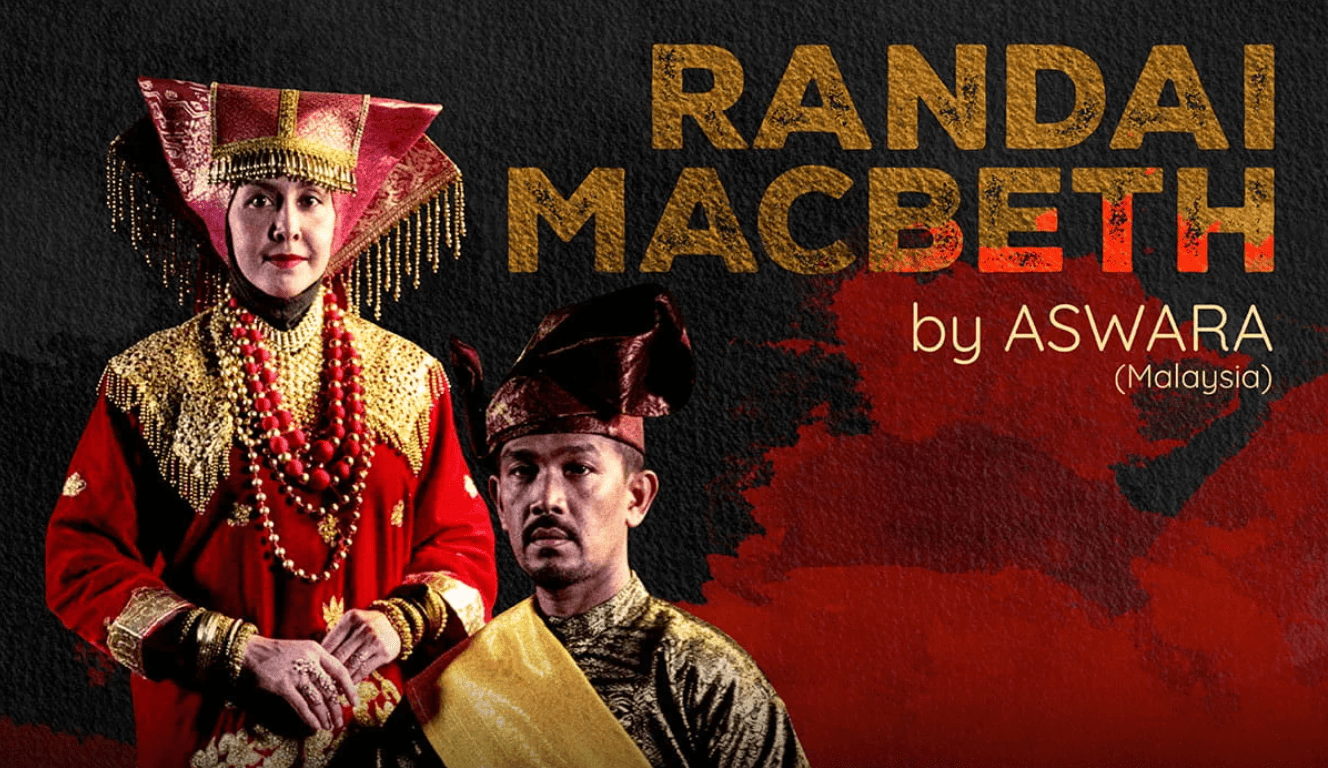
When Dr Norzizi speaks about randai, she does not describe it as an artefact or a genre. She describes the art form as something breathing, precarious, but alive. “Without ASWARA,” she says plainly of the National Academy of Arts, Cultural and Heritage of Malaysia, “randai is a dying traditional art form. It exists, but it is also not there. If you come to Kuala Lumpur and try to find a professional-level randai performance, it is very, very hard unless it is mounted as an assessment in a university.”
It is from this tension between preservation and disappearance that Randai Macbeth was born. Before it arrives in Singapore, the production carries with it not only Shakespeare’s dark tale of ambition and kingship, but the weight of a centuries-old Minangkabau performance tradition that has travelled from West Sumatra to Negeri Sembilan, and now into Malaysia’s universities, where it is fighting to remain relevant.
Dr Norzizi was part of the first batch of students at ASWARA, Malaysia’s National Academy of Arts, Culture and Heritage, where randai was institutionalised as a central traditional arts form. “As students, we learnt randai directly from Indonesian masters,” she recalls. “The Malaysian graduates today who teach randai were originally trained by these masters. So the transmission moved from the kampung to the institution. That is very important, because outside Negeri Sembilan, randai is not widely practised in villages anymore.”
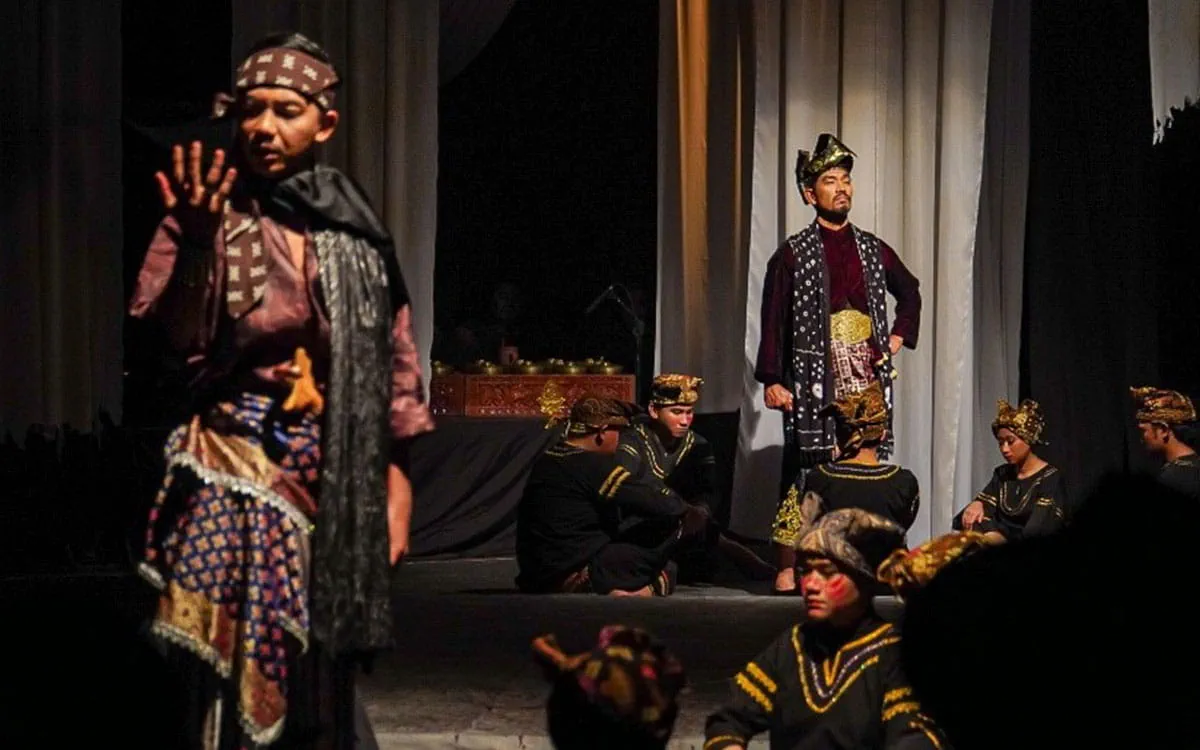
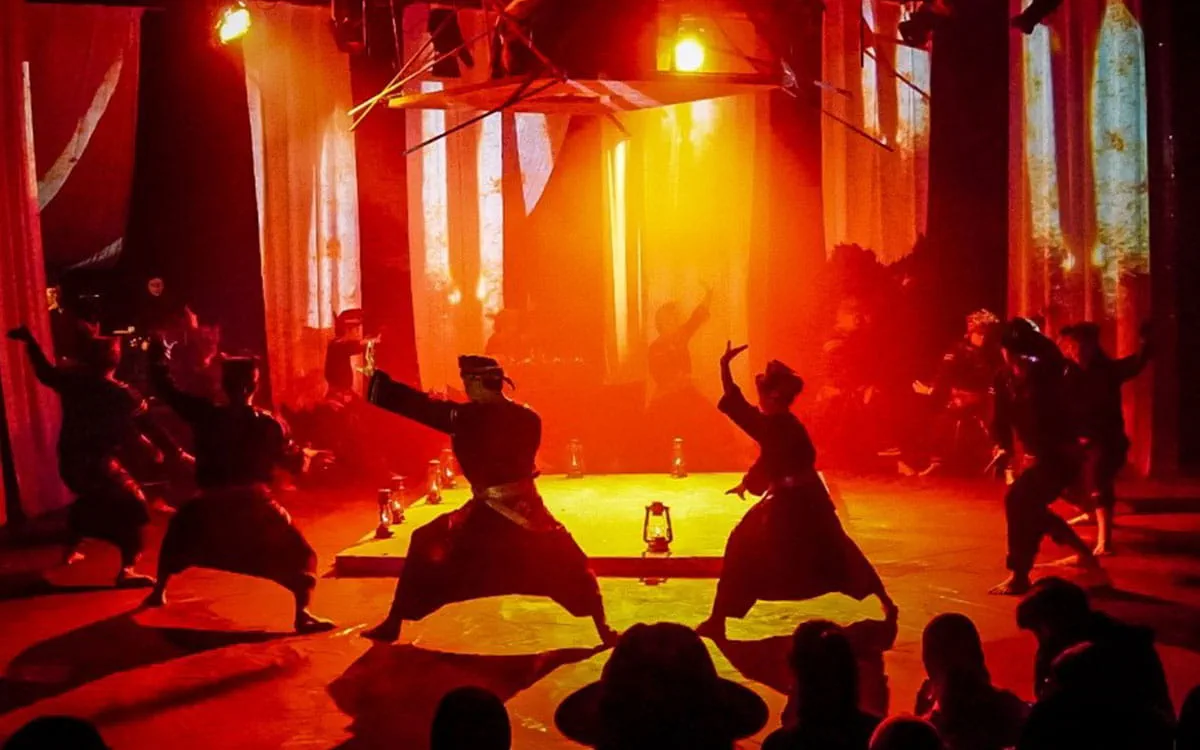
Historically, randai emerged among the Minangkabau community, rooted in silat, the Malay martial art. Young men would sleep in the mosque and practise silat at night. “In the beginning it was only silat,” Dr Norzizi explains. “Then gradually it developed into singing and acting. The bunga silat (the flower of silat) is not totally vigorous or combative. It becomes wave-like, stylised. From there, the performance form was born.” What defines randai is its circular formation: performers, known as anak randai, move rhythmically in a ring, singing, stepping, and enacting scenes within the circle. There are no elaborate sets, no grand props. Sound effects were once created using oil tins and everyday objects. “Even what we think of as tradition now,” she reflects, “was once an invention. So tradition has always evolved.”
The idea of specifically adapting Macbeth into randai did not arrive fully formed. It began as a quiet, passing thought. Dr Norzizi had been thinking about bangsawan, another traditional Malay theatre form, and how Shakespeare’s exploration of kingship and palace intrigue might sit within Malay performance traditions. “I was thinking about how the world of the palace, the warriors, the idea of loyalty and betrayal, how these could fit into a traditional form,” she says. At the time, she was directing a different Malaysian text for a student production. During a photoshoot, she asked the photographer and artistic director to capture one of the female characters in a way that evoked Lady Macbeth. “When I saw the image, I suddenly thought, maybe one day we will direct Randai Macbeth. I had not worked out the text yet. It was just a dream.”
That dream resurfaced in 2024 during a conversation over coffee with the Dean of Traditional Performing Arts. “We were talking about how to preserve the art form but also how to make innovative and experimental work from traditional theatre. I said I wanted to try Randai Macbeth. One week later, I received a call. The director of ASWARA agreed to support an innovative production. That was how I started writing.”
The writing process, she says, was among the most challenging of her career. “An adapter must first study the form of randai deeply. You cannot simply take Shakespeare and impose it. There are roughly twelve or thirteen segments in a randai structure. Each segment involves singing, silat movement, and acting. I had to decide which scenes from Macbeth were essential and how they could fit into these musical and physical structures.”
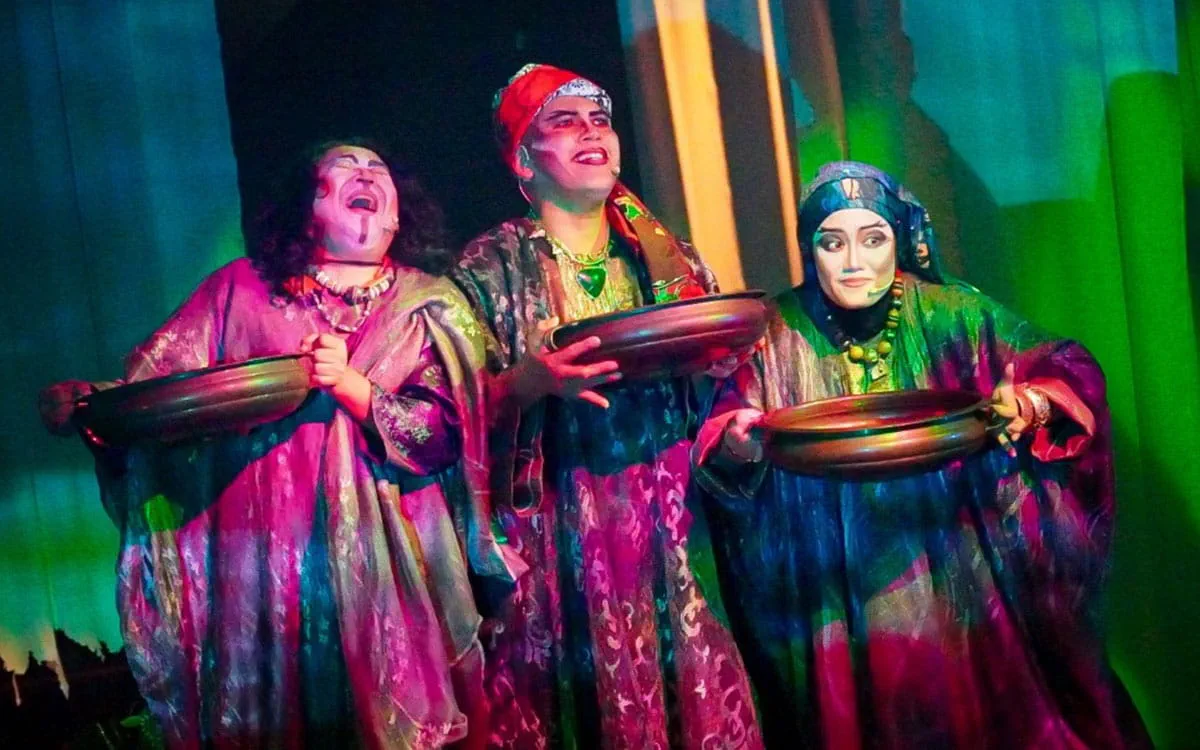
She worked closely with randai guru Ramzee Ramlee, who advised on the selection of traditional song forms. “I do not have the expertise to decide which song structure fits which emotional tone. If a scene is dark, or celebratory, or tense, the guru will suggest which traditional melody is suitable. From there, I rewrite the lyrics in Malay. Usually, traditional randai lyrics narrate the scene directly. But in this adaptation, sometimes the lyrics reflect the previous scene or create commentary. It is not always literal. That was one of the innovations.”
Three songs retain traditional structure closely; others have been adapted more freely. Dialogue carries the narrative forward between musical sections. While the circular formation remains central, there are moments where the circle breaks. “At certain points, I felt the need to break the circle and then return to it,” she explains. “But this is not invention for the sake of invention. It must serve the drama.”
Visually, the production remains minimal in keeping with randai’s aesthetic, yet it introduces subtle expansions: additional props, more deliberate ensemble movement, and projections that provide subtext. “In traditional randai, when one character speaks, the others may not necessarily react. They sit in their own world. But I wanted stronger connections between the anak randai and the scene. They become an ensemble, almost like in Greek tragedy. Even when they are not speaking, they are part of the emotional environment.”
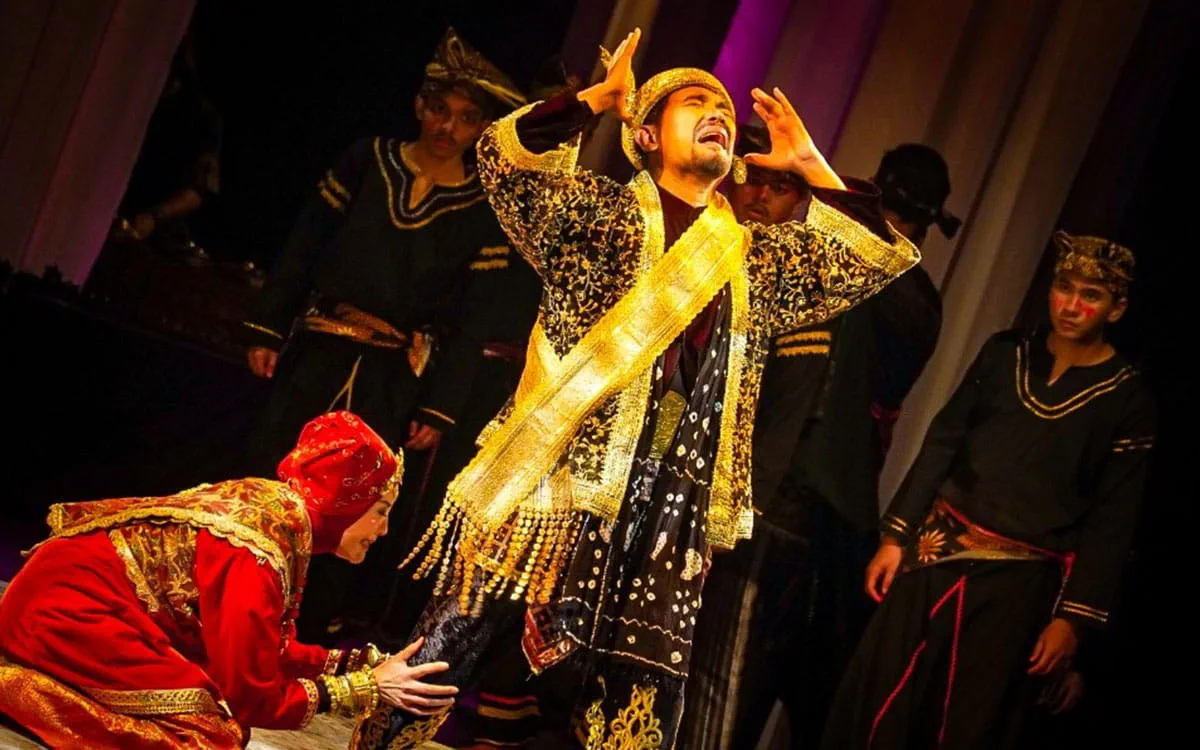
One of the most delicate decisions involved language and naming. Dr Norzizi initially considered fully localising the characters’ names. “I thought, why not change everything and make it completely Malay? But a friend asked me, why are you resisting the name so much? In the end, I retained ‘Macbeth’. The titles and context become Malay. The warrior moves like a Malay warrior. The country feels Malay. Even though the English name remains, as an audience you forget it is Shakespeare. It is just a name. You see him as part of our culture.”
When the production premiered in Malaysia, its reception surprised even her. At the 2024 BOH Cameronian Arts Awards, it competed across theatre, musical, dance and music categories and emerged as one of the year’s best productions. “For me, that was very meaningful,” she says. “A traditional art form was competing alongside contemporary theatre and dance. And it did not feel old-fashioned. It felt contemporary. The martial arts movement, the energy, although the costumes are traditional, the performance felt modern. Sometimes it is hard to explain. But the audience could feel it.”
Randai’s position in Malaysia remains fragile. Unlike mak yong in Kelantan or dikir barat, which have strong state-based identities and school-level exposure, randai does not have the same institutional presence beyond Negeri Sembilan. “It is very closely tied to state identity in Malaysia,” Dr Norzizi explains. “Sometimes an art form remains within its state. For randai, only certain schools in Negeri Sembilan practise it, usually because teachers or parents have passion. In Kuala Lumpur, outside the universities, it is rare.”
She believes the key lies with graduates who are willing to carry the form forward. “Many students learn randai at university, but when they graduate, they want to move into contemporary theatre. That is understandable. But if more graduates activate what they have learnt, by teaching, by forming groups, by creating new works, the form can expand. Randai should not be stuck. We must retain the originality, yes, but we can localise it, expand it, even incorporate English or other Malaysian languages. We can tell Chinese stories, Indian stories. As long as we understand the intention of the form, we can innovate responsibly.”
Randai Macbeth itself holds a strong spirit of collaboration, reflecting randai’s communal roots, where no single performer dominates the circle. As the production prepares for Singapore, Dr Norzizi hopes audiences will approach it not as a historical curiosity but as a living conversation. “Sometimes people hear ‘traditional theatre’ and they imagine something slow or outdated. But tradition has always been evolving. Even in the past, when they first added sound effects or makeup, that was innovation at that time. What matters is that we understand why we do it and how it guides us.”
In the end, Randai Macbeth is less about placing Shakespeare into a Malay costume than about opening the circle wide enough for new stories to enter: and then trusting that the circle will hold. And the only way to keep it alive is to take a chance and see what exactly the art form is all about as Randai Macbeth comes to Pesta Raya – Malay Festival of Arts, in a rare opportunity to experience it in person in Singapore.
Randai Macbeth plays from 19th to 26th April 2026 at the Esplanade Theatre Studio. Tickets available here
Pesta Raya – Malay Festival of Arts 2026 runs from 16th to 19th April 2026 at the Esplanade. More information and tickets available here
 Bakchormeeboy