
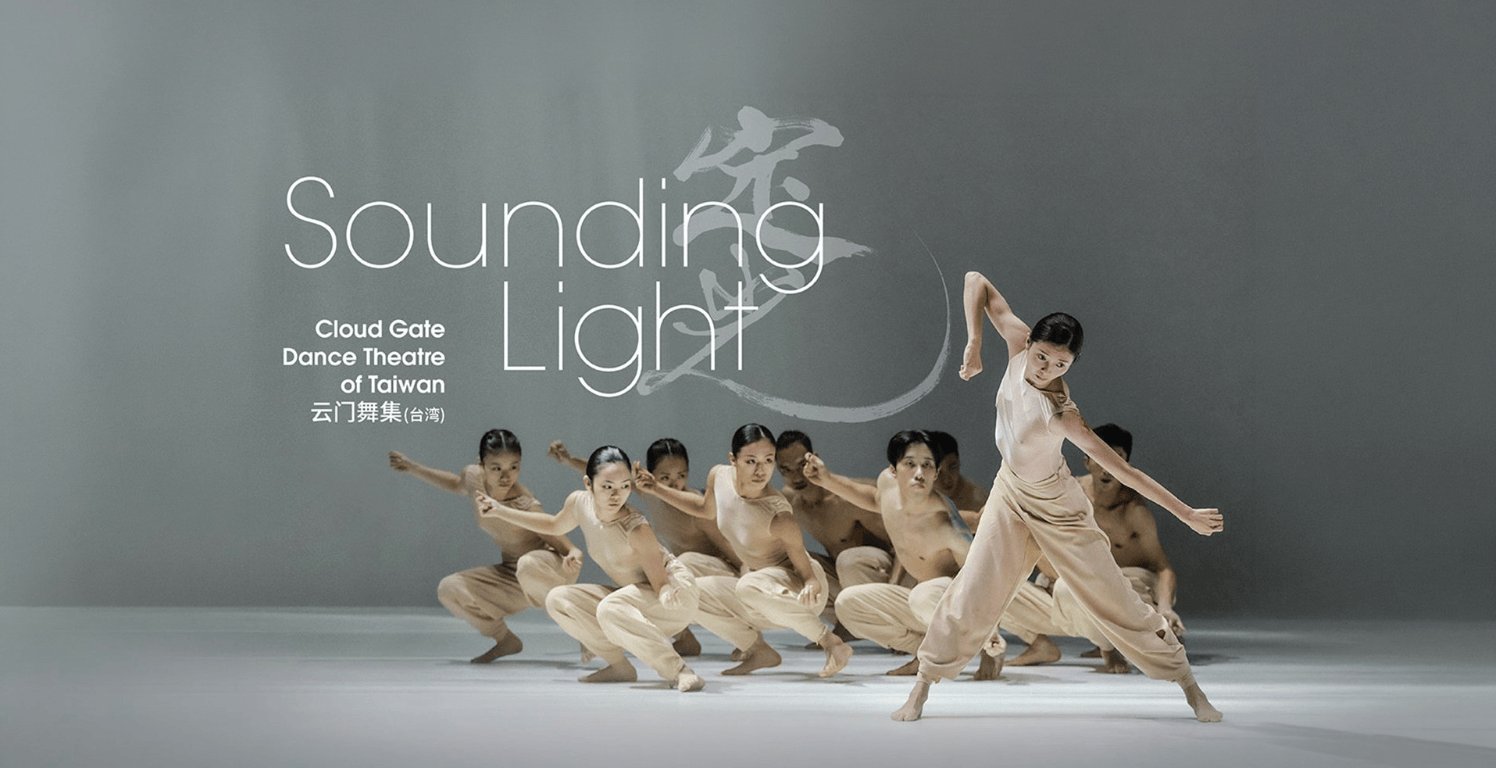
It seems like an impossibility to ever ask people who live in bustling metropolitan cities like Taipei or Singapore to slow down. These are places built around movement: trains arriving and departing, traffic flowing through intersections, people crossing streets with somewhere to be, messages arriving before the previous ones have been answered. There is always another email, another meeting, another decision to make. Even our downtime can feel occupied. We scroll, watch, listen and consume, often doing several things at once because of the countless demands of urban life.
Against all of this, Sounding Light offers something increasingly rare: time without urgency. Created by Cheng Tsung-lung, Artistic Director of Cloud Gate Dance Theatre of Taiwan, the work is quiet and deliberately so. Its dancers create their own sounds through breath, voices, clapping and finger snaps, responding to light, atmosphere and the natural world. Rather than filling every silence, the work allows silence to exist. Rather than rushing towards a conclusion, it asks audiences to stay with what is happening in front of them.
When Cheng first made it, however, he wasn’t entirely sure that quietness would work. “Back then, it was quite quiet. I was quite quiet too,” he recalls. “I wondered, was it too slow? Would the audience fall asleep?” Now, after the work has travelled internationally and gone through different stages of rehearsal and performance, his relationship with it has changed. He finds himself more interested in the process and the feeling it creates than in whether it is sufficiently energetic. For Cheng, the quietness has become something to embrace.
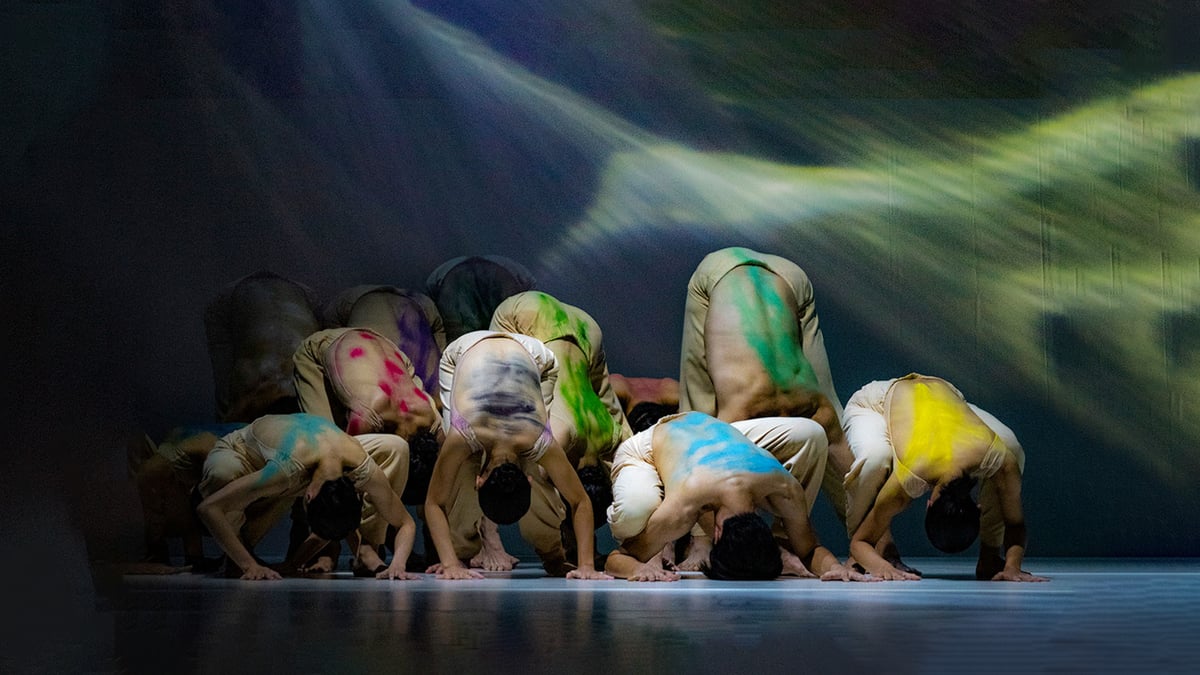
That instinct towards quietness has deep roots in his own life. Cheng grew up in Taipei, surrounded by the intensity of the city. His mother grew up in Wanhua, or Monga, a traditional part of Taipei that he remembers as full of temples, beggars, street snacks and people. “It was so lively,” he says. “There were so many things happening on the streets.” His childhood was therefore deeply connected to the complexity and energy of urban life.
But he also had another influence: his father, who enjoyed fishing and would often go to the mountains or the sea. “When I was younger, I really enjoyed following him to the mountains,” Cheng says. Compared with the streets, being in the mountains offered something different. “It was nice to be alone and away from the urban sprawl.”
One particular memory from those trips has stayed with him. Cheng remembers walking along a difficult path, using his hand against the trees to guide himself. The terrain required his body to constantly adjust; to rocks, trees and the changing ground beneath his feet. “My hand would be on the tree to guide me,” he recalls. “It created a lot of interesting ways for me to learn and for my body to react along this road.”
Eventually, he realised that there was something inherently dance-like about the experience. “If all those trees and rocks were gone, it would look like I was dancing,” he says. The movement wasn’t something he had consciously designed. It was simply his body adapting to the environment.
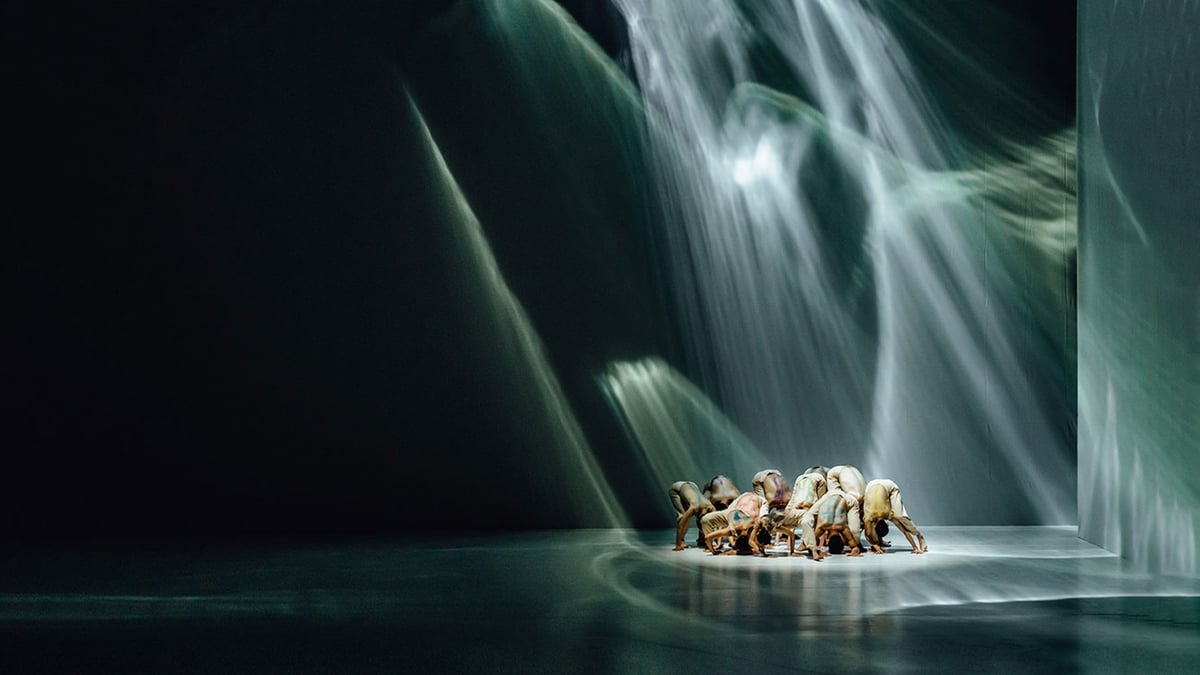
That became an important way of thinking about movement for Cheng. Nature could be a teacher, and the body could learn by being exposed to it. “How can nature be your teacher?” he asks. “You start again, to realign your body and know it, whether it’s in sound or dance.”
It is a philosophy built around attention. In the mountains, Cheng found himself noticing things that might ordinarily disappear into the background, be it a small insect on a tree, the movement of clouds, the speed of the wind, or noticing the shape of the mountains. “You have to focus a lot,” he says. But there is also pleasure in that focus. “When you’re just enjoying that process,” he explains, “you can really just be there and feel present.”
That way of paying attention eventually became central to Sounding Light. Cheng was interested in taking the sensations he had experienced in nature and allowing the dancers to discover them through their own bodies. Instead of simply imitating nature, they could respond to it, experimenting with movement and sound and finding ways for the body to react more instinctively.
This was also why sound became so important to the work. Cheng found a friend in New York who shared his interest in nature, and together they began exploring the possibility of creating sounds that could evoke the feeling of being in a forest. “We shared the initial idea with each other,” he says, and although the idea initially seemed a little unusual, the dancers began responding to the different sounds they created. Gradually, they started to form something like an orchestra, or, as Cheng puts it, “sounds that mimicked being in a forest.”
Every dancer brought something different to the process. Every single person brought their own style of dancing, Cheng says, and by listening to their individual sounds, he could begin to determine how those sounds might correspond to movement. Even breathing became part of the choreography. “Someone who breathed fast would have movements that match,” he explains, while someone who breathed more slowly would generate a different quality of movement and sound.
“It gave me a lot of inspiration,” he says. In this way, the dancers’ bodies were not simply performing a finished choreography. Their breathing, rhythms and individual physical qualities became part of the process of creating it. Sound and movement could emerge together, with the dancers listening to themselves and to one another.
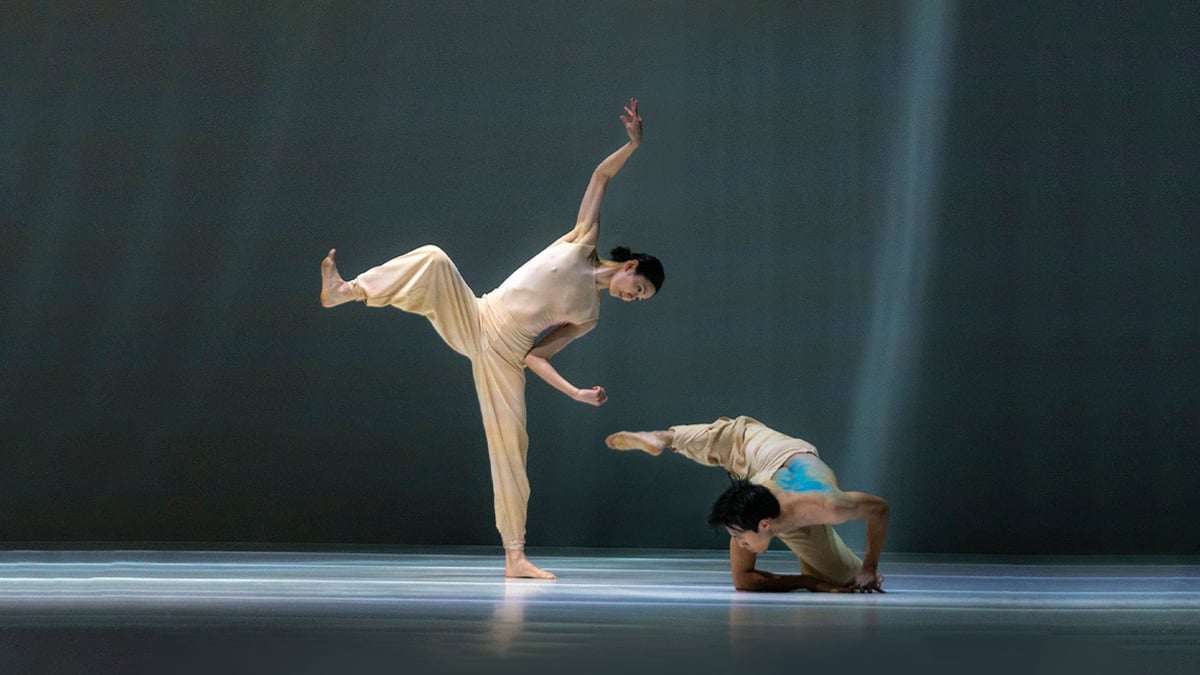
Interestingly, despite the synopsis, Cheng says Sounding Light was not initially conceived as a work about a single day. That structure emerged through the process, as the work gradually became more energetic and took on a different shape. And even after it premiered, it was never treated as finished. When the company brought the work to Italy, Cheng says they were still editing things, experimenting and rehearsing in different ways. “It’s never complete,” he says. “It’s still evolving, even today.”
For Cheng, this is simply part of the nature of dance. “Dance is a live form and keeps living and growing too.” In that sense, dance and nature are connected: both are constantly responding to their environments and changing over time. He sees even our most ordinary movements in similar terms. Reaching for a door, walking, shifting our weight, these are all natural reactions to the world around us. The difference is that we often stop noticing them in our hectic modern life. “It’s about understanding the body,” Cheng says, “and it’s about us slowing down sometimes and watching what’s happening around us.”
That might mean watching the way clouds move, or even feeling the breeze against your face from time to time. These are experiences that cannot necessarily be designed or replicated. “What we feel is not something we intentionally design,” he says. “It’s about finding truth and sincerity in it.”
That search for a more instinctive physical response also shaped the way Cheng worked with his dancers. He brought them into the mountains during the creation of the work. The path was relatively easy, he says, but moving across uneven ground forced the dancers to concentrate on their balance in a way that was different from their usual training.
Cloud Gate dancers spend extensive time working with formal movement disciplines, including ballet, tai chi and wushu. But the mountain introduced a different kind of knowledge. There were no fixed positions to return to and no choreography to follow. The body had to keep finding its balance. When the dancers returned to the rehearsal room, their bodies seemed to remember the instability of the mountain. On stable ground, that memory produced something new. “Suddenly,” Cheng explains, “the body almost invents a different kind of movement when it remembers.”
It was a kind of physical knowledge that could not be learnt entirely through formal training. “It’s not something you learn from a formal point of view,” he says. “It’s something you get from nature.” That eventually also informed Cheng’s wider approach to choreography. Cloud Gate dancers’ training draws from ballet and other Western dance techniques alongside tai chi and wushu. For Cheng, these practices are important because they give dancers roots. Traditional forms and folk cultures provide a foundation, while contemporary works allow those roots to encounter the changes happening around them, in society, technology and everyday life.
His own choreography has always moved between these worlds. The streets and folk cultures of his Taipei childhood have appeared in works such as 13 Tongues, while other works have engaged with technology and contemporary life. “The traditional lessons are important,” he says. “Only if you have them, you have roots.” The contemporary, meanwhile, is about asking how those roots interact with “the changes in society, in technology, in what people encounter today.”
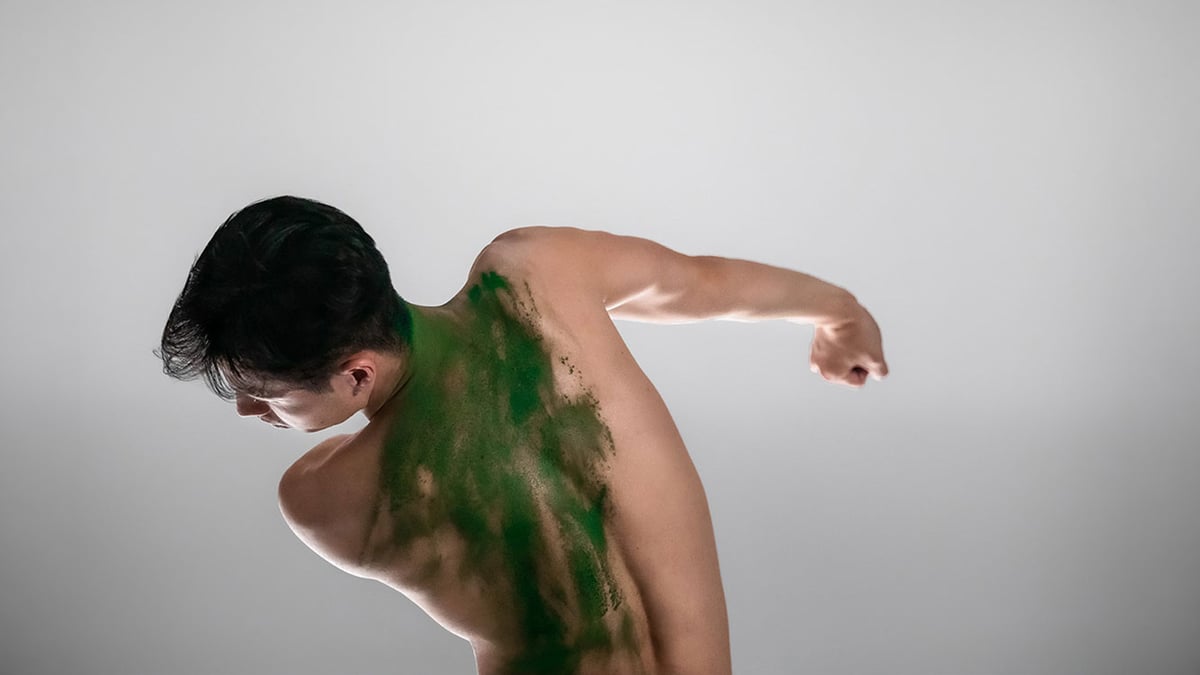
Sounding Light enters that conversation through nature. It asks what happens when the body steps outside its usual systems of movement and allows the natural world to become another source of knowledge. Perhaps that is also why the work feels particularly resonant when it arrives in another dense Asian city like Singapore. Taipei and Singapore have their own histories and rhythms, but both can be places where speed becomes second nature. We learn to navigate crowds, screens, schedules and constant information. We become very good at moving efficiently through the city.
What we may become less practiced at is simply staying still. Cheng does not necessarily want audiences to leave Sounding Light with an intellectual conclusion. In fact, what he hopes for is much simpler. “It’s better if after they watch this, they don’t think at all,” he says. “But I hope that they feel comfortable, and have a sense of peace and quiet after spending an hour together in the theatre watching this.”
It is a modest ambition, but perhaps an increasingly radical one. Because after that hour, the city will still be waiting. “You’ll go back to work, endless emails, what you want to eat,” Cheng says. “City life and so much you have to focus on, and what you might need to deal with.”
But within the performance, there is a temporary reprieve, and you might just for an hour, feel that sense of relief. And that is what Sounding Light offers: a moment where you are given enough time to remember what stillness feels like. For an hour, audiences can listen to a breath, notice the movement of a body, watch clouds or imagine the sound of wind through trees. They can allow themselves to be attentive without having to respond to anything.
Eventually, the emails will still be waiting. The streets will still be busy. The trains will still arrive, the traffic will still move, and the city will ask us to pick up its pace again. But for one hour, Cheng offers another rhythm. A quieter and slower once certainly. One in which, rather than constantly looking for what comes next, we can simply stay with what is already there.
Sounding Light plays from 16th to 17th October 2026 at the Esplanade Theatre. Tickets available here
da:ns focus – Connect Asia Now runs from 15th to 18th October 2026 at the Esplanade. More information and tickets available here

