
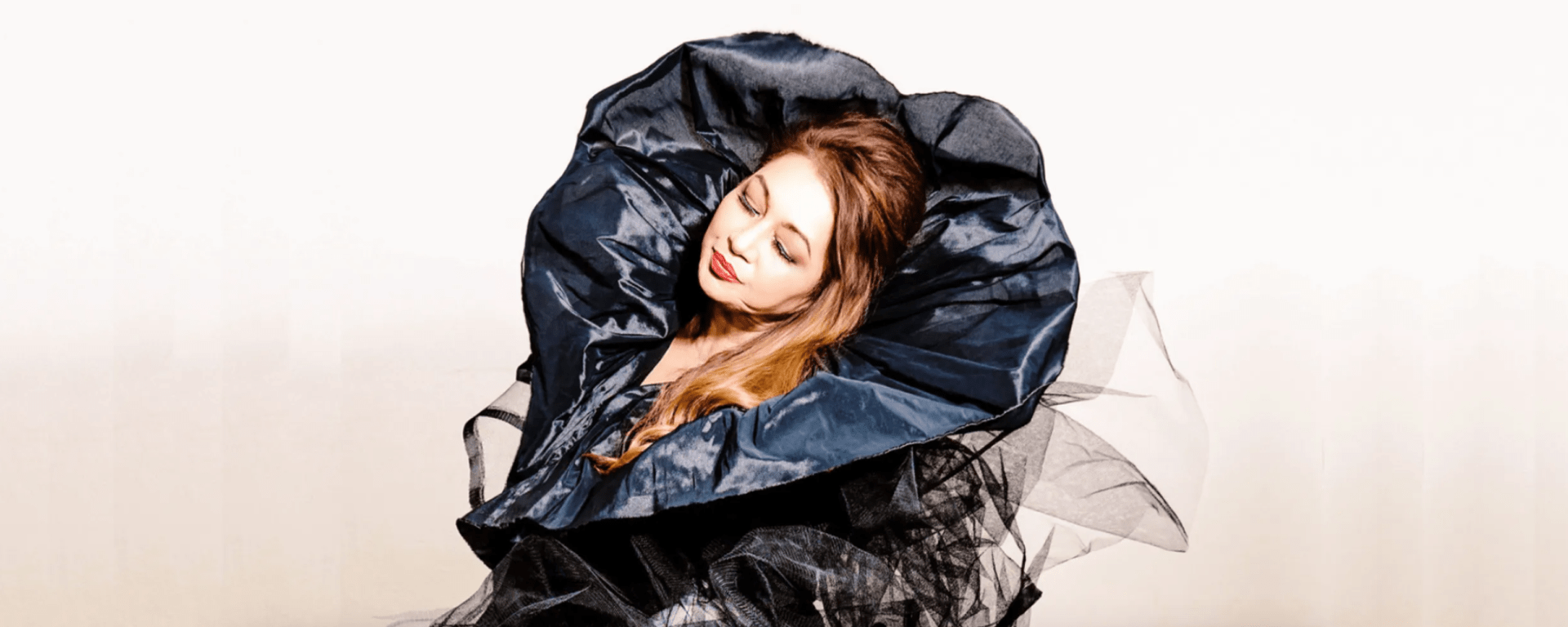
Before streaming platforms, before bedroom recordings, and before Singapore had any real infrastructure for popular music, there were artists like Jacintha Abisheganaden and Dick Lee, figures who carved out creative lives with few precedents and even fewer guarantees. Their songs, relationships and artistic decisions did not just define their own careers; they helped shape what it meant to be a musician in Singapore at all.
In Lush Life, directed by Ong Keng Sen, those lives return not in the form of nostalgic tribute, but as something far more searching: a documentary performance that traces how art and life become inseparable over time. Premiering at the 2026 Singapore International Festival of Arts (SIFA), the work brings together Jacintha’s intimate jazz world and Lee’s pop sensibility in what Ong describes as “a conversation across styles, generations, and ways of living.”
For Ong, the project is rooted in a long personal history. “I first got to know both of them around 1988, during Beauty World,” he says. “I met them separately, and then together. Over time, we went on quite different paths; Dick remained primarily in pop, working on musicals and large-scale projects, while Jacintha moved more deeply into jazz. But we stayed friends. We would still run into each other at the airport, catch up, talk.”
Both artistic and personal distance became part of the material. “With Jacintha, I remained more consistently in touch because she lives in Singapore,” Ong reflects. “But I realised I hadn’t created a work with her since the mid-1990s. Life moves on, relationships shift, and that in itself became something to think about.”
The project began with a simple proposition: Jacintha had been invited to present a concert during SIFA. But almost immediately, that form felt insufficient. “She felt it couldn’t just be a concert,” Ong recalls. “She thought, ‘If I’m going to do this, it should be something more.’ She reached out to Dick and to me separately, and somehow we all arrived at the same point, that this should be something we make together.”
For Ong, the decision was clear from the outset. “I agreed with her and didn’t think it should be just a concert,” he says. “It had to be a documentary of their lives, while together and apart. That includes their relationship, their breakup, and everything that followed.”
What emerged was not a biographical narrative in the conventional sense, but something closer to a constructed memoir, built from interviews, recordings and lived memory. “The first step was becoming a biographer,” Ong explains. “I spent time interviewing them, recording conversations, and from there I began shaping the material. I took sections verbatim, and then started the process of cutting, assembling, juxtaposing. After all, verbatim theatre isn’t just about transcription. It’s about deciding what to include, and why.”
That process demanded a strong conceptual spine. “You have to find the theme that holds everything together,” he says. “Otherwise it’s just fragments. The work is really about shaping those fragments into something that reveals a larger truth.”
At the centre of Lush Life lies a deceptively simple question: what does it mean to build a life around music? For Jacintha and Dick, music was not just a profession but the foundation of their relationship. “They shared the same ideals,” Ong says. “As Jacintha puts it, ‘We had the same ideals and the same music, and that’s why you get married.’ But over time, they realised that the music no longer connected them in the same way. And that’s why they separated.”
This idea of music as both a bond and a fault line became the emotional core of the piece. “I became very interested in how music runs through every phase of her life,” Ong says. “It’s not just about performance. It’s about what music means to you at different moments, what it gives you, and what happens when it disappears.”
For Ong, Jacintha’s journey is ultimately one of searching. “It becomes the story of a woman in search of music,” he says. “And at a certain point, when she feels she can no longer hear that music, she makes the decision to leave. That’s a very powerful moment.”
The structure of the work reflects this evolution, moving across different artistic worlds and emotional registers. “I eventually shaped it into four acts,” Ong explains. “The early sections are grounded in Dick’s perspective and their shared life, but as the work progresses, it opens out into Jacintha’s journey, especially her move into the jazz world.”
That shift is not just musical, but existential. “The piece ends in jazz,” he says. “And that’s significant, because jazz represents a kind of distance from the Singapore pop life she had with Dick. It’s another world entirely.”
The title Lush Life, drawn from Billy Strayhorn’s jazz standard, encapsulates this sensibility. “It’s a song with very evocative lyrics,” Ong notes. “There’s a sense of contentment, but also loneliness. It’s about someone singing to other lonely people, recognising that everyone is, in some way, alone and listening.”
Now, decades into their lives, that question becomes more pointed. “They’re at a stage where you start to look back,” Ong says. “You ask: is this what a ‘lush life’ is? Were all those experiences meaningful, or were they just moments, ornamentation along the way? That reflection sits at the heart of the work.”
Rather than presenting a single, unified portrait, Ong fragments identity across multiple performers and modes of storytelling. “There are different presences of Jacintha on stage,” he explains. “One is the storyteller, speaking about her life. Another is the figure living through those experiences. And then there is the public persona, the singer performing in front of an audience.”
This multiplicity allows the work to move between memory, immediacy and performance. “At times, she speaks about herself in the third person,” Ong says. “For example, she might say, ‘He called her at three in the morning,’ and you realise she is both inside the story and outside it, reflecting on it.”
For Ong, this reflects a broader shift in how we understand identity in performance. “I’m less interested in the idea of a fixed character behind a fourth wall,” he says. “What we see now is a mediated self, someone who exists across different layers: live, recorded, remembered.”
That sensibility has only deepened in recent years. “Since COVID, this has become even more pronounced,” he adds. “We’re constantly encountering ourselves through screens, through recordings. The self is no longer singular, now it’s always mediated.”
While Lush Life brings together two iconic figures, Ong is clear that the emotional weight of the work rests largely with Jacintha’s story. “It’s a very recognisable narrative,” he says. “A woman trying to pursue her artistic life in the 1970s, when the options available to her were extremely limited.”
He points to the structural constraints of the time. “Many women had to depend on being someone’s muse in order to access opportunities,” he says. “Even if you had talent, even if you had ambition, the pathways were not there in the way they are today.”
That context shapes the choices she makes. “There were many people in that generation who could have become singers, but didn’t,” Ong notes. “They chose more stable professions, such as medicine and law. So the decision to continue pursuing music was not an easy one. It involved risk, sacrifice, and a certain kind of stubborn belief.”
Beyond its personal narrative, Lush Life is also part of a larger project for Ong: the recovery of Singapore’s artistic memory. “I feel there is an urgent need to retrieve these histories,” he says. “Not just in an abstract or institutional way, but through the lives of individuals. These are human beings who were also artists, and their lives are inseparable from their work.”
He contrasts this with the way cultural knowledge is often shaped today. “We are very familiar with international figures such as Martha Graham, John Cage, Laurie Anderson,” he says. “But we know much less about our own histories, our own artists.”
For Ong, this absence creates a kind of disconnection. “If we don’t document and revisit these stories, they disappear,” he says. “And then the next generation looks back and finds nothing to connect to.”
Lush Life attempts to bridge that gap, not by presenting a definitive account, but by offering something more intimate and immediate. “It’s about making these histories personal,” he says. “So that audiences can recognise themselves in them.”
What emerges from Lush Life goes beyond just the story of two artists, crafting a meditation on what it means to live creatively over time. “These are people who held onto their dreams,” Ong reflects. “They lost parts of themselves along the way, as everyone does. But they also found ways to continue, to adapt, to survive, to keep making.”
Even in its most difficult moments, the work holds onto a quiet sense of affirmation. “Very often, in the darkest periods of a person’s life, you also find the most beautiful things,” he says. “The music, the connections, these are what make life meaningful.”
And perhaps that is the ultimate question Lush Life leaves us with: not just what kind of life we have lived, but what remains, what endures, as the music fades and returns again.
Photos Courtesy of The Arts House Group
Lush Life plays from 29th to 30th May 2026 at the Victoria Theatre. Tickets available here
SIFA 2026 runs from 15th to 30th May 2026. More information and tickets available here

